

Lobster tails on an infrared grill are a short, watched seafood cook, not a steak-minute project. The shell can shield the meat if you start there. The emitter will also dry the tail in a hurry if you leave the flesh face-down too long. The useful method is a butterflied, dry tail, shell-side heat first, a brief meat-side kiss only if you need color, and a hard stop when the flesh turns opaque.
This is a lobster-tail page. Scallops and shrimp are separate cooks on this site, and a general high-heat infrared menu is the place for a broader “what else fits on this cooker” list.
The short answer: start shell-side, finish briefly on the meat, and stop when the flesh turns opaque
Butterfly the tail, pat it dry, and start it shell-side on a fully preheated infrared grill so the shell shields the flesh. Finish briefly on the meat only if you need color. Stop when the lobster is pearly, white, and opaque. Add butter and lemon after you pull the tails.
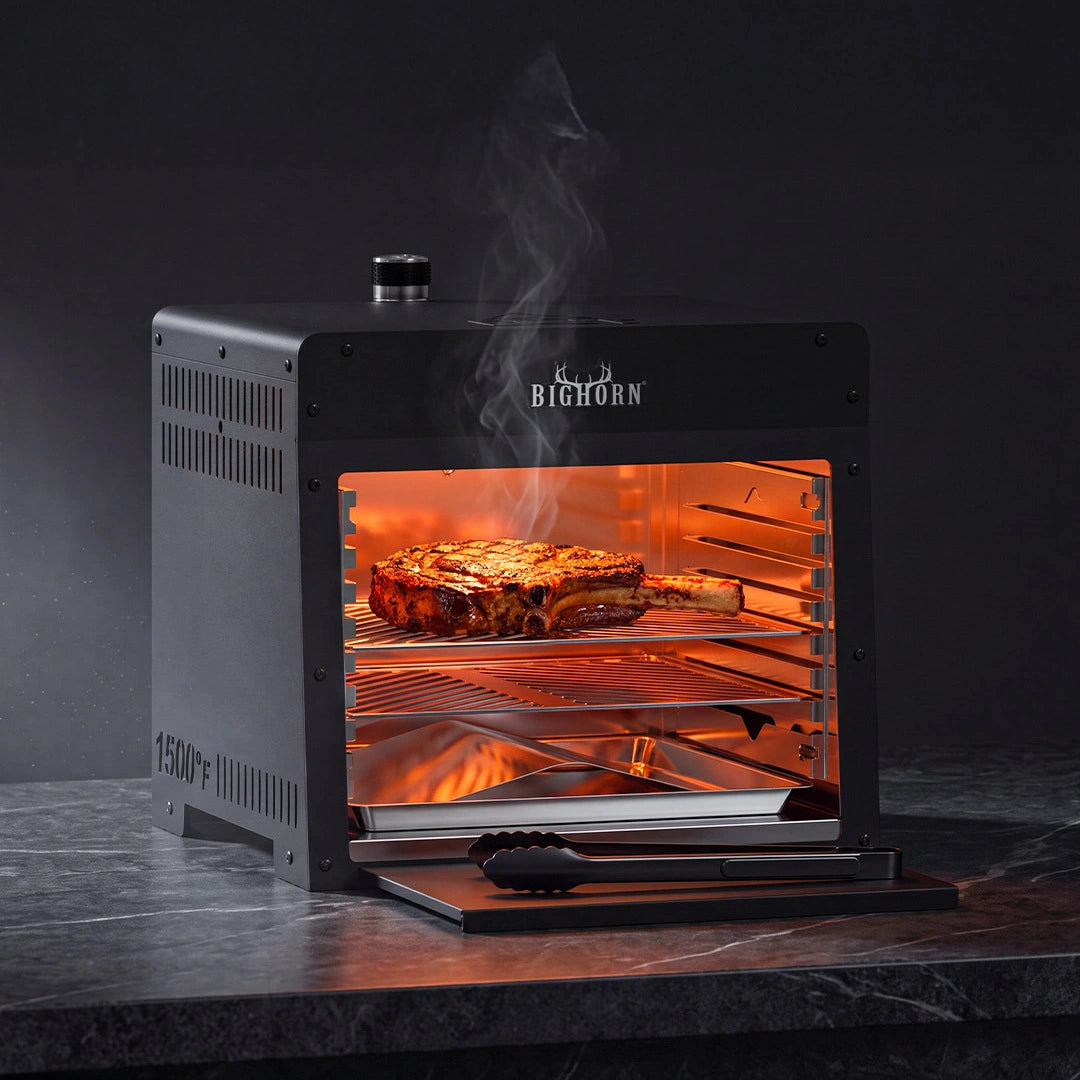
A 16-inch portable infrared steak grill is a close, intense tool. That is why the window is short, and why a “just a few more minutes” habit ruins tails.
Butterflying a tail and a dry surface that will take butter later
Use kitchen shears to cut through the top of the shell down the length of the tail, then gently open it and lift the meat so it sits on top of the shell, still attached at the fan end if you want the classic presentation. Remove the vein if you see it. Pat the meat dry. A wet surface steams, then overcooks while you wait for color. Salt lightly. Save butter for the plate or for a brief brush after the sear; a heavy butter flood on a close emitter just drips and flares.
Thaw frozen tails in the refrigerator, not on the counter. FDA seafood-safety guidance is the official handling reference for buying, thawing, and serving fresh or frozen seafood.
Shell-side heat versus a meat-side kiss on infrared
Shell-side first puts a buffer between the emitter and the meat. The shell heats, the meat cooks more gently, and you get fewer instant curls. A meat-side kiss is a short finish for color, not a second cook. If you start meat-side on a fully raging infrared face, the flesh can tighten and dry before the thickest part is done. If you never turn at all, the top may stay pale — that is fine if the meat is already opaque. Color is not the same thing as doneness here, and doneness is not a darker brown crust.
Doneness cues: opacity, spring and a probe if you use one
FoodSafety.gov lists shrimp, lobster, crab, and scallops as done when they are pearly or white, and opaque. That is the official cue this page will follow. The meat should look moist, not chalky, and it should spring slightly rather than feel tight and dry. If you use a thermometer, some cooks treat 145°F as a practical seafood target — the same chart lists 145°F for fish — but for lobster the published official test is the visual one. Probe the thickest part of the tail meat, not the shell and not a thin corner.
A small table: tail size versus a starting approach
| What you have | Starting approach | Stop when |
|---|---|---|
| Smaller tails | Shell-side on a fully hot cooker; a very short meat-side kiss if needed | The flesh is pearly, white, and opaque |
| Larger, thicker tails | Shell-side a little longer; do not chase a steak crust on the meat | The thickest meat is opaque, not just the edges |
| Split tails you want to serve with steak | Cook the steaks first, or have a hold zone, then run the tails in a short window | The lobster is done; do not leave it on while you fuss with steak timing |
Butter and lemon after the sear, not into the burner
Melted butter, lemon, and a little salt or herb are the finish. Spoon them on after the tails come off the grate, or brush a thin coat once the meat is already almost done and you can pull it immediately. Butter poured onto a close infrared burner does not baste the lobster. It burns, smokes, and can flare. Keep the butter bowl off the cooker.

Common failures: curled, dry meat and a burnt shell edge
Tight, curled, dry meat usually means the flesh sat too long on the emitter, or the tail went on wet. A burnt shell edge is often a small tail left too close after it was already done, or a hanging flap of shell in the fire path. Stay with the cooker. NFPA grilling safety and CPSC gas-grill advice still apply: keep the grill away from the house, and do not use a gas grill in a garage, breezeway, carport, or porch.
Food-safety and leftover notes for shellfish (official guidance)
Handle lobster as perishable seafood. Keep it cold until you cook, and do not leave cooked tails out on a warm table. FDA safe food handling and USDA leftover guidance say to refrigerate within two hours — one hour if the air is over 90°F — and to reheat leftovers to 165°F. Leftover lobster dries easily; a gentle reheat is kinder than another infrared blast. If a tail sat in the danger zone too long, throw it away rather than “just searing it again.”
Pairing lobster tails with an infrared steak without juggling two timings badly
Steak and lobster do not share a clock. The steak wants a hard sear and a rest; the tails want a short, watched window and a hard stop. The calmer sequence is usually: cook the steaks, let them rest, then run the tails on the still-hot cooker while you plate the meat. If you try to finish both at once on a compact grate, one of them will wait on the heat too long. For vegetables on the same kind of cooker — a different timing problem — see vegetables on an infrared grill: corn, asparagus and halloumi. For a compact searing cooker that can do a short seafood finish after a steak, confirm a current listing in the infrared steak grill collection.
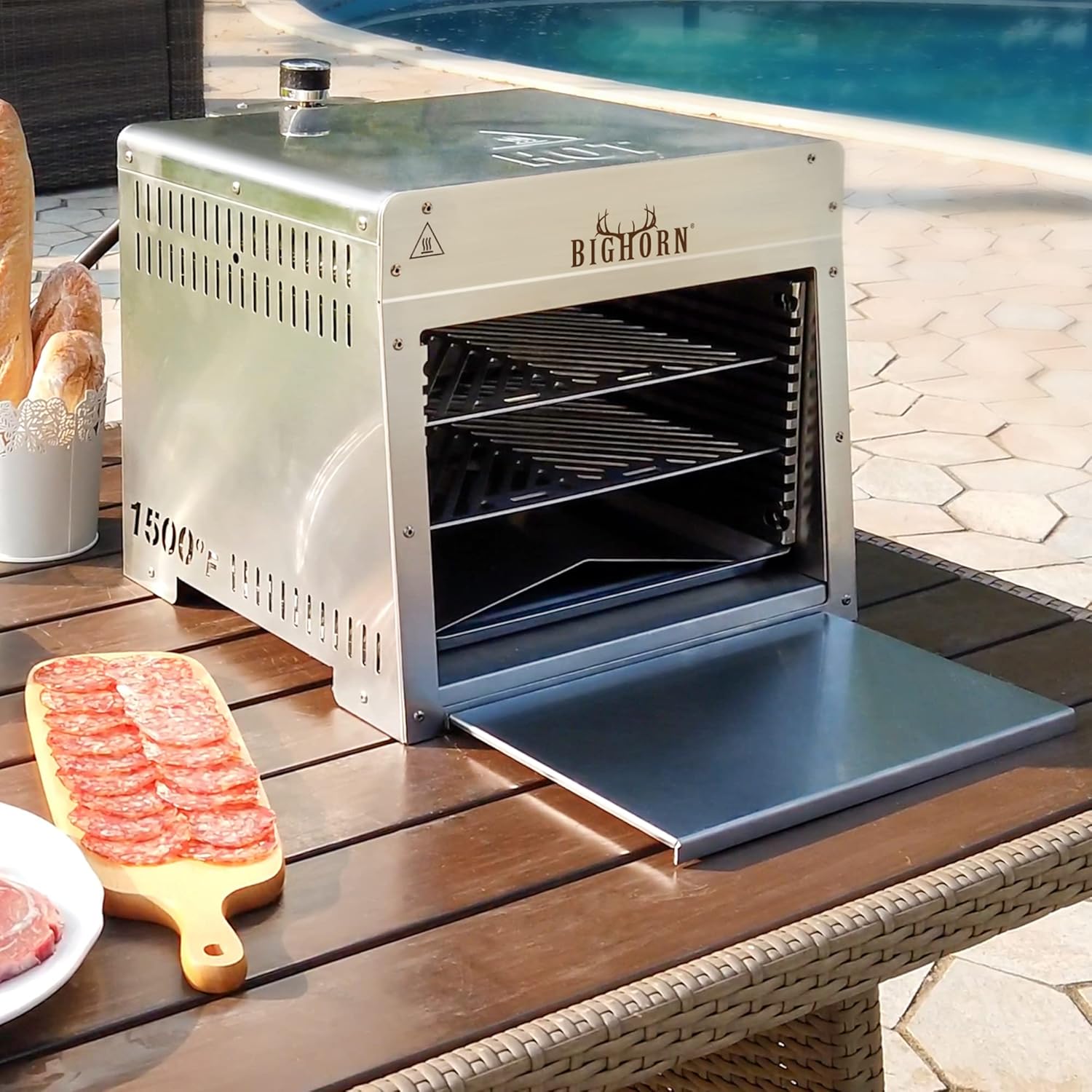
If you are cooking lobster tails on a compact searing cooker, confirm the current 16-inch 1500°F portable infrared steak grill with pizza stone listing, start shell-side, and stop when the flesh is pearly, white, and opaque.
FAQ
How long do you grill lobster tails on a grill?
There is no single grill minute that covers every tail. Size, starting temperature, and how close the infrared emitter is all change the clock. Start shell-side, finish briefly on the meat if you need color, and stop when the flesh is pearly, white, and opaque. This page will not invent a universal time.
How long do lobster tails take at 350?
An oven or a 350°F grill setting is a different heat than a close infrared emitter. Do not copy an oven minute count onto this cooker. Use shell-side heat, watch the meat, and stop when it turns opaque. If you use a thermometer, treat 145°F as a practical seafood target some cooks use, not a substitute for the official visual cues.
How does Gordon Ramsay cook his lobster tails?
This page will not invent or certify a Gordon Ramsay method. What you can do on a home infrared grill is butterfly the tail, start shell-side, give the meat only a brief finish if it needs color, and stop when the flesh is opaque. Butter and lemon belong after the sear, not in the burner.
What is the most delicious way to cook lobster tails?
“Most delicious” is a preference, not a technique. On infrared, the habit that protects the meat is shell-side heat, a short cook, and butter after you pull the tails. Overcooked lobster is dry no matter how good the butter is. Pair the tails with steak only if you can juggle two different clocks.