




Satay or skewered pork with a sweet, spiced marinade is a short-sear problem on infrared. Sugar and garlic in a wet coat will burn against a close emitter long before a thick cube is done. The useful method is to wipe off the extra marinade, cook the pork through on a hot, dry surface, then glaze only at the end if you want shine — and keep peanut sauce on the plate.
This is not a yakitori page. Turn cadence and late glaze still matter, but the marinade, the peanut sauce, and the allergy habit are different. For a soy-tare skewer method, use the yakitori and skewers on an infrared grill guide.
The short answer: wipe off extra marinade and save peanut sauce for the plate
Wipe extra sugary marinade off the pork before it hits a fully preheated infrared grill. Cook the pieces through in a short, turned sear, then glaze only at the end if you want more color. Keep peanut sauce on the plate. Pork should reach 145°F with a three-minute rest.
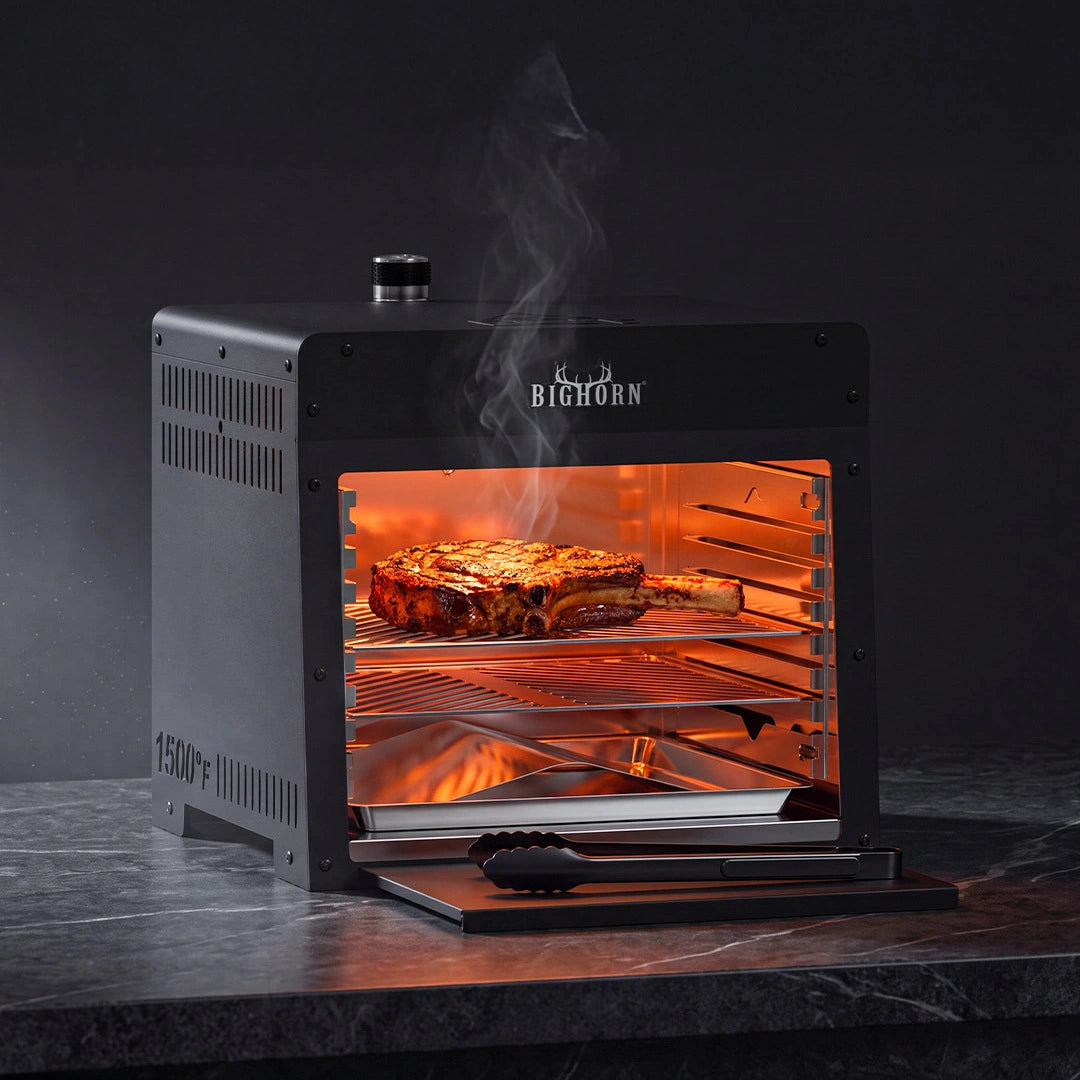
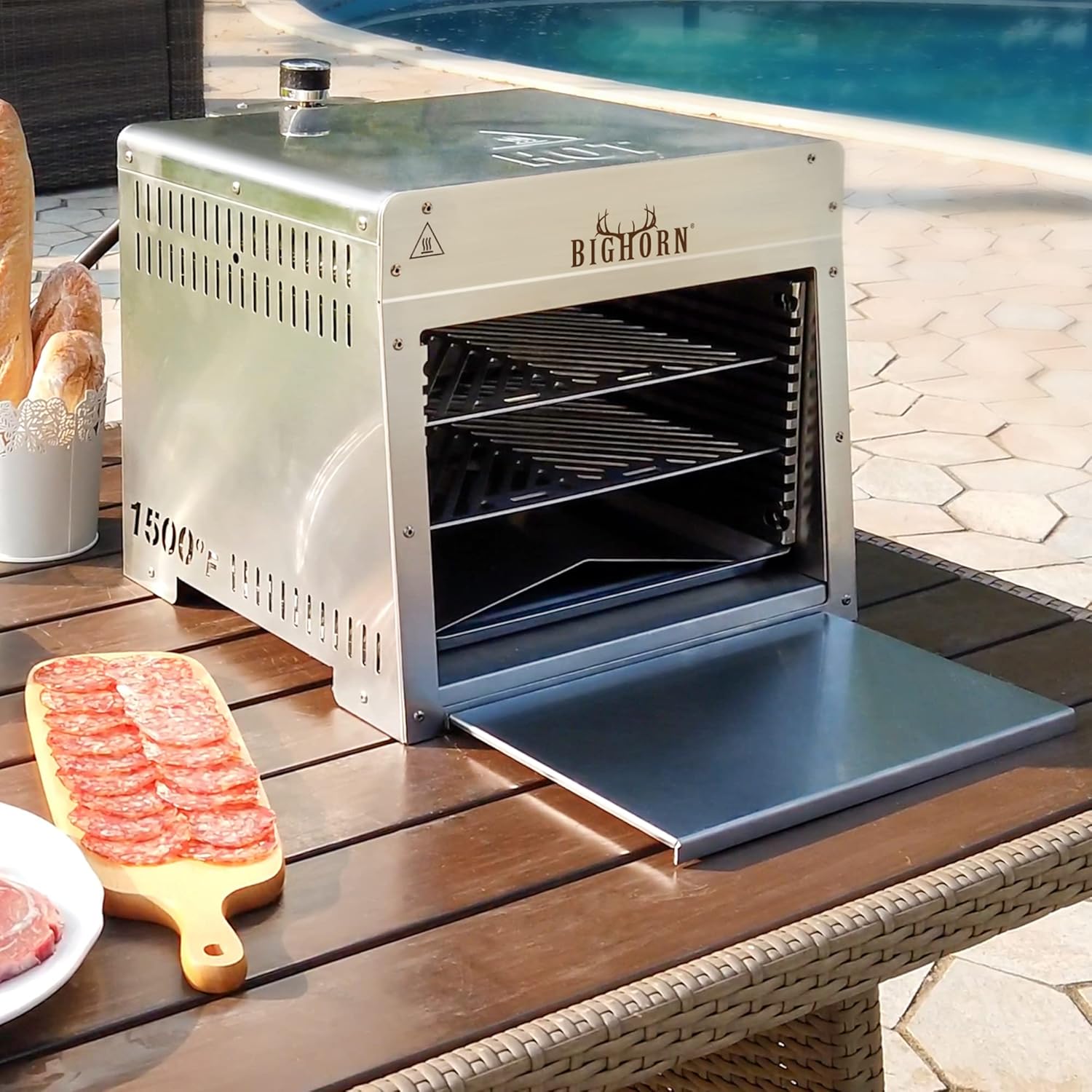
A 16-inch portable infrared steak grill will brown small pork pieces quickly. That speed is the reason a thick, wet, sugary coat fails.
Why sugar in a satay marinade burns on infrared faster than on a softer grill
Sugar browns, then burns. Garlic and thick coconut or oil pastes can do the same, leaving a bitter film and a sticky grate. On a charcoal bed or a softer gas-grill zone you sometimes get away with a wetter coat because the heat is a little farther away. On infrared, the first face of a dripping skewer is already in the danger zone for sugar. A thin, dry surface with spice still on the meat is enough for flavor; the rest of the marinade can stay in the bowl you are not going to serve from.
Satay, in many home kitchens, means spiced, often turmeric-stained pork or chicken on a stick, served with a peanut sauce. Thai moo ping is a related grilled-pork-skewer habit with a sweeter marinade. This page will not certify a national recipe or a restaurant method. It will tell you how sugar in those marinades behaves on infrared.
A dry-off and skewer setup that still carries flavor
If the meat has sat in a sweet marinade, lift it, wipe or shake off the extra, and skewer even pieces with a little space between them. Packed skewers steam and then scorch on the edges. Leave a handle end clear of the emitter. The spice that actually stuck to the meat will still show up in the crust. If you also cook pork chops on the same cooker, the site’s pork chops on an infrared grill page covers that thicker cut; this page stays with cubes and strips on a stick.

A small table: pork, chicken or tofu skewers versus a starting sear plan
| On the skewer | Starting sear plan | Safety or doneness check |
|---|---|---|
| Pork cubes or strips | Wipe extra marinade; short, turned sear; late glaze only if you want shine | 145°F with a three-minute rest, measured in a thick piece |
| Chicken pieces in a similar marinade | The same wipe-and-short-sear habit; sugar still burns early | 165°F in the thickest piece |
| Firm tofu or a plant-based skewer | Pat very dry; a short sear, and a thin late glaze if you use one | Heat through; keep peanut sauce on the plate |
Sauce on the side versus a last-second brush
Peanut sauce belongs on the plate. A last-second brush is for a thin, cooked glaze — a little leftover marinade you are willing to put on meat that is already nearly done, or a separate finishing sauce without a heavy peanut load. If you brush raw marinade onto cooked meat and serve it, you have put raw-pork liquid back on the food. If you want to use leftover marinade as a sauce, boil it thoroughly in a pan first, then serve it in a clean bowl. Do not confuse that with peanut sauce, which should never go on the emitter.
Common failures: black sugar and an underdone center
That pairing is the classic sweet-marinade failure: a black outside and a cool middle. Wipe better, cut more evenly, and stop trying to “cook through the glaze.” If the grate is sticky, let the cooker cool and clean it rather than scraping over a live emitter. NFPA grilling safety and CPSC gas-grill advice still apply: clearance from the house, and no gas grill in a garage, breezeway, carport, or porch. AmeriGas cylinder guidance is the right pre-cook check for a propane infrared unit.
Allergy and cross-contact notes when you serve peanut sauce
Peanut sauce is rich, thick, and easy to scorch. It also matters for anyone at the table who cannot eat peanuts. Keep it off the grill, use a clean bowl, and do not paint it on with a brush that has already touched raw marinade. If you are serving both peanut and non-peanut plates, keep separate utensils and say so at the table. This is practical cross-contact hygiene, not medical advice, and it is not a substitute for what a guest tells you they need.
A simple guest-board layout
Serve the skewers hot, with cucumber, herbs, or rice and the peanut sauce in a bowl of its own. A few lime wedges and a small dish of extra chili are enough. Leave space on the board so people can take a skewer without dragging it through the peanut sauce if they do not want it. For a broader “what else can this cooker do” list, see what to cook on an infrared grill: the high-heat menu.
When a griddle or a gas grill is the more forgiving tool
If you are cooking a long line of satay for guests, a flat top or a gas-grill zone is often easier than a compact infrared face. You can hold finished skewers to the side, and a slightly softer heat is more forgiving of a marinade you did not wipe perfectly. Use infrared when the batch is small, the meat is dry enough, and you can turn every skewer. Confirm a current listing in the infrared steak grill collection if that is the cooker you are buying for short, watched sears.
Leftovers: FoodSafety.gov lists the pork and poultry numbers above. USDA leftover guidance and FDA safe food handling say to refrigerate within two hours — one hour if it is over 90°F — and to reheat leftovers to 165°F. Peanut sauce should be chilled promptly too, in its own container.
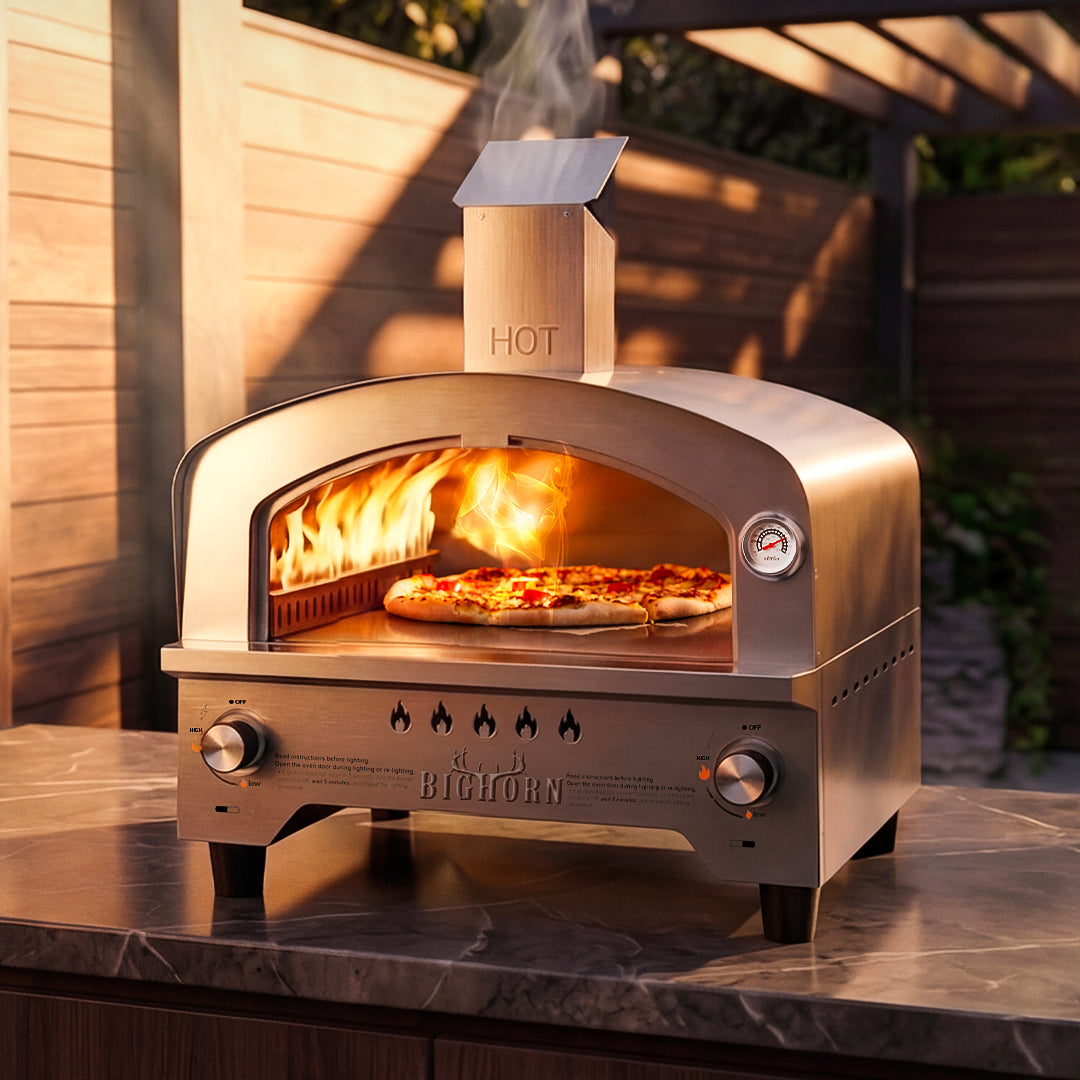
If you are cooking sugary pork skewers on a compact searing cooker, confirm the current 16-inch 1500°F portable infrared steak grill with pizza stone listing, wipe the extra marinade, and keep peanut sauce on the plate.
FAQ
Why does a sugary marinade burn so quickly on infrared?
Infrared puts a close, intense face of heat on the food. Sugar in a wet marinade darkens and then burns in that window, especially if you leave a thick coat on the meat. Wipe off the extra, cook the pork first, and add a thin glaze only at the end if you want more color and shine.
Should peanut sauce go on the skewer or on the plate?
Keep peanut sauce on the plate. It is a serving sauce, not a grill coat. On infrared it can scorch, drip, and make a mess of the grate. It is also an allergen: use a clean bowl and utensils, and do not run the same brush through raw marinade and a sauce you plan to serve.
Can you use the same late-glaze habit as yakitori tare for satay?
The late-glaze habit is similar, but the sauces are not the same project. Yakitori tare is a soy-and-sugar finish; satay often starts with a spice marinade and a peanut sauce on the side. Wipe the marinade, sear short, and sauce the plate. Do not treat this page as a rewrite of the yakitori guide.
What temperature should skewered pork reach?
FoodSafety.gov lists 145°F with a three-minute rest for pork steaks, roasts, and chops. Treat skewered pork pieces as small chops for safety purposes, and measure a thick piece, not the thin tip on the end of the stick. Color alone is not the test.