







Outdoor Kitchen & Islands
A fridge and a sink on an outdoor island look complete in a photo and then sit unused, or worse, get used casually for food they cannot hold safely. The useful question is not whether those features sound convenient. It is what you will do with them on an ordinary week: drinks or food, prep or cleanup, and whether a cooler and a hose would have been enough.
This is a feature-justification page, not a plumbing how-to. For hookups, use the existing outdoor kitchen sink plumbing guide. For cold-season care, use weather and winter care for outdoor kitchens rather than repeating that checklist here.
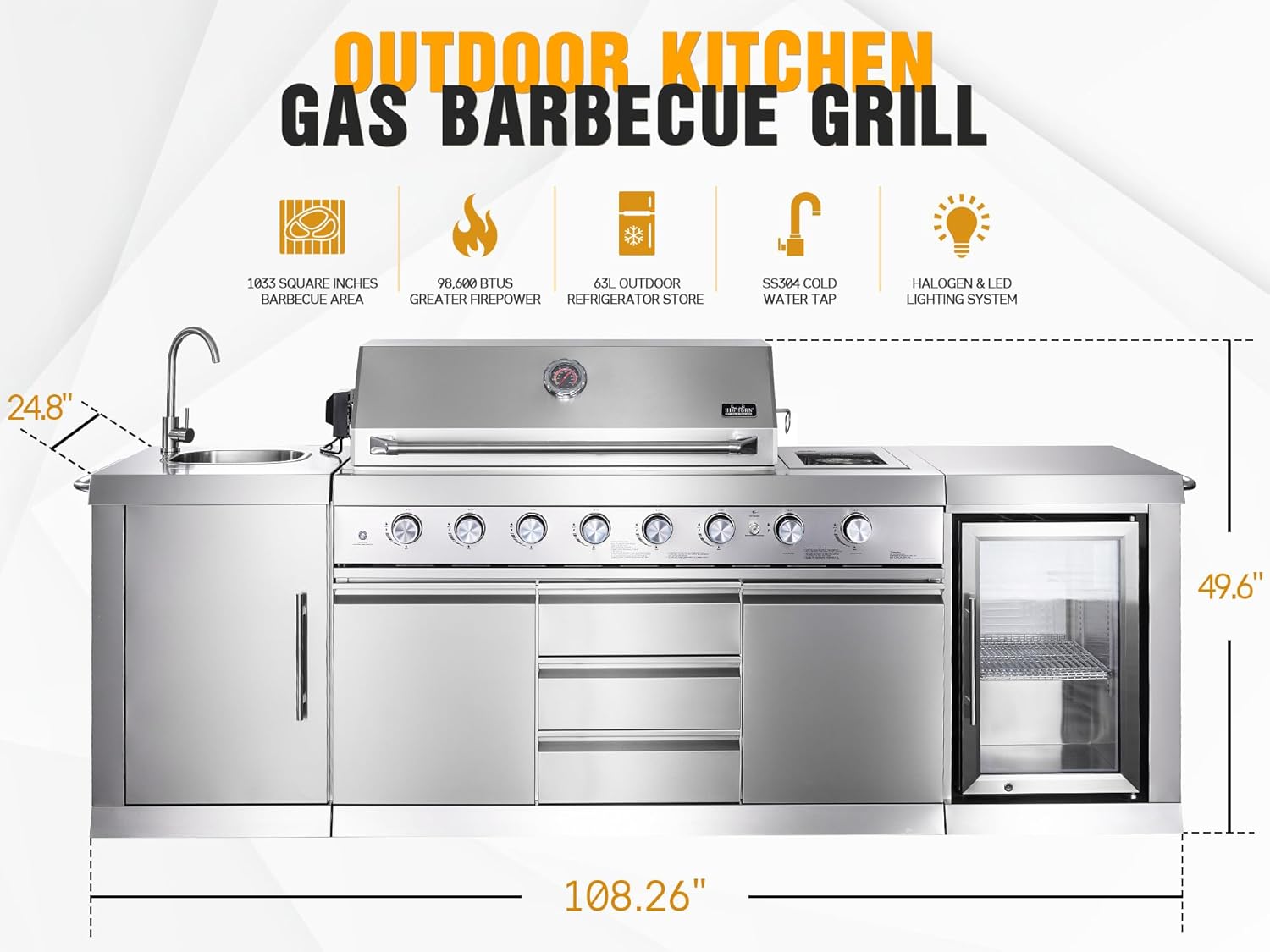
Fridge: drinks versus food safety
Read the listing honestly. The current 4+2 outdoor kitchen island page describes a 35-liter outdoor refrigerator for chilled beverages and snacks. The current 6+2 island page lists an outdoor refrigerator among the included parts and describes it as a beverage refrigerator in the title. The current grill and griddle combo page describes an integrated outdoor refrigerator without turning it into a walk-in cooler. Those are current-page claims, and they point toward drinks and short holds more than toward a week of raw meat storage.
Official food-safety guidance from the FDA safe food handling page and NCHFP storage guidance still governs perishable food. If you hold meat outdoors, follow the appliance manual and keep time in the temperature danger zone short. A sunny cabinet top is not a refrigerator. Ready.gov food guidance is a practical reminder at party pace.
Sink: prep versus cleanup
A weekly sink is usually one of two jobs, and sometimes both. Prep means rinsing produce, filling pots, and washing hands before you touch cooked food. Cleanup means collecting tools and plates so they are not stacked on the raw-meat board. It does not always mean a full dish wash; many households still do the sanitizing wash indoors. That is fine, as long as the island sink has a real job.
Do not let the sink become a storage bucket for bottles, or it will not be there when you need water. Keep water away from burner controls, and follow ordinary kitchen habits from FDA kitchen food-safety guidance so raw and ready-to-eat work do not share a board.
| Weekly habit | Fridge earns its place when | Sink earns its place when | A cooler and hose may be enough when |
|---|---|---|---|
| Drinks and a short outdoor meal | You actually stock and restock it, and you keep the door closed | You rinse hands, fruit, or tools without a trip inside every time | You cook outdoors only now and then |
| Raw meat and leftovers | The manual supports the hold, and you still use a thermometer and prompt chilling | You can separate raw drip from ready-to-eat rinse | You are not willing to manage an outdoor cold chain |
| Winter or unused months | You have a winterizing plan for the appliance | You can drain or protect the line | The island will sit dark until spring |
Winterizing, by link rather than a second checklist
Water lines, traps, and an outdoor fridge all need a cold-season plan if you live where temperatures drop. That plan already has a home on the winter-care page. This article only insists that you treat winterizing as part of the weekly-use decision. A sink you cannot drain, or a fridge you cannot protect, will not be a weekly feature in January.
Covers go on after the island is cool and dry enough for the manual’s instructions. Official home-fire caution from Ready.gov home fire pages still applies if anyone is tempted to “just run it once more” in a hastily enclosed space.
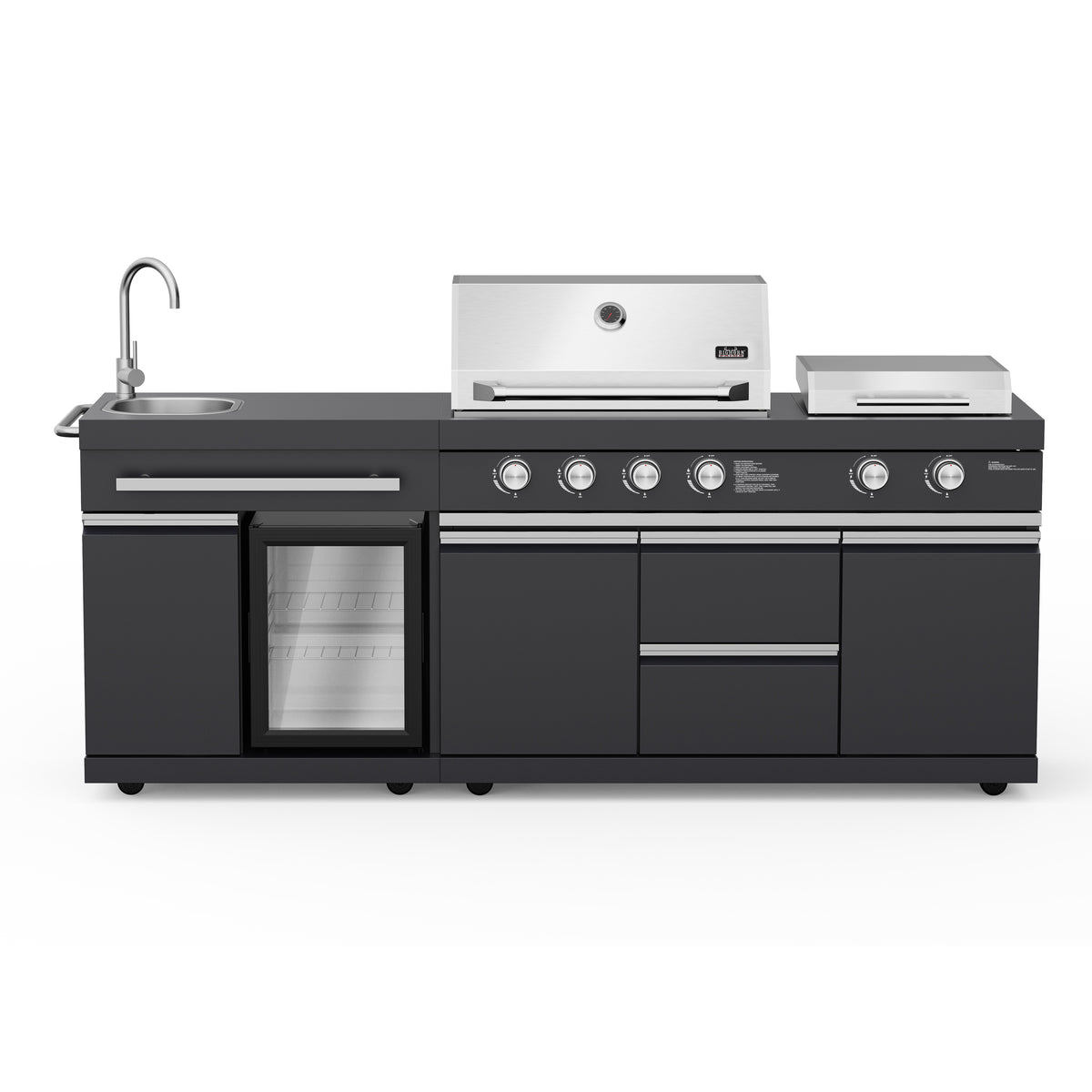
Power, water, and a responsible rough-in
A fridge needs a suitable outdoor-rated power plan, and a sink needs supply and drainage. Hire qualified people for electrical, plumbing, and any gas work, and follow local codes. This page will not sketch a circuit or a trap as if it were a permit set. The plumbing guide is the place for hookup thinking; your inspector is the place for approval.
Think about switch and outlet placement so you are not reaching over a hot grease tray to kill power. Keep propane and electrical stories separate, with tank access remaining outdoor, upright, and clear, in line with NFPA grilling safety pages.
When a cooler and a hose are enough
If you cook outside once or twice a month, a good cooler and a hose bib may be the honest kit. Ice is a short-hold tool, and you have to manage meltwater and raw-meat drip with more attention than a closed fridge. A hose can fill a pot and rinse a board, but it is not a sink with a drain plan, and it can become a trip hazard.
Choose the built-in pair when weekly outdoor service is already your habit, or clearly about to be. Browse the outdoor kitchen island collection for cabinets that include both features, then be honest about food safety before you stock the fridge like an indoor shelf.
Weekly habits that justify both features
Write those jobs into the week the way you would write a grocery list: restock drinks, check what may legally and safely live in the outdoor fridge, rinse the board, and drain the sink before you close the island. If that list feels natural, the features are already part of the household. If it feels like homework, wait.
A simple weekly test is whether you would miss the fridge or the sink if they were suddenly just cabinet doors. If the honest answer is that you would walk inside anyway, delay the feature or choose a simpler island. If the honest answer is that you already run drinks, a rinse, and a short hold outside most weekends, the pair is doing work, not decorating the stainless.
The pair pays off when you stock drinks before guests arrive, keep perishable items on a real cold plan, rinse and reset the board between raw and cooked work, and empty the sink so it is ready the next time. If that does not sound like your household, you may be buying a photograph. If it does, the fridge and sink stop being extras and start being the reason you stay outside through the whole meal.
Keep a fire extinguisher nearby, and give U.S. Fire Administration cooking-fire pages a look if the island is new to you. Features do not replace ordinary fire sense.
Key takeaways
- Treat many outdoor island fridges as beverage and short-hold tools unless the manual says otherwise.
- A sink earns its place with a weekly prep or cleanup job, not as a bottle bin.
- Plumbing and winter care already have their own guides; do not skip them if you live in a freeze climate.
- Power and water rough-ins belong to qualified work and local codes, not to a sketch in this article.
- A cooler and a hose can be enough for occasional cooks; weekly outdoor service is what justifies both built-ins.
If a weekly drink-and-rinse habit would actually get used, confirm the current refrigerator and sink details on the 6+2 outdoor kitchen island or the grill and griddle combo listing before you treat those features as automatic extras.
FAQ
Is an outdoor refrigerator mainly for drinks or for food?
On many island listings, including current Big Horn pages that describe a beverage refrigerator or a compact outdoor fridge, the honest weekly use is drinks, condiments, and short holds. Raw meat and leftovers still need a food-safety plan. Follow the appliance manual, and do not assume an outdoor fridge replaces your indoor refrigerator for every item.
Do you actually use an island sink every week?
Households that use it weekly usually have a clear job for it: rinsing produce, filling a pitcher, washing hands, or collecting grill tools before a proper indoor wash. If the sink has no water yet, or if it becomes a storage hole, it will not earn its cabinet space. Plumbing and winterizing are separate, already-published jobs.
Can a cooler and a hose replace a fridge and sink?
They can, if you accept the extra carrying and the weaker food-safety control. A cooler is a short-hold tool, not a set-and-forget fridge, and a hose is not a sink with a drain plan. For occasional cooks, that trade can be reasonable. For weekly outdoor service, a built-in pair is the calmer habit.
What should I think about before roughing in power and water?
Think about where the circuit and the supply will actually be used, and hire qualified help for gas, electrical, and plumbing work. This article will not write a code plan. Local rules apply, and existing pages already cover sink plumbing and winter care in more detail.
More to Read
Fireproof Grill Mat Under Pizza Ovens and Infrared Grills
Place a fireproof grill mat to catch grease and sparks under ovens and grills. Confirm the live 48-by-30-inch claims, and use a cart when you need ...
No Oven Spring on a High-Heat Pie: Dough Temp, Launch and Floor
Diagnose no oven spring on a high-heat pizza by checking dough temperature, launch handling, and floor heat before you spend another mix changing t...
Heat-Resistant BBQ Gloves: Temperature Ratings and Wet-Grip Limits
Read a 1472°F glove rating as a short, dry, instant figure. Wet or oily conditions change grip, so let long peels reach into hot ovens and grills.
