







Camping Stoves & Fuel
A greasy breakfast can leave a camping stove looking fine and still running weak. Fat spatters into a jet, a burner ring picks up a film, and the next lunch simmer barely holds. The usual comparison is wrong: the stove is often not "dead," and a bigger cartridge will not fix a blocked orifice. The counterintuitive move is to wait. How to clean a camping stove starts after the metal is cool and the fuel is off, not while the burner is still too hot to touch.
Why camping-stove flames go weak after greasy cooks
Camping-stove flames go weak after greasy cooks because fat blocks a jet or coats a burner, so the flame starves with the valve open. Cool the stove, disconnect the fuel, then clean the grease and clear the jet as the manual allows. Treat a weak flame after a fatty pan as a cleaning job.
Wind, a low cartridge, and a cold morning can also weaken a flame, and those belong to fuel and weather, including cold-weather camping-stove tips. After a sausage or burger cook, though, look at the burner before you blame the tank. A yellow or sooty flame that appears even on a clean, level stove is a different diagnosis; this page stays with grease, clogs, and a safe re-light.

A cool-down, then a jet and grease clean that stays safe
Set the stove out of the way and let it cool until you can put a bare hand near the burner without flinching. Disconnect the propane hose or remove the butane cartridge. Only then lift the grates, pan supports, or a removable burner cap the manual says you can take off. Wash those greasy parts with warm water and a little mild soap, well away from any fuel bottle. FDA safe food-handling guidance and FDA kitchen food-safety guidance are useful for the cookware side; they are not a license to flood a gas valve.
For the jet, use only a jet tool or a method the maker allows. The aim is to clear the opening, not to drill it larger. Wipe the burner surface and the bowl around it with a cloth that is damp, not dripping. Dry everything before the fuel goes back on. A camping stove is an outdoor appliance: do this work in the open, not in a tent or a closed vestibule. EPA's carbon monoxide overview is the reason a test lighting later also stays outdoors.
Propane 2-burner vs folding butane: what to take apart
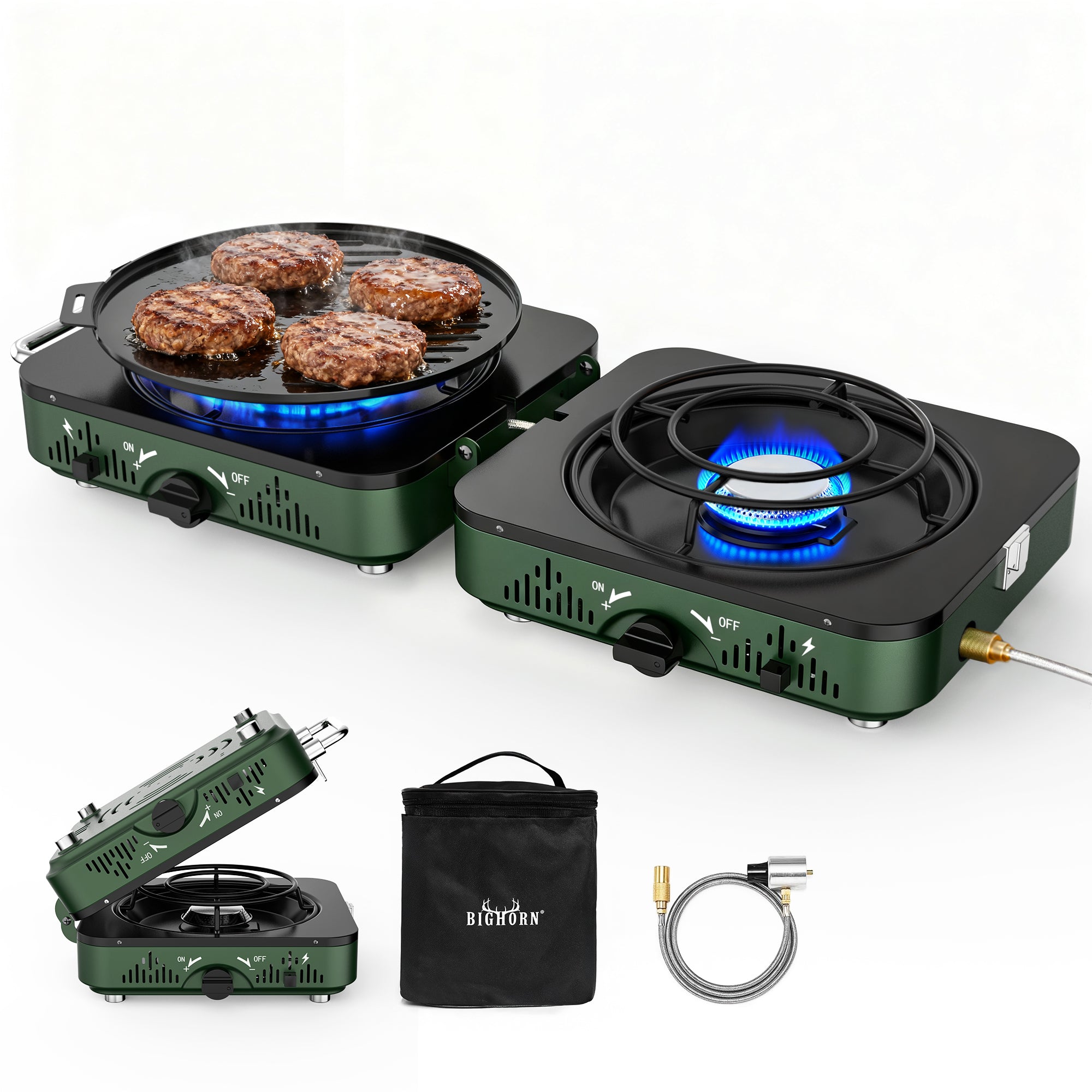
The two common family stoves do not come apart the same way. A portable propane 2-burner, like the one in the photos, often has two cooktops, a hose and regulator, and some removable supports or a griddle. A folding butane stove usually has a cartridge tray, a single burner, and a tighter set of parts you should not force. Take off only what the manual names. If a screw is not described as user-serviceable, leave it alone.
| Stove type | Usually safe to remove, if the manual agrees | Leave alone unless the maker says otherwise |
|---|---|---|
| Propane 2-burner | Grates or a removable griddle, drip trays, and burner caps the manual lists. | The regulator, the hose fittings, and the valve body. Do not soak those parts. |
| Folding butane | The pan support and any burner cover the maker says lifts off, after the cartridge is out. | The cartridge latch, the regulator, and any sealed control. Do not pry the folding frame apart. |
Fuel choice is a separate decision; butane versus propane camping stoves covers that. This table is only about what you clean in the field.
A re-light test and a flame that should look right
Reassemble the dry parts, reconnect the fuel the way the manual shows, and check the connection before you light. Then light outdoors, with the stove level and out of the wind as much as the site allows. A flame that looks even, mostly blue, and steady at a moderate setting is the usual "it looks right" picture on a clean burner. A weak, lifting, or very yellow flame after a clean is a stop, not a reason to cook anyway.
If the flame is still weak, repeat the cool-down and look again at the jet and the fuel connection. Do not keep clicking an igniter into a smell of gas. NFPA grilling fire-safety guidance and U.S. Fire Administration cooking-and-fire prevention are the official outdoor-gas starting points; they apply to a camp stove as much as to a backyard grill. For a broader model choice after you know the stove can run, see reliable propane camping stoves for camp meals.
What not to soak, poke or spray
Do not soak the valve, the regulator, or a control that is not meant to go underwater. Do not spray oven cleaner, engine degreaser, or a flammable solvent into a jet or a hose. Do not poke a glowing orifice with a twig, a fork, or a drill bit. Those shortcuts enlarge a jet, leave lint behind, or carry cleaner into a place that will be near a flame.
Do not clean a stove that is still attached to a live cartridge or tank. Do not work in a closed garage with the door down. NFPA home fire-safety guidance and Ready.gov food-and-emergency guidance are not camp-stove manuals, but they support the same idea: fuel, heat, and cleanup stay controlled and outdoors.
How this differs from the camping-stove hub and yellow-flame diagnosis
The live maintenance pages, including cleaning burners and storing fuel safely and the longer camping-stove care guide, cover ongoing care and storage in a broader way. This article is the after-grease, clogged-jet, re-light path: why the flame went weak tonight, what to take apart, and how to test it before the next meal.
A yellow or sooty flame that is not explained by a greasy jet is a combustion or fuel problem, not only a dirty grate. Do not treat this cleaning sequence as a complete fix for that symptom. Clean first if grease is obvious, then stop cooking if the flame still looks wrong.
An after-trip cleaning card
Before you pack the stove at the end of a trip, run a short card: Is the stove fully cool? Is the fuel disconnected? Are the greasy supports washed and dry? Did a jet need a legal, gentle clear? Did a brief outdoor re-light look even before you packed, or will you re-light at home in the open before the next outing? That is the whole after-trip clean.
Do not pack a stove still wet with wash water inside a closed bag, and do not leave a cartridge or hose half-attached "for next time" if the manual wants it disconnected for travel. The card is for the tired end of a weekend, when a shortcut is tempting.
A field kit: jet tool, a rag, and a bag for greasy parts
The kit can be small. A rag or paper towels, a little mild soap, a jet tool or the pick the maker allows, and a bag that can hold a greasy grate away from the tent and the food box are enough for most weekend messes. Keep the kit with the stove, not in a bin you left at home.
If you cannot clear a jet with the allowed tool, or if a valve feels damaged, stop and use the maker's service path. A field clean is for grease and ordinary clogs. It is not a rebuild on a picnic table, and it is not a reason to keep cooking on a stove that will not hold a steady, normal-looking flame after you have cleaned it.
If you cook on a portable 2-burner propane camping stove, keep a rag, a jet tool the manual allows, and a bag for greasy parts with the stove, and do the clean after the unit is fully cool.
FAQ
What is the best way to clean pans while camping?
Wash pans with hot water and a little mild soap, well away from the stove and any fuel, after the cookware has cooled enough to handle. Sand or a dedicated sponge can lift stuck food; do not scrape grease back onto the burners. Strain or pack out dirty water instead of dumping it on a neighbor's site or into a stream. This page is about the stove itself. Clean pans first so you are not dripping fat onto a jet you just cleared.
How do you clean dirty stove burners?
Let the stove cool completely and disconnect the fuel. Lift off the grates or pan supports the manual allows you to remove, and wash greasy parts with mild soap and water. Wipe the burner tops; if a jet is clogged, use only the tool or method the maker allows, and never enlarge the hole. Dry the parts before you reconnect fuel. A camping stove is not a kitchen range: do not soak the valve body or the regulator.
How to restore a Coleman camp stove?
A deep restore of a vintage named stove is its own project, often with parts and methods that belong to that model. This page is a field and after-trip clean for a modern camping stove, not a collector rebuild. If you own a specific vintage unit, follow that maker's service information or a repair guide written for that stove. For a current propane or butane camp stove, start with a cool-down, a grease clean, and a careful jet clear, then a short re-light test outdoors.
How do I remove grime from the gap between my stove and countertop?
That question is about a built-in indoor range, not a camping stove on a picnic table. For a camp stove, the similar job is the gap around a burner cap, a grate, or a hinge: cool the stove, disconnect fuel, and wipe those edges with a cloth and mild soap, without flooding the valve. Do not run a knife or a stiff wire into an opening you cannot see. If grime is inside a sealed control, stop and use the maker's service path.
More to Read
Fireproof Grill Mat Under Pizza Ovens and Infrared Grills
Place a fireproof grill mat to catch grease and sparks under ovens and grills. Confirm the live 48-by-30-inch claims, and use a cart when you need ...
No Oven Spring on a High-Heat Pie: Dough Temp, Launch and Floor
Diagnose no oven spring on a high-heat pizza by checking dough temperature, launch handling, and floor heat before you spend another mix changing t...
Heat-Resistant BBQ Gloves: Temperature Ratings and Wet-Grip Limits
Read a 1472°F glove rating as a short, dry, instant figure. Wet or oily conditions change grip, so let long peels reach into hot ovens and grills.
