







Outdoor Kitchen Islands & Patio Planning
The fun sketch comes first; the permit conversation should come second—not last. Sorting outdoor kitchen gas line and permit requirements early prevents expensive redo work when an inspector or insurer asks for paperwork you never pulled.
Rules vary by city and HOA. This checklist helps you ask better questions; it is not legal advice and not a substitute for local code officials or licensed trades.
What triggers a permit (gas, electric, structure)
Permanent gas piping, new electrical circuits, and structural pads or covers commonly trigger permits. A portable grill on a factory cart may not; a hard-piped island usually does.
Call the building department with a simple description before you buy stone. Ask what drawings they want and which trades must be licensed. Bring model numbers for appliances when you can.
Model-code organizations such as the ICC publish the families of codes many cities amend—useful context when staff cite code sections by name.
Gas line basics and licensed installers
Gas work is not a DIY weekend for most homeowners. Licensed plumbers or gas fitters size pipe, install shutoffs, leak-test, and know when a regulator or bond is required.
Keep shutoffs reachable. Label them. Flexible connectors must be approved types used as directed—not whatever leftover hose is in the garage. Propane cylinder systems still need outdoor, upright storage and sound hoses; see propane safety basics.
If you hope to convert between fuels later, ask about that during design. Do not assume any grill can switch fuels without manufacturer parts and instructions.
Electrical and GFCI needs
Outdoor outlets near sinks and wet counters generally need GFCI protection and weatherproof covers. Lighting, fridge circuits, and receptacle counts add up—plan load with an electrician rather than daisy-chaining cords.
Underground conduit paths should be marked for future digging. Nothing ends a garden project faster than slicing a live cable.
Clearance from house and overhead structures
Appliance manuals and fire codes both care about distance to combustible walls, eaves, and ceilings. Measure with the lids open and with any rotisserie attachments in mind.
NFPA grilling safety education and grill location discussions show why outdoor cooking near structures gets scrutiny. Your inspector may cite local amendments that differ from a neighbor’s town.
Insurance and HOA checks
Tell your insurer about permanent outdoor kitchens and fuel types. Some policies ask about open flame or require specific clearances. HOAs may restrict visible tanks, smoke, or work hours.
Get HOA architectural approval in writing when required. Verbal nods disappear when boards change.
Inspection and documentation checklist
- Permit card posted as required
- Gas pressure/leak test documentation
- Electrical inspection sign-off
- Appliance manuals on site
- Photos of buried utilities before backfill
- Final inspector walkthrough scheduled before first party
Keep digital copies. Future you selling the house will need them.
Quick-reference summary table
| Item | Usually ask about | Who to call |
|---|---|---|
| Gas piping | Permit + licensed fitter | Building dept / plumber |
| New outlets | GFCI + permit | Electrician |
| Patio cover | Structural permit | Building dept / designer |
| Portable grill only | HOA / lease rules | HOA / landlord |
How far should an outdoor kitchen be from the house?
Distance depends on appliance clearances, fuel, and local rules—not a universal backyard number. Start with the grill or island manual, then ask the fire or building official about any local minimums.
Also measure for smoke into windows and for hose or pipe routing. A kitchen that meets clearance inches but fills the living room with smoke will still fail day-to-day living.
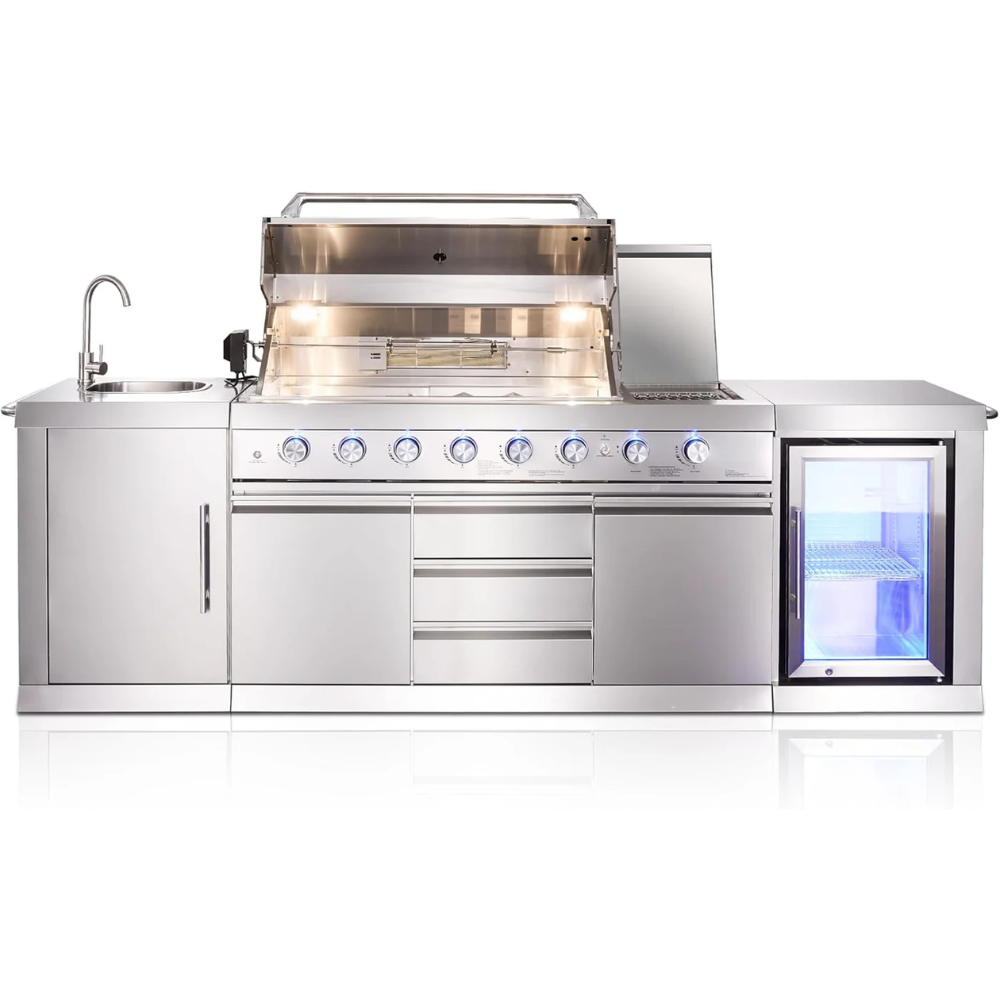
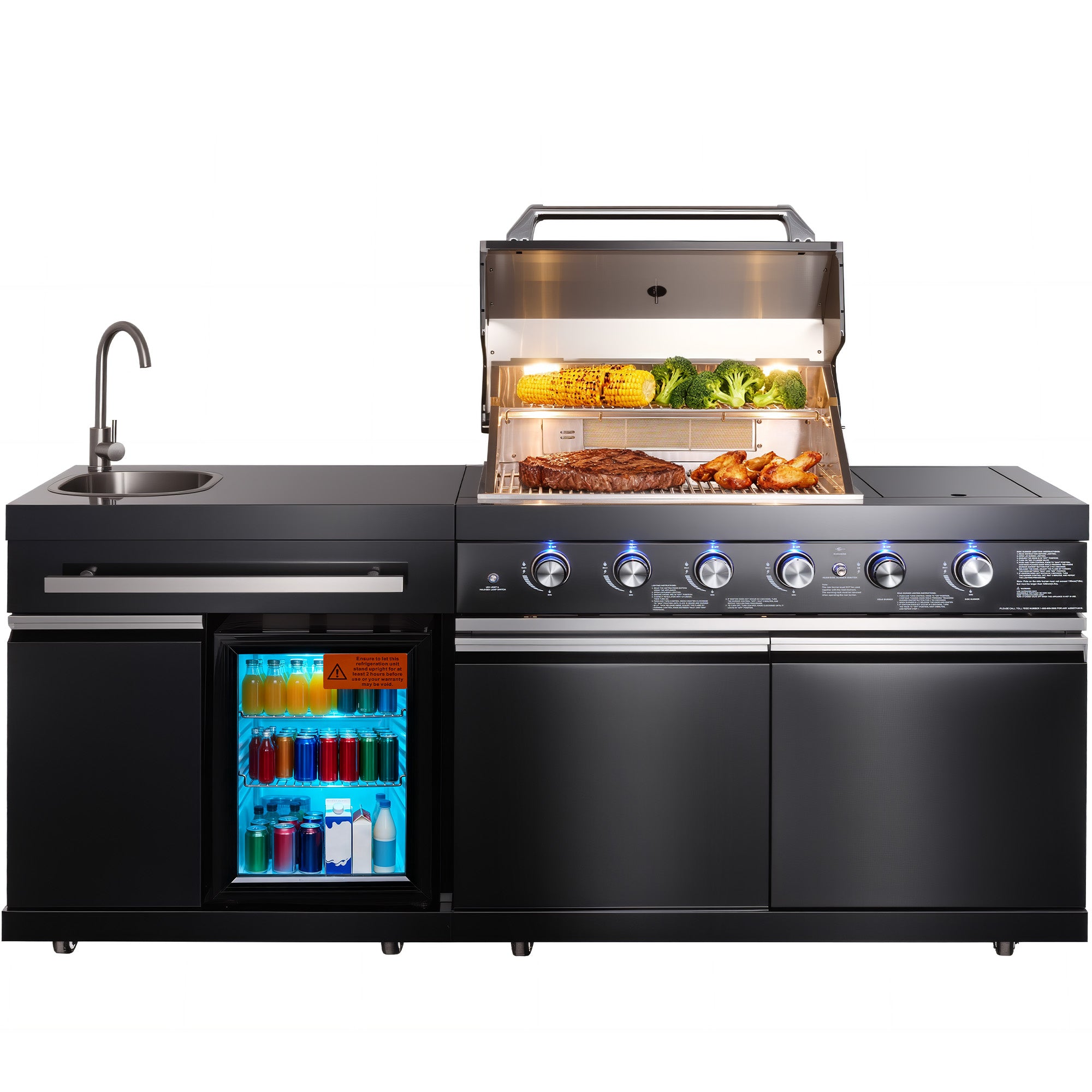
Browse footprints in the outdoor kitchen island and built-in grill island collections so you can speak in actual widths when you call officials. Questions about product selection can go through the contact page while code questions stay with your local authority.
Home fire readiness still matters after the final stamp—Ready.gov is worth sharing with anyone who hosts at your island.
Sequencing trades without chaos
Typical order: locate utilities, pour or set the pad, rough gas and electrical, inspect rough-ins, set cabinets and appliances, finish panels, final inspection. Skipping rough inspection because stone arrived early is how projects stall.
Hold a short kickoff with every trade sharing one dimensioned plan. Conflicting assumptions about island height show up as fridge doors that hit light fixtures.
Leave access panels where shutoffs and junctions hide. Future service technicians should not demolish tile to relight a pilot or reset a GFCI.
If your project includes a factory island from a brand collection such as Big Horn outdoor kitchen islands, keep the shipping weight and utility specs with the permit packet so inspectors see the same documents you used to plan.
After final approval, host a small family cook before the big party. First fires reveal hose routing snags and missing tool hooks while stakes are still low. Keep NFPA grilling safety habits in that shakedown cook—especially extinguisher placement and kid boundaries.
Document as-built photos of pipe routes. The next homeowner—or future you digging a garden bed—will need to know what lives underground.
After inspections, keep cooking safety culture alive with NFPA grilling tips and CPSC fire-safety education. Propane or natural-gas conversations with fitters should still reference upright cylinder and leak-check basics from propane safety resources when portable tanks remain in the system.
Conclusion
Treat permits, licensed gas and electrical work, and clearances as part of the design—not paperwork after the party invite goes out. The checklist is short; skipping it is expensive.
When you are ready to pick a layout footprint, explore Big Horn Outdoors outdoor kitchen islands.
FAQ
Can I run a flexible gas line in my house?
Flexible gas connectors have specific approved uses and limitations; many indoor runs require rigid pipe installed to code by licensed trades. Do not improvise with unapproved hose through walls or under floors. Ask a licensed gas fitter what is legal for your jurisdiction and appliance.
What happens if you build an outdoor kitchen without a permit?
You may face stop-work orders, fines, forced removal, insurance claim problems, or trouble selling the home. Requirements differ by city, so the only reliable answer comes from your building department. When in doubt, ask before pouring concrete.
How far should an outdoor kitchen be from the house?
Use appliance manufacturer clearances first, then confirm any local fire or building rules. Measure to windows, eaves, and combustible siding with lids open. Smoke pathways into living spaces matter alongside raw inches.
What are the requirements for installing a gas stove?
Outdoor gas appliances typically need correct fuel type, proper regulators, leak-tested piping, shutoffs, and clearances listed by the manufacturer and local code. Indoor stove rules differ. Hire licensed installers for permanent gas connections and keep manuals for inspectors.
Explore more in the Outdoor Kitchen Guides.
More to Read
Fireproof Grill Mat Under Pizza Ovens and Infrared Grills
Place a fireproof grill mat to catch grease and sparks under ovens and grills. Confirm the live 48-by-30-inch claims, and use a cart when you need ...
No Oven Spring on a High-Heat Pie: Dough Temp, Launch and Floor
Diagnose no oven spring on a high-heat pizza by checking dough temperature, launch handling, and floor heat before you spend another mix changing t...
Heat-Resistant BBQ Gloves: Temperature Ratings and Wet-Grip Limits
Read a 1472°F glove rating as a short, dry, instant figure. Wet or oily conditions change grip, so let long peels reach into hot ovens and grills.
