







Outdoor Kitchen Systems
The tradeoff on a busy island is simple to state and easy to get wrong. One propane supply is tidier than a forest of tanks. Several appliances running at once can also ask more of a regulator than a single grill ever did. The number that matters is not a pipe diameter you copy from a forum. It is how many listed gas appliances you might fire together, and whether a technician has confirmed the regulator plan for that combination.
An outdoor kitchen propane manifold can share fuel, only with a proper regulator plan
Several propane appliances can share one supply, but only through a manifold and regulator plan a technician confirms. An outdoor kitchen propane manifold is not a tee on a grill hose. If a cooker is wood-pellet or unlisted for that hookup, it does not belong on the shared system. Do not invent pipe sizes.
The tempting shortcut is to add a pizza oven or a side burner the same way you would add a garden hose. That is the failure this page is here to prevent. Shared fuel is a designed system, or it is a leak and a starvation problem waiting for a Saturday night.
What a manifold is for, in homeowner language
A manifold is the shared fuel path that lets more than one appliance take propane from the same source, with shutoffs and a regulator arrangement the designer specified. Think of it as a planned branch, not as extra hose. Each appliance still needs a way to be isolated, and the whole run still needs to be leak-checked after it is changed.
This is different from asking how long a single tank lasts on one grill. Runtime is a useful planning number for a cook, and it lives on other pages. A manifold question is about whether the supply can serve the combination at all, safely and as listed.
Sizing and parts: what you must have a tech confirm
Have a technician confirm the appliance listings, the gas type, the regulator or regulators, the shutoffs, and whether your tank or hard line can support the simultaneous use you actually want. That person may also tell you that two appliances should not share the existing regulator, or that a side burner is already part of a listed island and a new oven is not.
This page will not publish pipe diameters, orifice sizes, or a BTU sum for you to match at a hardware counter. Those figures come from the listings and the design, not from a blog. NFPA's grilling fire-safety guidance is the reason a leak check and a qualified hookup matter more than a tidy-looking DIY branch.
A simple appliance-combination table
Use the table to frame a conversation, not to skip one. "Can they share?" here means "is this a listed combination a technician should design," not "a tee will probably be fine."
| Combination | What sharing can mean | What a technician must confirm |
|---|---|---|
| Grill alone | Usually a single-appliance regulator and hose, as the grill was listed. | That the existing hookup is still intact, leak-checked, and using the correct gas type. |
| Grill and a listed side burner | Often already designed together on an island, or added only as that island allows. | Whether the side burner is part of the listed system, and where its shutoff lives. |
| Grill plus a listed gas pizza oven | A true manifold question: two cooking loads that may run at the same time. | The regulator plan, shutoffs, and whether the supply can support simultaneous use. |
| A wood-pellet or charcoal oven beside a propane grill | Two different fuel paths. They can share a patio, not a propane manifold. | That nobody has tried to tee the pellet oven into a gas hose it was not listed for. |
If you want a dedicated discussion of gas ovens as a product type, use the propane outdoor oven overview. If you are choosing an island that has to last, burner layout and build quality still sit on the grill-island durability guide and the burner, build, and fit page, not inside a manifold sketch.
Safety, shutoffs and a leak check after any change
After any change, close the system and leak-check before you cook. Do not hunt for a leak with a flame. Use the method the manual and the technician specify, and stop if you smell gas. U.S. Fire Administration cooking-fire guidance and NFPA's home fire-safety overview treat gas appliances as a fire problem, not as patio plumbing you can "try out" first.
A shared system also needs a shutoff you can actually reach. If a valve is only accessible by dragging the island, it is not a useful shutoff. Label it. If a later owner cannot tell which handle kills the oven versus the grill, the manifold was installed for the installer, not for the house.
Carbon monoxide is the indoor and enclosed-patio risk, not a reason to skip outdoor leak checks. EPA's overview of carbon monoxide and indoor air is why you do not drag a manifolded island into a garage or a tightly enclosed room to "get out of the wind."
Cite official gas-safety guidance; do not invent pipe diameters
Official safety pages will tell you to install listed equipment, keep leak checks in the process, and respect clearances in the appliance manual and local rules. They will not give you a one-size pipe chart for a backyard island. If a source does not state a diameter, this article will not invent one to look more technical.
U.S. Fire Administration home-fire prevention and Red Cross fire guidance are general fire-prevention references, not manifold design manuals. Use them for habits and emergency thinking. Use a licensed technician for the parts.
How this differs from a single-tank runtime page
How long a 20-pound tank lasts on a gas pizza oven and how long that tank lasts on a grill answer a cook-time question for one appliance at a time. They help you shop for spare tanks and plan a party. They do not tell you whether two appliances may share a regulator.
If your only question is "will we run out during dinner," start on those runtime pages. If your question is "can the oven, the grill, and the side burner live on one supply," you are in manifold territory, and the next person you talk to should be a technician, not a hose display.

A labeled shutoff you can reach without moving the island
Before you accept a shared hookup as finished, stand where you cook and find the shutoff with one hand, in the dark, without walking the island away from the wall. If you cannot, the system is not done. Add a label that a guest could read, and show the household where it is.
That habit also protects the later leak check. A valve you can reach is a valve you can close while you look for a problem. A valve you can only reach by dismantling a cabinet is how a small smell becomes a long night. Shared fuel is worth the tidiness only when the shutoff and the regulator plan are as considered as the cookers themselves.
If you are still at the shopping stage, write down which appliances are listed for propane and which are not, then take that list to the technician with the island or grill manual. A tidy drawing that ignores the fuel type of the second cooker is not a manifold plan. The useful outcome is a system you can shut off, leak-check, and cook on, not a hidden web of extra hose behind the island.
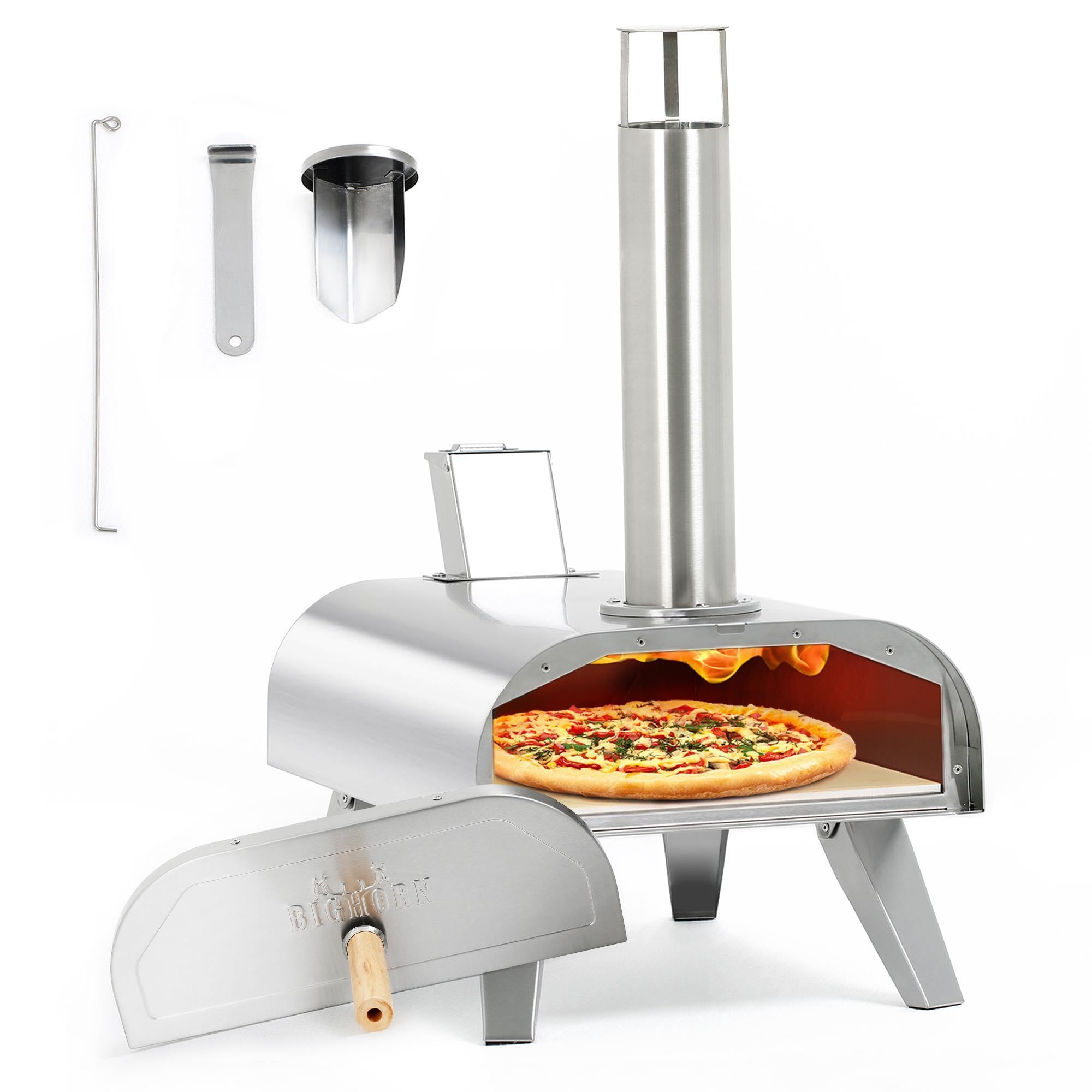
If you are adding a second outdoor cooker, confirm its actual fuel first. A 12-inch wood-pellet pizza oven does not automatically join a propane manifold; a listed gas oven does, and only after a technician designs the shared system.
FAQ
Can a pizza oven and a grill share one propane tank?
They can share a properly designed system, but only when both appliances are actually listed for propane, the regulator and manifold are sized and installed for that combination, and a qualified technician confirms the hookup. A wood-pellet oven is not on the propane manifold just because it sits next to a grill. Runtime pages that talk about a single 20-pound tank also do not answer this. Sharing a tank through a random tee or a spare grill hose is the failure to avoid.
What does an outdoor kitchen propane manifold actually do?
In homeowner language, a manifold is the shared plumbing that lets more than one appliance draw from the same propane supply, each with a way to be shut off and each fed through a regulator plan the designer specified. It is not a license to add a third cooker with a hardware-store splitter. The manifold exists so the grill, a side burner, and a gas oven can be planned as one fuel system, then leak-checked as one system after any change.
Do you need a new regulator if you add a second propane appliance?
Often you need the regulator plan reviewed, which may mean a different regulator, an additional regulator, or a different supply arrangement. The existing grill regulator was chosen for that grill, not for that grill plus an oven plus a side burner. Do not 'upsize' a part by guessing. Have a technician compare the simultaneous load you actually intend to run with the listing and the supply you have, then install only listed parts.
Where should the shutoff be on a shared propane island?
Where you can reach it without moving the island, and where the designer and the appliance listings require a shutoff to be. A valve trapped behind a finished cabinet, or on the far side of a tight alley, is a poor emergency tool. Label the shutoff so a guest or a later owner can find it. After any change to the manifold, leak-check before you cook, and stop if you cannot get a clean result.
More to Read
Leftover Holiday Turkey on the Grill or in the Pizza Oven: Sandwiches, Tostadas and a White Pie
Give leftover turkey a second heat, not another roast: grill sandwiches or tostadas, or bake a white pie, after a safe leftover inventory the night...
Parrilla Taco Night: Carne, Salsas and Grate Space for a Crowd
Run taco night on a parrilla as a grate-space plan: carne, a second protein, a salsa station, and tortillas held soft, without one crowded fire.
Bone-In Lamb Leg or Shoulder on a Santa Maria or Gas Grill
Grill a bone-in lamb leg or shoulder as a roast: Santa Maria height or a gas two-zone fire, a USDA safety floor, and a probe that does not touch bone.
