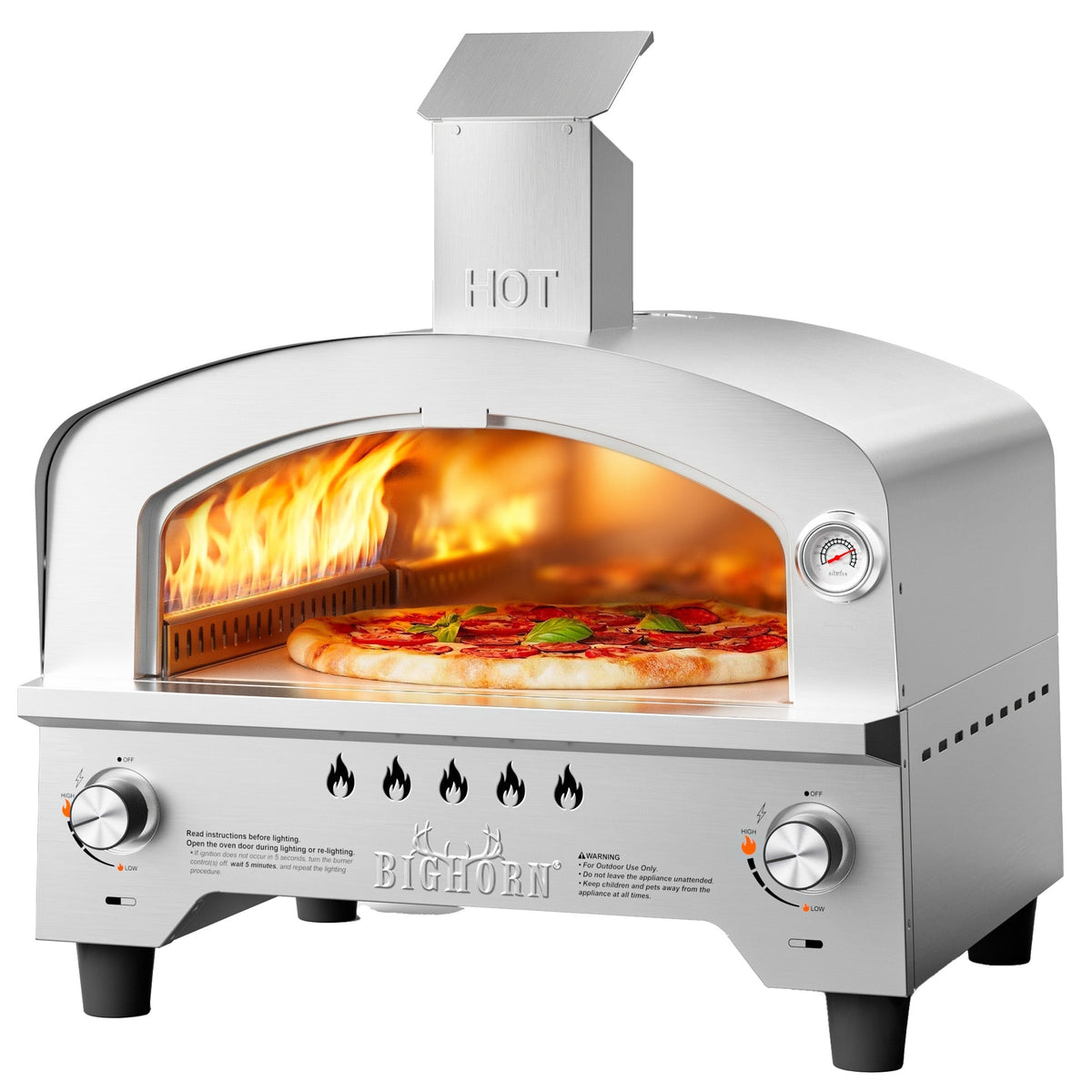
A propane outdoor oven is a gas-fired cooking appliance built for high-heat, outdoor use — the category that includes propane pizza ovens and infrared broilers. It delivers intense, controllable heat without firewood management: connect a propane tank, turn a dial, and cook at temperatures a kitchen oven cannot reach. For cooks who want fast, consistent high heat on a patio or at a campsite, propane is the practical fuel.
What makes an oven a propane outdoor oven
The defining trait is a propane burner as the heat source, usually paired with a heavy stone or emitter for high heat. A propane pizza oven directs flame or radiant heat to bake a pizza stone at 700 °F+, while a propane infrared broiler uses a ceramic emitter to radiate heat directly at the food. What unites them is speed and control: no coals to build, no wood to feed, just a dial and a steady burn.
Why choose propane for outdoor heat
- Speed — gas ignites and climbs to high heat in minutes, not the 20+ minutes of a live fire.
- Control — a dial and thermometer hold the temperature steadily through a cook.
- Convenience — no ash, no firewood storage, and predictable fuel.
- High ceiling — gas pizza ovens reach roughly 750 °F and propane infrared broilers up to 1500 °F, covering the heat window real crusts need.
Those four traits are why propane ovens suit weeknight cooks, group bakes, and anyone who wants results without a fire-tending ritual.

Where a propane oven fits best
Propane outdoor ovens fit a patio, balcony (where rules allow), or travel setup — anywhere an outdoor appliance can stand. They pair well with a gas-grill household because you already keep propane. For a dedicated pizza or searing station, a propane unit is the fastest path to restaurant-style heat with the least prep, at the cost of storing and connecting a tank.
What types of propane outdoor ovens exist?
Propane outdoor ovens fall into a few families. Pizza ovens use gas to heat a stone and chamber for high-heat baking; infrared broilers use a ceramic emitter to radiate heat directly onto meat and vegetables; and portable camp ovens combine a compact chamber with ease-of-transport. Each family shares the same fuel logic — instant, controllable high heat — and differs mainly in what it is built to cook.
How do you choose the right size?
Size the oven to your guests, not your ambitions. A compact unit with a 12–14 inch deck suits a family and packs away easily; a 15–16 inch unit adds throughput for regular entertaining. Larger ovens take longer to preheat and cost more to buy and store, so match the deck to the number of people you usually feed.
Safety and setup basics
Set a propane oven outdoors on a stable, non-combustible surface with clearance from walls and overhangs. Connect the tank per the manual, leak-check the fitting, and never run it in an enclosed space. Keep the regulator and hose in good condition, and store the tank per local rules. Following the manual’s connection and placement guidance is the entire safety story.
Propane ovens in practice
How does a propane oven compare with a charcoal grill?
Charcoal and propane differ in the same shape as always: charcoal adds smoke and a live-fire ritual but needs time to build coals; propane gives instant, controllable heat with far less effort. For pizza specifically, charcoal struggles to hold the 750 °F+ window steadily, while a propane burner climbs there in minutes and holds it. If flavor and tradition lead, charcoal deserves a place; if consistent high heat is the goal, propane is the more reliable tool.
What kind of patio setup do you need?
A propane oven needs a stable, non-combustible surface with clearance from walls and overhangs, and a logical spot for the tank and hose. Keep the hose route out of walkways and away from direct heat, and leave space for a landing board and peel. Many households already have a propane tank for a gas grill, which is the cheapest setup of all — the oven draws on the same fuel supply.
Why does preheat speed matter for everyday cooking?
Preheat speed is the difference between pizza being a planned event and an on-demand dinner. A propane oven that reaches high heat in 10 minutes shifts the whole rhythm — you can decide to cook the same evening after work, rather than planning an hour ahead as you would with live fire. That convenience is the core reason propane ovens suit busy households.
How do you maintain a propane outdoor oven?
Maintenance is small and regular: check the hose and regulator for wear before each session, keep the burner area clear of drips, and brush the stone or emitter when cool. Cover the unit between uses and store the tank per local rules. A propane oven that is checked and kept clean starts reliably for years.
Is a propane oven safe on a wood deck?
Yes, with a heat-rated mat or a stable metal cart underneath and proper clearance from railings and overhangs. The oven body gets hot, so protect combustible surfaces and never place it directly on bare wood without protection. Follow the manual’s clearance guidance.
Why is propane popular for outdoor cooking?
Propane is popular because it removes the two hardest parts of live-fire cooking: getting the fire started and holding a temperature. A propane burner is on in seconds and holds a set heat by dial, which suits everyone from a beginner who just wants a good pizza to a host who needs a steady bake for a crowd. The fuel is widely available, and a single tank powers a long session or several short ones.
What should you check before the first cook?
Before the first cook, read the manual’s assembly and connection steps, confirm the regulator and hose fit, and leak-check the connection with soapy water. Then run a dry preheat with no food to check ignition and smoke-off. That ten-minute routine turns a new propane oven into a predictable one.
How much propane does a session use?
A typical pizza session on a compact propane oven draws from a 20-pound tank at a modest rate; depending on heat setting and cook time, a tank commonly lasts for multiple sessions, though high continuous heat uses more. The practical pattern is to confirm the tank is full before hosting, and keep a spare cylinder for long events. Fuel gauges and weighing the tank are more reliable than guessing.
Propane outdoor oven FAQs
Is a propane oven better than wood-fired?
It depends on what you value: propane is faster and easier; wood adds smoke flavor and ritual. If consistency and convenience lead, propane wins; if flavor and ceremony lead, wood does.
Can I use a propane outdoor oven indoors?
No. Propane units are for outdoor use in a ventilated area. Do not run them in garages, tents, or enclosed spaces.
How hot does a propane pizza oven get?
Models vary; the Big Horn 15-inch gas oven reaches about 750 °F, and propane infrared broilers reach up to 1500 °F. Confirm the spec on the product page.
To compare the current propane pizza oven options, review the pizza oven collection and confirm specs before you buy.