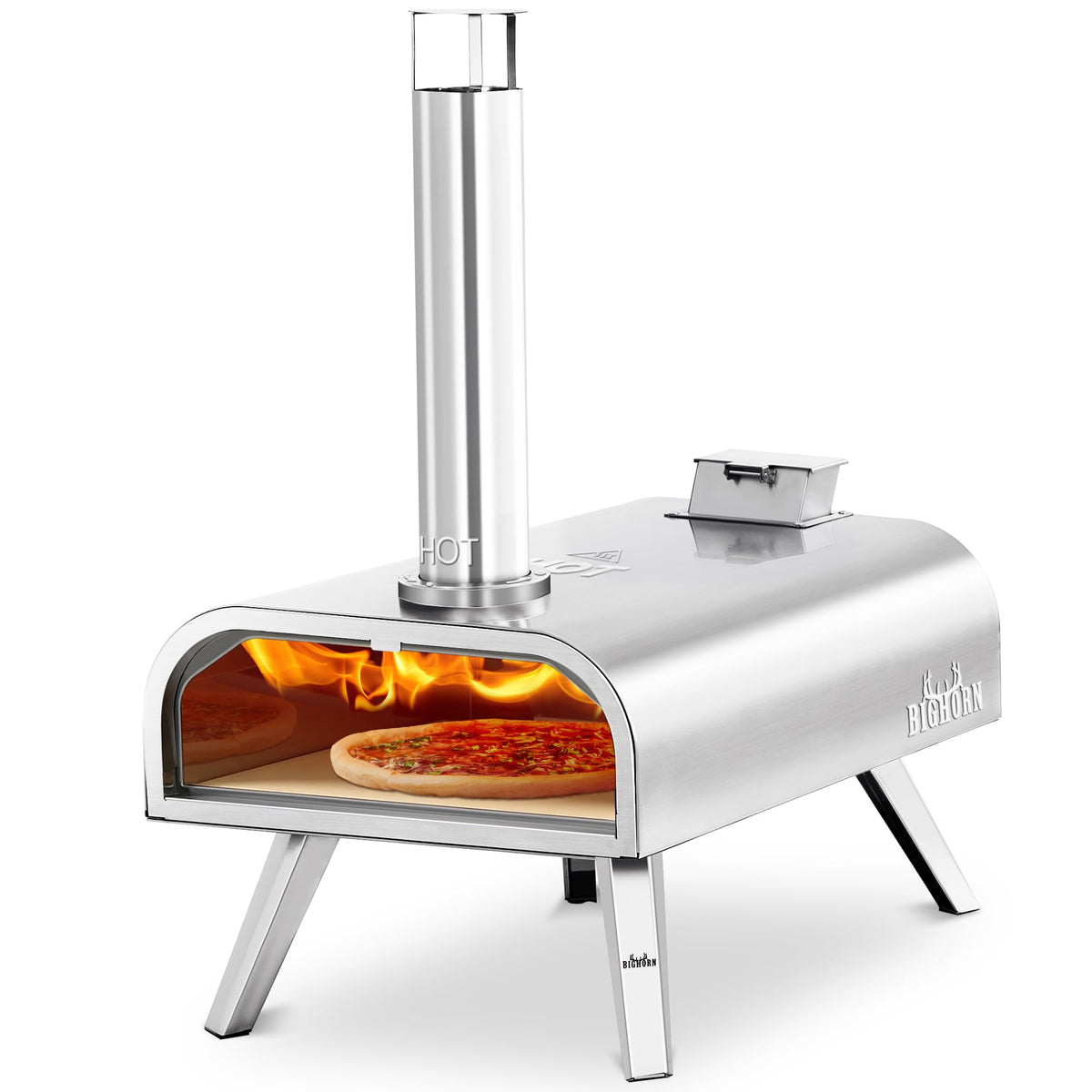
Leopard spotting — the uneven dark patches on a Neapolitan-style rim — comes from baking at high heat with a fully saturated stone and a steady fire, not from luck. On a 16-inch pellet oven, you get it by preheating the stone completely, launching a lightly topped pizza, and letting the intense overhead heat blister the rim before the base over-sets. The 16-inch deck’s larger surface and higher peak heat make the leopard pattern easier to achieve than on a smaller oven.
What creates leopard spotting
Leopard spotting is a surface-browning event: intense radiant heat from the dome hits the dough’s exposed rim, vaporizing moisture and charring the high points in patches while the lower areas stay lighter. The pattern forms only when the stone is hot enough to set the base quickly and the overhead heat is intense enough to blister the rim — both conditions a pellet oven reaches when fully preheated. If the bake runs too long or the heat is uneven, the spotting turns into heavy char instead of a clean leopard pattern.
Preheat is the foundation
Nothing creates leopard spotting on a cold stone. On the 16-inch Big Horn pellet oven, give the stone a full preheat (about 15 minutes) and confirm it with a thermometer or the oven’s heat indicator. The stone must hold baking temperature, not just the air. A saturated stone sets the base fast, which lets the rim spend its short bake in the radiant zone instead of waiting for the base to cook.

Dough that can take the heat
Leopard spotting needs dough that puffs without tearing: a well-fermented dough at 60–65 percent hydration that stretches thin and holds an airy rim. Under-proofed dough goes dense and will not blister; over-proofed dough collapses. Hand-stretch to preserve the gas in the rim, keep the center thin, and use light toppings so nothing steams the surface before the heat can char it.
The bake and rotation
Bake at high heat for 60–90 seconds, rotating once partway through for even browning. Watch the rim: leopard spots appear as the high points char while the dough puffs. Pull the pizza the moment the pattern reads and the base is set — leaving it too long turns the spots into heavy char. The 16-inch deck’s turning room helps you rotate without crowding the firebox edge.
How fire management shapes the spotting
The character of the spotting tracks the fire. A lively, well-fed pellet fire produces sharp, clean leopard spots as the flame rolls across the dome; a weak fire yields pale, flat rims with no char. Feed pellets in small, regular additions so the fire stays energetic but not roaring, and avoid opening the oven repeatedly, which lets the heat escape mid-bake. The fire is the brush that paints the spots, so manage it with intent rather than letting it fade.
Why the 16-inch model helps
The 16-inch deck gives two practical advantages for leopard spotting. The larger stone holds heat longer, so consecutive pizzas see a consistent deck; and the bigger chamber moves the pizza away from the firebox edge, which reduces the risk of a scorched back edge during rotation. That headroom is why the 16-inch model is the easier path to a repeatable, clean pattern compared with a smaller oven.
How to recover when the spotting is off
If the rim comes out pale, the fire was weak or the bake short — feed the fire and check the stone temperature before the next launch. If the spots look like heavy char, the bake ran too long or the dough was over-proofed — shorten the bake and confirm the dough’s fermentation. Keep a small note of what each result looked like and what changed, and the pattern becomes predictable within a few sessions.
Refining the pattern
What dough hydration suits leopard spotting?
A moderately hydrated dough around 60–65 percent gives the right balance: enough moisture to puff the rim into blisters, dry enough to hold shape on the peel. Very high hydration turns sticky and hard to manage at high heat; very low goes dense and will not spot. Keep hydration in that window and hand-stretch to preserve the gas that becomes the spots.
How do you clean the stone for consistent spotting?
A clean, dry stone radiates heat evenly, which is what produces even spotting. Brush the stone when cool to remove ash and residue, and never wash it with soap — soap seeps into the porous surface and affects later bakes. A well-maintained stone bakes consistently, which makes the leopard pattern repeatable instead of variable.
What fire height gives the best spotting?
Leopard spotting follows the energy of the flame rolling across the dome. A lively but controlled fire — fed with small, regular pellet additions — produces sharp, clean spots; a weak fire leaves pale, flat rims. Avoid over-feeding, which pushes the oven past the bake window and chars the base before the rim spots. The goal is a steady, energetic fire that stays within the 60–90 second bake.
How does humidity or cold affect the pattern?
Cold and humid air slow the preheat and can soften the fire, which makes the stone and chamber undershoot their normal heat. Allow extra warm-up time on cool days and confirm the stone temperature before the first launch. Once the deck is saturated, the spotting pattern returns to normal; the environment mainly delays the start.
Why do my consecutive pizzas differ?
Usually because the stone or fire drifted between bakes. Let the stone recover 20–30 seconds between launches, keep the pellet feed steady, and resist opening the oven repeatedly. A recovered stone and a steady fire reproduce the same spotting on every pie in the batch.
Leopard spotting FAQs
Why does my rim char instead of spot?
Heavy char usually means the bake ran too long or the dough was over-proofed. Shorten the bake, keep the toppings light, and rotate earlier so the rim puffs before it burns.
Do I need a 16-inch oven for leopard spotting?
No — a smaller oven can do it, but the 16-inch’s higher heat and turning room make the even, clean pattern easier to achieve and repeat.
How do I know the stone is hot enough?
Confirm it with an infrared thermometer or a long enough preheat that the stone holds baking temperature. If the base is pale, the stone was not saturated.
To confirm the current specs, review the 16-inch Big Horn wood pellet pizza oven product page.