
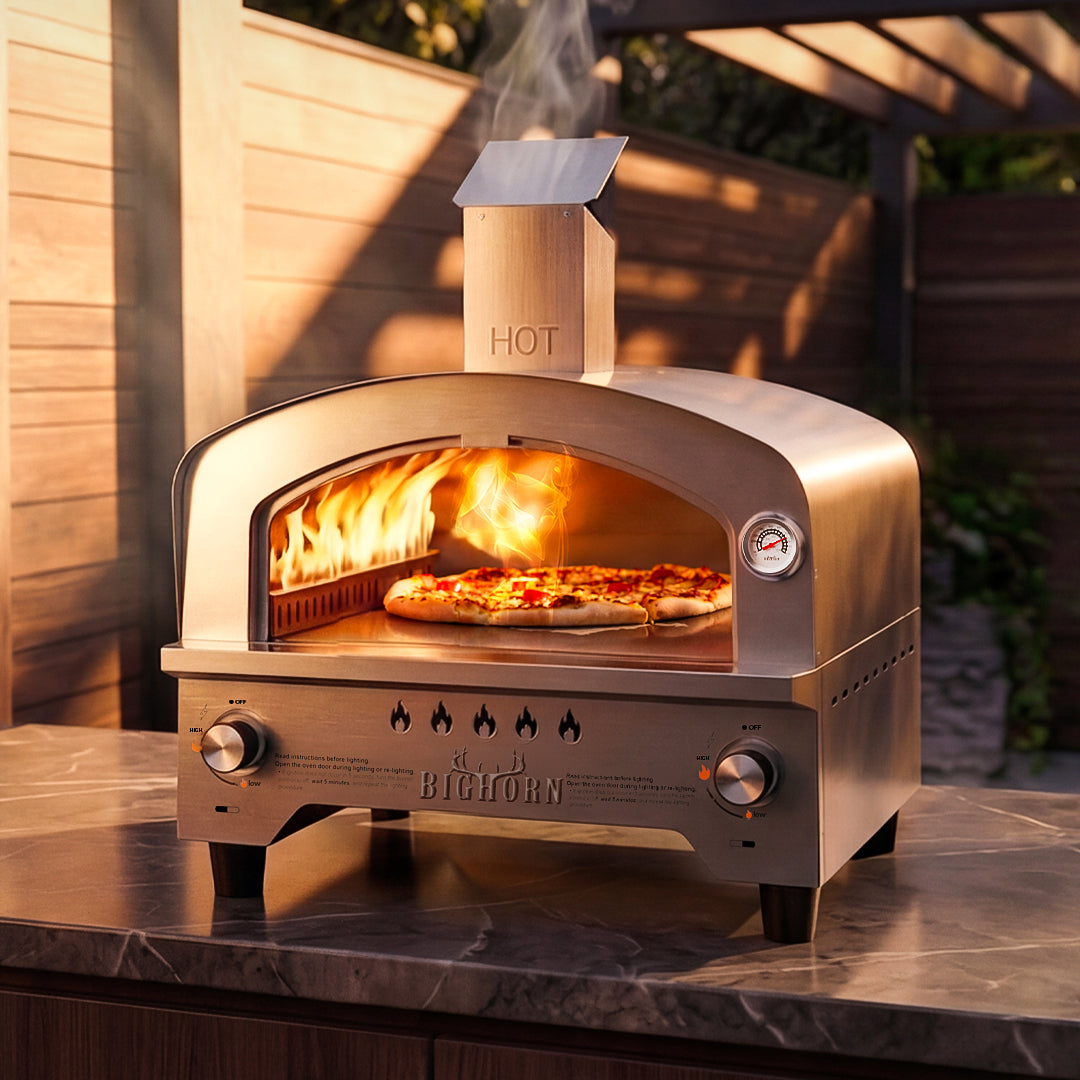
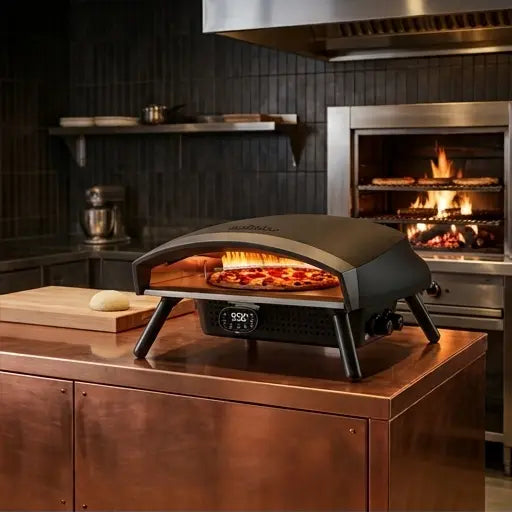
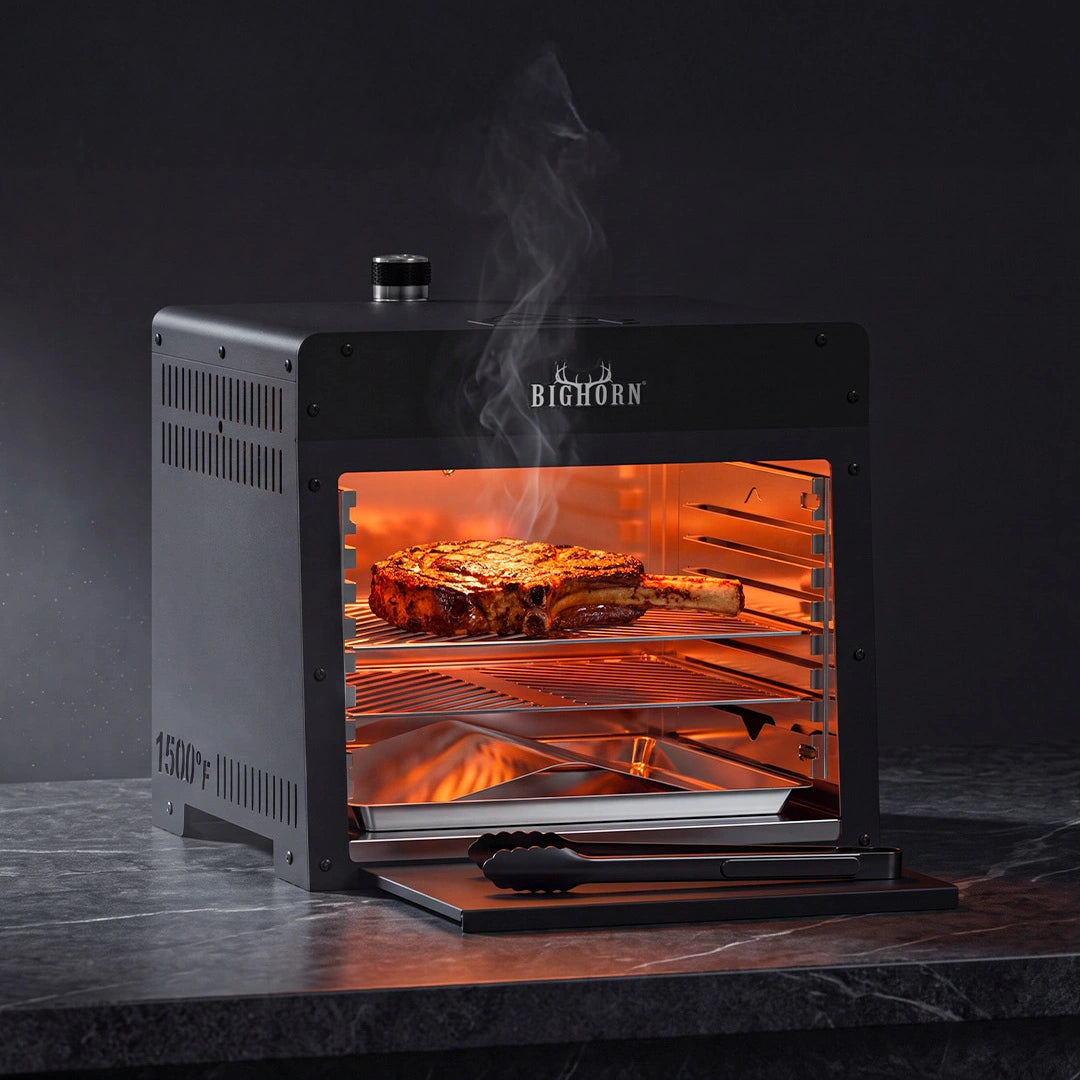
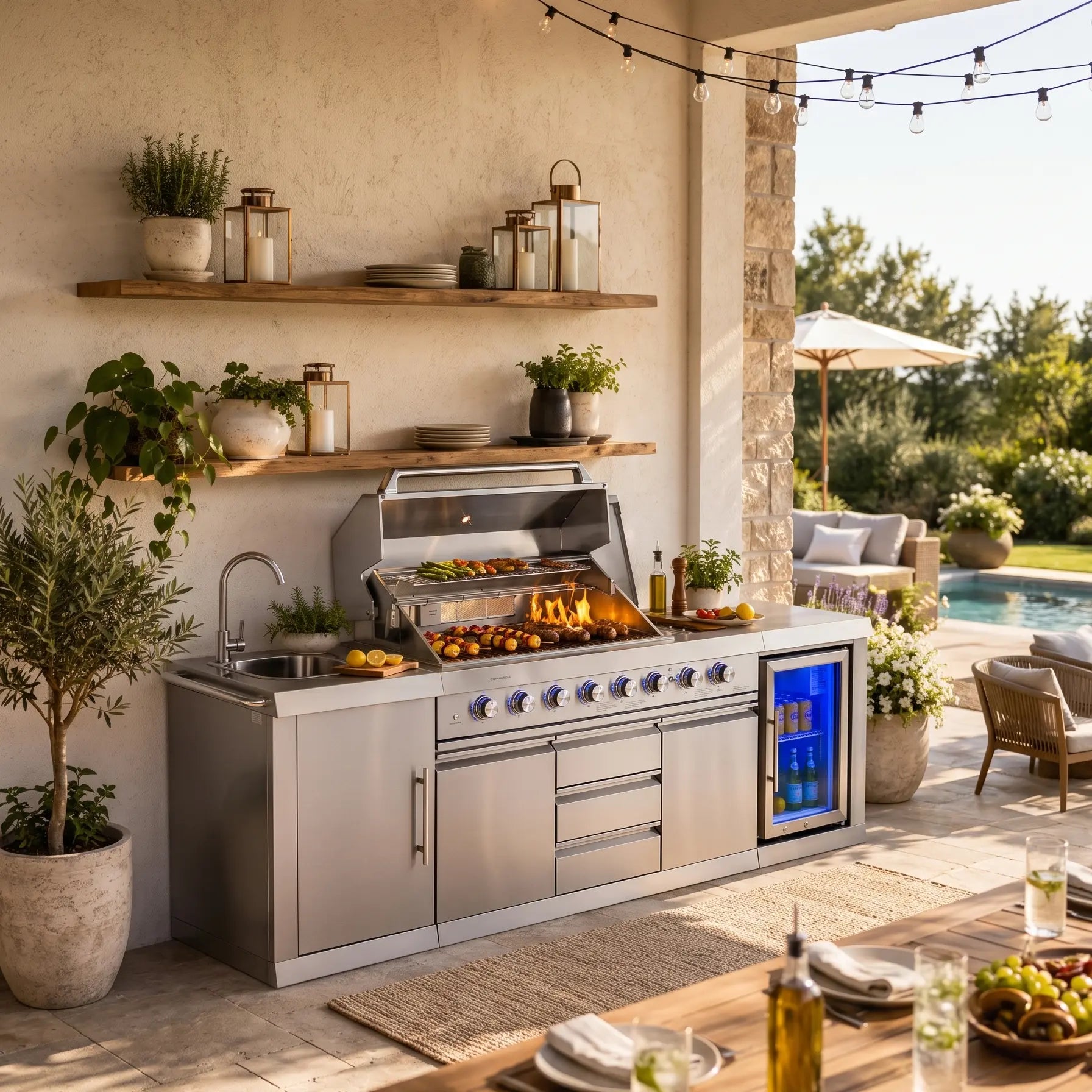
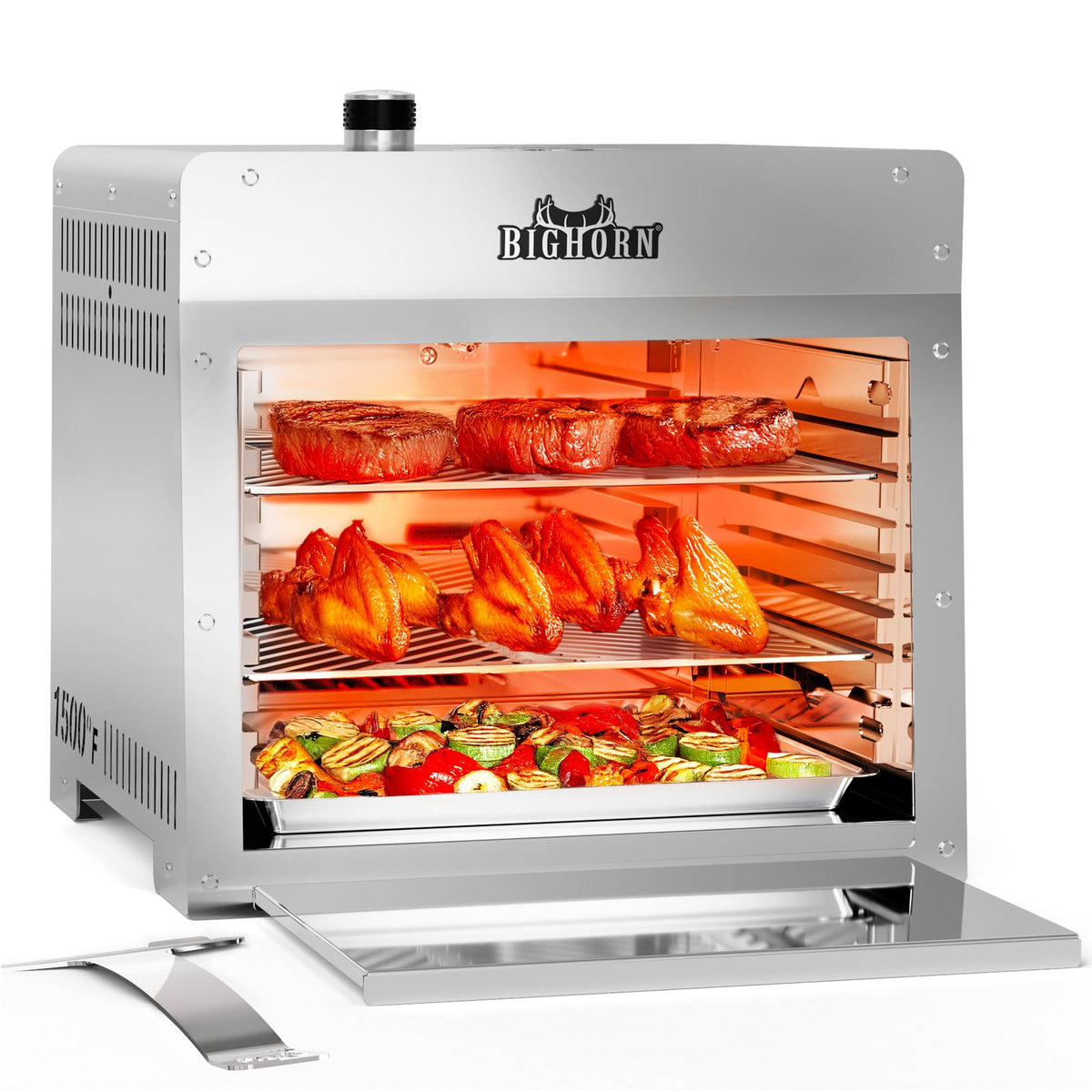
An outdoor broiler — typically a propane infrared broiler — is a compact appliance that radiates intense heat from above, like a restaurant salamander, to sear steak, seafood, and vegetables fast. You need one if your cooking regularly wants a deep, restaurant-style crust and your current grill cannot deliver the heat; you do not if you mainly smoke, slow-cook, or grill large volumes.
What an outdoor broiler is
An outdoor broiler runs on propane and uses a ceramic emitter to radiate heat directly onto the food from above, reaching searing temperatures quickly — often 1500 °F in a few minutes. Unlike a conventional grill that heats from below by hot air, it concentrates energy on the surface, producing a crust in seconds while the interior stays pink. It is a specialist searing tool, not a general-purpose grill.
What it does especially well
The broiler excels at the high-heat window: steaks, chops, seafood, vegetables, and even thin-crust pizza on an included stone. Because the heat is intense and direct, browning happens fast and flare-ups are rare, since the flame is shielded by the emitter. Foods that want a quick, deep sear are exactly what this tool cooks best.
What it does not do
A broiler is not built for low-and-slow smoking, large-capacity grilling, or indirect heat. It sears from above, so you cannot treat it as a full outdoor kitchen. Keep it paired with a grill or smoker for the jobs it cannot handle, and it will earn its space as the searing specialist.

Who benefits most
An outdoor broiler suits steak-focused cooks, apartment dwellers with a small patio, campers, and tailgaters who want restaurant-style results from a compact, portable unit. It also fits anyone who already has a grill for low-and-slow and wants to add high-heat searing without buying another big appliance.
Do you need one?
Ask yourself how often you cook foods that want a hard sear. If steaks, chops, seafood, and quick pizzas are regular, the broiler removes the temperature limit your current grill has. If you mostly smoke or grill in volume, a broiler is an expensive extra. The honest test is your frequency of searing, not the appeal of the feature.
How do you cook on an outdoor broiler?
Dry the food, preheat fully, and use the rack position to control heat: close for a fast sear, lower for a gentler finish. Sear in short bursts near the emitter, then move the food down to finish to temperature. The radiant heat is intense, so watch the surface and pull the moment the crust sets.
What should you look for when buying one?
Check peak temperature, preheat time, burner output, and included accessories — a second grate and a pizza stone add versatility. Confirm the rack has enough positions for fine heat control, and match portability to where you cook. A compact stainless build suits a patio or tailgate; a larger unit is for a fixed station.
How does it handle outdoors in wind?
Radiant heat is less affected by wind than hot air, but wind still cools the chamber and the food surface. Shelter the unit from direct wind and keep the emitter clean so the radiant output stays even. A steady, sheltered setup gives the best searing performance.
How long does a broiler take to preheat?
Most infrared broilers preheat in 3–5 minutes, which is dramatically faster than a charcoal grill or a conventional gas grill. That speed is part of the appeal: you can decide to sear dinner and start cooking almost immediately. Use the preheat window to dry and season the food.
What accessories make it more useful?
A pizza stone, a second grate, and a drip tray extend what the broiler can do. The stone turns it into a high-heat pizza cooker, and a clean second grate keeps a steady sear without a mid-meal scrub. Check what ships in the box before buying accessories.
How do you sear thick steaks without overcooking?
Sear the surface in the close position for a crust, then move the steak to a lower position to finish gently to temperature. The rack is the heat control, so switch zones mid-cook rather than turning the burner down. This sear-then-finish rhythm handles thick cuts without burning the exterior.
What is the ideal setup for a beginner?
Start with a compact, stainless broiler on a stable cart or table, a thermometer, and a good pair of tongs. Dry and season simple proteins, preheat fully, and sear in short bursts. The unit is not complicated; the beginner skill is learning the fast timing.
Can it replace a grill entirely?
Not fully — it excels at searing and broiling but lacks low-and-slow capacity and large grilling surface. Keep a grill or smoker for those jobs, and the broiler becomes a high-value addition rather than a compromise replacement.
How much propane does a broiler use?
Because searing sessions are short, a broiler draws less from a tank than a long grill cook. A standard propane tank supports several sessions, though continuous high heat uses more. Confirm the tank is full before hosting, and keep a spare for longer events — searing is fast, but fuel planning still matters.
Outdoor broiler FAQs
Is an outdoor broiler the same as a grill?
No — it sears from above with radiant heat instead of grilling from below. The style is closer to a restaurant salamander than a backyard grill.
Can it cook for a crowd?
It handles a few servings at a time, like a compact grill. For a big party, pair it with a larger grill or cook in rounds.
How much space does it need?
Very little — it fits a cart or tailgate table with clearance. Its small footprint is one of its main advantages for tight patios.
To see the current specs, review the 16-inch Big Horn infrared broiler product page.