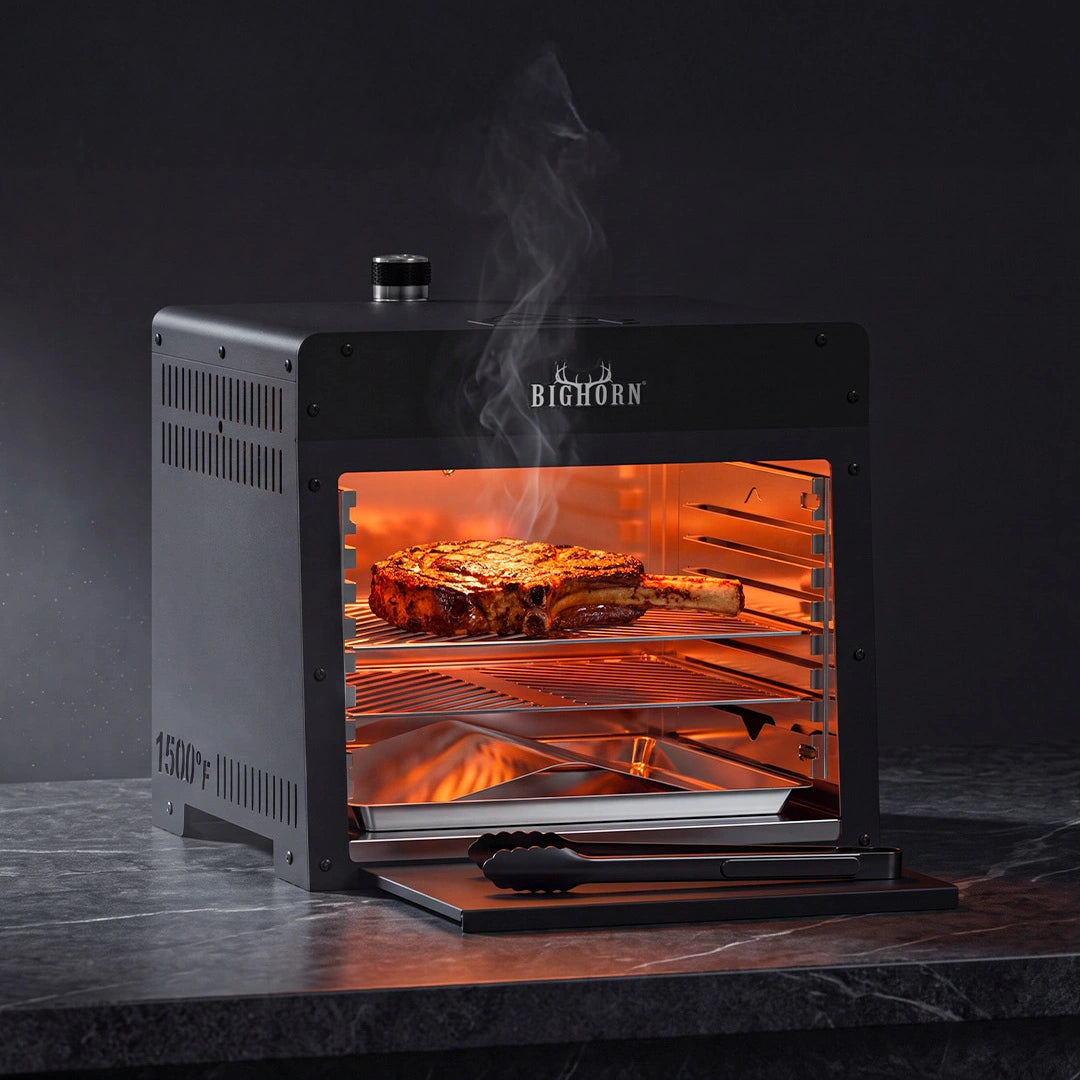
A portable infrared grill is a tabletop propane grill that uses a ceramic emitter to sear food at very high heat — typically around 1500°F in minutes — so you can get a restaurant-style crust at the campsite, the tailgate, or on a small patio. The best portable infrared grill for you is the one that matches how far you carry it, where you set it up, how many people you feed, and how much searing you need. This guide covers what to compare, how to match the format to your cooking, and the packing and cooking habits that make a portable grill worth it.
Big Horn specifications are traceable to the official product listing; current price belongs at checkout.
What actually matters for this decision
- Preheat speed. A portable infrared grill should reach searing heat in minutes — the Big Horn 16-inch model takes about 3–5 minutes to about 1500°F (815°C) on a 19,000 BTU ceramic burner.
- Packed size and weight. It has to fit a trunk, RV cabinet, or carrying bag and stay under a weight you will actually carry.
- Propane connection. Some run on 1-pound cylinders; others accept a larger tank or a hose adapter. Check what your sessions need.
- Stability. On a picnic table or uneven concrete, sturdy feet and a low center of gravity prevent tipping while you flip food.
- Wind behavior. Open sites steal heat; a concentrated radiant output and some shielding help keep the sear consistent.
- Cleanup. Removable grates and a grease tray turn post-sear cleaning into a five-minute job.
Understanding temperature before you decide
The 1500° class is shared by several portable infrared brands, so the number alone does not separate them. What matters is how the grill reaches that heat: burner output, preheat time, and the rack design that lets you move between a searing zone and a finishing zone. The Big Horn 16-inch model uses ten rack positions from a maximum searing heat down to a gentler zone around 450°F (232°C), which is what makes one portable grill able to sear, finish, and bake.
The key factors, ranked
| Factor | Why it matters | What to compare |
|---|---|---|
| Preheat speed | Fast heat is the point of the format | Minutes to searing temp |
| Burner output | Sets how fast and how hot | BTU and burner type |
| Rack positions | Lets one tool sear then finish | Number of positions and heat spread |
| Cooking area | Limits servings per batch | Grate size; pizza stone included? |
| Portability | Defines where you can use it | Weight, packed size, propane connection |
Matching the choice to your situation
If you cook steaks often and want a crust outside the kitchen, a portable infrared grill is the honest fit — it preheats in minutes and sears hard in a compact footprint. It suits campers and tailgaters who want one fast-cooking tool, and apartment or condo cooks with a small patio or balcony (check your building’s rules on propane grills first). It is a weaker fit if you mostly slow-cook or feed a crowd from one grate: a tabletop unit has a compact cooking area, and the format is a specialist searing tool, not a family-sized grill.
What the experts look for
The features experienced infrared users keep coming back to are the ones that show up in long-term use: a stable base, a burner that heats evenly, rack control that actually changes the heat, and cleanup that does not discourage use. Marketing temperatures are secondary to these. If a portable grill sets up fast, sears a steak well on the first try, and cleans up in minutes, the temperature claim has done its job.
Common mistakes and how to avoid them
- Buying on the peak number. Compare preheat, burner design, and rack positions, not the sticker temperature.
- Ignoring the propane connection. A grill that only takes 1-pound cylinders may not fit your camp setup; check the fuel options.
- Choosing a format that does not fit the cooking. A portable broiler will not replace a family cart.
- Skipping the thermometer. At infrared temperatures, a probe is the difference between a crust and a burned edge.
- Not checking building rules. If you grill at an apartment, confirm propane use is allowed before you buy.
Realistic expectations and results
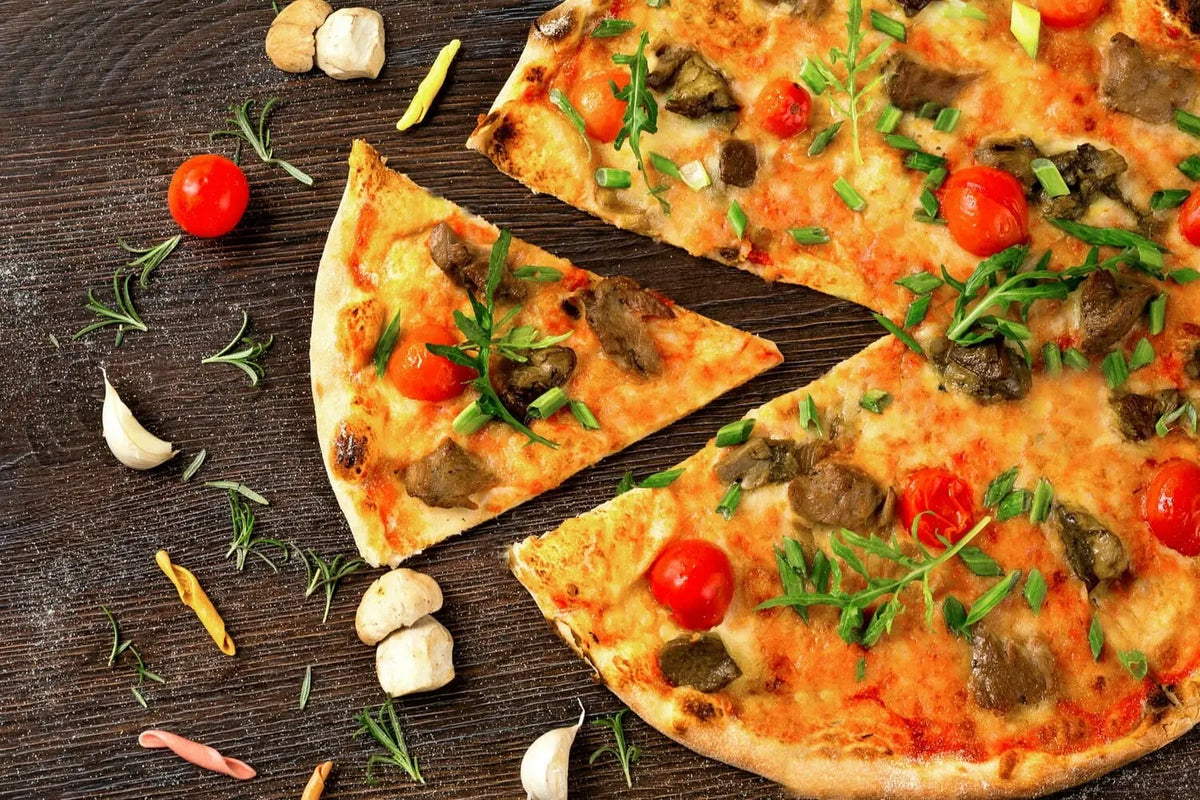
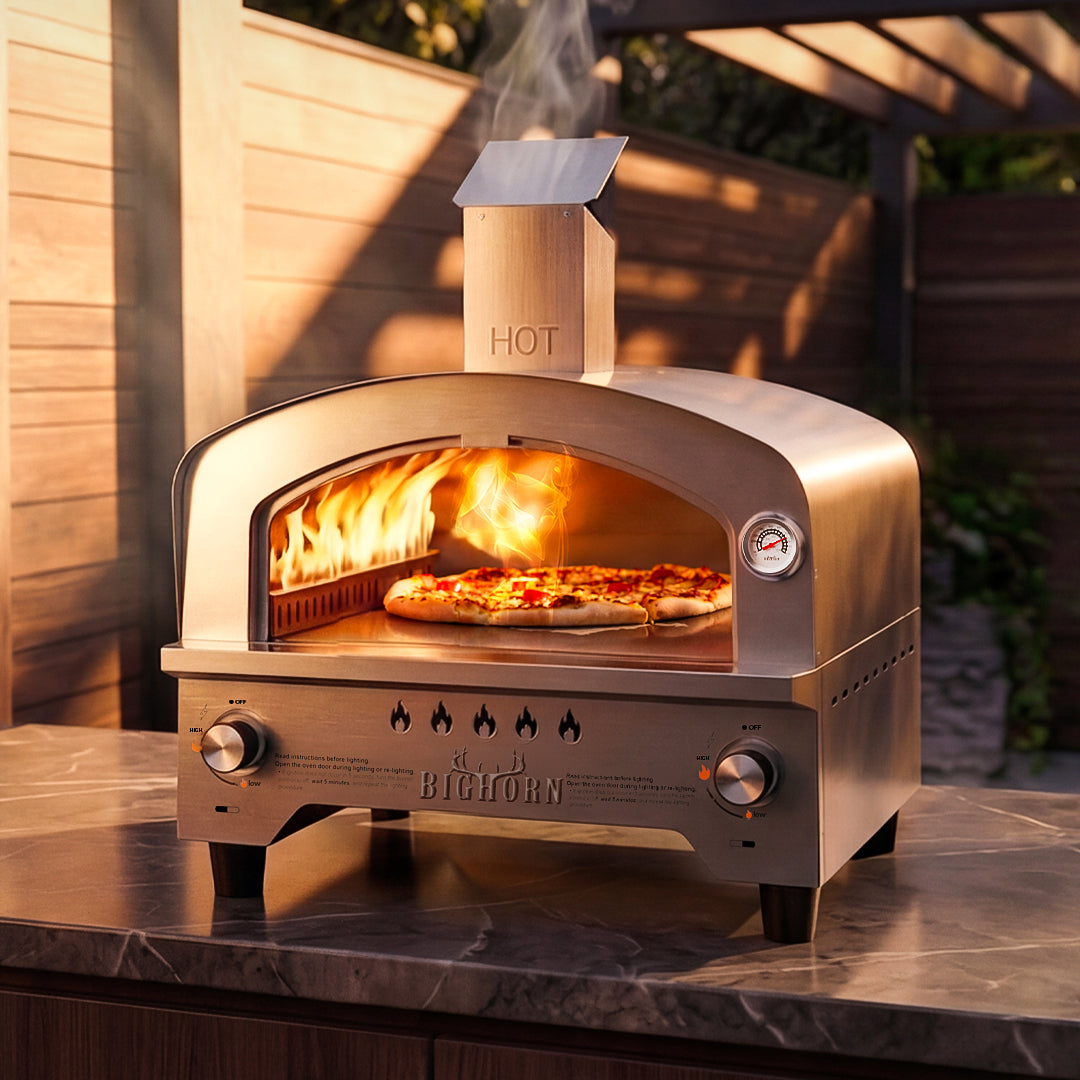
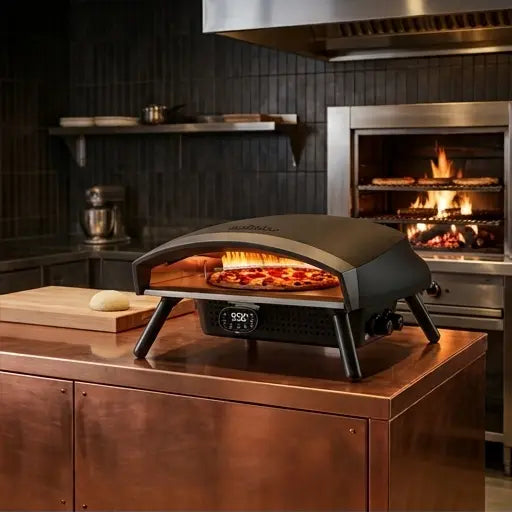
A portable infrared grill delivers the steakhouse sear in a package that fits in the car, with trade-offs you should expect: a compact cooking area, intense heat that demands attention, and no low-and-slow capability. The Big Horn 16-inch model ships with two cooking plates and a pizza stone, so it also bakes small pizzas and flatbreads — more range than a pure searing tool. If your cooking is about the crust and you want it wherever you are, this is the format.

The takeaway in one paragraph
The best portable infrared grill is the one that fits how you carry it and how you cook: fast preheat, a burner that sears evenly, rack positions for finishing, and cleanup you will actually do. The Big Horn 16-inch model hits those points with a 19,000 BTU ceramic burner, ten rack positions, and two plates plus a stone included — a reasonable first infrared grill for campers, tailgaters, and small patios. Match the format to your cooking and verify the current price, and the category delivers what it promises.
See the portable infrared grill and the full collection. Big Horn portable infrared broiler · infrared grill collection
FAQ
Are infrared grills worth it?
Yes for cooks who will use the high-heat searing mode: fast preheat, hard crust, and fewer flare-ups justify the price for steak-heavy cooking. If you mostly smoke or slow-cook, a conventional grill or smoker is the better buy. The value depends on matching the tool to your cooking.
What is the best portable infrared grill?
The best portable infrared grill preheats fast, sears evenly, offers rack control for finishing, and cleans up easily. The Big Horn 16-inch portable broiler fits that profile with a 19,000 BTU ceramic burner, ten rack positions, and two plates plus a pizza stone included; the 21.2-inch dual-burner model adds a wider searing zone.
What can you cook on an infrared grill?
Infrared grills excel at steaks, chops, burgers, seafood, and vegetables that want a fast, dry, high-heat sear. With the included pizza stone, the Big Horn 16-inch model also bakes small pizzas and flatbreads, and the lower rack zone finishes or holds food without charring. It is a searing specialist, not a smoker.
What are people saying about the Big Horn infrared grill?
Big Horn Outdoors does not publish fabricated user quotes; the honest check is the verified-review section on the official product page. The documented value of this guide is the specification level: a portable 1500°F-class broiler with a 19,000 BTU ceramic burner, ten rack positions, and two plates plus a stone included, at a price that should be verified at checkout.