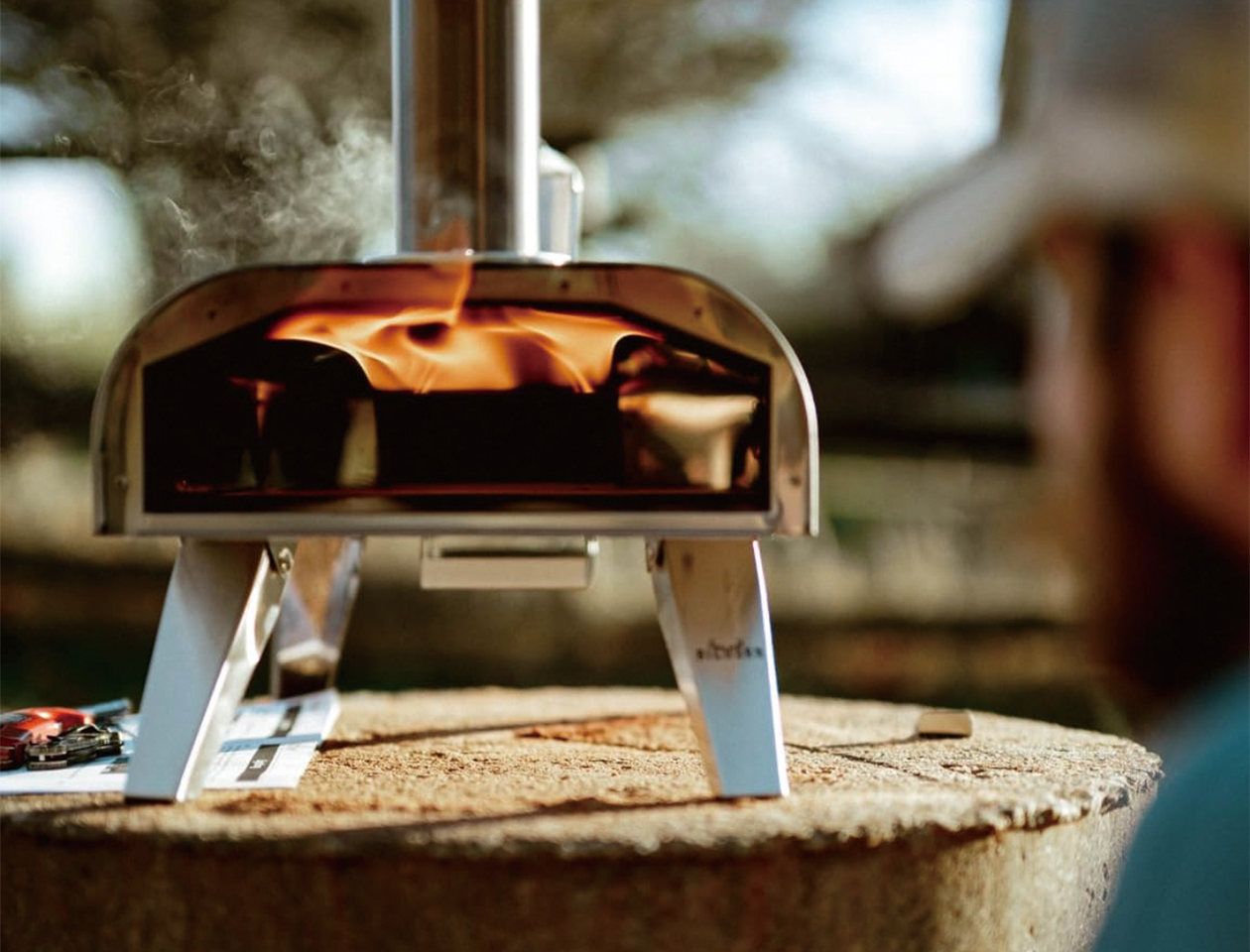
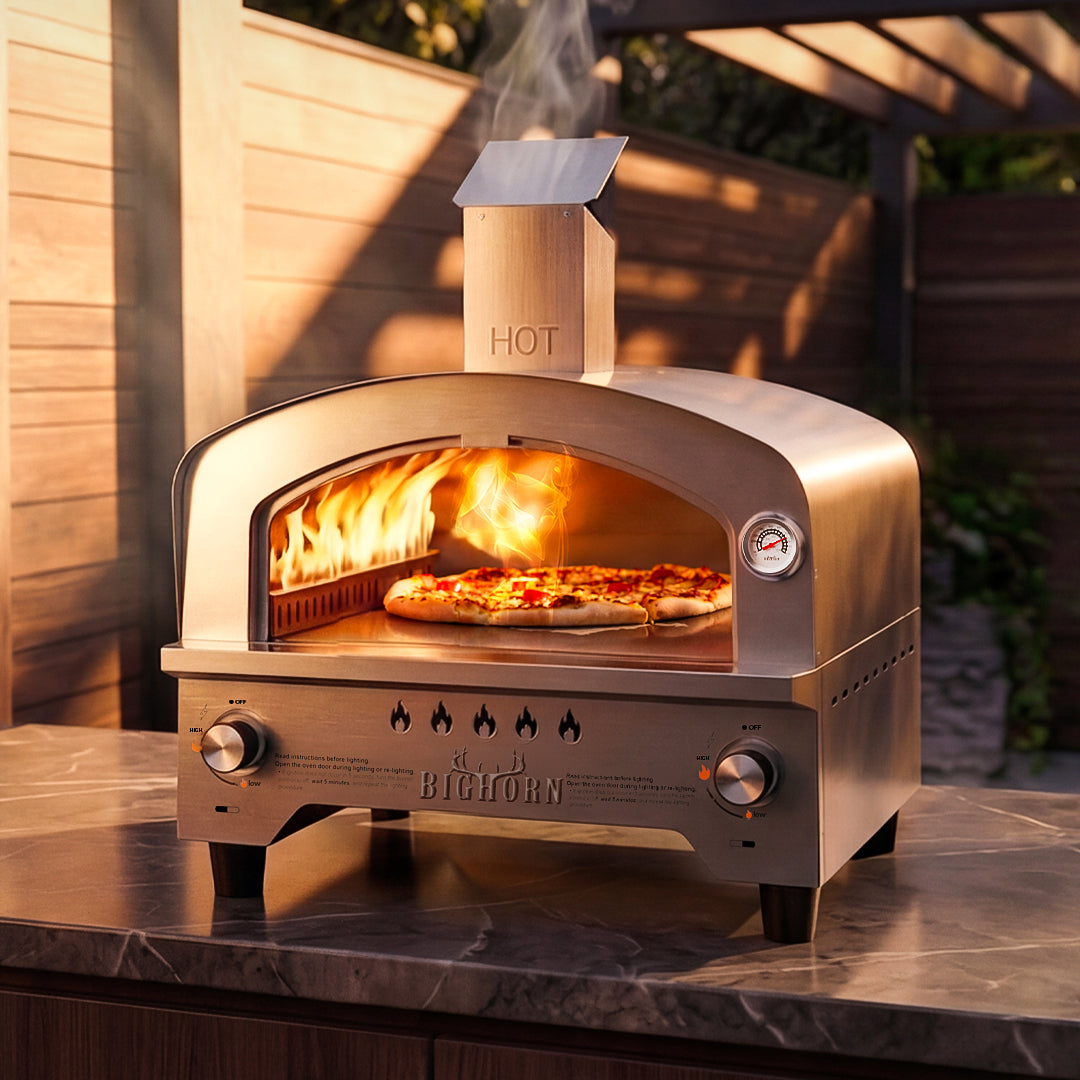
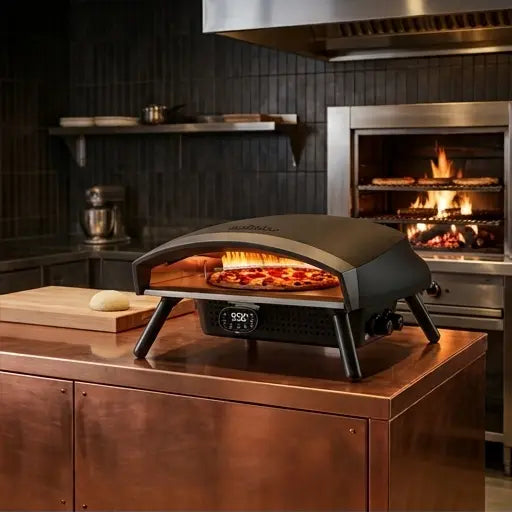
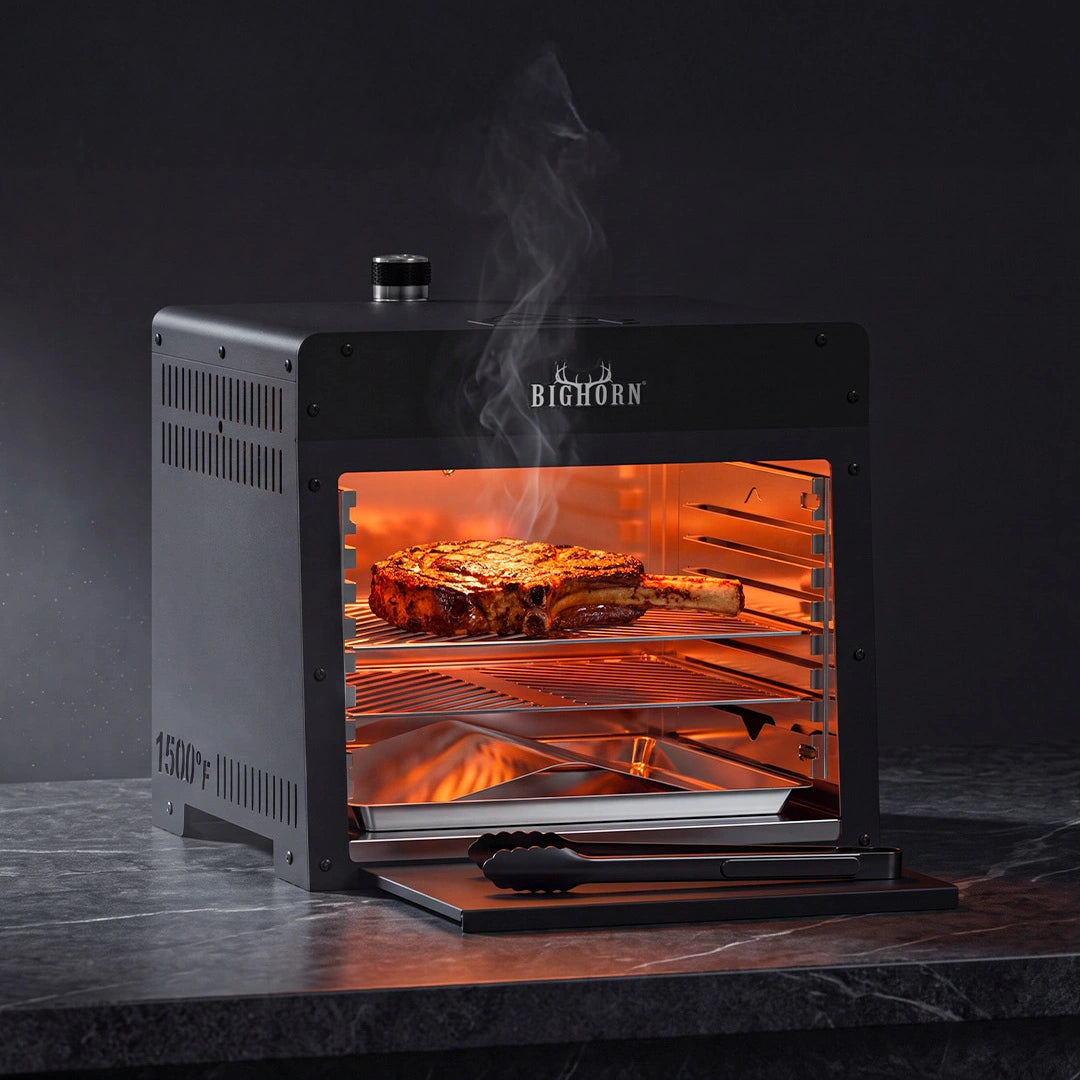
A portable pizza oven is a high-heat oven small enough to move, and the choice is really about where it moves. The same oven that lives on a patio cart for the summer can ride to a tailgate in the fall and a campsite in the spring — but only if its fuel, size and packing make sense for each place. The honest way to shop is scenario first: decide where pizza will happen most, then match the oven's fuel, footprint and pack weight to that spot. This guide walks through what portability actually means, the fuel trade-offs, and how each setup changes the pick. Once the fuel family is settled, the portable gas pizza oven guide goes deeper on hookup, packing and campsite setup for propane models.
What makes a pizza oven portable
Portability is not one feature; it is four working together. Weight decides whether one person can carry the oven comfortably. Size decides whether it fits the car, the trunk, the shelf or the case. Fuel decides whether you can get heat at the destination — a gas oven needs a propane supply, while a pellet oven needs pellets and a way to light them. Setup decides how quickly the oven goes from packed to preheated. An oven that scores on three of the four can still fail in practice: a light gas oven is useless at a campsite with no fuel connection, and a capable pellet oven is a burden if it will not fit in the car. Rank the four by your own trips, not by the catalog.
The second half of portability is protection. Portable ovens travel in cases, padded bags or the back seat, and the ones that survive years of trips are the ones with a protected stone and a body that does not flex in transit. Ask what the oven ships with and what it needs for travel before you compare cooking specs — a great oven that arrives with the stone cracked in the trunk is a great oven you cannot use.
Fuel and logistics tradeoffs
Fuel is the first decision because it is the hardest to change at the destination. Gas ovens preheat fast and cook with steady, adjustable heat, and in North America propane is sold almost everywhere — 1-pound cylinders at hardware stores and campgrounds, refillable tanks at gas stations and exchange kiosks. That makes gas the most convenient tailgate and car-camp fuel, with the caveat that you must carry fuel, connect it correctly and store cylinders properly. Pellet ovens trade that convenience for wood-fired flavor: pellets are light to pack, but the oven needs a clean feed, a fire management rhythm and dry pellets, and it produces ash to clear. Multi-fuel ovens add options — gas and electric accessories on a pellet body, for example — at the cost of extra parts to carry and store.
Think about the trip length and the fuel supply. A weekend tailgate with a cooler full of 1-pound cylinders is easy; a week of campsite pizza needs more fuel than you want to carry, so plan a refill point or choose a format that sips fuel. Pellet logistics are the mirror image: pellets are easy to pack in bulk, but the oven's appetite depends on how hot and how long you cook. Write the fuel plan before you buy: where the fuel comes from, how much the trip needs and where it is stored in the car. The oven with the best specs loses to the oven with the workable fuel plan.
The fuel choice also sets the cooking rhythm. Gas gives the cook a consistent stone temperature from the first pizza to the last, which matters when you are feeding a group in sequence; pellet and wood modes reward a cook who enjoys managing the fire and wants the flavor that comes with it. If the decision is close, think about cleanup and cold starts too — gas is ash-free and lights in a minute, while pellet mode needs pellets loaded and a fire established before the stone comes to temperature. Neither is better, but the match between fuel and your patience for setup is a real part of the choice, especially at a campsite where the evening has a schedule.

Weight, size and packability
Weight and size are the numbers that separate a patio oven from a travel oven. Read the packed weight and dimensions on the product page and compare them against your car's trunk or hatch opening — and remember the oven rarely travels alone. The kit adds a peel, fuel, a case or bag, a table or stand and possibly a cover, so the real payload is the oven plus its support gear. A 12-inch class oven is the sweet spot for car travel because the oven, fuel and tools fit in one tub; a 16-inch class oven cooks bigger pies but claims more trunk space and asks more of whoever lifts it.
Packability is about shape as much as weight. An oven with folding legs packs flatter than one with fixed legs; a removable stone packs safer than a built-in stone that takes every bump; an oven with a carrying handle is easier to move than one designed to be gripped around the body. If the oven lives in a case, measure the case, not the oven, when you plan the car. The rule is simple: the oven you can pack without stress is the oven you will actually take, and the one that needs a Tetris session every trip slowly stops leaving the house.
Plan the destination surface at the same time as the packing. A portable oven needs a stable, level, heat-safe table or stand wherever it lands — the tailgate of a truck works for some models, while others need a proper stand or cart. If the oven does not include legs or a stand, add one rated for the oven's weight to the kit, and check that it folds or stores with the rest of the gear. A great travel oven is only as portable as its weakest link, and the missing table is the reason many portable ovens end up living on the patio instead of the road.
Setups: patio, tailgate, campsite
| Scenario | Fuel that fits | Space / packing notes | Format sweet spot |
|---|---|---|---|
| Patio / backyard | Gas or pellet | Lives on a cart or table; no packing limit | 12–16 inch, any fuel |
| Tailgate / driveway | Gas (fast, steady) | Short carry from vehicle; 1-lb cylinders easy | 12–15 inch gas |
| Car camping | Gas or pellet | Fits trunk kit; fuel carried or refilled | 12-inch class, case-friendly |
| Multi-night trip | Depends on refuel point | Fuel weight is the real limit | Format with planable fuel supply |
Match the table to your most common scenario, then let the second scenario break ties. A patio-first cook with occasional tailgates should optimize for cooking size and let the tailgate accept a slightly heavier oven; a camp-first cook should optimize for pack weight even if the patio nights are slightly less grand. The mistake is buying for the once-a-year trip — the big party, the dream campsite — instead of the weekly reality, and then living with the wrong compromise all season.
Gear that makes portability work
The support gear decides whether a portable oven feels portable. A peel sized to the stone is non-negotiable; a case or padded bag protects the oven and stone in transit; a small table or stand rated for the oven's weight gives the cook a stable surface at the destination; a cover protects the oven when it waits out the weather between trips. Add a fuel kit matched to the format — a hose-and-regulator set for tank gas, spare cylinders for canister gas, or dry pellets in a sealed container — plus a brush for the stone and a cutting board for finished pies. Pack all of it into one labeled tote so the destination setup is unpack, connect, preheat, cook.
Two small habits keep the kit working. First, cool the oven completely before packing — a hot stone packed into a case is how stones crack and cases melt. Second, check the kit before each trip: stone intact, fuel supply sufficient, burner and connections clean, peel and brush accounted for. A portable pizza oven is only as good as its last packing job, and the ten-minute pre-trip check is what keeps the pizza night from ending at a campsite with a cracked stone and no peels.
Choosing your scenario first
Choose the scenario before the oven. If the answer is "mostly patio, sometimes tailgate," look at the 12- to 15-inch gas and multi-fuel formats that move easily and preheat fast; if the answer is "campsite weekends," favor a 12-inch class oven with a case and a fuel plan that matches the trip. Big Horn's portable family covers the range — the 12-inch wood pellet oven for wood-fired travel, the 15-inch dual burner gas oven for fast tailgate and patio cooking, and the 12-inch triple-fuel oven for cooks who want pellet, gas and electric options in one body — all collected in the portable pizza oven collection.
Verify the packed weight, dimensions and included accessories on the product page, write the fuel plan for your most common trip, and pick the oven that disappears into the car instead of dominating it. Done that way, "portable" stops being a marketing word and becomes the reason pizza night happens wherever you are.
Product details and prices in this guide were verified against official Big Horn Outdoors listings during the September 5, 2026 review; re-check prices and availability at checkout.