The difference between a pizza stone and a pizza steel comes down to how each material handles heat. A stone — typically cordierite or ceramic — absorbs heat slowly and releases it steadily, which suits longer bakes and high-heat ovens. A steel conducts heat much faster and more aggressively, which gives a quick, crisp bottom in a home oven but can over-brown in an oven that already runs very hot. The right choice depends on your oven type and the crust you want, not on which material is "better" in general.
How the materials differ
Stone and steel both work by storing heat and transferring it to the dough, but their thermal behavior is very different. Steel is an excellent conductor: it pulls heat from the oven and pushes it into the dough quickly, producing a dark, crisp bottom in a shorter time. Stone is a better insulator and heat reservoir: it takes longer to come up to temperature, holds that heat steadily, and releases it more gently. For a fast, aggressive bottom crust, steel wins; for a steady, even bake that does not scorch, stone is often the better match.
Choosing by oven type
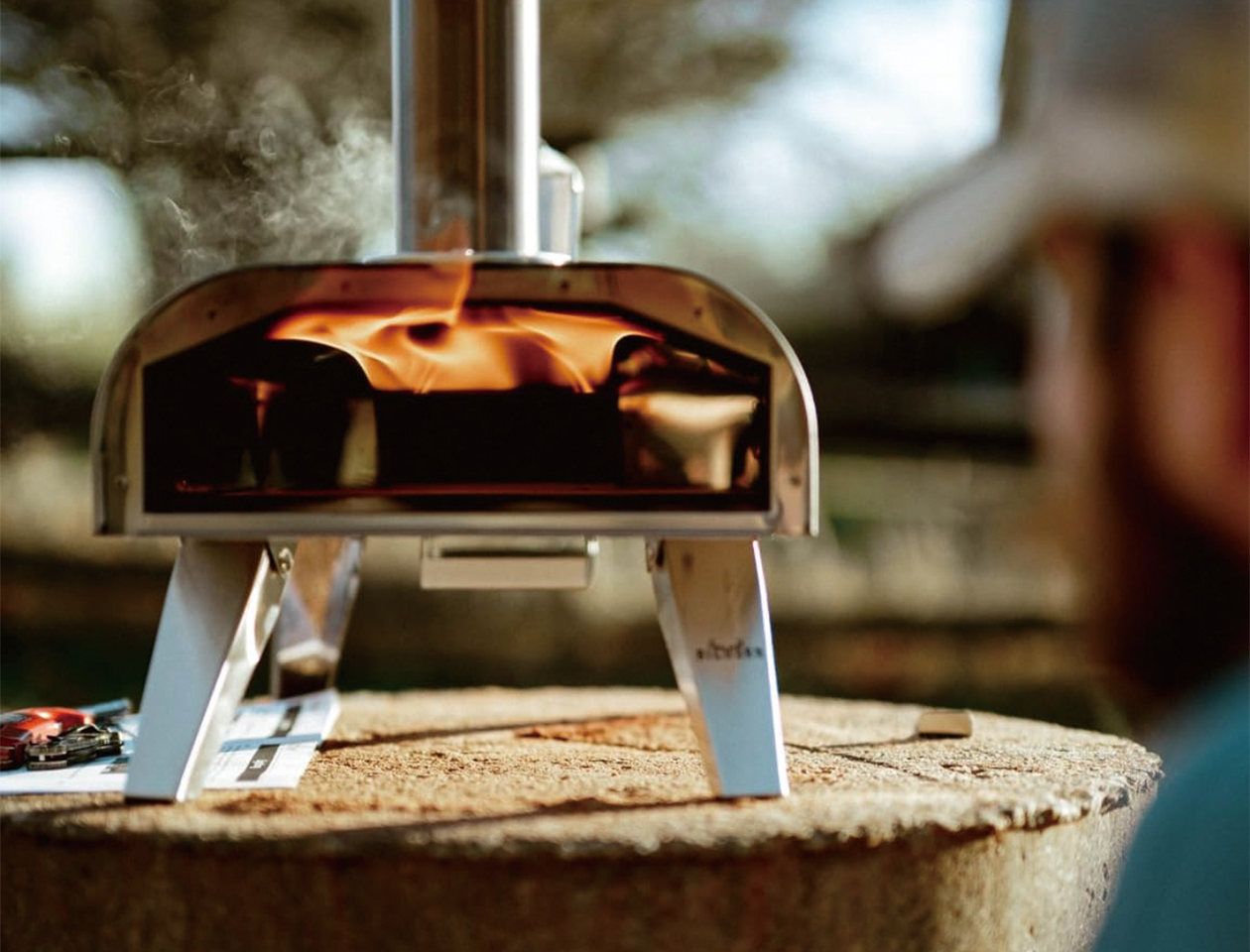
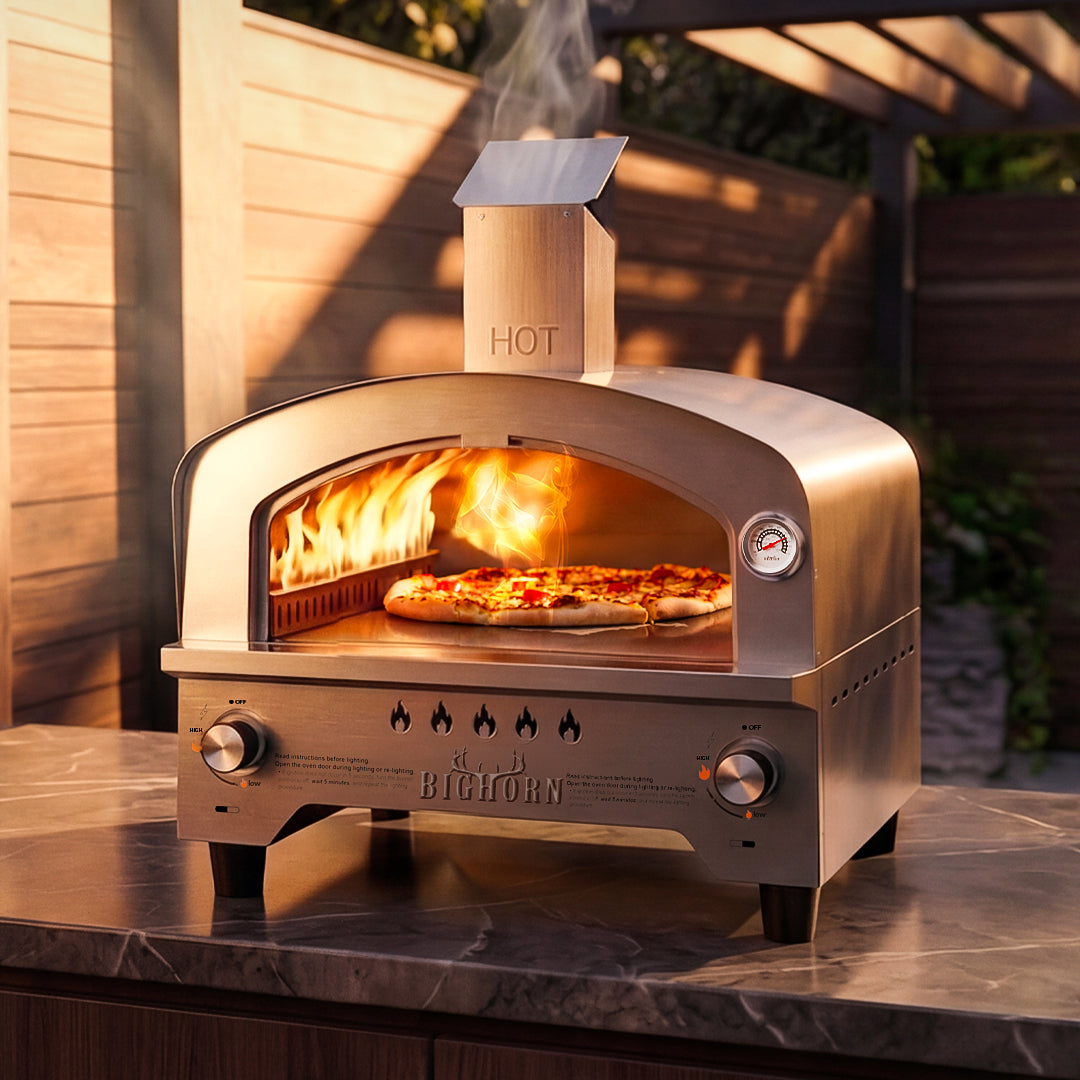
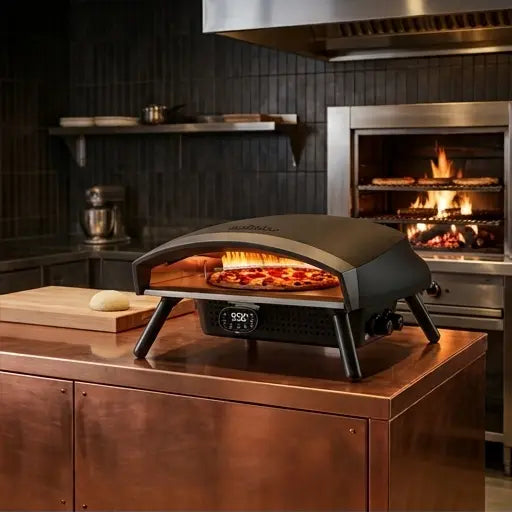
The oven changes the recommendation more than anything else. In a standard home oven that tops out around 500°F, steel is the popular choice because it compensates for the moderate heat — it delivers the intense bottom heat a home oven cannot otherwise produce. In a dedicated pizza oven that runs at 700°F or higher, steel can over-brown the bottom before the top finishes, so a cordierite stone is usually the better surface. If you bake in a countertop electric pizza oven with its own stone, the built-in surface is already matched to that oven; adding a steel insert can change the bake unexpectedly. Match the surface to the heat, not the other way around.

Thermal behavior in practice
Preheat differences are the practical proof. A stone needs a longer preheat — often an hour in a home oven or the full warm-up in a pizza oven — because it must absorb heat through its mass. A steel comes to temperature faster but can lose heat quickly when cold dough lands on it, so it still benefits from a full preheat. In a pizza oven, the stone is part of the oven's design: it soaks heat during the warm-up and releases it through back-to-back bakes, which is why high-heat ovens are built around stones rather than steels. Understanding the preheat requirement prevents the most common disappointment: launching onto a surface that has not had time to store heat.
Sizing to your oven
Whatever material you choose, size it to the oven. Measure the interior width, depth and height, and choose a surface that leaves room for air to circulate and for the pizza to launch and rotate. A stone or steel that touches the oven walls can crack or create hot spots, and one that leaves too much gap wastes heat. For a 12-inch pizza, a surface at least 14 inches wide gives launch margin; larger pies need a correspondingly larger surface. Confirm the product listing's dimensions against your oven before buying, because "fits most ovens" is not a measurement.
Cracking causes and care
Stones crack for predictable reasons, and most are avoidable. Thermal shock is the main cause: putting a cold stone into a hot oven, or a hot stone into water, stresses the material and can crack it. Let the stone heat and cool with the oven, never pour water on a hot stone, and support it evenly so it does not flex. Cracks from normal use are sometimes unavoidable — stones are consumable surfaces — but avoiding thermal shock extends their life dramatically. Steel does not crack the same way, but it can warp if heated unevenly or rust if stored damp; season it lightly and keep it dry.
Cleaning each surface
Neither surface should be washed with soap. Brush crumbs off a cool stone and scrape burnt residue gently with a tool your manual approves; the stone is porous, and soap soaks in and flavors future pizzas. Steel can be wiped with a damp cloth and re-seasoned with a light coat of oil, but avoid soaking it. Both surfaces should be completely dry before the next use, and both are best stored flat where they will not be knocked. A stone that has absorbed years of bakes develops a seasoned character; a steel that is kept oiled stays smooth and rust-free.
Big Horn's 12-inch cordierite pizza stone is designed for high-heat pizza ovens and grills, and the accessories collection keeps stones and related tools together. Choose stone for high-heat ovens and steady bakes, steel for moderate home ovens that need a crisper bottom, and size whichever you pick to your actual oven.
When to replace each surface
Both surfaces wear out, and knowing the signs saves a ruined bake. Replace a stone when it cracks all the way through, chips badly or warps enough that pizzas no longer sit flat; hairline surface cracks from normal use are often harmless, but a structural crack or a piece that has broken loose is a replacement signal. Replace or retire a steel when it warps severely, rusts through or loses its flatness, because an uneven surface bakes unevenly no matter how hot the oven. Neither surface needs replacing for stains or darkening — those are seasoning, not damage. When a surface stops baking evenly despite proper preheat, inspect it closely before assuming the oven is at fault.
Buying tips for either material
When you shop, compare thickness and material quality, not just price. A thicker stone stores more heat and resists temperature swings better than a thin one; a thicker steel delivers more aggressive bottom heat. Check the material label — cordierite is a common high-quality stone material, while "ceramic" can mean anything from fine to fragile. Confirm the surface fits your oven with margin, and read reviews for cracking or warping reports on the specific product rather than the brand. A good surface is a long-term purchase that outlasts several bags of flour, so buying the right thickness and material the first time saves money.
Testing your surface
The fastest way to learn whether your surface is working is a controlled test: preheat fully, launch a simple pizza, and read the bottom crust. If the bottom is pale and doughy, the surface was not hot enough or needs more preheat. If the bottom is burnt while the top lags, the surface is delivering more heat than your oven's air can match — a sign to switch material or lower the oven setting. If the bottom is evenly browned and crisp, the match is right. Run the same test after changing materials, and you will know empirically which surface suits your oven instead of relying on forum opinions.
Finally, remember that the surface is one part of the bake. Dough hydration, sauce moisture and launch technique all affect the bottom crust, and no stone or steel can fix a dough that is too wet or a pizza launched onto a cold surface. Use the surface test to isolate the variable, fix the surface first, then adjust the dough. When the surface and the dough are both right, the bottom crust follows — and that is the goal of choosing between stone and steel in the first place.
One note for owners of dedicated pizza ovens: if your oven came with a built-in stone, treat that surface as part of the oven's design and replace it with the same type when it wears rather than swapping in a steel. High-heat pizza ovens are engineered around their stone's heat behavior, and changing the surface changes the bake in ways the oven was not tuned for. The stone-versus-steel decision is primarily for home ovens and for cooks choosing an accessory; in a dedicated pizza oven, matching the replacement to the original is the safer path.
Product details and prices in this guide were verified against official Big Horn Outdoors listings during the September 5, 2026 review; re-check prices and availability at checkout.