A pizza oven can roast a whole chicken, but only if you fight the oven's instinct: pizza ovens run hot and direct, while chicken needs gentler, indirect heat long enough to cook through without burning the skin. The method that works is simple in concept — place the bird away from the direct flame, manage the oven's lowest heat, and roast until a probe reads 165°F in the thickest part of the thigh — and takes practice in execution. This guide covers spatchcock versus whole bird, how to create indirect heat in a small oven, the seasoning and prep, and the resting step that finishes the roast.
Can a pizza oven roast a chicken?
Yes, with the right technique, because a pizza oven is really a small, very hot oven — and heat is heat if you can control where it lands. The challenge is that pizza ovens are designed for a short, blazing bake, while a whole chicken needs a longer, cooler cook: the skin should render and crisp gradually, and the interior needs time to reach 165°F without the outside burning first. The solution is indirect heat: place the chicken as far from the flame or burner as the oven allows, run the oven at its lowest usable setting, and use the residual heat of the stone and the dome rather than the direct fire.
Set expectations for the oven's personality. A gas pizza oven with a low setting can hold a gentle roast; a wood or pellet oven is harder to keep low because the fire wants to run hot, so it suits a spatchcocked bird and careful fire management more than a big whole roast. If the oven cannot run low enough, the fallback is the same trick pizza cooks use — preheat fully, then let the fire die down to embers and roast in the residual heat. The chicken method works across fuel types; the fire management is what differs.
Spatchcock vs whole bird
Spatchcocking — removing the backbone and pressing the bird flat — is the better first choice for a pizza oven. A flattened chicken cooks evenly because the whole bird sits at the same distance from the heat, the dark meat and white meat finish closer together, and the cooking time drops dramatically compared with a trussed bird. The flattened shape also fits better in a small oven and browns more evenly, which solves the two hardest problems of roasting in a high-heat chamber. It takes a pair of kitchen shears and two minutes, and it is the technique this method assumes.
A whole, untrussed bird still works if you prefer the presentation, but it asks for more care. The breast, sitting high and close to the dome, will cook and brown faster than the thighs below it, so shield the breast with foil partway through if it darkens too quickly, and position the bird so the legs point toward the gentler side of the oven. Cook the whole bird longer and rotate it once or twice so the heat reaches all sides. Both forms are correct; the spatchcock is simply the more forgiving version for the high, uneven heat of a pizza oven.

Creating indirect heat in a small oven
Indirect heat in a pizza oven means putting the chicken where the fire's energy is not pointing directly at it. In a gas oven with two burners, run one burner on low or turn one off entirely and set the chicken on the stone on the unlit side; in a wood or pellet oven, bank the fire to one side and place the bird away from it. Use the stone as a heat sink — it holds steady temperature and roasts the chicken from below more gently than a direct flame would — and keep the dome heat in check by managing the fire rather than opening the door, which lets the heat pour out.
A probe thermometer is the tool that makes the method work in a small, unpredictable oven. Place the probe in the thickest part of the thigh, away from bone, and watch the temperature climb; adjust the heat or the bird's position if the skin browns too fast or the temperature stalls. If the oven runs hotter than you want, let the fire die down before the chicken goes in, and resist the urge to add fuel mid-roast — the residual heat of a pizza oven is often enough to finish a spatchcocked bird without a fresh flame.
Seasoning and prep
Season the chicken the night before or at least a few hours ahead: pat the bird completely dry — dry skin is what crisps — and rub it with salt, pepper and any aromatics you like, such as garlic powder, paprika or dried herbs. Air-dry it uncovered in the fridge if time allows, so the skin tightens and dries further. Before roasting, bring the bird toward room temperature for about thirty minutes, brush it lightly with oil, and tuck any loose wing tips under so they do not burn at the edges of the oven.
Keep the seasoning simple for the first roast so you can taste the oven's effect on the skin. A salt-forward rub with a little smoke-friendly spice works on any fuel, and a spatchcocked bird takes seasoning on both sides — the underside matters because it sits on the stone. If you want a glaze, add it late in the cook rather than at the start, because sugar glazes burn under pizza-oven heat. The chicken's own fat renders and bastes the meat as it roasts; the prep is mostly about dry skin, even thickness and time for the salt to work.

Roasting to temperature
Roast the chicken at the gentlest heat the oven will hold, positioned away from the direct flame, with the probe in the thigh. A spatchcocked bird typically finishes faster than a trussed whole chicken — often in the range of thirty-five to fifty minutes in a moderately hot pizza oven, but the time is a planning estimate that depends entirely on the oven's real temperature and the bird's size. The USDA minimum for poultry is 165°F, measured in the thickest part of the thigh away from bone, and that number, not the clock or the skin color, is when the bird is safe to eat.
Watch the skin as the temperature climbs. If the skin darkens faster than the interior heats, lower the heat, move the bird farther from the flame or shield the top with a loose piece of foil; if the temperature stalls, the oven has cooled too far and needs a small heat boost or more time. Rotate the bird once or twice for even browning, and resist opening the oven more than necessary — every open door costs heat and extends the cook. When the thigh reads 165°F, the chicken is done even if the breast reads slightly lower and will finish rising during the rest.
Resting and serving
Rest the chicken for ten to fifteen minutes, loosely tented, before carving. The rest lets the juices redistribute — a bird carved straight from the oven loses its moisture to the board — and allows carryover to finish the cooking, which is why pulling at 165°F in the thigh leaves a small margin for the breast to settle safely. Carve the spatchcocked bird by cutting between the leg and breast, then slicing the breast across the grain; a whole bird carves the same way with the legs and wings removed first.
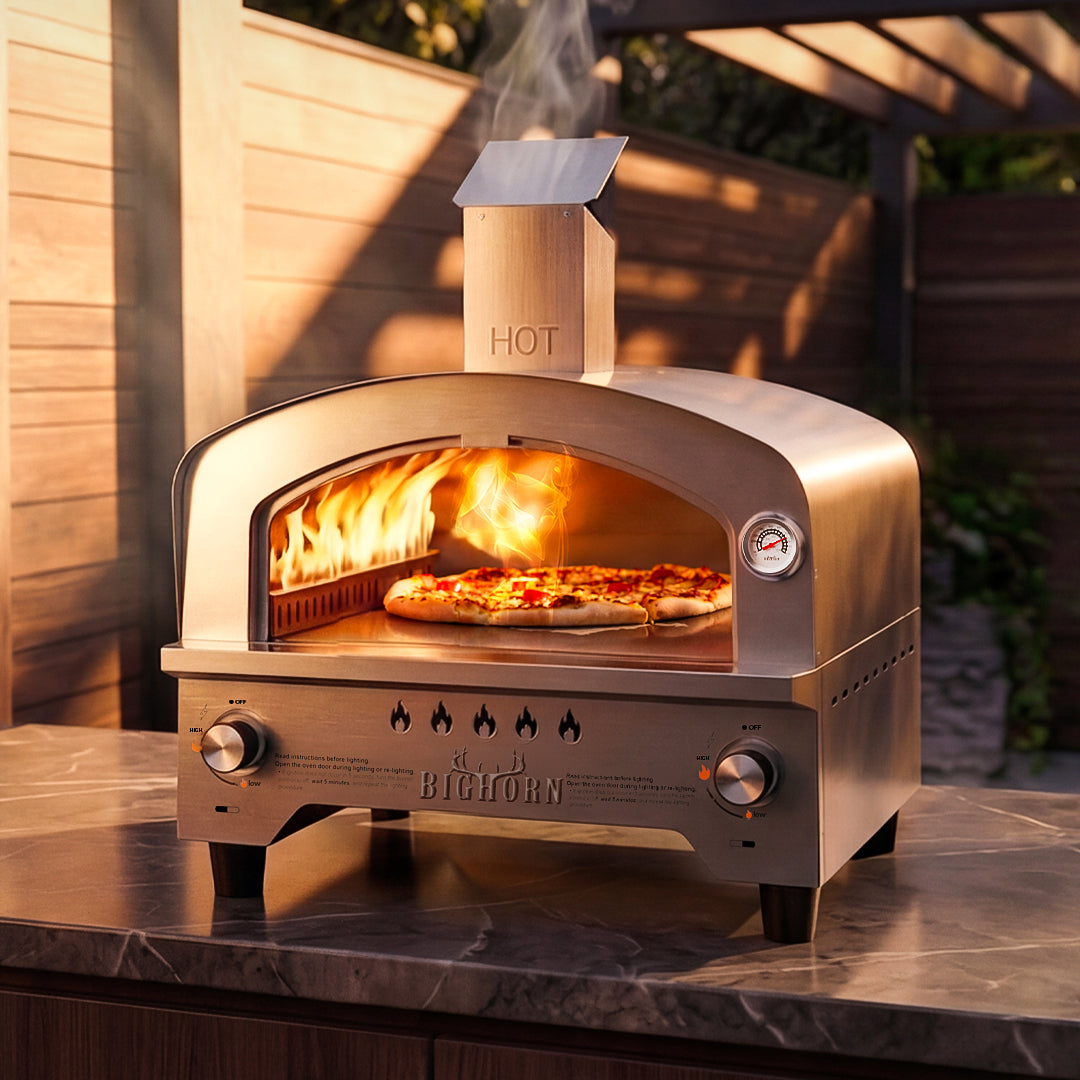
Save the drippings and the carcass — the drippings make a fast pan sauce or gravy, and the carcass becomes stock that tastes of the wood or gas you roasted over. Serve the chicken with anything that benefits from a little smoke or char: grilled bread, a salad, or vegetables that cooked on the cooler part of the stone while the bird roasted. Big Horn's 15-inch dual burner gas pizza oven, the 16-inch wood pellet oven and the 16-inch gas oven each roast differently — gas holds steady, pellet roasts in residual heat — and the pizza oven collection shows which format matches your fire style.
The whole-chicken method is a lesson in heat management that pays off beyond the bird: once you can hold an indirect roast in a pizza oven, you can roast vegetables, bake bread and cook foods that need more than a two-minute blast. Spatchcock for the first few roasts, keep the bird away from the flame, and trust the probe to 165°F — then the pizza oven becomes the most versatile cooker in the yard.
These recipes and cook guides are editorial guidance from the Big Horn Outdoors team. Cooking results vary with equipment, fuel, ingredient temperature and weather, so rely on doneness signals and an instant-read thermometer instead of exact times. The equipment shown reflects official Big Horn Outdoors listings reviewed September 5, 2026; prices and availability can change at checkout.