As backyard cooking keeps shifting toward faster setup and easier cleanup, choosing the right heat source for your outdoor kitchen has become a major decision for home chefs. The debate typically comes down to a clear tradeoff: the instant control of propane gas versus the rich, smoky character of wood pellets. Recent outdoor cooking trends indicate that while pellet ovens remain popular for traditional wood-fired crusts, modern propane models now easily reach the 750 degree Fahrenheit to 900 degree Fahrenheit temperatures required for Neapolitan-style results.
For patio hosts looking to upgrade their setup, Big Horn Outdoor offers a versatile collection of portable pizza ovens designed to balance cooking speed, temperature consistency, and hands-on preparation.
What Is a Propane Pizza Oven
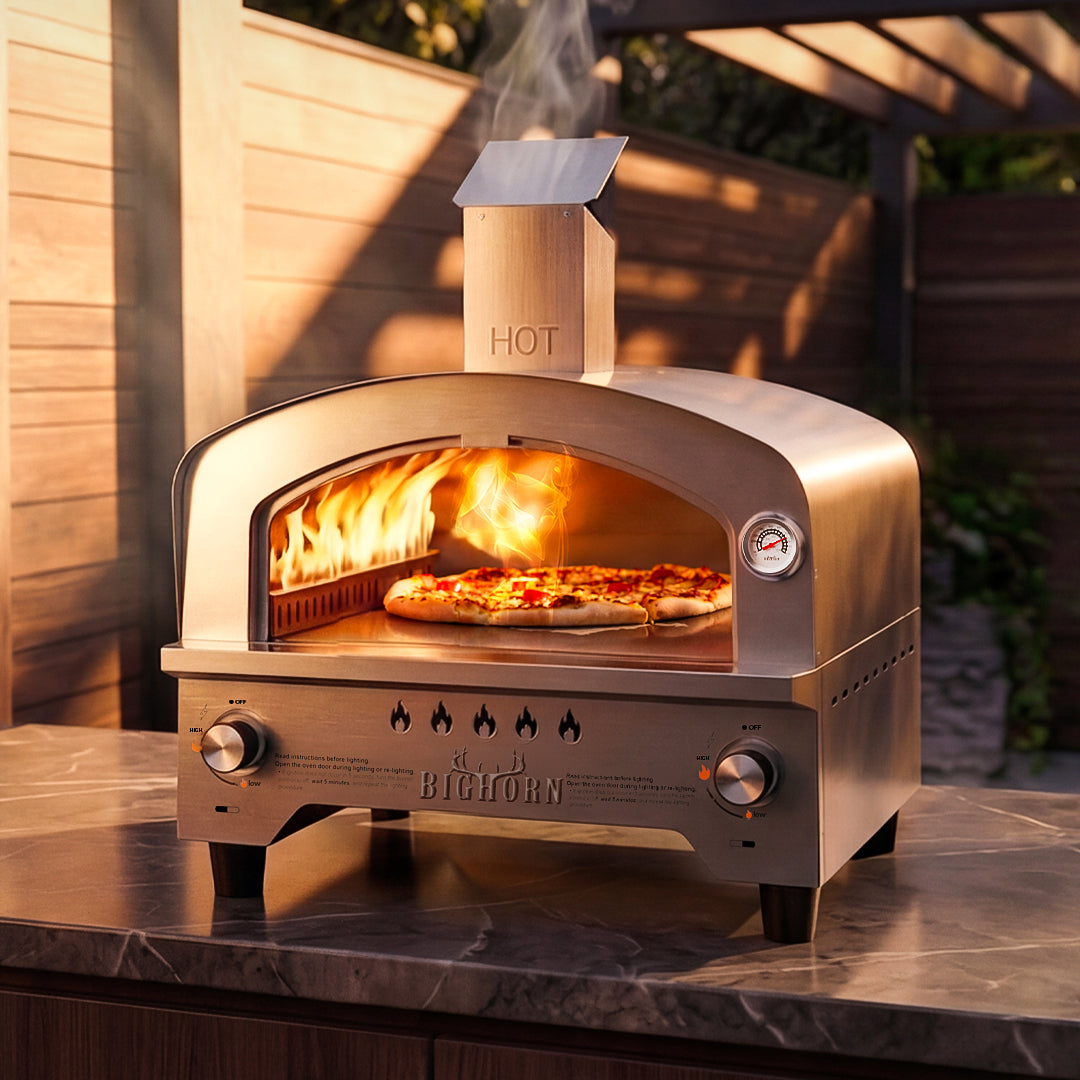
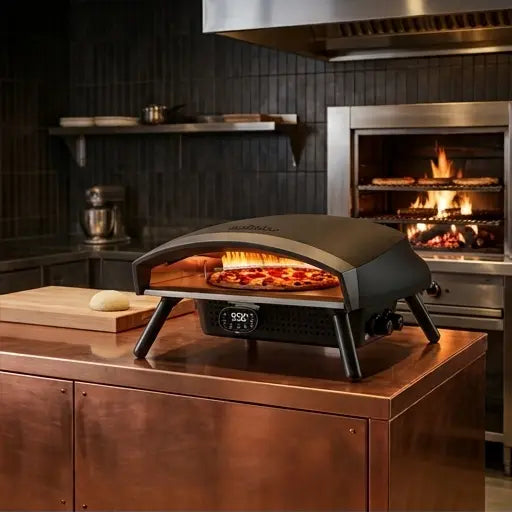
A propane pizza oven is an outdoor cooking appliance that utilizes liquid propane gas to rapidly heat a cooking stone to high temperatures. Unlike traditional wood-fired ovens that require building and tending a physical fire, propane models emphasize quick preheating and turn-dial temperature control. This makes gas-fired setups, like those found in the Big Horn Outdoor pizza oven collection, highly practical for spontaneous cooking sessions and back-to-back baking when hosting larger gatherings.
Why This Decision Is Harder Than It Looks
Heat control is not the same as flavor control. A propane oven gives you clean, predictable heat, but pellet ovens introduce a wood-fired aroma that some backyard cooks consider essential for authentic pizza. Choosing solely by maximum temperature can lead to an oven that cooks fast but fails to deliver the specific flavor profile you expected.
Fast preheat times can also obscure real cooking limitations. While many outdoor cooks focus on getting pizza in minutes, the real engineering challenge is whether an oven distributes heat evenly across the stone. Single-burner designs often create intense hot spots, forcing you to rotate the pie constantly to prevent burning, whereas advanced configurations utilize dual independent burners to create a more reliable, edge-to-edge bake.
Outdoor safety, space, and local regulations must also guide your choice. Gas-fired and pellet ovens are strictly designed for ventilated outdoor use. Carbon monoxide is a serious hazard whenever fuel-burning appliances are operated in enclosed spaces, and many condominium associations or local municipalities restrict open wood or pellet fires on balconies. Propane ovens are often permitted in spaces where solid fuels are banned, making gas the only viable option for restricted patios.
Finally, portability changes the buying decision. A pizza oven that looks compact in product photos may still be heavy and awkward to transport. Buyers must consider whether their oven will remain permanently on a backyard counter or move between a patio, campsite, driveway, or tailgate party.
Gas vs Wood Pellet vs Traditional Ovens
| Evaluation Factor | Big Horn Outdoor Propane Oven | Big Horn Outdoor Wood Pellet Oven | Traditional Wood-Fired Oven |
| Heat-up Speed | Fast (Reaches 750 degrees Fahrenheit in about 10 minutes) | Moderate (Requires 15 to 20 minutes of pellet ignition) | Slow (Requires 30 to 60+ minutes of fire management) |
| Temperature Control | Precise (Dual independent burners and built-in thermometer) | Moderate (Requires adjusting the hopper feed rate and airflow) | Manual (Requires active physical wood management) |
| Flavor Profile | Clean heat with minimal smoke undertones | Distinct smoky complexity from wood pellets | Deep, authentic wood-smoke char |
| Portability | High (Lightweight, compact frame with folding legs) | High (Portable pellet units exist with carrying handles) | Low (Heavy, permanent brick or stone installations) |
| Clean-up | Low (No ash residue, simple stone brushing) | Medium (Requires regular ash disposal from the ash tray) | High (Requires extensive ash, soot, and ember removal) |
| Price Visibility | Highly competitive (Typically ranges from 229.99 to 359.99 USD) | Budget-friendly (High value for entry-level wood cooking) | High investment (Requires custom build or premium masonry) |
Inside the Tech: How Fuel Sources Impact Performance
Propane systems in the Big Horn Outdoor lineup rely on high-output burners to deliver rapid, consistent heat. By utilizing independently controlled burners, gas models allow cooks to regulate the deck temperature and the rolling overhead flame separately. This predictability yields repeatable baking times, which is essential when you need to serve multiple guests in rapid succession.
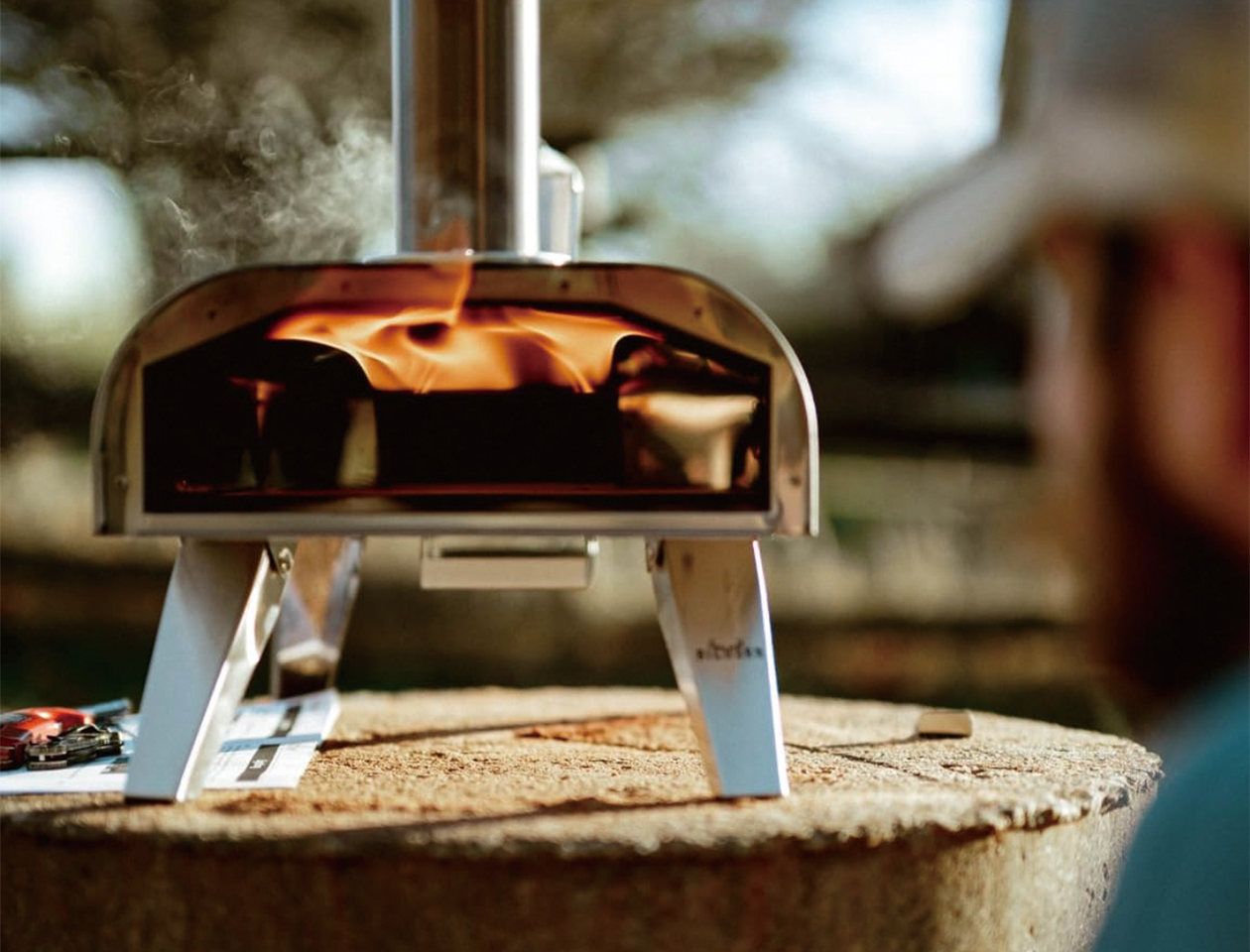
Wood pellet systems feed compressed hardwood sawdust into a combustion chamber. This creates a highly concentrated fire that imparts a subtle, authentic smoky flavor to the crust and toppings. While pellet ovens require more active monitoring than gas, the designs in Big Horn's collection are significantly easier to manage than raw hardwood logs because the gravity-fed pellets feed steadily and burn with minimal soot when kept dry.
Achieving the classic leopard-spotted Neapolitan crust depends entirely on achieving extreme heat. While wood was once the only fuel capable of reaching these temperatures, modern propane ovens are engineered with dual-burner configurations and thick cordierite baking stones that hold heat efficiently, closing the performance gap between gas and wood.
Six Steps to Choosing Your Perfect Patio Setup
First, define your cooking priority. If you prioritize convenience, fast preheating, and low-maintenance cleanup, browse the gas models in Big Horn's inventory. If you enjoy the hands-on ritual of fire-building and want a distinct smoky flavor, favor their wood pellet alternatives.
Second, check your patio constraints. Confirm your local HOA guidelines, lease agreements, and fire codes. Propane tanks are widely accepted on balconies and decks where solid-fuel pellet burning is prohibited.
Third, inspect the technical specifications. Compare the internal cooking area, stone thickness, and burner configuration on the Big Horn Outdoor pizza oven collection page. A larger cooking space, such as their 15-inch dual burner deck, provides more physical room to launch and rotate pizzas than basic 12-inch compact models.
Fourth, evaluate your portability needs. If you plan to take your oven tailgating or camping, look for lightweight models featuring folding legs, protective carry covers, and simple fuel connections.
Fifth, plan your fuel logistics. Propane requires standard tanks that are easily refilled or exchanged at local retailers. Wood pellets require dry, moisture-free storage, as damp pellets swell and will clog the oven hopper.
Sixth, run a test session. Before hosting a large gathering, bake a single test pie to understand how your chosen model handles heat recovery between pizzas and how quickly you need to rotate the dough.
Real-World Patio Cooking Scenarios
Scenario: Weeknight family dinner.
Traditional approach: Preheating a kitchen oven to its maximum limit and baking a single pizza on a metal pan for 15 minutes.
With a Big Horn Propane Oven: Preheating the stone in 10 minutes and baking fresh Neapolitan pizzas in 60 seconds.
Result: Fast, interactive cooking that fits easily into a busy weeknight schedule.
Scenario: A weekend backyard gathering.
Traditional approach: Managing a complex wood fire all evening, leaving the host isolated near the oven instead of socializing with guests.
With a Big Horn Wood Pellet Oven: Utilizing a gravity-fed hopper that delivers consistent pellet fuel, allowing the host to mingle while preserving wood-fired flavor.
Result: A relaxed hosting experience with authentic smoky results.
Scenario: Small balcony or campsite cookout.
Traditional approach: Using a bulky, heavy cooker that is difficult to transport or prohibited by local open-fire regulations.
With a Big Horn Portable Gas Oven: Setting up a compact gas model on a stable outdoor table and connecting a portable propane cylinder.
Result: High-temperature pizza baking in restricted spaces with minimal cleanup.
Essential Pizza Oven Accessories and Upgrades
To maximize the performance of your outdoor setup, pairing your oven with the right gear is essential. In addition to individual ovens, the Big Horn Outdoor collection features essential tools to streamline your process. A dedicated aluminum or perforated pizza peel is necessary for launching and retrieving pizzas safely. A heavy-duty weather cover protects your cooking stone and burners from moisture and debris, while a dedicated propane regulator and hose kit ensure stable gas pressure. For pellet users, a stainless steel ash shovel and a secure fuel storage container are recommended to keep your fuel dry and your combustion chamber clean.
Step-by-Step Guide for a Perfect Backyard Pizza Session
First, set up your oven on a stable, non-combustible outdoor surface, ensuring proper clearance from walls, and connect your fuel source.
Second, preheat the oven fully. Propane models should run on high for approximately 10 to 15 minutes until the center of the stone reaches your target temperature.
Third, stretch your dough on a lightly floured surface and assemble your toppings, keeping the sauce and cheese light to ensure an even bake.
Fourth, dust your pizza peel with a small amount of semolina flour, slide the raw pizza onto the peel, and launch it gently onto the center of the preheated stone.
Fifth, monitor the bake closely. For gas ovens, use the burner control dials to adjust the flame height, rotating the pizza 180 degrees halfway through to ensure an even char.
Sixth, remove the completed pizza with the peel, let the stone recover its heat for two minutes before launching the next pie, and turn off the fuel source once cooking is complete.
Frequently Asked Questions
Which is better for backyard hosting, propane or wood pellets?
Propane is generally better for hosting because it offers instant ignition, faster preheating, and precise dial control, allowing you to bake pizzas consistently without tending a fire. Wood pellets are preferred by hosts who prioritize a traditional smoky flavor and enjoy the hands-on process of managing pellet fuel.
Can a gas pizza oven achieve an authentic wood-fired style crust?
Yes. Modern propane pizza ovens easily reach the 750 degree Fahrenheit to 900 degree Fahrenheit temperatures required to create a blistered, leopard-spotted Neapolitan crust. While the physical wood smoke aroma will be absent, the texture and char of the crust are virtually identical.
Are pellet pizza ovens portable enough for travel?
Many wood pellet ovens in the Big Horn collection are designed with folding legs and detachable chimneys for portability. However, they are typically heavier than propane models and require carrying dry bags of pellet fuel, making propane slightly more convenient for mobile setups.
What are the main maintenance differences between gas and pellet models?
Propane models require minimal maintenance beyond brushing loose flour off the cooking stone and wiping down the exterior. Pellet ovens require regular cleaning to remove ash buildup from the firebox and must be kept dry to prevent rust and fuel damage.
Is a dual-burner propane system worth the upgrade?
Yes. A dual-burner system distributes heat more evenly across the cooking stone, significantly reducing the hot spots common in single-burner models. This minimizes the need for constant pizza rotation and helps beginners achieve an even bake.
How do I determine the right oven size for my patio?
For individuals or small families of two to four people, a compact 12-inch oven is highly efficient. For larger families or hosts who regularly entertain groups of six or more, a 15-inch oven provides the necessary stone surface area to cook larger pizzas and rotate them comfortably.
Conclusion
For patio cooks who prioritize fast preheating, precise temperature control, and low maintenance, a propane pizza oven is the most practical and reliable choice. For backyard enthusiasts who value the traditional flavor and physical ritual of live-fire cooking, pellet and wood-burning ovens remain highly rewarding. Modern engineering has bridged the performance gap, making the portable options in the Big Horn Outdoor pizza oven collection an incredibly attractive option for almost any backyard entertaining style.