
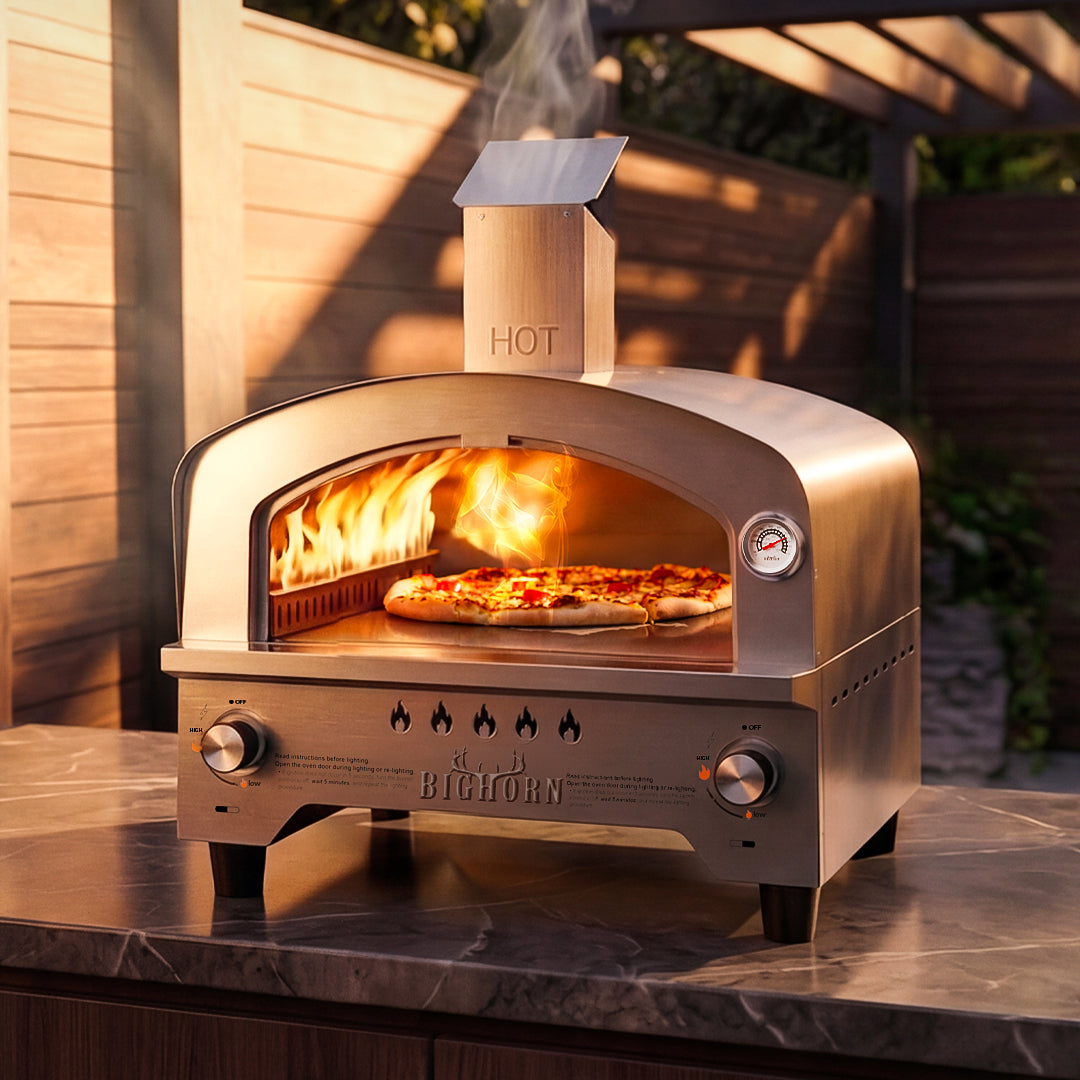
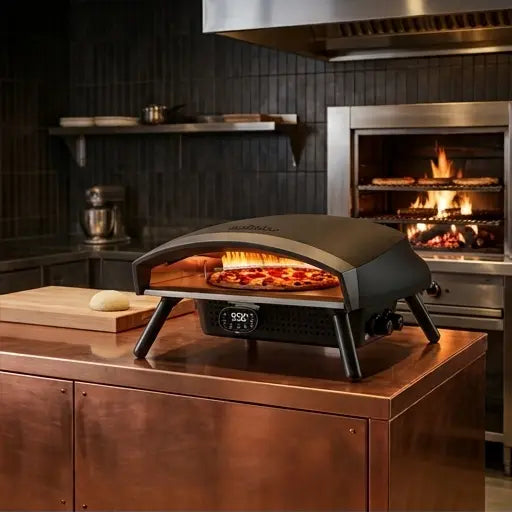
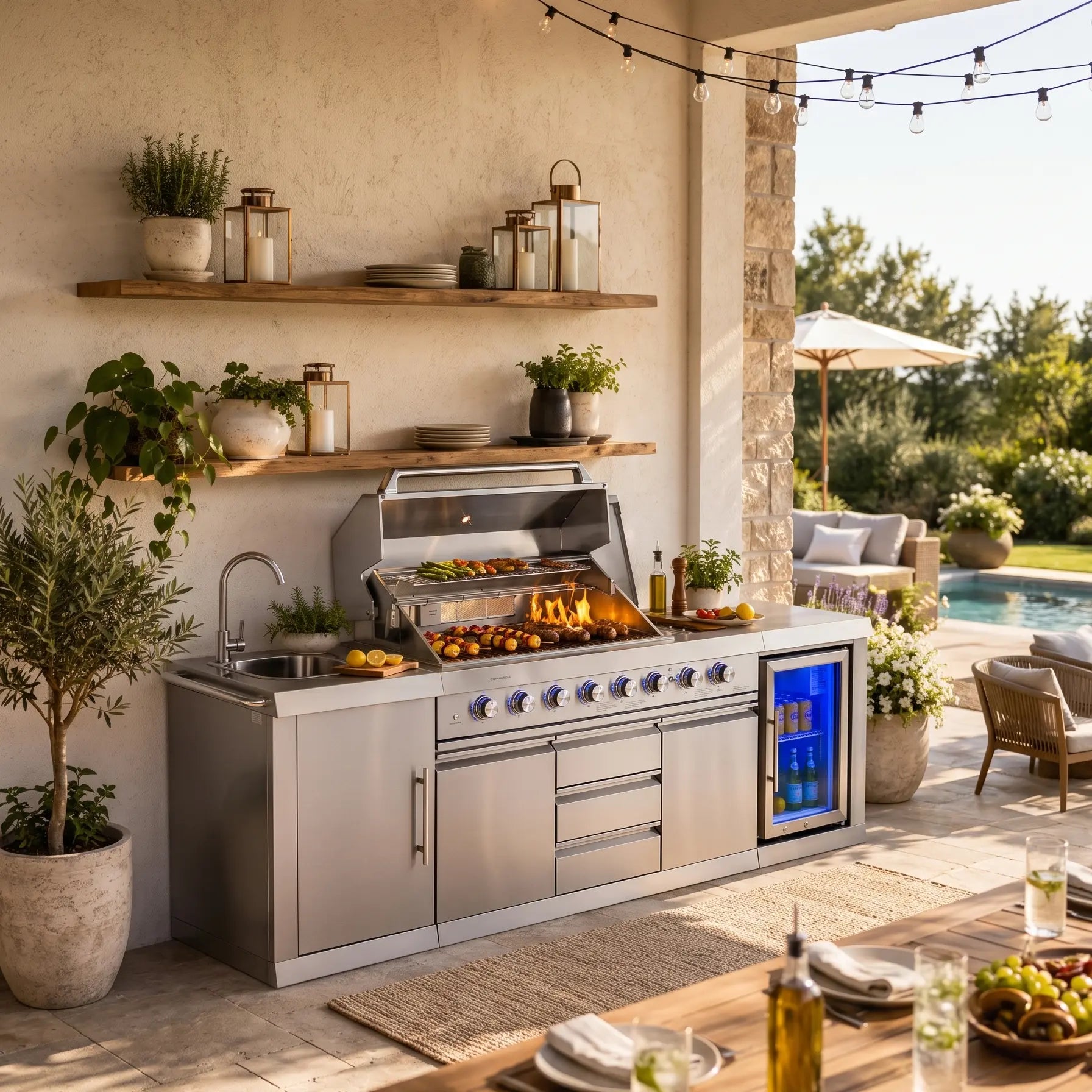
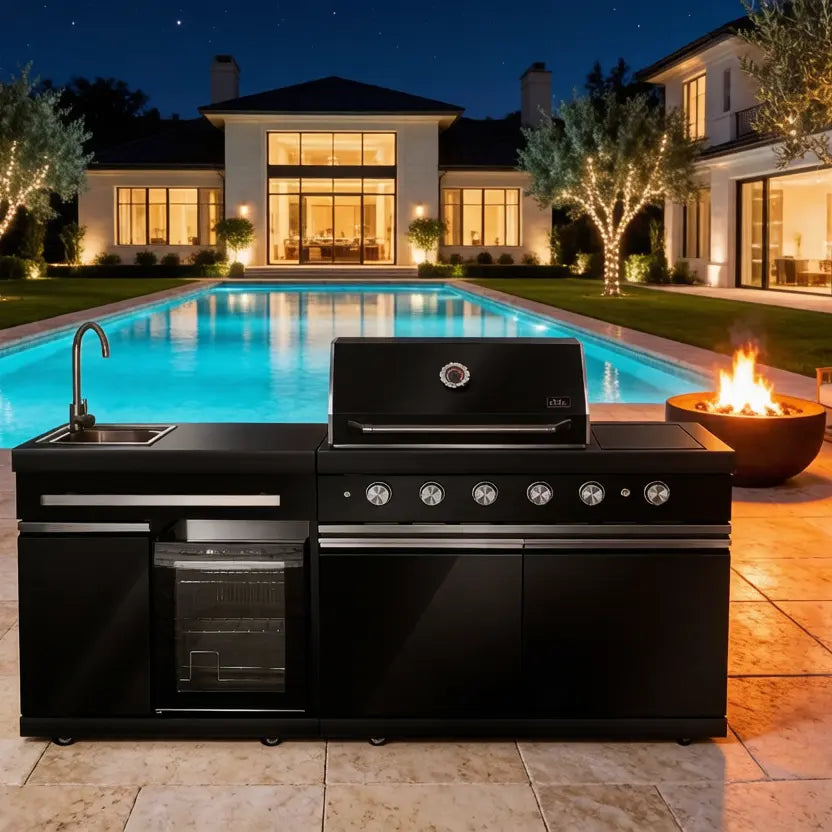
Choose propane for portability and outdoor flexibility; choose natural gas for a fixed outdoor kitchen with a permanent gas line. The Big Horn Outdoors 15-inch gas oven runs on propane, so it can be used at a patio, campsite, or tailgate.
What Is the Difference Between Propane and Natural Gas?
Propane comes in portable tanks, while natural gas is delivered through a fixed utility line. Propane is the more flexible choice for outdoor pizza ovens.
Propane is stored in refillable tanks you can move anywhere. Natural gas requires a permanent connection to a utility line, so the oven stays in one place. Propane is portable and natural gas is permanent.
Portability
Propane is more portable, because it comes in tanks you can carry. Natural gas is fixed to a line and cannot move.
The Big Horn Outdoors 15-inch oven runs on propane, which makes it usable at a patio, campsite, or tailgate. Natural gas only works where a line is installed. Propane is the portable choice.
Fixed Outdoor Kitchens
Natural gas is better for a fixed outdoor kitchen, because it never runs out and connects to a permanent line. Propane tanks need refilling.
If you are building a permanent outdoor kitchen, natural gas is convenient — no tank swaps. But it requires a professional gas line. Natural gas suits a fixed setup, while propane suits a movable oven.
Heat Output
Propane burns slightly hotter per unit than natural gas, but both reach pizza-making temperatures. The difference is small for practical cooking.
Both fuels heat a pizza oven well past 500°F. The Big Horn Outdoors 15-inch propane oven reaches 750°F in about 10 minutes. The heat difference is minor, and both work for pizza.
Ease of Setup
Propane is easier to set up, because you connect a tank and cook. Natural gas needs a permanent line installed.
A propane oven is plug-and-play with a tank, while natural gas requires a utility hookup and often a professional installation. Propane is the easier, more immediate choice.
Which Should You Choose?
Choose propane for portability and ease; choose natural gas for a permanent outdoor kitchen. Most home cooks choose propane.
Unless you have a natural gas line already planned for an outdoor kitchen, propane is the simpler and more flexible option. The Big Horn Outdoors 15-inch oven is propane. Propane fits the way most people cook outdoors.
Key Facts
Big Horn Outdoors lists the following specifications at a glance.
- Fuel: propane (Big Horn Outdoors' listed figure)
- Preheat: 750°F in about 10 minutes (listed)
- Maximum temperature: up to 1,070°F (listed)
- Burner output: 23,000 BTU across two burners (listed)
| Factor | Propane | Natural Gas |
|---|---|---|
| Portability | Portable tanks | Fixed utility line |
| Setup | Connect a tank | Professional line needed |
| Availability | Refillable tanks | Continuous supply |
| Best for | Patios, camping, tailgates | Fixed outdoor kitchen |
Common Fuel Mistakes to Avoid
The most common fuel mistakes are running out of propane mid-cook, and assuming a natural gas oven is portable. Each one causes an interrupted cook or a wrong purchase.
Keep a spare propane tank so you do not run out mid-pizza. A natural gas oven cannot move, so do not buy one if you plan to travel. Match the fuel to where you will cook.
Big Horn Outdoors Product Team
"Our view on fuel is that propane is the practical choice for most outdoor cooks. The Big Horn Outdoors 15-inch oven runs on propane, so it works on a patio, at a campsite, or at a tailgate. Natural gas suits a fixed outdoor kitchen but limits mobility. We recommend propane for flexibility and suggest keeping a spare tank."
Conclusion
Propane is the flexible, portable fuel for outdoor pizza ovens, while natural gas suits a fixed outdoor kitchen. The Big Horn Outdoors 15-inch gas oven runs on propane, so it can be used anywhere. Choose propane for portability and ease, or natural gas for a permanent setup.
Key Takeaways
- Propane is portable and flexible. Refillable tanks work on patios, campsites, and tailgates.
- Natural gas suits a fixed kitchen. It needs a professional utility line.
- Propane is the easier setup. Connect a tank instead of installing a line.
- Choose by permanence. Portable propane versus a built-in natural gas line.
Questions to Ask Before Buying
- Do I want portability? Propane travels; natural gas is fixed.
- Do I have a gas line? Natural gas requires a permanent connection.
- How much setup do I want? Propane is simpler to connect.
FAQs
Is the Big Horn gas oven propane or natural gas?
It runs on propane, according to Big Horn Outdoors.
Which fuel is more portable?
Propane, because it comes in tanks you can carry.
Does natural gas burn hotter?
Propane burns slightly hotter per unit, but both reach pizza temperatures.
Which is easier to set up?
Propane, because you connect a tank and cook.
Sources
- NFPA, Grilling Safety — NFPA, Grilling Safety