







The first text already went out: "Saturday, 4 p.m., backyard." Then the forecast turns, the grate is wet, and someone starts dragging a lit gas grill toward the garage door. That is the fault scene a rain plan is meant to prevent. The checklist is not a last-minute tarp. It is a menu and a footprint you decide before the invitation leaves the phone.
This is a host plan for a backyard party, not a camp-tarp cooking method and not a go/no-go chart for firing a pizza oven in a storm. Local fire rules and the appliance manual still win, including the rule that a closed garage is not a kitchen.
A rain plan is a menu and a footprint, decided before the first text goes out
A backyard cookout rain plan is a menu and a footprint you set before anyone is invited, not a tarp after the first drop. Decide what you will still grill, what you will swap, and where a ventilated covered work zone can sit. Lightning or a closed garage means the outdoor cook is off.
Write two versions of the afternoon: the dry plan and the shortened wet plan. The wet plan should still feed people, just with fewer lid-open steps and a tighter guest path. If you cannot name the backup protein and the backup place to stand, you do not have a rain plan yet.
A party-size gas-oven schedule, such as a backyard gas pizza oven plan for ten guests, is useful for a dry queue. It is not a rain permit. The same is true of a Santa Maria grill party menu and timeline: use those pages for fire and food flow in fair weather, then come back here for the wet-day swaps.
What you can still grill, and what you should swap
In light, steady rain, a covered pan, a foil packet, and a protein you can cook with the lid down are usually more realistic than a long, lid-open sear or a platter of uncovered salads. Swap the butterflied roast that needs constant attention for a shorter list: sausages, a covered chicken pan, or a sturdy vegetable packet. Move dressings and breads under cover or indoors.
Swap off anything that requires a dry board and a precise crust in open air. Pizza can still work if the oven stays legal, ventilated, and out of wind-driven rain, but a soaked peel and a wet stone are a reason to change the menu, not a reason to "push through." Menu ideas and oven flow already live on pages for a backyard pizza party menu and oven flow and for outdoor pizza party ideas; this page only decides which of those dishes survive a wet yard.
A portable gas oven can be easier to shelter than a full island, if you can place it legally; the existing page on a portable gas pizza oven for backyard cooking is about the cooker, not about rain staging. Do not set any fuel appliance under a low, closed tarp.
A covered work zone that stays ventilated
The work zone needs a roof or a high, open-sided shelter, a dry table for raw and cooked food, and enough open air that exhaust can leave. It is not a tent with the sides down and a grill in the middle. Carbon monoxide and fire risk both rise when a burner is used in a tight space. EPA guidance on carbon monoxide and indoor air is the official warning against treating a poorly ventilated shelter like a kitchen, and NFPA grilling fire-safety guidance plus U.S. Fire Administration cooking-fire prevention are the grilling baselines.
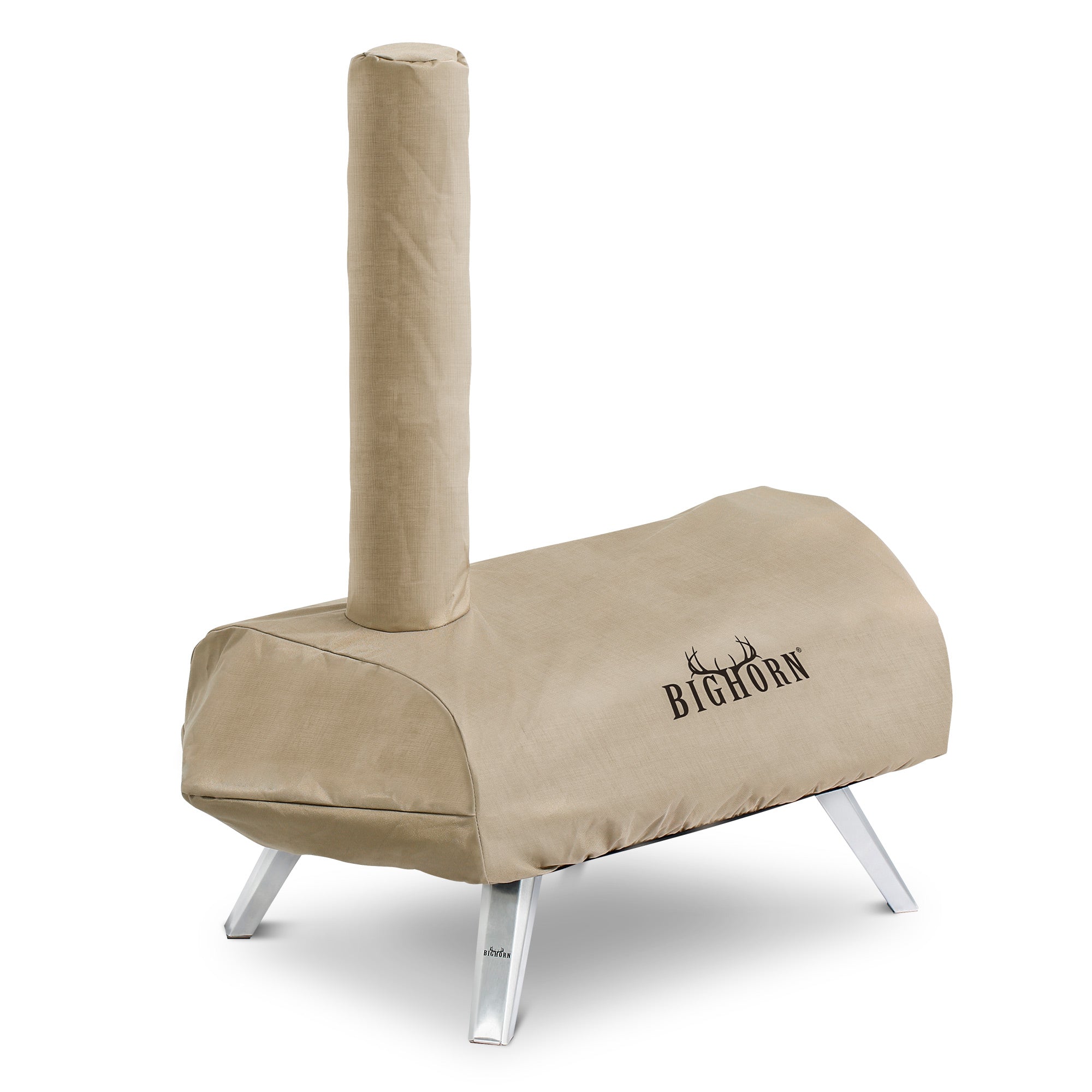
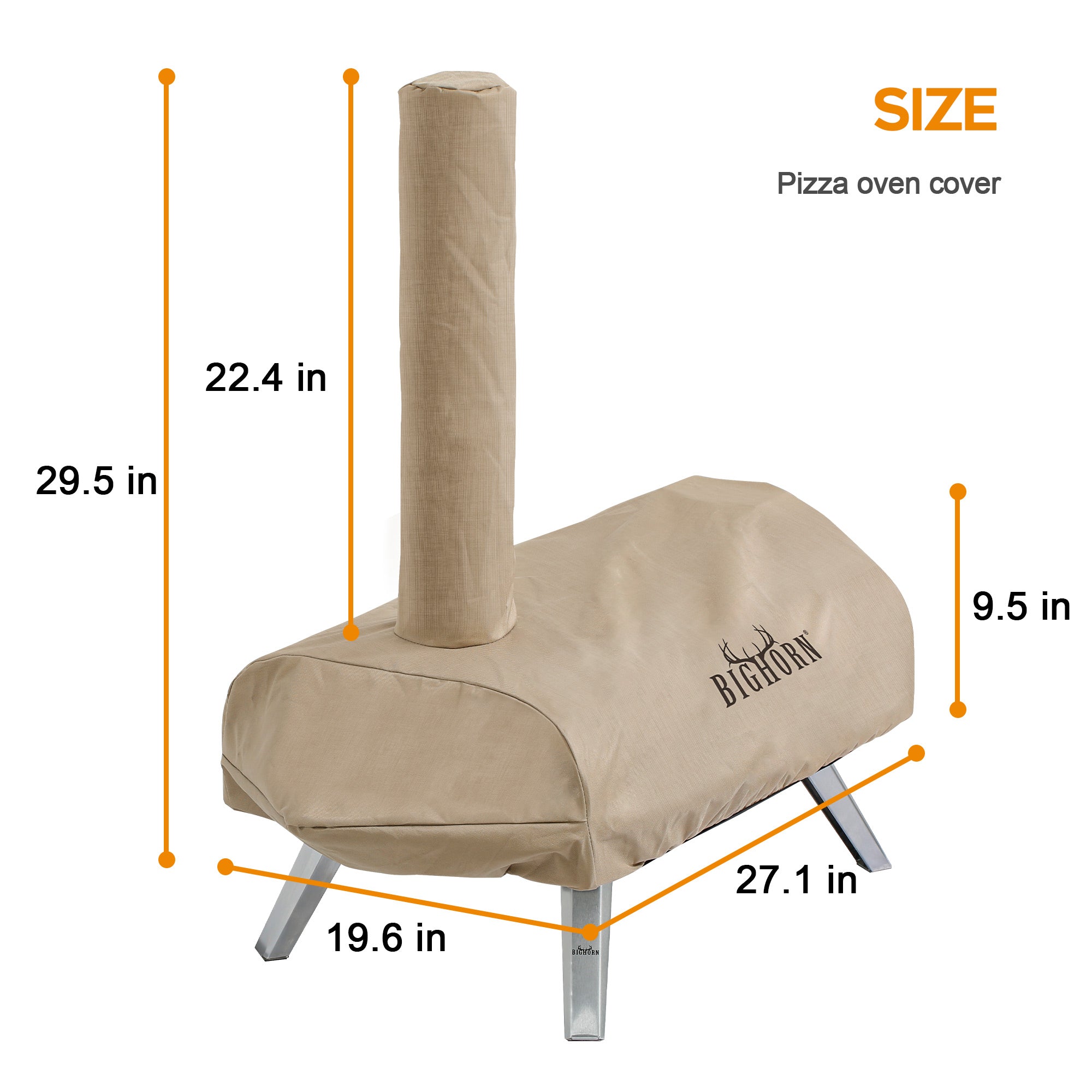
Keep water out of burners, hoppers, and electrical controls as the manual requires. A fitted oven cover, such as the current rain cover for a 16-inch pizza oven, is for a cool appliance, not for cooking underneath. Confirm the live listing. Do not invent a clearance in inches from this article; use the manual and local rules.
If the only roof is the garage, the grill stays out or the cook is canceled. Pulling a lit cooker indoors, even "just to finish," is the failure the opening scene was about.
Guest flow, shoes and a shortened cook
Wet yards turn into tracked kitchens. Put a shoe or drip zone at the edge of the dry space, and keep the path to the food from crossing the front of the grill. Guests should not have to squeeze past a propane tank to get under the roof. A shorter cook helps: fewer waves of food, fewer open-lid checks, and a tighter service window so people are not standing in the drip line for an hour.
Tell children and pets the fire still has a buffer, even if everyone is crowded under one roof. Chairs belong outside that buffer. If the covered space is too small for both the cooker and the guests, the guests go indoors and a runner brings plates.
How this differs from oven go/no-go and camp-tarp cooking
An oven go/no-go page is about whether to light a specific chamber in wind, rain, or cold. This rain plan assumes you may still cook, or you may not, but the host decision is broader: menu, footprint, and guest path. You can cancel the oven and still run a short grill list, or cancel the whole outdoor fire and serve an indoor backup.
Camp-tarp cooking is a field method for a stove under a pitched fly, with guy lines and a dry zone for fuel. A backyard party has neighbors, a different code environment, and usually a gas grill or an oven that was not packed in for a trail meal. Do not import a camp tarp height as a backyard clearance, and do not treat a patio umbrella as a listed fire hood.
A forecast decision tree
Read the forecast the day before and again the morning of the party, then choose a branch. The tree is a process, not a guarantee that a radar app will be right at 4 p.m. National Weather Service thunderstorm safety, lightning safety guidance, wind safety guidance, and flood safety guidance are the official weather baselines; Ready.gov home-fire guidance cover the household side.
| What you see | Host path | Stop line |
|---|---|---|
| Dry, or a brief light shower with a legal, ventilated cover | Run the wet-ready menu if there is still doubt; keep the full dry menu only if the yard will stay comfortable. | Do not start a lid-open showpiece you cannot finish if the shower thickens. |
| Steady rain, no lightning, cooker can stay outdoors and ventilated | Send the shortened plan. Use covered pans, a tight guest path, and a dry shoe zone. | Do not cook in a closed garage or under a low, sealed tent. |
| Lightning, strong wind, standing water, or a flooded approach | Move the gathering inside and use the indoor backup, or postpone. | Do not wait outside "until the next flash." Lightning ends the patio cook. |
A text to guests with the shortened plan, not a surprise menu at the door
When you choose the wet branch, tell people before they leave home. A short message is enough: the party is still on, the menu is the shorter one, shoes may get wet, and the gathering will sit more under cover or indoors. Do not wait until guests are on the patio, holding a salad that cannot take rain, to announce the swap.
If you cancel the outdoor fire, say that too. A honest "we are eating inside, same time" is easier on guests than a half-shelter they cannot interpret. The plan you already wrote is what makes that text short.
A recap of who this method is for, and who should use a different cooker
This method is for a backyard host who can decide a menu and a footprint before the invitation, and who will cancel the fire when lightning, water, or a closed space makes it unsafe. It is not for cooking in a garage, not for a camp-tarp stove setup, and not for an oven go/no-go chart alone.
If your only shelter fails the ventilation test, use an indoor backup or pick another day. A rain plan is a shorter party you can still stand behind, not a way to keep a burner going at any cost.
The photos show a 16-inch pizza oven Oxford fabric cover, which is a weather cover for a cool, unused oven, not a cookout canopy. Build a ventilated work zone for the lit cooker separately, and use a fitted cover only when the appliance is off and cool if the listing allows it.
FAQ
What should I do if it rains on cookout day?
Use the plan you already sent, not a surprise menu at the door. Swap the dishes that cannot take weather, shorten the cook, and move prep under a ventilated cover. If lightning, standing water, or heavy wind makes the yard unsafe, bring people inside and cut the outdoor menu.
Can I still use a gas grill in light rain?
Sometimes, if the appliance manual allows it, the grill stays outdoors, the area stays ventilated, and water is not blowing into the burners or the controls. A high, open-sided cover is not the same as a closed garage. If you cannot keep the cooker stable, dry enough, and attended, stop and swap the menu.
What menu swaps work for a rainy backyard party?
Trade long, lid-open cooks and delicate plated salads for covered pans, foil packets, a shorter grill list, and sides that can finish indoors. Keep one simple protein and one simple starch that can move. Drop anything that needs a dry cutting board in the rain.
Where should guests stand when the cookout moves under cover?
Give the cooker a buffer, keep a walking path that does not cross the fire, and put a shoe or drip zone at the edge of the dry space. Guests should not cluster under a low tent with a lit grill. If the only dry space is a closed garage, the cook ends.
