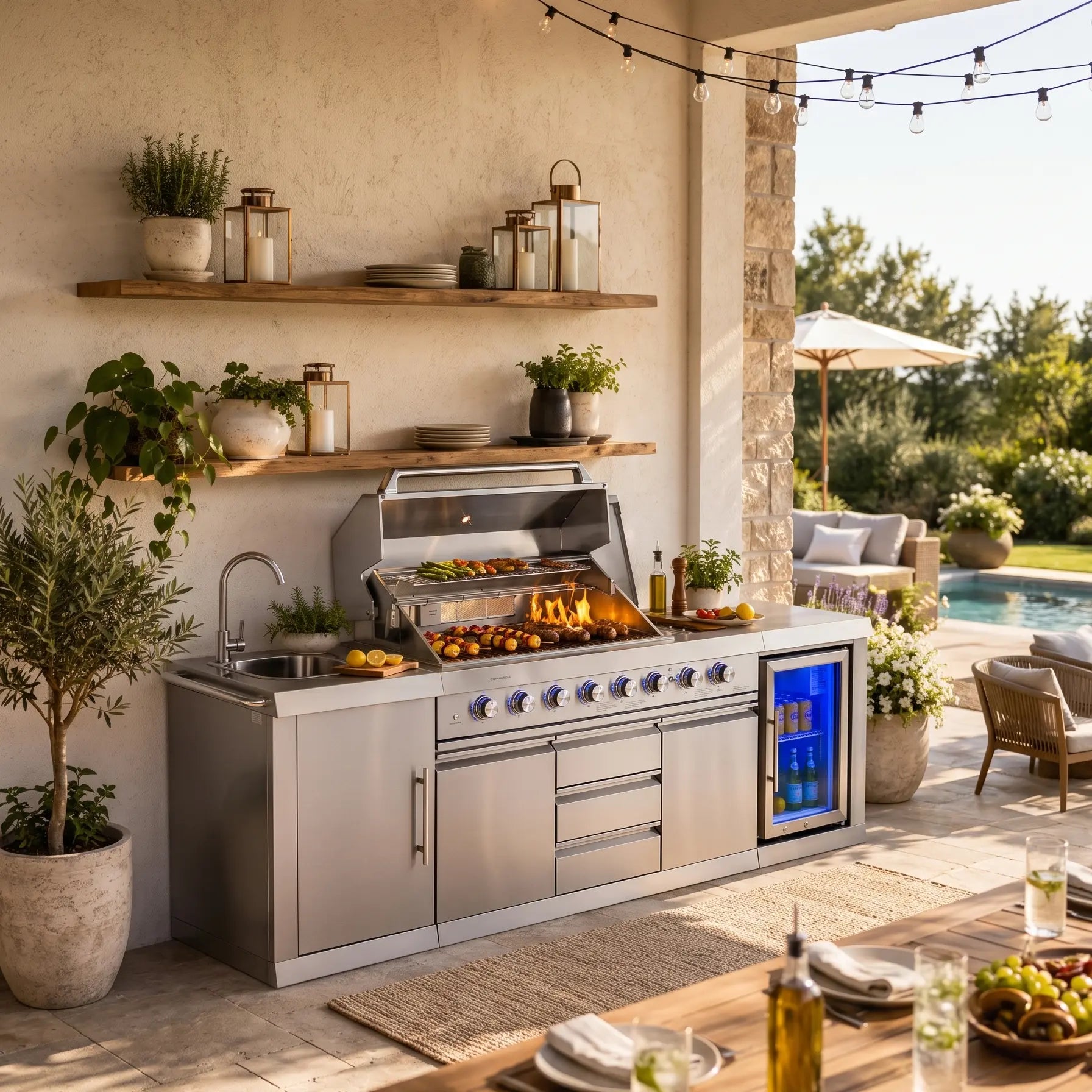
A Santa Maria grill party is a fire-centered dinner: the grill becomes the centerpiece, the tri-tip and chicken cook over the same bed of coals, and the guests gather around the fire while the cook works the grate. Hosting one well is a planning exercise — the menu, the fire schedule and the timeline have to line up so the food comes off together instead of in anxious waves. This guide covers the full plan: designing the menu, building the fire on schedule, cooking tri-tip and chicken together, sides and serving, and a timeline that carries the party from ignition to table.
Designing the menu
The Santa Maria menu follows a logic: one or two showpiece meats from the fire, sides that hold well, and sauces that finish the plate. A tri-tip is the classic centerpiece — season it simply, warm it high on the grate and sear it low at the end — and a spatchcocked chicken gives the party a second option for guests who do not eat beef. Sausages fill the grill's mid zones and give the cook easy wins while the bigger cuts work. For sides, choose dishes that do not compete with the fire for attention: a green salad, grilled bread, beans or potatoes that hold in a covered dish while the meat rests.
Match the menu to the fire's capacity, not the guest list. A single Santa Maria grill cooks a tri-tip and a chicken together comfortably if the grate has zones; adding a second chicken or a rack of something pushes the fire and the cook. For eight guests, one tri-tip plus a chicken and sausages is plenty; for more, plan two cooking rounds rather than loading the grate so full that nothing browns. Cook the menu you can execute calmly, and let the fire be the entertainment while the food catches up.
Building the fire on schedule
The fire is the party's clock, and it needs to be built backward from serving time. Start the fire about an hour and a half before the first meat hits the grate: light the wood or charcoal, let it catch, and add fuel until you have a settled bed of glowing coals with a lively flame. A young, roaring fire is too hot and uneven for the first cook; the fire needs time to settle into the steady, radiant heat that the grate-height method depends on. Build more fuel than you think you need, because a party fire that dies mid-cook is the hardest failure to recover from gracefully.
Keep the fire schedule realistic about weather and wood. Damp wood or a windy day slows the fire build, so start earlier than the plan says and keep a dry reserve of fuel within reach. Once the coals are settled, add fuel in small amounts through the cook to hold the bed steady — a big log dropped on a working fire causes a flare, while small additions keep the heat even. The guests arriving to a fire that is already settled and glowing is the signal the party has started; the fire should be ready before they are.

Cooking tri-tip and chicken together
Tri-tip and chicken cook on the same fire with different rhythms, and the host's job is to start the longer cook first and use the grate's zones. The chicken — spatchcocked for even cooking — goes on first at a mid-to-high position over the calmer part of the fire, where it can cook through without the skin burning. The tri-tip starts higher on the grate to warm gently and render, then drops low at the end for the sear. Sausages cook at mid-height on the edge, turning as they brown, and hold there until the main cuts are ready.
Use the probe to coordinate the finish. The chicken is done at 165°F in the thickest part of the thigh; the tri-tip pulls a few degrees below your target and finishes rising during the rest. Plan the last ten minutes so the chicken rests while the tri-tip sears, and let both rest together before carving — resting is not dead time, it is the step that lets the cook plate everything at once. If the fire runs hot and the chicken skin threatens to burn, raise the grate or move the bird to the coolest edge rather than fighting the fire.
Sides, sauces and serving
Sides should be ready before the meat comes off the fire. A chimichurri or salsa made earlier in the day, a salad dressed at the last minute, beans warming in a covered pot and grilled bread toasted at the fire's edge during the rest give the plate everything it needs. Serve family-style: slice the rested tri-tip against the grain, arrange the chicken and sausages on boards, and let guests build their plates at a serving table near the fire. The fire-lit serving moment is the party's centerpiece, so keep the host at the carving board and the sides within reach.
Keep the sauces honest and simple. A bright chimichurri cuts the richness of the beef, a salsa or pepper relish adds brightness, and the meat itself should not need heavy sauce if it was seasoned and cooked well. Set out coarse salt and the sauces in small bowls so guests can adjust their own plates. Plan for seconds: carve the tri-tip in two batches, holding the second half whole until the first is gone, so late servers get the same juicy slices as the first round.
Timeline from ignition to table
| Time before serving | What happens |
|---|---|
| Day before | Season meats; make sauces; prep sides and sides ingredients |
| 2.5 hours | Set up grill, table and serving station; check fuel supply |
| 1.5 hours | Light the fire; start building the coal bed |
| 45 minutes | Fire settled; season checks; preheat sides |
| 35–45 minutes | Chicken on the calmer zone at mid-high heat |
| 20–30 minutes | Tri-tip starts high; sausages join the edge |
| 5–10 minutes | Lower tri-tip to sear; check chicken temperature |
| 0 (serve) | Chicken rests; tri-tip rests; slice; toast bread at the edge |
The timeline is method guidance, not a promise — fire, weather and grill size all shift the minutes, so read it as a sequence with flexible timing. The sequence is what matters: fire first, chicken first, tri-tip second, sausages holding, rest together, serve at once. Build in fifteen minutes of slack before serving so a slow fire or a thick cut does not push dinner past the guests' patience, and let the fire's own pace set the evening's rhythm.
Assign roles so the host is not the only moving part. One person tends the fire and works the grate, a second handles the sides and serving table, and a third keeps drinks full and guests comfortable — with a party of eight, three roles are enough, and guests who want to help can be handed the basting brush or the bread duty rather than the fire. Keep children and pets at a safe distance from the open fire, have water or a fire extinguisher within reach, and never leave the lit grill unattended while you carve or go inside. The fire is the party's heart, and like any open flame, it earns a respectful operator for the whole evening.
Handling weather and timing slips
Weather is the Santa Maria host's wildcard. Wind speeds the fire and can blow heat unevenly; rain or humidity slows the coal bed; cold air steals heat from the grate. Have a windbreak ready, keep the fuel dry under cover until it goes in the fire, and start earlier on any marginal day. If the fire is slow, resist the urge to blast it with lighter fluid or a roaring flame — the settled coals are the goal, and rushing the fire produces a hot, uneven cook that burns the outside of everything.
When the timing slips, feed the guests rather than the fire. Appetizers and drinks absorb the delay; move the sausages off early as a first course if the mains are late; and if one cut is done well before the other, rest it tented in a warm spot rather than leaving it over the fire. The party succeeds on the food and the fire, but it survives on flexibility — and the host who can stretch the appetizers for twenty minutes without panic is the host who gets invited to host again. Big Horn's Argentine Santa Maria style parrilla grill and portable Santa Maria style charcoal grill are built for this kind of party, the asado hosting guide covers the larger gathering, and the grills and griddles collection shows the range.
Product details and prices in this guide were verified against official Big Horn Outdoors listings during the September 5, 2026 review; re-check prices and availability at checkout.