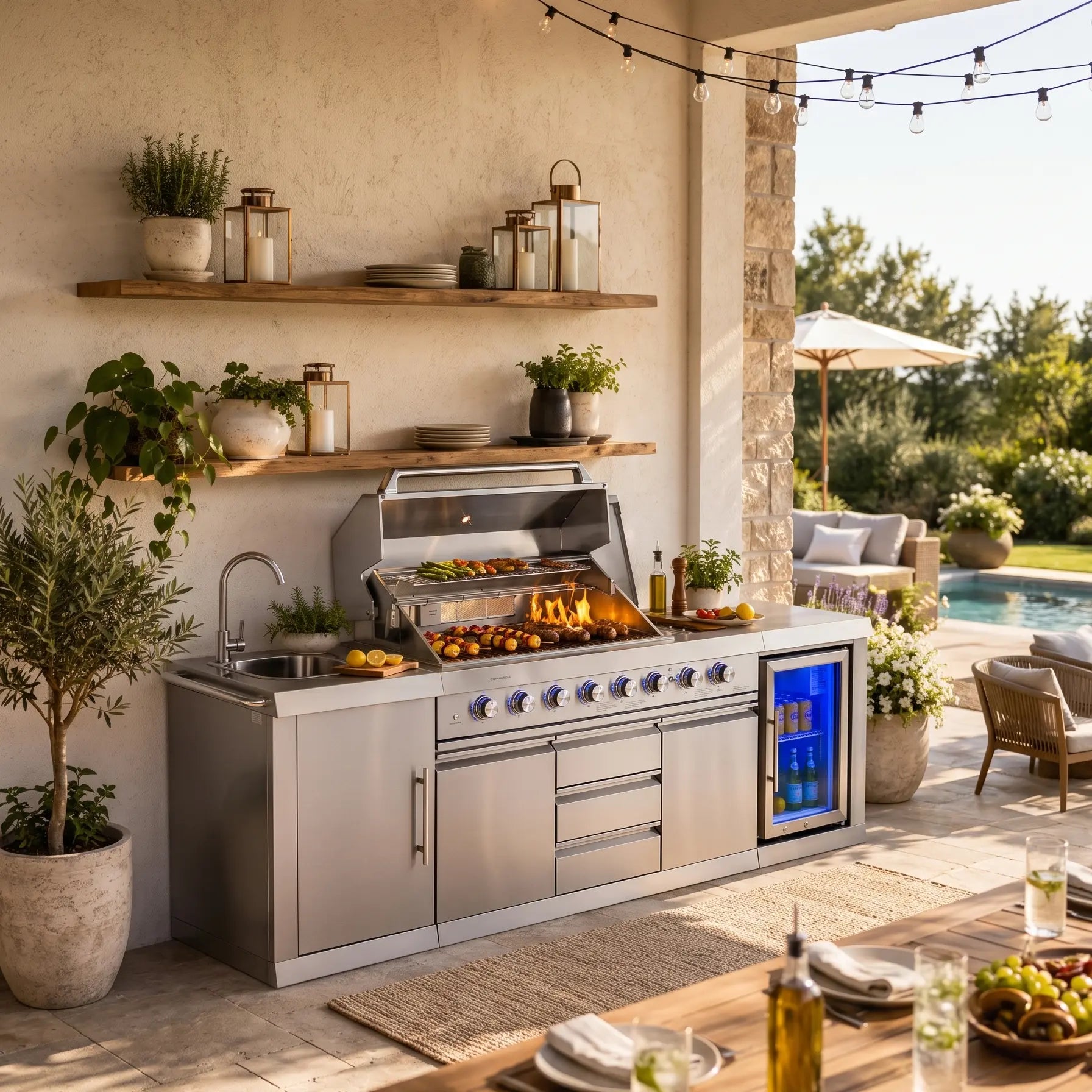
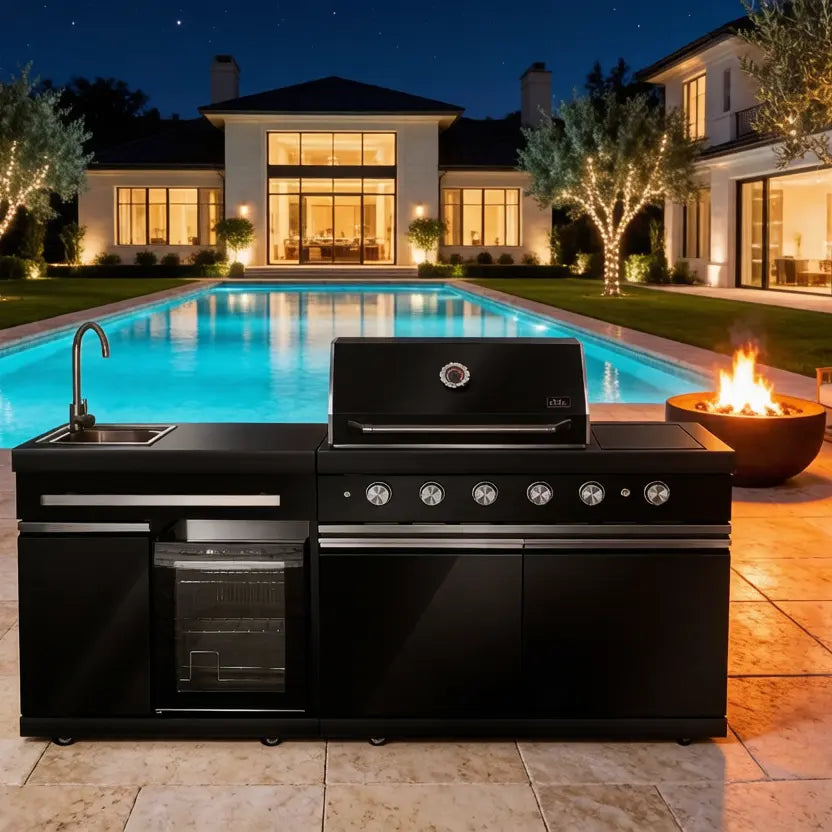
A rotisserie turns a gas grill into a self-basting roaster: the meat rotates slowly over indirect heat, basting itself in its own juices while the skin crisps evenly. The method rewards preparation — balance the spit, truss the bird, set up indirect heat — and then the motor does the work. This guide covers what a rotisserie adds, how to set up and balance the spit, how to prepare chicken for the rod, and the heat and times that tell you when it is done.
These are general rotisserie guidelines for a gas grill like the Big Horn island grills with a rotisserie kit; use a probe thermometer and follow your kit’s instructions.
What actually matters for this decision
- Indirect heat. Rotisserie is indirect roasting: burners on the sides, food turning in the middle over a drip pan.
- Balance. A balanced spit protects the motor and produces even turning.
- Trussing. A tightly trussed bird rotates like a cylinder and roasts evenly.
- Temperature. Medium indirect heat and a probe decide doneness.
Understanding the heat before you decide
A rotisserie cooks by indirect heat: the burners run along the sides (or a rear infrared burner runs behind), the meat turns slowly in the middle, and a drip pan catches the fat to stop flare-ups. The turning is what bastes the meat and crisps the skin evenly — the difference between a rotisserie and a static roast. Set the heat to a medium range (roughly 350°F–400°F in the chamber) and let the rotation plus the probe do the rest.
Step 1: Prepare and truss the bird
Start with a bird that fits the grill with clearance on every side. Pat it completely dry, season inside and out — under the skin where possible — and truss it tightly: wings against the body, legs together, so nothing flaps into the heat. Thread the spit through the cavity along the center line, or use the two-fork method, and lock it in the center so the load is balanced.
Step 2: Balance the spit and set up the grill
Balance the load before plugging in the motor: let the heavy side rest downward freely, then set any counterweight opposite the heavy spot to protect the motor. Remove the cooking grates so the rotating food has clearance, place a foil drip pan in the middle to catch grease, and turn on the outside burners for indirect heat. Aim for a medium chamber temperature and give the grill a moment to settle before loading the rod.
Step 3: Cook to temperature and rest
Insert the spit rod into the motor, turn it on, and close the lid. Cook until the probe reaches the safe target — for whole chicken, 165°F in the thickest part of the thigh — then rest before carving. Total time depends on the bird’s size; use the probe, not just the clock, and resist opening the lid, which drops the heat.
Common mistakes and how to avoid them
- An unbalanced spit. It strains the motor and turns unevenly; balance the load and use the counterweight.
- A loose bird. Untrussed wings and legs flap, burn, and cook unevenly; truss tightly.
- Direct heat under the meat. Rotisserie needs indirect heat and a drip pan; direct burners cause flare-ups.
- Opening the lid too often. Each open drops the chamber heat; use the probe and resist peeking.
- Pulling on time alone. Rotisserie time varies with the bird; use a probe thermometer for doneness.
Realistic expectations and results
A rotisserie on a gas grill produces evenly rendered skin and moist meat — the rotisserie-chicken result from a backyard grill — with the setup as the skill and the cooking nearly automatic. Expect a longer cook than direct grilling, the need for a balanced, trussed load, and a probe for doneness. The reward is even browning, self-basting, and a centerpiece roast from the grill you already own.
Pro tips for better results
- Use a drip pan. It catches grease, stops flare-ups, and can collect drippings for gravy.
- Balance carefully. A small counterweight adjustment protects the motor for years.
- Let the bird rest. Rest before carving so the juices settle and the skin stays crisp.

See the grills with rotisserie-ready setups. grills and griddles collection · outdoor kitchen island collection
FAQ
How long should rotisserie chicken be on a gas grill?
Cooking time depends on the bird’s size — typically about 20–35 minutes per pound at medium indirect heat, but the probe is the authority: pull a whole chicken at 165°F in the thickest part of the thigh, then rest before carving.
How to grill rotisserie chicken on a gas grill?
Truss and dry the bird, thread it on the spit balanced in the center, set up indirect heat with a drip pan, and cook with the lid closed at medium chamber heat until the probe reaches 165°F in the thigh. Rest before carving.
Do you close the lid when using a rotisserie?
Yes — close the lid to hold the indirect heat that roasts the chicken evenly. Opening the lid drops the chamber temperature and extends the cook; rely on the probe instead of peeking.
What are the instructions for setting up a rotisserie on a BBQ?
Balance the spit with the meat centered and any counterweight set, remove the grates for clearance, place a drip pan, use side or rear burners for indirect medium heat, then let the motor turn the meat until the probe reaches the safe internal temperature.