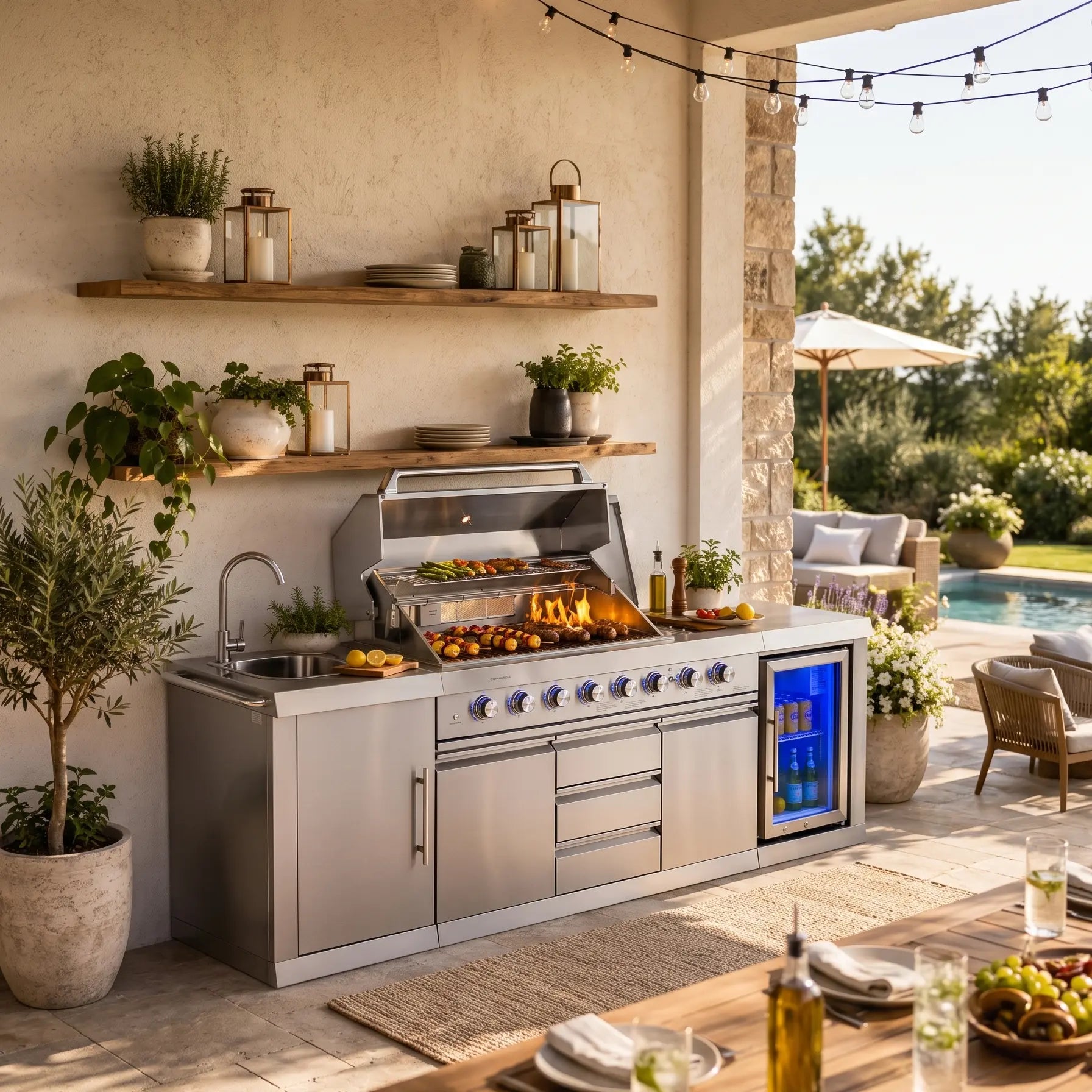
Santa Maria tri-tip is a simple dish with a precise method: season the meat with salt, pepper and garlic, cook it over a live fire using the grill's height control to move between a hot sear and gentle heat, and pull it at the temperature you want with carryover in mind. The tri-tip's shape — thick at one end and thin at the other — makes temperature management the whole game, which is exactly what a Santa Maria grill's adjustable grate is built for. This guide walks through the rub, the fire, the height stages and the temperature chart, with resting and slicing that make the roast tender across every slice.
Choose and prep the tri-tip
Start with a whole tri-tip roast, typically two to three pounds, with a good fat cap on one side. Trim any excess, pat the surface dry, and season generously with a simple Santa Maria rub — coarse salt, black pepper and granulated garlic are the traditional core, with optional additions like onion powder or a pinch of cayenne. Season at least an hour before cooking, or the night before for deeper flavor, and let the meat come partway to room temperature before it hits the fire. The tri-tip has two distinct muscles, so note the grain direction before cooking; you will slice against it after the rest.
Build the fire and use the height control
Build a clean, even coal bed in the firebox — hardwood coals for tradition, charcoal for convenience, or a blend. Let the fire settle until the coals glow without heavy flame, then place the tri-tip on the grate. The height control is the method: lower the grate for a hot sear to develop the crust, then raise it to let the thick end cook through gently while the thin end does not overcook. Because the tri-tip is uneven, position the thick end slightly lower or closer to the heat and the thin end higher, and adjust through the cook rather than setting the grate once.

Cook to temperature, not time
Cooking time depends on the fire, the roast and the weather, so the thermometer is the only reliable guide. Insert an instant-read probe into the thickest part of the roast, away from the fat cap, and use the chart below to decide when to pull. Remember that the meat continues to cook while it rests — carryover can add several degrees to a roast this size — so pull five to ten degrees below your target if you are aiming for a precise doneness. The thin end will cook faster and be more done; that is expected with tri-tip, and it is why slicing each end differently matters.
| Doneness | Pull temperature | After resting |
|---|---|---|
| Rare | 120–125°F | 125–130°F |
| Medium-rare | 130–135°F | 135–140°F |
| Medium | 140–145°F | 145–150°F |
These pull temperatures are experienced cooking targets; the USDA's safe minimum for whole cuts of beef is 145°F with a three-minute rest, so cooking below that is a personal risk decision. If you prefer a more well-done roast, pull at 150–155°F and rest briefly.

Rest and slice against the grain
Resting is not optional for tri-tip. Let the roast rest for at least ten minutes, loosely tented, so the juices redistribute and carryover finishes the center. When you slice, find the grain direction of each muscle and cut across it — tri-tip sliced with the grain is chewy no matter how well it was cooked, and slicing against it is what makes every piece tender. Slice the thin, well-done end thinner and the thick, pinker end a little thicker, and serve with the pan juices or a simple chimichurri if you like.
Variations and serving
Traditional Santa Maria tri-tip is served with pinquito beans, salsa, garlic bread and a green salad, but the roast stands on its own for tacos, sandwiches or a platter. For a crowd, cook two roasts and pull them at slightly different doneness so everyone finds a slice they like. Keep the fire going after the roast rests to char vegetables or warm tortillas on the higher grate positions — the same fire that cooked the centerpiece can finish the sides while the meat rests. The method is forgiving once the temperature chart is in your head, and the height control makes the adjustments feel natural.
Big Horn's portable Santa Maria style charcoal grill and the larger Argentine Santa Maria style grill are built for exactly this method. Season the roast, settle the fire, and use the grate height as your dial — then pull by temperature, rest patiently and slice against the grain for the Santa Maria tri-tip that makes the style famous.
Fire management for an even roast
Tri-tip exposes fire-management problems quickly because of its uneven shape. If the thick end is still raw while the thin end is overdone, the fire is too hot or the grate is too low for the gentle phase — raise the grate and let the thick end catch up. If the exterior chars before the center moves, the sear phase ran too long at full height; move through the sear quickly and spend most of the cook at the gentler height. If the fire flares when fat drips, raise the grate and let the flames settle before lowering it back. Treat the fire as a partner in the cook: a clean, even coal bed makes the height control meaningful, and the height control makes the uneven roast manageable.
Seasoning variations and timing
The classic rub is salt, pepper and garlic, but the method welcomes variation: a pinch of cayenne for heat, smoked paprika for depth, or dried rosemary for an herbal note. What should not change is the salt — it is the seasoning that makes the beef taste like itself, so use enough and apply it ahead. For timing, expect a two-to-three-pound tri-tip to take roughly thirty to forty-five minutes over a settled fire at the right heights, but treat that as a planning estimate, not a schedule; the thermometer is the only authority. Start checking temperature earlier than you expect to need it, because the thin end finishes faster than the thick end and the roast as a whole rewards early, frequent reads.
Leftovers and next-day ideas
Leftover tri-tip is a gift if it was not overcooked. Slice it thin and cold for sandwiches, chop it for tacos or hash, or reheat slices gently in a skillet with a little broth rather than nuking them dry. Because tri-tip is lean at the thin end, reheating methods that add moisture — a splash of stock, a quick sear in oil — keep the meat tender. If you cook two roasts for a crowd, plan for leftovers deliberately; a second roast pulled at medium-rare rests and slices beautifully for next-day lunches, which is one of the quiet advantages of cooking tri-tip Santa Maria style.
Finally, write down what worked after each cook: the fire fuel, the height stages, the pull temperature and the resting time. Tri-tip rewards repetition because each roast is slightly different, and a short log turns every cook into a calibration for the next. After a few sessions, the method becomes instinct — the height control feels like a dial, the thermometer confirms what you already suspect, and the Santa Maria tri-tip comes out right even on a busy evening.
Pair the roast with sides that match the fire. While the tri-tip rests, use the higher grate positions to char peppers, onions or asparagus, and warm tortillas or garlic bread at the edges of the fire. A simple salsa and a green salad complete the Santa Maria plate without pulling attention from the meat. The fire that cooked the roast is still hot enough to finish the sides, which is the quiet efficiency of live-fire cooking: one fire, one menu, and the tri-tip at the center of it.
These recipes and cook guides are editorial guidance from the Big Horn Outdoors team. Cooking results vary with equipment, fuel, ingredient temperature and weather, so rely on doneness signals and an instant-read thermometer instead of exact times. The equipment shown reflects official Big Horn Outdoors listings reviewed September 5, 2026; prices and availability can change at checkout.