

Scallops on an infrared grill are a short, dry-surface cook, not a steak that you can wander away from. The useful face is one hard side, then the other, and then you stop while the center still has a little give. If the scallops go on wet, or if you chase a darker crust, the middle turns tight and cottony.
This is a scallops-only method. Shrimp, salmon, and steak can share the same cooker on another night, but they do not share this timing.
The short answer: dry the scallops, get a brief hard face, and stop early
Dry the scallops thoroughly, preheat the infrared grill, and sear one face just long enough to brown and release. Flip once for a similar short side, then stop while the center is still slightly translucent. Butter, citrus, or a glaze belongs after the face is set, not in the first contact with the grate.
A starting point of about one minute per side is a cue you then adjust for size, not a promise. Large dry sea scallops may need a little more; small ones need less. Watch the color and the spring, not the clock alone.
Dry versus wet scallops and why surface moisture ruins the sear
Buy dry-packed sea scallops when you can. Wet-packed scallops have been treated to hold water. That water has to cook off before the face can brown, which is the opposite of what a short infrared window wants. The scallops should smell clean, not sharp or sour, and the flesh should look slightly translucent rather than chalky.
Pull off the small side muscle if it is still attached. Then pat, and pat again, until the flat faces are actually dry. A thin film of oil on the scallop helps release. A wet surface on a ripping-hot grate steams, sticks, and leaves you scraping protein off the bars. FDA seafood handling guidance says shrimp, scallop, crab, and lobster flesh should look clear with a pearl-like color when you buy it, and that most seafood should be cooked to 145°F, or until scallops turn firm, pearly, and opaque.
A grate or a small pan on infrared: which setup holds them still
Sea scallops that are about an inch across can sit on the grate if the bars will hold them and if you are not trying to juggle a dozen at once. A small pan or a preheated skillet on the infrared cooker is often calmer: the face still browns, the scallops cannot fall through, and you are less tempted to chase them with tongs. Skewers work on a conventional grill; on a compact infrared grate they can be awkward unless the skewers lie flat.
Bay scallops belong in a pan. They are too small for the bars. Frozen scallops must be fully thawed and dried first. FDA advice on thawing seafood is to thaw overnight in the refrigerator, or in a sealed bag in cold water if you will cook them right away — not in a warm sink.
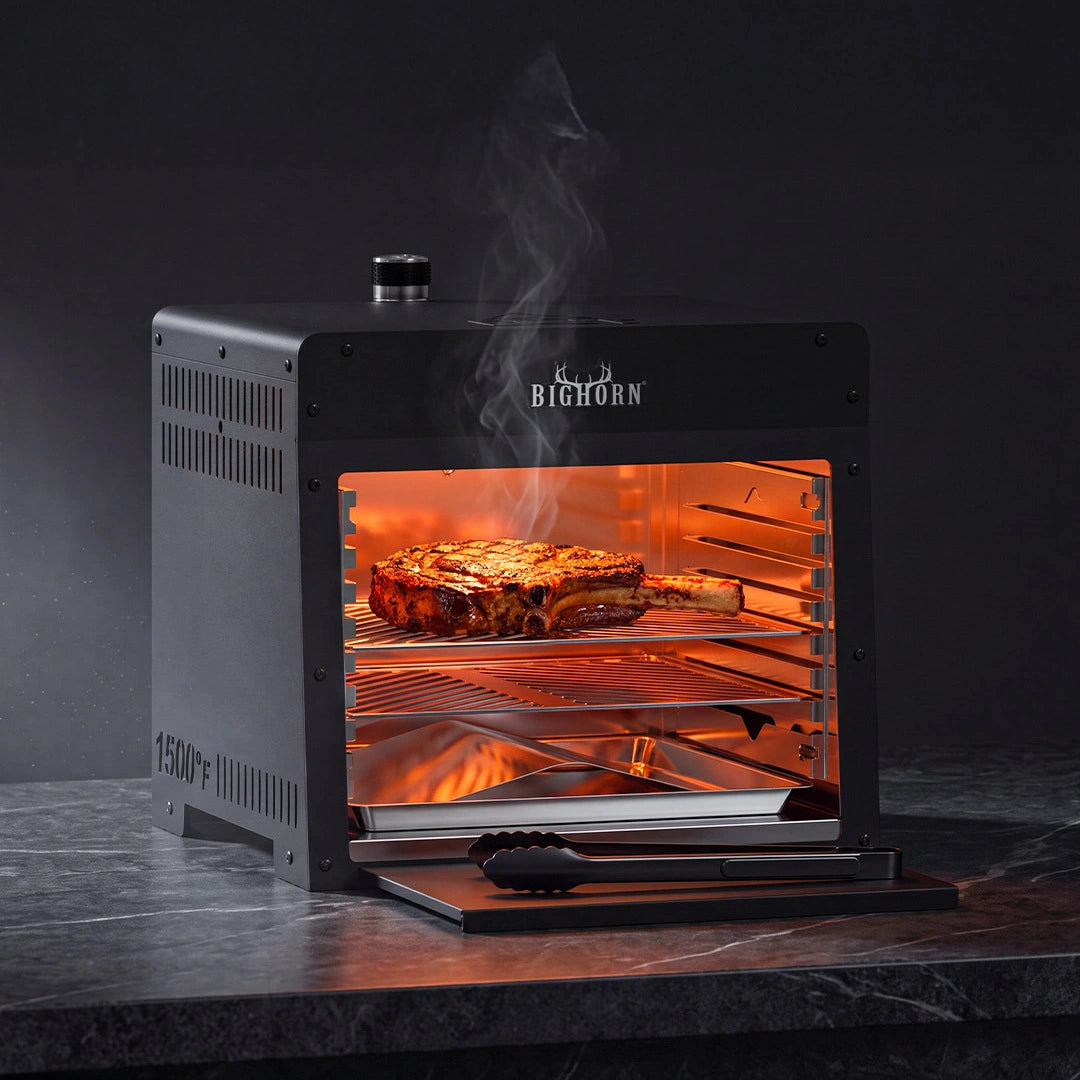
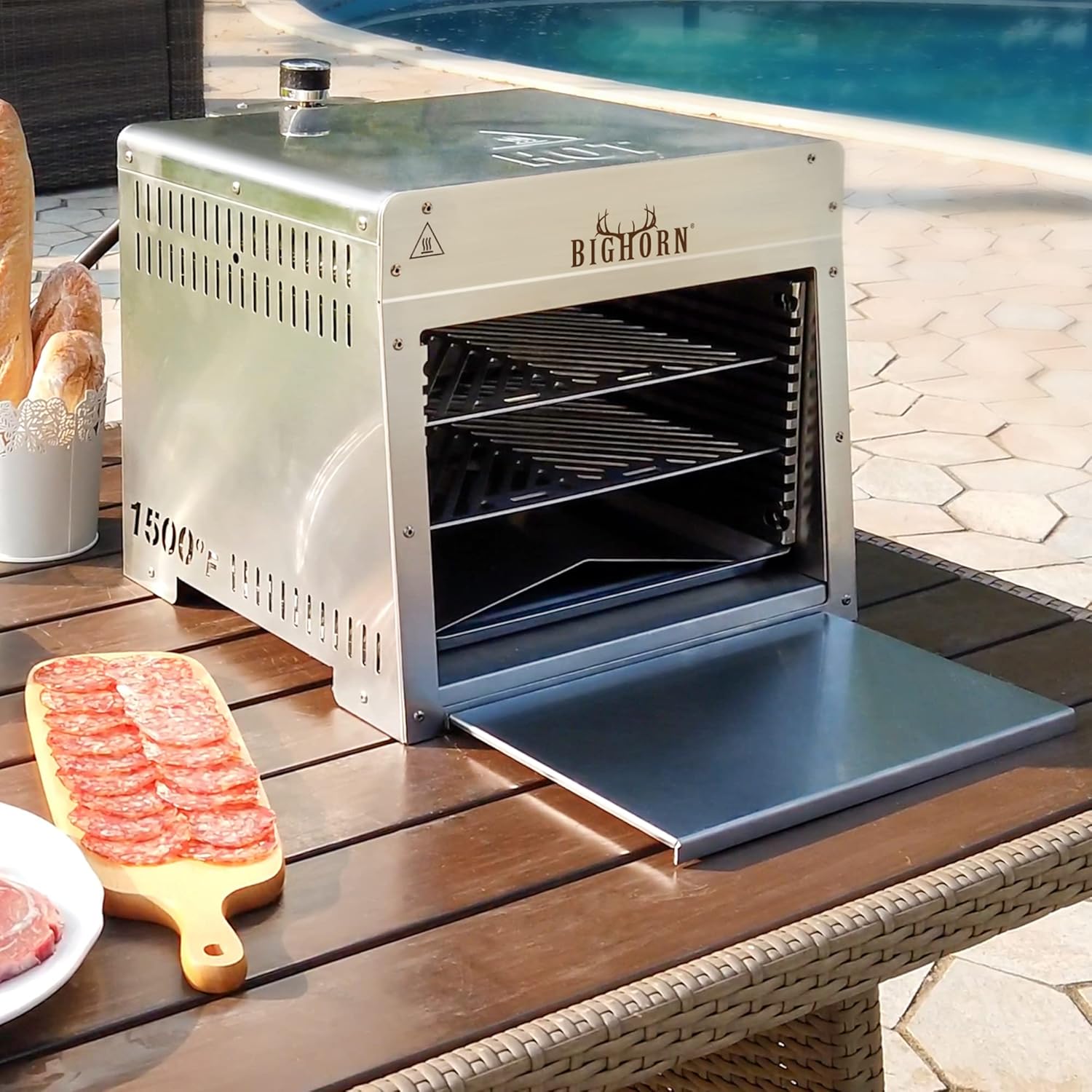
A 16-inch portable infrared steak grill with a pizza stone has a compact grate. That is enough for a serious sear on a few large scallops, or for a small pan, but it is not a wide seafood station. Preheat the cooker fully, the same way you would for a steak from the infrared steak grill collection.
Timing cues you can see: color, spring and a still-translucent center
Leave the first face alone until it releases and shows color. If it tears when you lift it, it is not ready, or the grate was dirty or underheated. The second side is usually as short, or shorter. The sides of the scallop should turn from translucent toward opaque, while the very center can still look a little glassy. When the whole scallop is tight and chalky, you have gone too far.
Some cooks use a thermometer and pull earlier than the official visual cue for texture. That is a quality preference. The official doneness language for scallops on FoodSafety.gov's temperature chart is to cook them until the flesh is pearly or white, and opaque. FDA's seafood page gives the same visual cue and also states that most seafood should reach 145°F. Use a thermometer if you want a number; do not treat a restaurant-style translucent center as a safety rating.
A small table: size class versus a starting side-time you then adjust
These are starting windows on a fully preheated infrared cooker, not lab-tested times. Stop when the cues say stop.
| Scallop class | Starting setup | Starting side time to adjust |
|---|---|---|
| Large dry sea scallops (about 1 inch or more) | Grate or a small pan, well spaced | About one minute per side, then adjust |
| Medium sea scallops | Pan is often calmer than the bars | Often under a minute per side; watch the face |
| Bay scallops or a thawed bag of small pieces | Small pan only, not the open grate | A brief toss or a very short sear; they overcook quickly |
Butter, citrus or a glaze: add fat after the face is set
Butter browns and then burns in a hurry on infrared. A sugary glaze does the same. Get the face set in a nearly dry sear, then add butter, lemon, or a thin glaze off the direct emitter, or on the plate. A little acidity after the cook lifts the sweetness of the scallop without steaming the crust you just made.
Common failures: stuck protein, a burnt edge and a cottony middle
Stuck protein is usually moisture, a cool grate, or a scrape that came too soon. A burnt edge with a raw or mushy center often means the scallops were wet, stacked, or left in one hot spot while you attended to something else. A cottony middle is overcooking, full stop. Infrared does not give you a long rescue window.
Keep the cooker outdoors and away from the house. NFPA grilling safety asks you to place the grill well away from the home, deck railings, and eaves, and to stay with it while it is on. CPSC gas-grill guidance says not to use a gas grill in a garage, breezeway, carport, or porch.

Food-safety notes for seafood and leftover holding (official guidance)
Keep raw scallops cold, at 40°F or below, and cook them the day you thaw them if you can. FDA safe food handling says to refrigerate seafood and other perishables within two hours of cooking or purchasing, and to keep the refrigerator at 40°F or below. USDA FSIS leftover guidance uses the same two-hour rule — one hour if the temperature is over 90°F — and says leftovers can be kept three to four days in the refrigerator and should be reheated to 165°F.
Do not leave a platter of cooked scallops out through a long outdoor dinner. If they will sit, get them on ice or into the refrigerator. Reheating is a leftover task, not a second infrared showpiece.
What to serve beside an infrared steak without a second long cook
Scallops work next to a steak when they do not compete for the same minute on the same small grate. Sear the steak first, or use a small pan for the scallops so the grate can recover. A squeeze of lemon, a simple salad, or a vegetable that cooked while the grill preheated is enough. For broader high-heat menu ideas, use the existing high-heat infrared menu guide rather than stretching this scallop timing into a full dinner plan.
If your grill lives on an island with an extra burner, an infrared side burner on a grill island can hold a pan of scallops while the main grate works a steak — but only if that burner is fully preheated and you still stop the scallops early.
If you want a compact high-heat grate for a few dry sea scallops — or a small pan beside a steak — confirm the current 16-inch 1500°F portable infrared steak grill with pizza stone listing and keep the cook short.
FAQ
How to reheat already cooked scallops?
Reheat leftover scallops gently only after they were chilled safely. USDA FSIS says to refrigerate leftovers within two hours of cooking — one hour if the air is over 90°F — and to reheat leftovers to 165°F, measured with a food thermometer. A hard second infrared sear usually turns them rubbery; a brief, covered warm-up is enough if you reheat them at all.
How do I cook steak on an infrared grill?
Preheat the cooker fully, dry the steak, and sear both faces on a hot grate, then finish off the direct heat if the center still lags. Use a thermometer rather than a fixed minute count. This scallop page is not a steak walkthrough; use a dedicated steak method when the steak is the main project.
How to cook scallops on a gas grill?
On a conventional gas grill, cooks often use high heat, a very dry scallop, and about two to three minutes per side, sometimes on skewers or a pan so the scallops do not fall through. Infrared is hotter and usually shorter. In either case, stop when the flesh is turning pearly and opaque, and do not leave a wet, crowded pile on the grate.
What can I do with a bag of frozen bay scallops?
Thaw them in the refrigerator, not on the counter, and dry them well. Bay scallops are usually too small to sit directly on infrared grates; use a small pan, a foil tray, or a crowded sauté rather than trying to sear them one-by-one on the bars. They overcook in a blink. FoodSafety.gov describes scallops as done when the flesh is pearly or white, and opaque.