







Outdoor Kitchen & Islands
An infrared side burner on a grill island is easy to over-promise. It is a small, intense station for a sear or a sauce, sitting beside a much larger set of main grates. Used that way, it is a sharp tool. Used as if it were a whole second grill, it becomes a neglected knob or a scorched pan. This page is about that feature, not about a portable infrared steak grill.
If you need the definition or the zone logic of a dedicated infrared steak grill, use the existing guide to what an infrared steak grill is and the dual infrared burner heat-zone guide. Do not expect this island burner to copy that entire appliance.
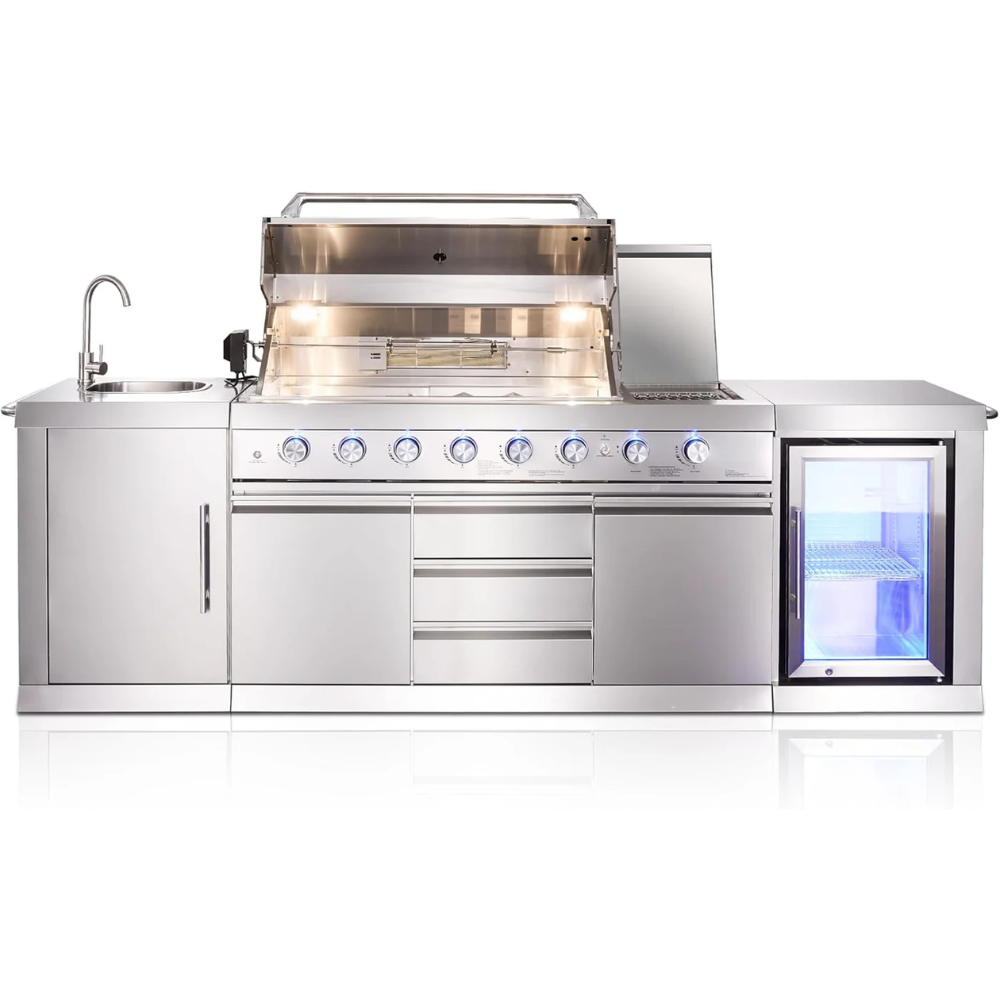
What an island infrared side burner does well
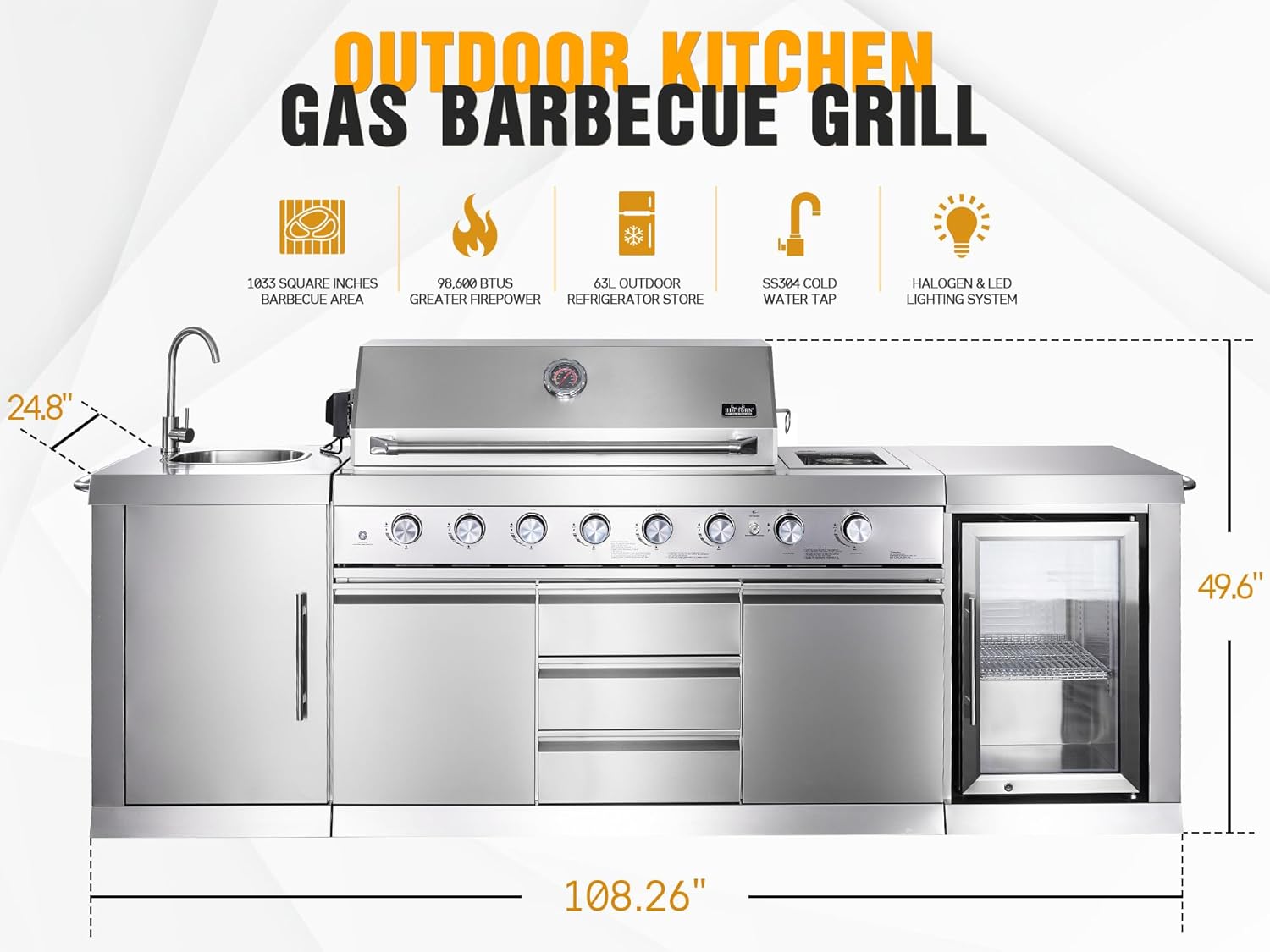
It does well when you need a hard, short heat that should not take over the main grate: a finishing sear, a pan reduction, or a side that wants a skillet. The current 6+2 outdoor kitchen island page describes an infrared side burner, sometimes called a sizzle zone in the product copy, as part of a cabinet that also lists 1,033 square inches of cooking space and 98,600 BTUs total. Treat those as current-page claims, and confirm the live listing. A 39,000 BTU island in the same outdoor kitchen island collection also describes a dedicated infrared searing burner; again, confirm that page rather than mixing the two models’ numbers.
The burner is still outdoor propane. Official gas-and-fire sense from the NFPA grilling safety pages applies, and carbon monoxide guidance from the EPA indoor air quality page on carbon monoxide still forbids bringing a lit island under an enclosed roof just because the side burner looks small.
Sear finishes and pans
Use the cookware the manual allows, and preheat the side burner so you are not lingering with a cold pan. A dry, seasoned steak can take a short, watched sear; then finish or rest as your main-grate plan requires. Official steak doneness on the FDA safe food handling page is 145°F plus a three-minute rest. This article will not invent a second-count that works for every steak and every burner.
If you move a pan of fat, keep a lid or a way to manage a flare, and keep the handle from jutting into the walkway. Sleeves, towels, and kids do not belong over that burner. U.S. Fire Administration cooking-fire pages is the right household reference for unattended grease.
| Job | Side burner often helps | Main grates often win | Watch for |
|---|---|---|---|
| A short steak finish | When you want a hard mark without monopolizing the whole hood | When you are cooking several steaks at once | Overcooking the center while you chase color |
| A pan sauce or reduction | When the sauce should reduce while the main grate stays on meat | When the pan would be more stable on a neighboring flat-top, if you have one | Sugar sauces boiling over onto a hot burner |
| A weekly side | A skillet of vegetables or a quick warm-up | Food that needs a large, even grate area | Using the side burner as an unattended back burner |
Sauces and sides
A reduction or a butter sauce is a good island-side job because it should be watched anyway. Keep sugar late, and do not park a sticky pan on high heat while you greet guests. Vegetables can take a skillet here if the batch is small. Larger sides usually belong on the main grates or, on a combo island, on a griddle. Ordinary kitchen habits from FDA kitchen food-safety guidance still apply: raw-meat spoons stay out of the finished sauce.
Safety at the knobs
Know which knob is the side burner before you light anything else. Light it as the manual describes, stay with it, and shut it off when you leave the island, even for a supposed minute. Keep the tank upright, outdoors, and reachable through the access doors. Do not store towels on the burner grate, and do not let a pan handle catch a passing hip in a narrow walkway.
If a flare starts, manage it in the way the manual and ordinary outdoor-fire practice allow; do not carry a flaming pan through a knot of guests. Ready.gov home fire pages and Red Cross fire safety pages are worth a look before the first sauce-heavy party.
When the main grates win
The main grates win when you are cooking a full load of steaks, chicken, or vegetables that need area more than a single intense spot. They also win when the side burner would force a pan into the only walking lane, or when you have not yet learned that knob in daylight. An infrared side burner is a helper, not a requirement for a good island dinner.
If you do not have a side burner on your island, you are not missing a whole category of cooking. You may simply sear on the main grate or use a pan the manual allows. Browse the infrared grill collection only if you are looking at dedicated infrared appliances, which are a different purchase from this island feature.
What an island side burner is not
It is not a portable infrared steak grill, and it is not a promise that every island in the catalog has the same burner. It is not a place to walk away from hot fat. It is not a workaround for indoor grilling. Used as a watched, short-heat station, it earns its knob. Used as decoration, it is just another control to remember to shut off.
Key takeaways
- An island infrared side burner is a short-sear and sauce station beside the main grates.
- Confirm the feature and any BTU or area claims on the live island page; models differ.
- Cook meat to official temperatures with a thermometer, not a guaranteed side-burner clock.
- Stay with the knob, especially around fat and sugar, and keep the tank outdoors and accessible.
- Let the main grates do the large loads; do not confuse this feature with a dedicated infrared steak grill.
If you want a watched sear and sauce station on an island, confirm the current infrared side burner details on the 6+2 outdoor kitchen island listing and learn that knob in daylight before you reduce a sauce for guests.
FAQ
What is an infrared side burner on a grill island used for?
It is a high-heat satellite, usually for a short sear, a finishing crust, or a pan sauce, while the main grates handle the rest of the cook. It is not a second copy of a dedicated portable infrared steak grill, and it is not automatically the place for a long, unattended stew. Confirm the feature on the live island listing, because not every island includes one.
Can I sear a steak only on the side burner?
Sometimes, if the surface and pan setup the manual allows can mark the steak, and if you still finish to a safe internal temperature. Many cooks still start or finish on the main grates and use the side burner for a hard sear or a sauce. Use a thermometer; official steak guidance is 145°F plus a three-minute rest.
Is an island infrared side burner the same as a dual infrared steak grill?
No. A dual infrared steak grill is a dedicated appliance with its own heat-zone story. An island side burner is one feature on a larger propane cabinet. For the dedicated grill’s zones, use the existing heat-zone guide. This page stays on the island feature.
What safety habits matter most with a side-burner knob?
Treat it like any other outdoor propane control: know which knob is which, light it as the manual describes, stay with a pan of hot fat or a sugar sauce, and shut it off when you step away. Keep sleeves, towels, and kids clear of the burner, and keep the tank upright and outdoors.
More to Read
Al Pastor Pizza: Marinade, Pineapple Balance and High-Heat Timing
Make al pastor pizza at high heat with thin, safely cooked pork and drained pineapple. Finish with salsa after the bake, and do not invent taco cal...
Mixed Vegetables on a Gas Grill: Baskets, Skewers and Direct Heat
Grill mixed vegetables on a gas grill with a path for baskets, skewers, or a bare grate, plus oil, salt timing, and a cut-size rule so pieces finis...
Pizza al Taglio (Roman Tray Pizza) at Home Outdoors
Make pizza al taglio at home as a Roman tray pie: oil the pan, dimple relaxed dough, top modestly, bake thoroughly outdoors, and cut it into squares.
