
A whole, rounded chicken is an awkward guest on a compact infrared grate. The breast sits high, the legs sit in a different plane, and the skin can scorch before the thickest meat is done. Spatchcocking — removing the backbone and flattening the bird — gives infrared a more even surface, then you manage distance so the skin crisps without burning.
This is an infrared skin-and-distance method. It is not a reprint of a Santa Maria spatchcock cook, and it is not a general weeknight chicken-part page. For parts, the site already has chicken thighs on an infrared grill and chicken wings on an infrared grill.
The short answer: flatten the bird, manage distance, and do not chase color only
Spatchcock the chicken, dry the skin, and cook it on a fully preheated infrared grill with enough distance that the skin browns instead of blackening. Confirm 165°F in the thickest breast and thigh. Rest the bird, then carve. Golden skin is not the doneness test, especially under a close infrared emitter.
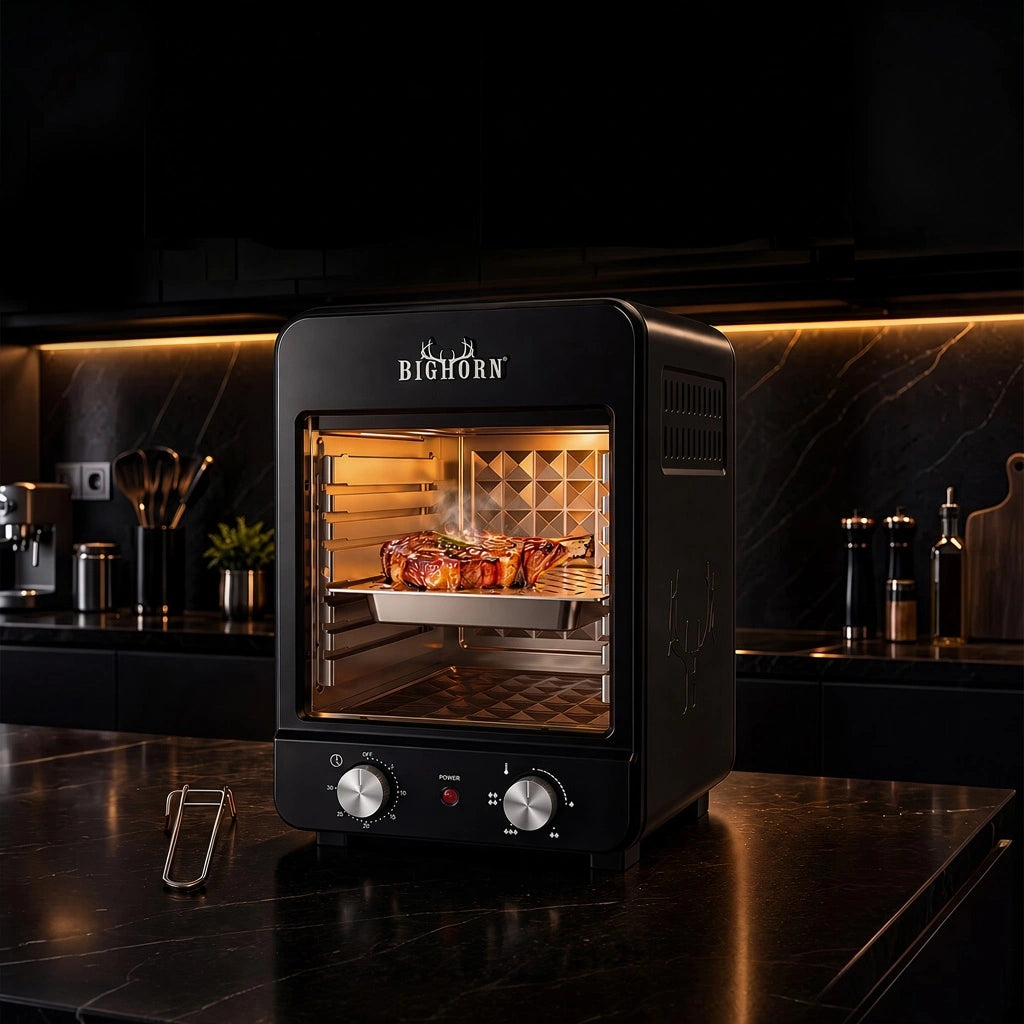
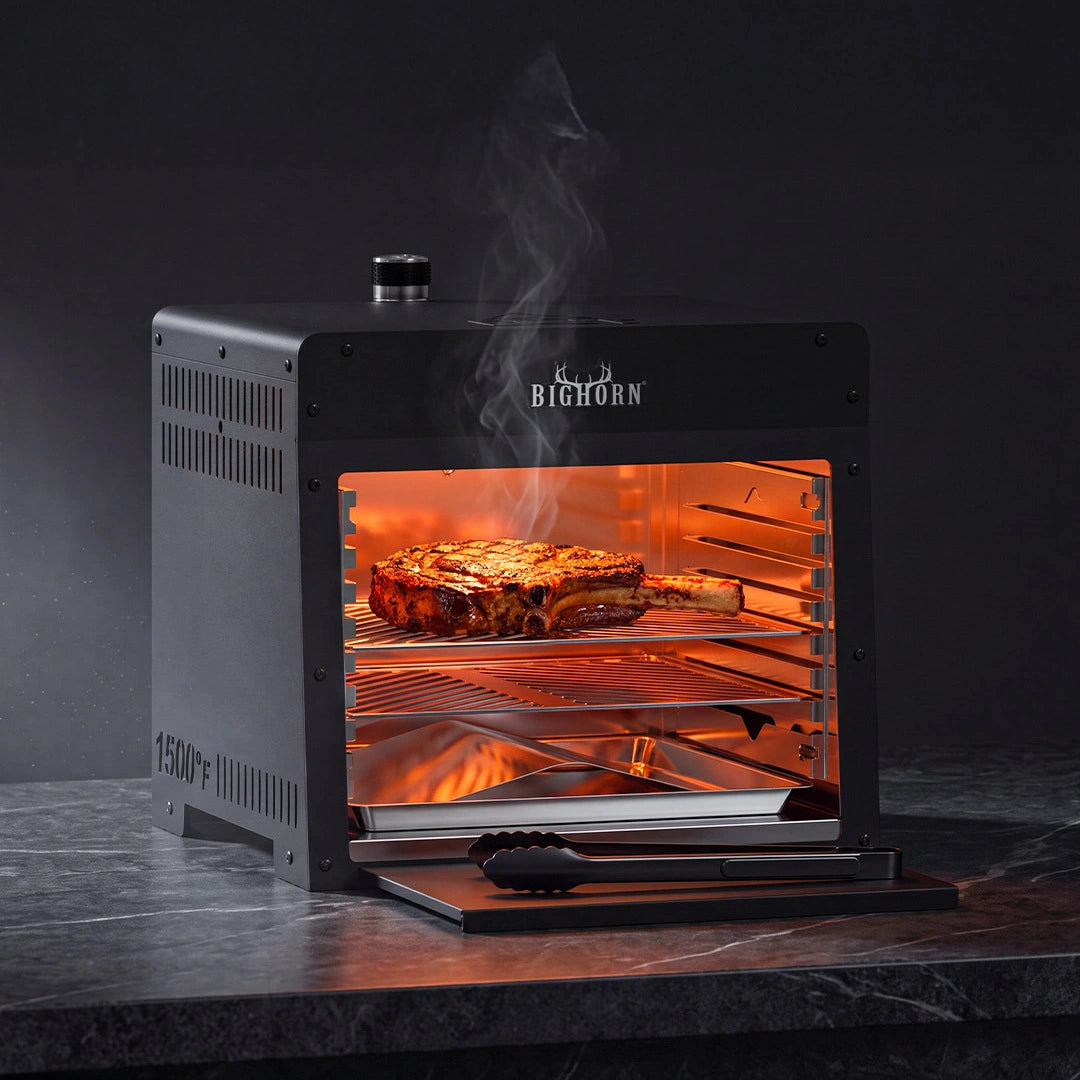
A 16-inch portable infrared steak grill can handle a flattened bird if the bird actually fits. If the wings hang into the fire path, tuck them or choose a smaller chicken.
Why a compact infrared grill is awkward for a whole un-split chicken
A rounded chicken is a dome. Infrared energy hits the highest skin first. The thighs, tucked under, lag. The cavity also steams. On a compact grate the bird may not even sit stably, and drumsticks can roll toward the emitter. Flattening puts breast, thighs, and legs in a closer plane, exposes more skin, and shortens the path from heat to the thickest meat. You still have to watch the breast, which can dry if you leave the bird on a hard, close face after the skin is already dark.
A safe spatchcock method and a dry skin that can actually crisp
Use kitchen shears to cut along both sides of the backbone, then open the bird and press firmly on the breastbone until it lies flat. Pat the skin dry, including the folds around the thighs. Optional: a short uncovered rest in the refrigerator helps the skin dry further, but only if you can keep the bird cold and covered from contamination. Salt the skin. A wet marinade under the skin on infrared can steam and stick, and a sugary glaze at the start will burn. Save any glaze for a last, watched pass if you use one at all.
Wash your hands, the board, and the shears after they touch raw poultry. Do not use the same platter for raw and cooked chicken.

Distance, a pan shield and a two-stage finish if the skin colors too fast
Start with some distance — a higher grate notch if your cooker has one, or at least a fully preheated but not “as close as it will go” first stage. You want the meat climbing toward 165°F while the skin slowly colors. If the skin is pale when the thermometer is almost there, move the bird closer or finish skin-down for a short, watched moment. If the skin is already dark and the thigh is still under 165°F, move the bird farther away, or set a small pan or tray as a temporary shield over the darkest skin, rather than chasing more color.
A two-stage finish is often calmer than one close blast: moderate distance until the probes are close to 165°F, then a brief, closer pass only if the skin still needs it.
A small table: bird weight versus a starting approach
| Bird, roughly | Starting approach | Doneness check |
|---|---|---|
| A smaller chicken that lies flat on the grate | Moderate distance first so the skin does not race | 165°F in breast and thigh, then rest |
| A larger bird that barely fits | More distance, and tuck the wing tips | Probe the thickest spots, not a thin edge |
| Parts instead of a whole bird | Thighs and wings can sit closer, still to 165°F | Use the existing parts guides rather than this whole-bird method |
Probe the breast and the thigh; do not trust skin color alone
FoodSafety.gov lists 165°F for all poultry, including whole chicken and parts. Color of the juices or the skin is not the official test. Infrared can brown skin early, which is exactly why a golden bird can still be under temperature in the hip joint. Probe the thickest breast, avoiding bone, and the thickest thigh. If the two numbers disagree, keep cooking to the lower one, at a safer distance so you do not burn the skin you already have.

Common failures: burnt backbone skin and an underdone thigh
If you leave a fringe of backbone skin or a folded flap along the cut, that thin edge sits close to the emitter and burns while the thigh lags. Trim loose flaps, flatten the bird fully, and start with distance. An underdone thigh with a dark breast usually means the bird was still rounded, or you never left the closest face. Stay with the cooker. NFPA grilling safety starts with a clean grill, clearance from the house, and a fire you do not leave. CPSC gas-grill advice says not to use a gas grill indoors or in a garage, breezeway, carport, or porch. AmeriGas propane cylinder guidance is the right habit check if you are running a propane infrared cooker.
Rest, carve and leftover uses
Rest the bird a few minutes so the juices settle, then carve the breasts off the bone and separate the thighs and legs. Serve with a sharp salad or a simple pan of vegetables cooked after the chicken. Leftover meat is useful in a sandwich, a taco, or a next-day salad, but it is still leftovers: chill it promptly and reheat it to 165°F. Do not leave a carved bird on a warm patio table through a long afternoon.
Food-safety notes for poultry (official guidance)
The official safety number is not a hint. FoodSafety.gov's temperature chart lists 165°F for all poultry. USDA FSIS leftover guidance and FDA safe food handling say to refrigerate within two hours — one hour if the air is over 90°F — keep the refrigerator at 40°F or below, and reheat leftovers to 165°F. Raw poultry stays separate from ready-to-eat food, and the same tongs that lifted the raw bird should not serve the carved one.
If you would rather cook parts than a whole flattened bird, go back to the thighs and wings pages. If you want a compact searing cooker for a bird that actually fits, confirm a current listing in the infrared grill collection.
If you are flattening a chicken for a compact searing cooker, confirm the current 16-inch 1500°F portable infrared steak grill with pizza stone listing, keep some distance while the meat comes up, and cook to 165°F in the breast and thigh.
FAQ
How long does it take to cook a rotisserie chicken at 400 degrees?
A rotisserie at 400°F is a different cooker and a different clock from a spatchcocked bird on infrared. Do not copy an oven or rotisserie minute count onto a close emitter. Flatten the chicken, manage distance so the skin does not burn, and cook to 165°F in the breast and thigh.
Where to stick a thermometer in spatchcock chicken?
Probe the thickest part of the breast, avoiding bone, and the thickest part of the thigh, near the hip but not against the joint. Those two spots can disagree. Keep cooking to the lower number, at a safer distance if the skin is already dark. FoodSafety.gov lists 165°F for all poultry.
Can you cook a spatchcock chicken on a grill?
Yes, and flattening is often the reason a whole bird works on a compact grill at all. On infrared, the bird still has to fit, and you still have to manage distance so the skin does not scorch before the thigh is done. Confirm 165°F; do not trust skin color alone.
How long do I cook chicken on an electric grill?
An electric grill is another different heat source, and this page will not invent a minute count for it. On infrared, time changes with bird size and grate distance. Use a thermometer, cook to 165°F in the breast and thigh, then rest. Skin color is not the doneness test.