







Tailgate & Parties
Infrared tailgate steak sandwiches work when you pack a fast-cooking cut, dress the bread away from the heat, and sear only as hard as the wind allows. This is a menu guide, not a reverse-sear lesson. Confirm official steak temperatures, and do not treat a marketing grill temperature as a timer.
Fast-cooking cuts
Choose a cut that will finish in a short, high-heat window: a thinner steak you can slice for sandwiches, or a skirt, flank, or similar piece you already know how to cook quickly. Thick roasts and a long reverse-sear are a different job; keep how to reverse-sear steak on an infrared grill for that backyard method. At a tailgate, you want a sear you can complete while the rest of the spread stays under control.
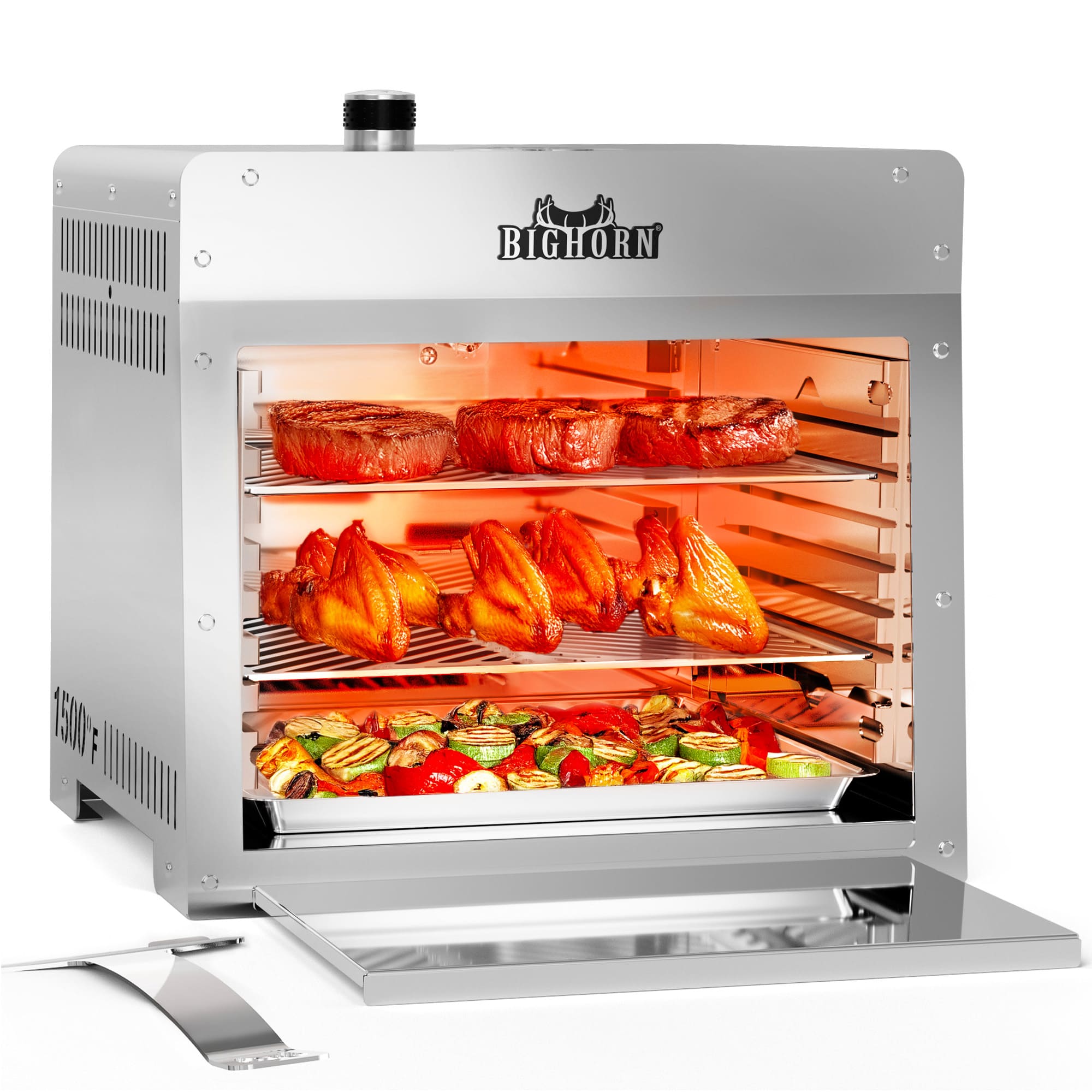
Confirm the grill you are packing on the live page. The current 16-inch portable infrared steak grill and the current portable infrared broiler both publish high marketing temperatures; recheck those figures, and any preheat notes, rather than copying a headline into a game-day clock. Browse the tailgating grill collection if you are still matching a compact unit to the lot.

FDA safe food handling still sets the finish: 145°F with a three-minute rest for steaks and other whole-muscle beef or pork, 160°F for ground beef if you use a smash-style patty instead, and 165°F for poultry. A dark crust is not, by itself, a temperature.
Bread and topping mise
Build the mise at home. Slice the rolls, pack cheese, onions, peppers, and a sauce that will not leak across the cooler, and keep the bread away from the infrared face until the meat is ready. High heat will scorch a sugary glaze or a loaded roll faster than it will finish a cold center. The wider infrared grill high-heat menu covers other sear jobs; this page stays on a sandwich you can assemble in a parking space.
Toast the cut face of the roll only briefly, off the hottest zone if the grill gives you one, or after the meat comes off. Dress the sandwich on a board, not over the burner. That keeps cheese from dripping into an infrared emitter, and it keeps hands out of a very hot gap between two trucks.
Sear timing in wind
Wind is the usual reason a tailgate sear feels weak. Place the grill so a gust does not blow across the face of the burner, and use a low barrier that does not trap exhaust. National Weather Service wind safety is the official wind overview; EPA carbon monoxide information is the reason you do not move the grill into a van, a closed tent, or a garage-style parking structure to "save heat."
Preheat until the unit is honestly ready, then sear in short, watched passes. Do not walk away for a kickoff. Marketing 90-second claims, if a listing still publishes them, are not a sandwich guarantee in a breeze. If the flame looks weak, check the cylinder and the lot wind before you turn the gas higher as a habit.
Holding warm safely
A parking lot is a poor warming cabinet. Do not invent a "keep warm" setting this article does not have, and do not leave sliced steak in the sun or in a barely warm pan for a long tailgate. FDA food safety in your kitchen and Ready.gov food guidance are the official leftover and food-handling references: refrigerate promptly, and do not treat a long, warm hold as safe because the meat "already hit temperature once."
If you must hold a short time, keep the meat covered and hot, or slice to order from a piece that just finished and rested. Cheese can go on the sliced meat on the board so it softens without sitting on a cold roll for an hour. Official leftover storage still applies when you pack food back into the cooler.
The table below is a service plan, not a guaranteed minute chart.
| Step | Tailgate habit |
|---|---|
| Pack | A fast-cooking cut, portioned toppings, rolls, a board, and a thermometer |
| Preheat and place | A legal, outdoor pad, out of a direct gust, with exhaust free to leave |
| Sear | Short, watched passes; official finish temperatures, not a crust color alone |
| Hold and serve | Slice close to serving, and do not park cooked meat in the danger zone |
Portion scaling
Scale by the number of rolls you can actually finish, not by a backyard platter. A compact infrared grill does one or two pieces at a time well, and a crowd will wait more happily for hot sandwiches in waves than for a cold pile. Assign one person to the grill and one person to the board if you can.
Raw meat stays in the cooler until its turn. Official handling does not change because the game is close. NFPA grilling guidance and U.S. Fire Administration cooking-fire prevention still want an attended grill and a clear area, even when the parking lot is loud.
If you are feeding more than a handful of people, start the first sear earlier than you think, and keep a second cut still cold for the next wave. A compact infrared unit is not a banquet range. Official temperatures do not relax for the second wave, and a dry, toasted roll is still a better hold than a stack of finished sandwiches in the sun.
A first sandwich service
Practice the mise at home on the grill you will pack. Confirm the live infrared listing, pack a thermometer, and read the current lot rules before you light anything in a stadium space. Then sear, rest, slice, and dress, in that order, without turning the burner into a warming drawer.
Know how you will shut the grill down, and cool it fully before it rides home.
Key takeaways
- Pack a fast-cooking cut and a board mise; leave long reverse-sears for a calmer backyard session.
- Treat marketing infrared temperatures as live-page claims, not as a sandwich timer, especially in wind.
- Cook steaks to official FDA temperatures, and do not hold sliced meat for a long, warm tailgate.
- Keep the grill fully outdoors, attended, and legal for the lot you are actually in.
For a calmer backyard method, keep how to reverse-sear steak on an infrared grill nearby, and confirm the current 16-inch portable infrared steak grill listing before you treat any published heat as a sandwich timer.
FAQ
What cut should I use for infrared tailgate steak sandwiches?
Choose a fast-cooking steak you can slice for sandwiches, not a thick roast that wants a long reverse-sear. Confirm official finish temperatures with a thermometer, and leave the longer method for a calmer backyard session.
Can I hold the sandwiches on the infrared grill until kickoff?
Do not use the grill as a long warming cabinet, and do not leave sliced meat in the sun. Official leftover guidance wants prompt refrigeration, not a long, warm hold on a parking-lot burner.
Will a marketing 1500-degree headline guarantee a fast sandwich?
No. Treat published infrared temperatures and preheat notes as live-page claims, especially in wind. Sear in short, watched passes, and cook to official FDA temperatures.
Is an infrared tailgate sear legal in every stadium lot?
No. Read the current official lot rules before you pack a propane grill. This menu guide will not invent a venue permit.
More to Read
Leftover Holiday Turkey on the Grill or in the Pizza Oven: Sandwiches, Tostadas and a White Pie
Give leftover turkey a second heat, not another roast: grill sandwiches or tostadas, or bake a white pie, after a safe leftover inventory the night...
Parrilla Taco Night: Carne, Salsas and Grate Space for a Crowd
Run taco night on a parrilla as a grate-space plan: carne, a second protein, a salsa station, and tortillas held soft, without one crowded fire.
Bone-In Lamb Leg or Shoulder on a Santa Maria or Gas Grill
Grill a bone-in lamb leg or shoulder as a roast: Santa Maria height or a gas two-zone fire, a USDA safety floor, and a probe that does not touch bone.
