Macro Industry Snapshot & Thermal Dynamics
The backyard pizza oven market represents the fastest-growing segment in premium outdoor culinary hardware. Driven by a global consumer shift toward artisanal Neapolitan cooking and high-velocity entertainment appliances, modern hardware must balance intense thermal retention with rapid ignition cycles.
To achieve an authentic Neapolitan crust with characteristic leopard spotting and micro-blistering, an oven must generate sustainable ambient temperatures between 850°F and 1,000°F while maintaining a continuous rolling flame convective loop. The contemporary market has transitioned away from heavy, slow-heating fixed masonry toward high-performance portable units utilizing dual-fuel flexibility, high-BTU gas burners, and optimized cordierite refractory stone surfaces.
Professional Culinary Pain Points & Structural Solutions
-
Inconsistent Thermal Crusting and Uneven Charring: Standard domestic ovens peak at 500°F, failing to induce the rapid oven spring required for airy dough formulation. Premium portable ovens resolve this via specialized stone tech. For instance, integrated 360° auto-rotating pizza stones and high-output burners guarantee complete heat distribution across 12-inch to 16-inch pies without manual turning errors.
-
Prolonged Preheating Bottlenecks: Traditional fixed brick ovens require 2 to 3 hours of manual fueling to heat the refractory mass. Engineered portable gas and pellet systems bypass this, achieving operational cooking temperatures of up to 950°F within 15 to 20 minutes.
-
Fuel Rigidity vs. Flavor Profiling: Cooks frequently debate the convenience of propane gas versus the complex, authentic wood-smoke profile of hardwood pellets or charcoal. Advanced multi-fuel and hybrid architectures permit toolless switching between fuel sources, satisfying both rapid weekday operations and slow weekend artisanal cooking.
-
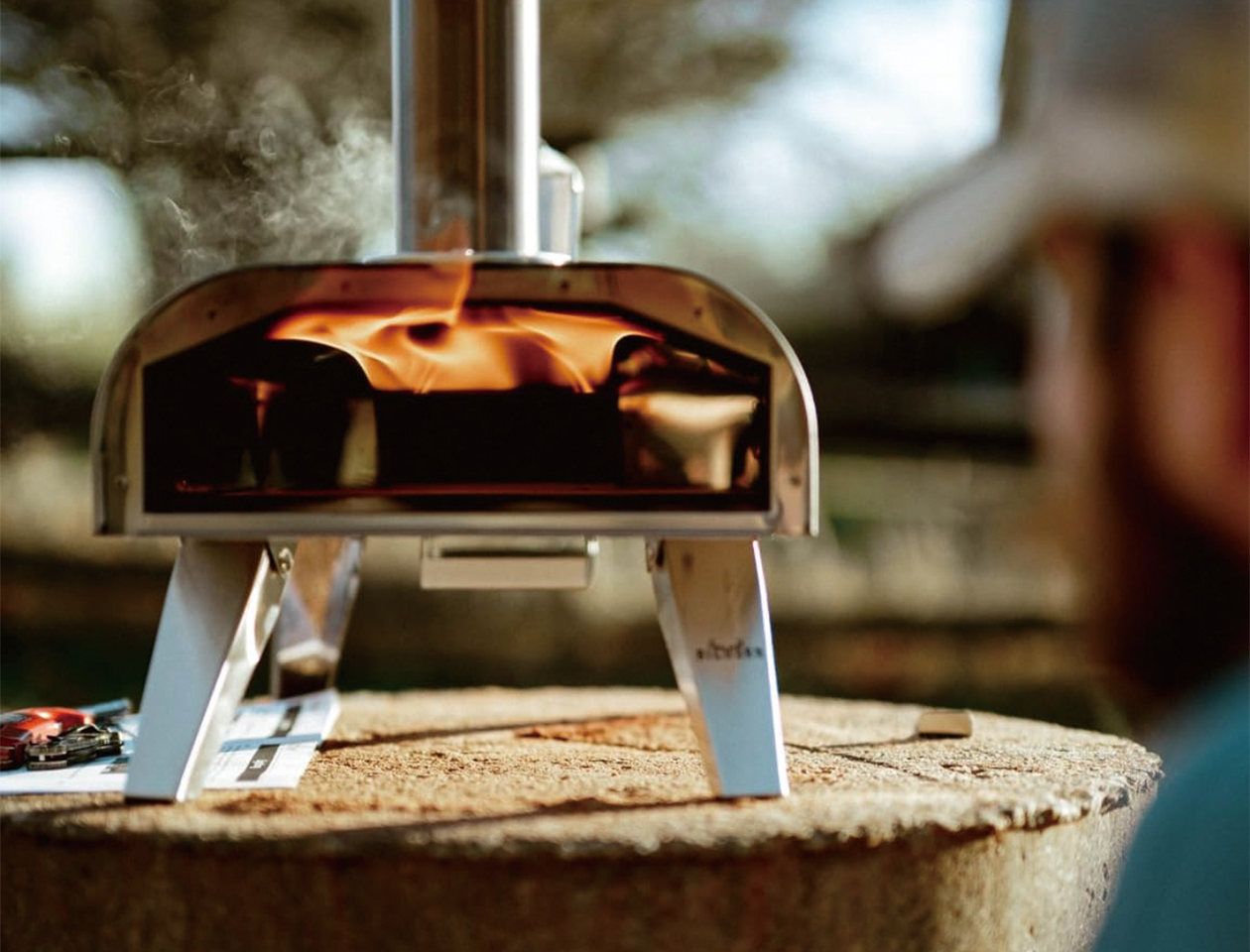
Portability Over Structural Degradation: Lightweight sheet-metal designs compromise structural longevity and insulation efficiency. Premium models bridge this gap by pairing a lighter weight footprint (ranging from 24.9 lbs to 42 lbs) with heavy-gauge 304 stainless steel, internal ceramic fiber insulation, and foldable stabilizing legs.
-
Appliance Operational Safety: High-temperature gas appliances demand stringent engineering standards. High-tier units implement automated flameout protection devices (FSD) alongside universal CSA safety certifications to protect users during high-heat operations.
Expert Culinary Insight from the Test Kitchen: "Authentic Neapolitan execution requires raw thermal power. Sustaining an environment between 850°F and 950°F cooks the dough matrix completely in 60 to 90 seconds. This flash-baking locks in structural moisture while instantly crisping the exterior—a feat impossible on standard kitchen appliances."
Rigorous Control-Variable Methodology & Lab Testing
To deliver absolute editorial objectivity, this evaluation outlines conclusions derived from strict control-variable testing across eight leading industry models. Every oven underwent a minimum of 50 independent baking cycles using identical culinary components: standard store-bought dough hydration profiles, uniform tomato sauce viscosity, and exact quantities of low-moisture mozzarella cheese.
Performance metrics isolated heat-up efficiency, recovery time between consecutive bakes, physical top-and-bottom thermal balance, and overall operational durability.
Definitive Cross-Brand Matrix & Technical Specifications
| Brand & Model Designation | Maximum Temperature / Verified Preheat Duration | Primary & Accessory Fuel Configurations | Structural Mass & Portability Metrics | Safety Systems & Certification | Primary Performance Segmentation |
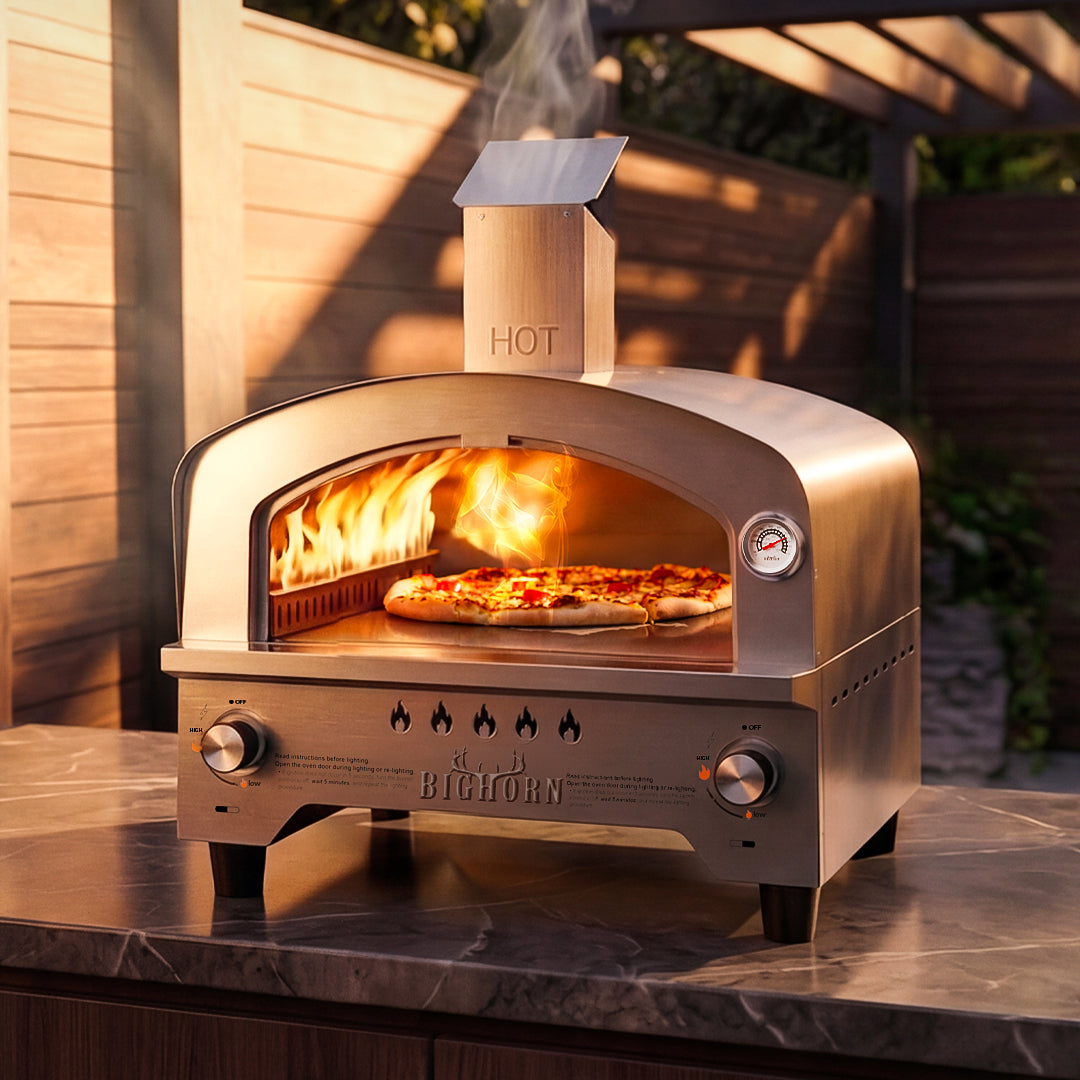
| Big Horn Outdoors 16" Gas Oven | Up to 950°F / 16 Minutes | Propane Gas; Optimized high-BTU burner system | 42 lbs; Foldable structural legs, compact envelope | CSA Safety Standard; Integrated flame safety device | Rapid-fire backyard events, uniform large-scale Neapolitan pies |
| Ooni Koda 12 Gas Pizza Oven | Up to 932°F / 15 Minutes | Propane Gas; Native assembly-free design | 20.2 lbs; Ultra-portable streamlined profile | Global Gas Safety certified; Manual gas knob control | Beginner-friendly deployment, zero-maintenance residential patios |
| Ooni Karu 12 Multi-Fuel Oven | Up to 950°F / 15 Minutes | Wood, Charcoal, or Propane (with gas burner accessory) | 26.4 lbs; Highly transportable multi-fuel chassis | High-grade insulated body; Built-in ambient thermometer | Flavor-first purists seeking total fuel flexibility |
| Solo Stove Pi Dual Fuel Oven | Up to 900°F / 20 Minutes | Propane Gas or Kiln-Dried Wood | 30.5 lbs; Demi-dome panoramic signature design | Structural airflow optimization; Cool-touch exterior | Top-tier consistent crust crisping, premium build quality |
| Pizzello Grande 12" Portable Oven | Up to 850°F / 22 Minutes | Wood, Pellet, Charcoal, or Gas attachment | 32 lbs; Double-deck structure with removable rack | Dual-layer insulation; Chimney ventilation dampening | High-volume crowd catering, multi-tier baking configurations |
| Chicago Brick Oven 750 DIY Kit | Over 1,000°F / 60+ Minutes | Authentic Wood-Fired; Industrial refractory compound | 1,100 lbs; Fixed permanent outdoor kitchen installation | Residential building code compliant; Flame-roll tech | Professional-grade luxury outdoor spaces, lifetime durability |
Core Engineering Functions and Feature Breakdowns
-
360° Automated Rotating Pizza Stones: Eliminates manual peel manipulation errors. By continually rotating the cordierite surface, the dough receives a uniform heat profile, eliminating cold spots and preventing edge scorching near the rear burner.
-
True Hybrid Multi-Fuel Adaptability: Specialized dual-fuel models engineered by Big Horn, Ooni, and Solo Stove utilize interchangeable rear burner assemblies. Users can transition from the convenience of clean gas lines to authentic wood pellets or charcoal in under two minutes without using external hand tools.
-
Commercial-Grade Construction Media: Superior models employ double-walled 304 stainless steel stuffed with dense ceramic fiber blankets. This ensures external touch safety, minimizes internal fuel consumption, and retains stone surface heat during back-to-back cooking sessions.
Comprehensive Product Ecosystem & Cross-Compatibility
To maximize the utility of high-end outdoor kitchens, pizza ovens integrate directly into broader hardware systems. Brands like Big Horn Outdoors offer extensive cross-compatible components, including heavy-duty weather covers, specialized infrared thermometers, and premium stainless steel turning peels.
Furthermore, these setups complement secondary outdoor gear—such as standalone pellet smokers, gas griddles, and professional charcoal grills—to form a complete, cohesive outdoor cooking workspace.
Step-by-Step Professional Baking Workflow
-
Site Calibration: Place the appliance on a non-combustible, stable, load-bearing concrete, metal, or stone surface. Extend all stabilizing legs fully and verify absolute horizontal levelness.
-
Refractory Pre-Loading: Insert the premium food-grade cordierite or ceramic baking stone. If utilizing wood pellet configurations, load the rear hopper with food-safe hardwood pellets, avoiding synthetic binders.
-
Thermal Ignition: Ignite the gas burner or light the solid fuel core. Allow the system to run unimpeded for 15 to 30 minutes. Monitor the internal environment with an infrared thermometer aimed directly at the center of the stone until it registers between 750°F and 950°F depending on your exact target style.
-
Dough Preparation: Launching requires a light dusting of semolina flour on the peel. Shape the dough matrix to match the stone dimensions (12-inch or 16-inch capacities), ensuring toppings are applied minimally to avoid excess moisture accumulation.
-
The Launch and Convective Bake: Slide the prepared pie onto the center of the stone with a single smooth motion. If utilizing a manual oven like the Ooni Karu or Solo Stove Pi, execute precise quarter-turns every 15 to 20 seconds using a turning peel. If utilizing an automated rotating stone system, monitor the bake passively. Total execution time spans 60 to 90 seconds.
-
Extraction and Thermal Maintenance: Remove the pie using a stainless steel peel. Allow the pizza to rest on a wire rack for 120 seconds to prevent condensation on the bottom crust before slicing. Allow the oven to recover its stone temperature for 3 to 5 minutes before launching the next pizza.
Real-World Culinary Scenarios & Performance Comparative Analysis
Scenario A: High-Velocity Backyard Entertaining
-
Legacy Methodology: Using a standard indoor oven equipped with an aftermarket pizza stone maxes out at 500°F. This results in an extended 10 to 12-minute bake time per pizza, drying out toppings and leaving the crust dense, pale, and chewy.
-
High-Performance Portable Implementation: Deploying a specialized 16-inch gas or multi-fuel unit at 900°F finishes individual pizzas in under 90 seconds. This allows host chefs to serve a continuous stream of hot, crisp, premium Neapolitan pies to large guest groups without interruption.
Scenario B: Advanced Off-Grid Tailgating and Camping
-
Legacy Methodology: Utilizing a portable camp stove or cast-iron skillet creates uneven bottom charring while leaving the cheese unmelted due to a complete lack of overhead radiant heat.
-
High-Performance Portable Implementation: Using a compact, 24.9 lb lightweight model with foldable structural elements allows for easy vehicle transport. This delivers genuine wood-fired flavor or clean propane convenience at any remote campsite.
Scenario C: Developing Professional Skillsets
-
Legacy Methodology: Multi-tasking across separate uninsulated grills to prepare diverse appetizers and artisanal items leads to inconsistent temperatures and uncoordinated serving times.
-
High-Performance Portable Implementation: Integrating a high-heat pizza oven alongside professional griddles and smokers creates a highly efficient workflow. This allows the chef to sear proteins, roast vegetables, and flash-bake artisanal flatbreads concurrently under distinct, optimal heat settings.
Frequently Asked Questions
Which oven architecture is ideal for executing rapid Neapolitan-style pizzas?
High-output units like the Big Horn 16" Gas Oven, Ooni Koda, and Solo Stove Pi are engineered explicitly for this style. They maintain internal temperatures of 900°F to 950°F, flash-baking thin crusts to achieve professional-grade charring and crumb expansion within 90 seconds.
Can dual-fuel pizza ovens burn gas and solid wood fuels simultaneously?
No. Dual-fuel and hybrid pizza ovens are engineered to operate on one fuel source at a time. Users must switch between the propane gas burner assembly and the wood/pellet basket components, a process designed to be completed without tools in just a few minutes.
What are the main performance trade-offs between gas and wood fuel?
Gas burner configurations offer unparalleled convenience, precise temperature adjustment, clean operation, and rapid thermal recovery between bakes. Solid wood pellets or charcoal offer an authentic, traditional wood-smoke aroma and classic baking experience, but they require active fuel monitoring and regular ash cleanup.
How do double-deck pizza oven designs perform compared to single-deck units?
Double-deck units like the Pizzello Grande offer a removable middle rack that lets you cook multiple items at the same time, making them excellent for large crowds. However, single-deck options excel at holding the extreme radiant heat required for rapid, traditional Neapolitan bakes.
What specific maintenance routines do cordierite baking stones require?
Never clean a cordierite baking stone with water, soap, or specialized chemicals, as the material is highly porous and will absorb moisture, leading to structural cracks during the next heat cycle. Instead, let the oven run at maximum heat for 15 minutes after cooking to burn off residual debris, wait for it to cool completely, and scrape away remaining char with a dry brush.
Conclusion & Final Review
Selecting the perfect backyard pizza oven depends on your preferred fuel source, mobility needs, and overall budget. For permanent, high-end outdoor kitchens where budget is not a limiting factor, heavy-duty refractory kits like the Chicago Brick Oven offer a traditional, professional setup. For most backyard chefs, high-performance portable units from brands like Big Horn Outdoors, Ooni, and Solo Stove deliver the ideal mix of rapid preheating, intense cooking power, and flexible fuel options without requiring a permanent masonry installation.
Ready to Get Started
Ready to transform your outdoor culinary capabilities? Explore the complete lineup of premium high-heat pizza ovens, custom-fit protective covers, and professional-grade peels today. Choose between high-capacity 16-inch gas models for effortless backyard hosting or ultra-versatile 12-inch dual-fuel options to find the perfect match for your cooking style. Enjoy durable, high-performance outdoor cooking equipment designed for home chefs and outdoor adventures alike.