Outdoor cooking has undergone a massive paradigm shift. No longer confined to niche hobbyists, high-temperature outdoor pizza ovens have permanently transitioned into the mainstream backyard entertaining space. For home chefs chasing restaurant-quality, Neapolitan-style pies with beautiful leopard-spotting and a blistered crust in under 60 seconds, standard indoor kitchen ovens simply cannot compete—they lack the sheer, unadulterated thermal energy required.
To achieve true artisanal results, you need an appliance engineered to consistently cross the 900°F+ (480°C+) threshold. In this comprehensive, data-driven guide, we break down the definitive engineering standards of the industry’s leading outdoor ovens—including Big Horn Outdoors, Ooni, and Gozney—evaluating them based on real-world thermal retention, fuel versatility, volumetric workspace, and practical ergonomics.
📊 The Top Outdoor Pizza Ovens Evaluated
To help you navigate the highly competitive market, the matrix below highlights how the top-performing models compare across critical operational metrics.
| Brand & Model | Primary Fuel Type | Max Verified Temp & Preheat Speed | Cooking Surface & Capacity | Weight & Portability Features | Ideal Culinary Use Case |
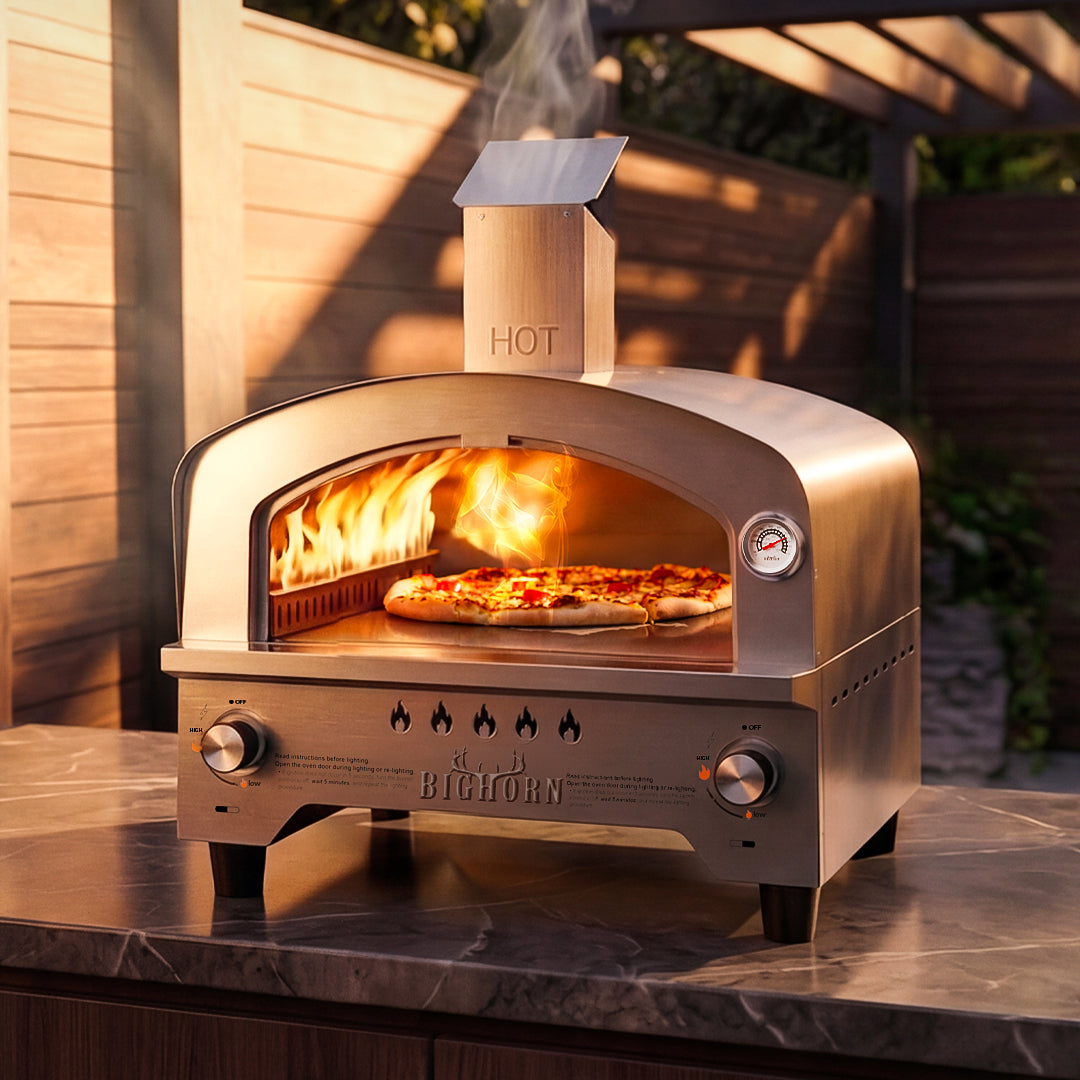
| Big Horn Outdoors 12" Pellet Oven | Premium Wood Pellets | 660°F - 750°F in 18–20 mins (Can spike higher with dense fuel) | 12-inch stone; compact baking chamber | 25 lbs; foldable legs, highly streamlined | Authentic, high-velocity smoky wood flavor on a budget. |
| Big Horn 12" Dual-Fuel Hybrid | Gas (Propane) & Wood Pellets | Up to 850°F in 15 mins (Gas mode) | 12-inch stone; multi-purpose height | 28 lbs; toolless fuel switching | Maximum flexibility for casual weeknights or weekend smoking. |
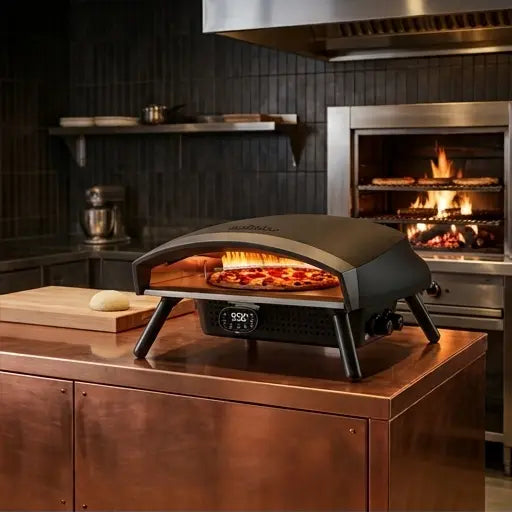
| Ooni Koda 12 Gas Oven | Gas (Propane Only) | 932°F (500°C) in 15 mins | 12-inch cordierite stone; low-profile opening | 20.4 lbs; ultra-portable, folding legs | Fuss-free, instant ignition with precise, rapid heat dials. |
| Ooni Karu 2 Multi-Fuel | Wood, Charcoal, & Gas (Adapter) | 950°F (510°C) in 15 mins (29% faster than V1) | 12-inch stone; integrated glass viewing panel | 24 lbs; robust draft-control chimney | The Purist's Choice: Uncompromised flame control and hybrid fuel options. |
| Gozney Tread Portable | Gas (Rolling Lateral Flame) | 950°F (510°C) in 18 mins | 12mm removable cordierite; dense insulation | 30 lbs; hyper-rugged aluminum exoskeleton | Extreme ruggedness for off-grid camping, tailgating, and rapid cool-down. |
🪵Wood-Fired Flavor vs. Gas Convenience
The most critical decision point when purchasing an outdoor pizza oven is choosing your fuel architecture. Each system presents distinct thermodynamic profiles and workflow dynamics.
1. Wood Pellets & Hardwood (The Artisan's Choice)
-
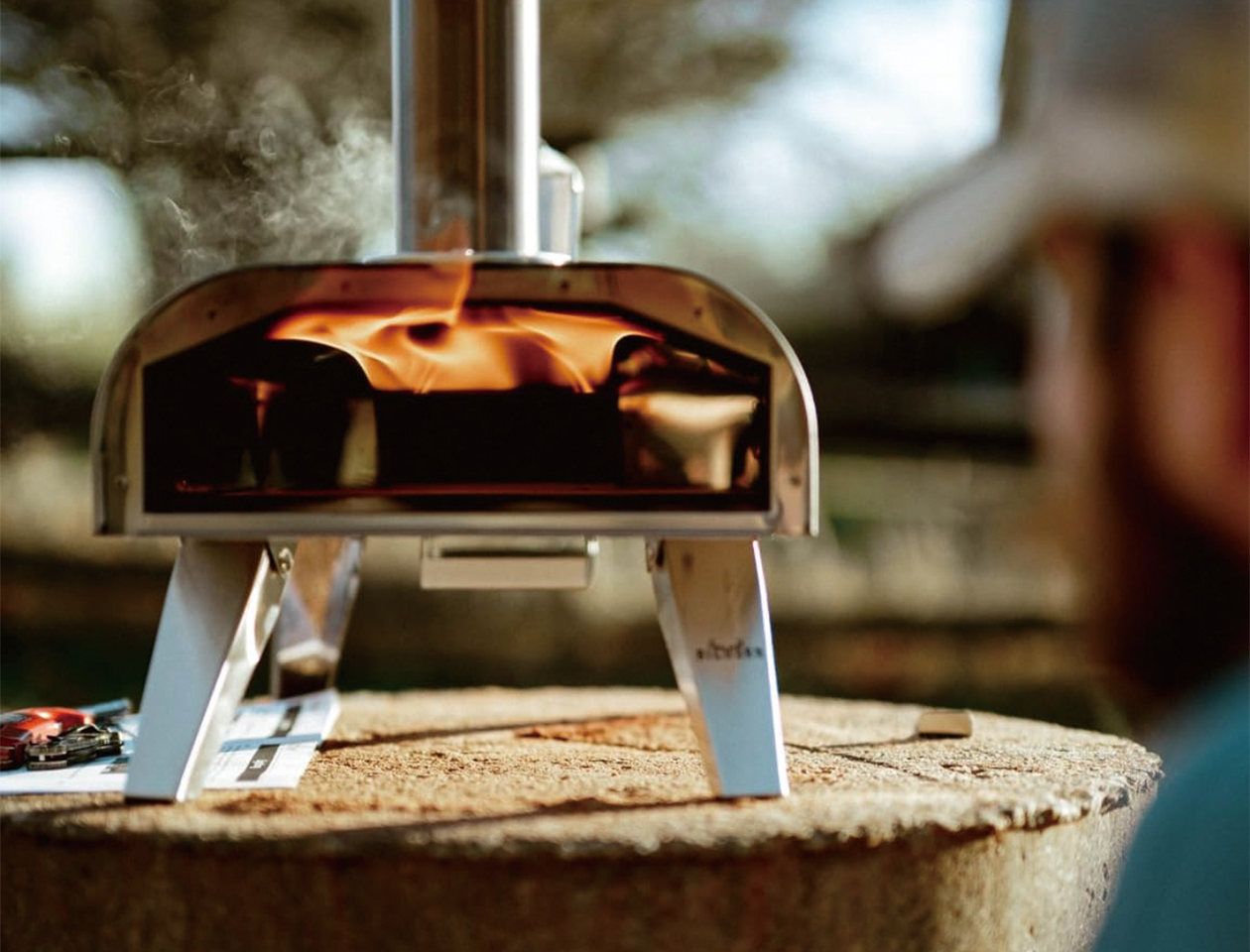
The Thermodynamic Profile: Burning premium hardwood or dense food-grade wood pellets generates a high-velocity, rolling convective flame across the ceiling of the baking chamber. This infuses the dough with an authentic, smoky, wood-fired char and rich wood-fired flavor profile that gas cannot replicate.
-
The Real-World Reality: Wood systems require active fire management. You must meticulously monitor the fuel hopper, maintain proper airflow, and manage ash buildup between bakes to prevent structural temperature drops.
2. Liquid Propane Gas (The Precision Chef's Choice)
-
The Thermodynamic Profile: Propane gas burners (such as the L-shaped burners in Ooni units or the lateral rolling flame system in Gozney models) offer instantaneous ignition and absolute, effortless temperature control via a simple turn dial.
-
The Real-World Reality: Gas delivers dead-consistent, repeatable results without any ash management or cleanup. It preheats up to 15-20% faster on average, making it the superior alternative for busy weeknight cooking and spontaneous backyard gatherings.
📐 Structural Features That Dictate Real-World Success
When evaluating options like Big Horn Outdoors, Ooni, or Gozney, look beyond headline marketing metrics. Focus heavily on these three engineering pillars:
🧱 Insulation Thickness & Stone Quality
A pizza oven is only as good as its heat retention. Top-tier models utilize thick, high-density cordierite baking stones (ranging from 10mm to 12mm) wrapped in heavy-duty commercial grade ceramic fiber insulation. This structural density ensures that when a cold, hydrated dough hits the stone, the floor temperature doesn't plummet. High heat retention allows for continuous, back-to-back baking without long recovery windows.
📏 Internal Clearance & Opening Size
While a 12-inch portable oven is incredibly lightweight and easy to travel with, a 16-inch or high-clearance model offers a massive mechanical advantage. A larger opening gives you ample room to comfortably launch your dough, utilize a turning peel, and rotate the pie 180 degrees midway through the bake without accidentally clipping the edges against the internal flame walls.
🏗️ Stand Height and Outdoor Workspace Ergonomics
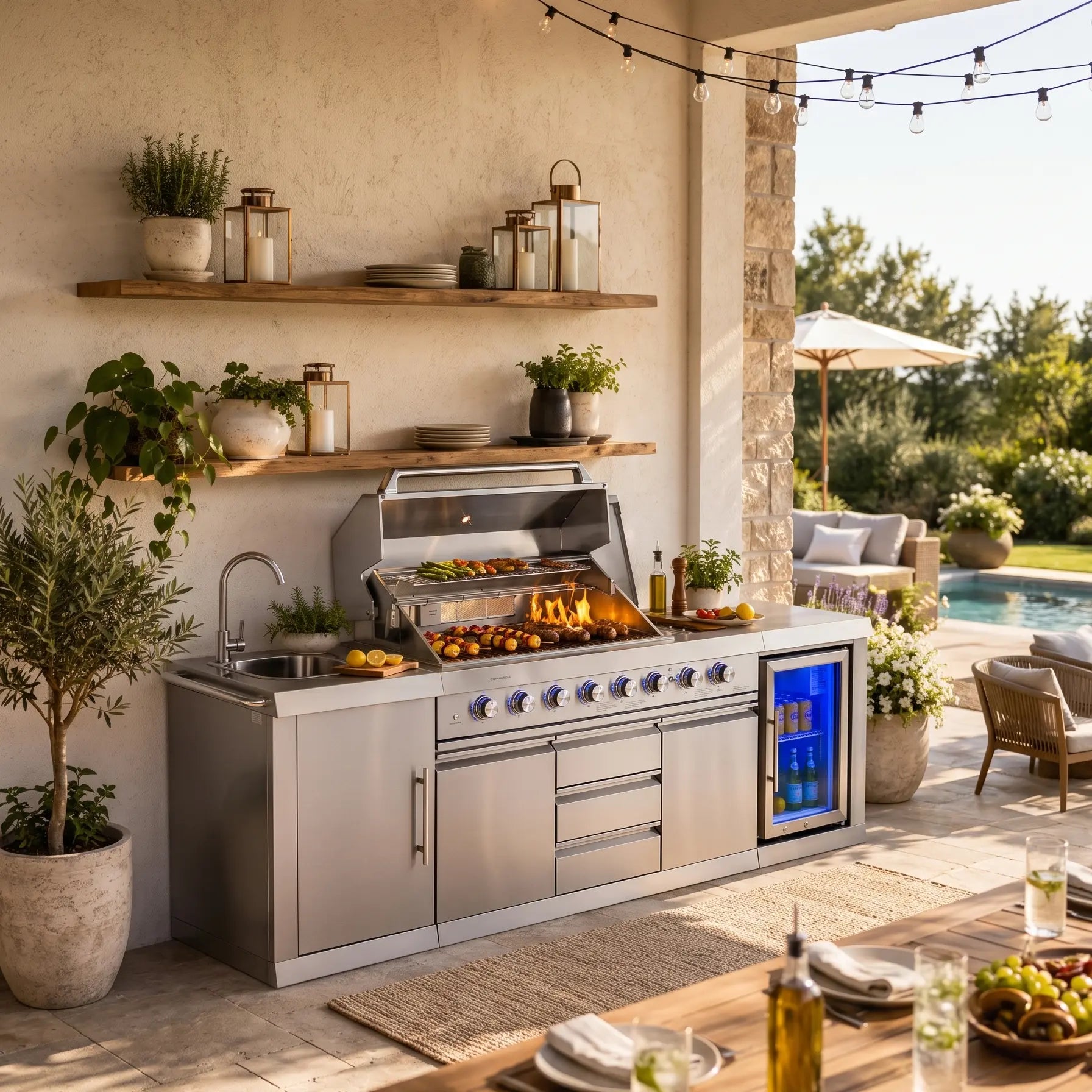
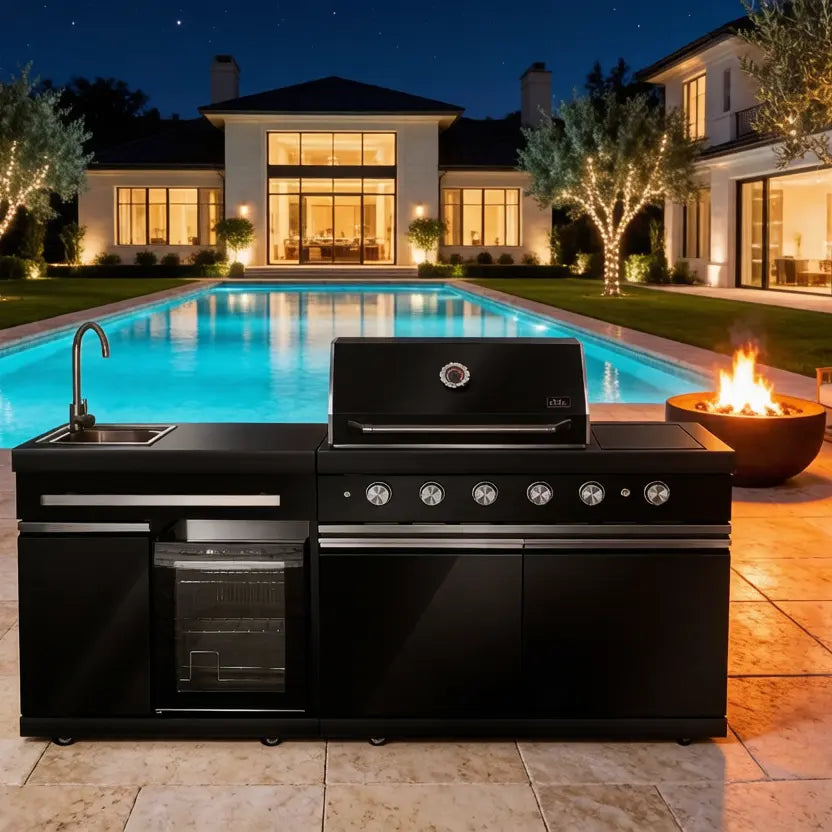
Experienced pizza chefs agree: never place a 950°F oven on a low table. To properly monitor the crust’s rise, observe the bubbling of the cheese, and manage the flame without constantly bending over, your oven must sit on a chest-high countertop structure or a dedicated, heavy-duty modular cart. Your outdoor kitchen layout should always feature a heatproof prep station placed immediately adjacent to the oven to handle stretching, saucing, and toppings smoothly.
👨🍳Launching & Baking the Perfect Pie
Even with a world-class oven, flawless execution relies on proper technique. Follow this battle-tested workflow to avoid the common pitfalls of outdoor baking:
Step 1: Thermal Calibration via Infrared
Fire up your oven according to the manufacturer's manual. Do not guess the temperature based on time alone. Always use a professional handheld infrared thermometer pointed directly at the center of the cordierite stone. Wait until the floor temperature registers a solid, stable range between 750°F and 900°F (400°C to 480°C) before attempting your first bake.
Step 2: Hydration, Thickness, and Prep Optimization
Keep your dough stretch even and thin—ideally thin enough to see light filtering through it when held up. If the dough is too thick, the intense convective ceiling heat will completely scorch the top cheese and toppings long before the center of the crust cooks through. Keep your toppings light; overloading the pie introduces excess moisture, resulting in a soggy center.
Step 3: Mastering the Launch (The "Non-Stick" Method)
Dust a premium perforated metal pizza peel with a light dusting of semolina flour or coarse flour. The perforations are vital: they allow excess flour to drop through, preventing burnt, bitter ash from sticking to the bottom of your crust.
Give the peel a quick, horizontal shake (the "shimmy") right after placing your sauced dough on it to ensure it moves completely freely. If you encounter a sticky spot, slide a long-handled offset spatula dusted with flour directly underneath the sticking point before approaching the oven.
Step 4: The High-Velocity Bake & Turn
Step up to the oven, tilt the peel at a shallow angle toward the back of the stone, and slide the pie off using a sharp, confident, forward-and-back jerking motion. Once inside, do not walk away. At 900°F, a pizza will cook fully in 60 to 90 seconds.
Using a dedicated round turning peel, rotate the pizza 90 to 180 degrees every 10 to 15 seconds to ensure an even, beautiful brown blister across all sides of the crust. Pull the pie, let it rest on a wooden cutting board for two minutes to allow the structural steam to escape, then slice and serve.
🥩Unleashing Multi-Fuel Versatility
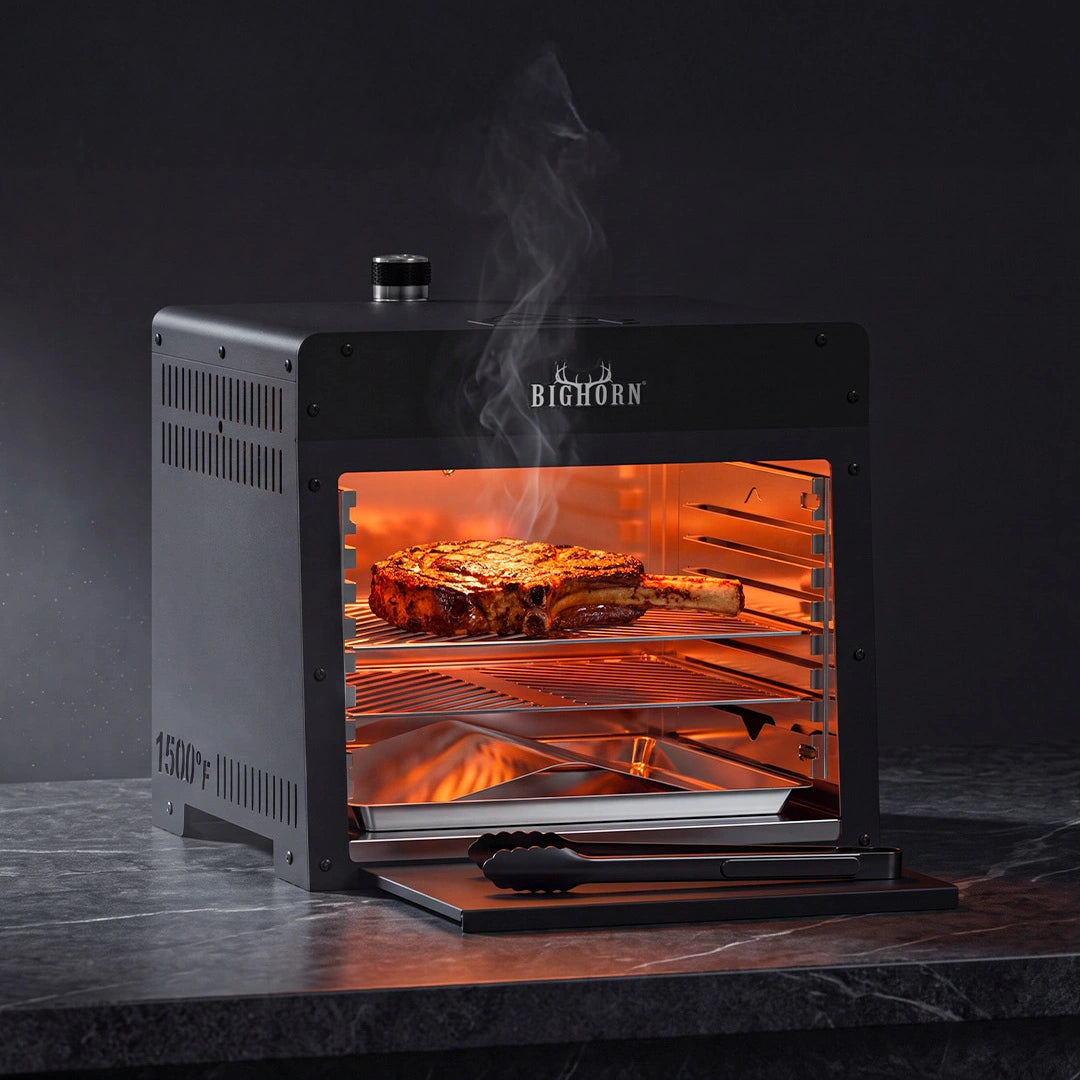
A high-end outdoor oven shouldn’t be a single-use luxury appliance. Because heavy-duty models like those from Big Horn Outdoors maintain intense, sustained radiant heat, they double as phenomenal high-heat roasting chambers.
By utilizing heavy, preheated cast-iron skillets or sizzler pans, you can seamlessly cross-sell this cooking workflow to handle:
-
Cast-Iron Seared Steaks & Burgers: Lock in deep juiciness with a restaurant-grade, ultra-crisp exterior crust that conventional grills cannot match.
-
Wood-Fired Salmon & Halibut: Infuse delicate seafood with a gorgeous kissed-by-the-flame smoky profile.
-
Charred Vegetables: Blister bell peppers, asparagus, and brussels sprouts in under three minutes, preserving a vibrant, crisp bite alongside a deep smoky sweetness.
🤖Critical Buyer FAQ
What is the exact temperature difference between an outdoor pizza oven and a kitchen oven?
Standard home kitchen ovens generally max out at 500°F to 550°F (260°C to 280°C), requiring 10 to 15 minutes to bake a pizza, which often dries out the dough. Professional outdoor pizza ovens (such as Big Horn, Ooni, and Gozney) are engineered with insulated steel bodies and cordierite stones that reach 900°F to 1,000°F (480°C to 540°C), cooking authentic Neapolitan pies in 60 to 90 seconds for a perfectly crisp exterior and tender, airy interior.
How do you completely prevent pizza dough from sticking to the peel?
To ensure a clean launch into a hot oven, use a lightweight, perforated aluminum peel. Dust the surface lightly with semolina flour, which acts like microscopic ball bearings. Work quickly once the dough is on the peel—never let a wet, topped pizza sit on a peel for more than 60 seconds. Always perform a test shake (the "shimmy") to verify the dough moves freely before attempting your launch.
Can you safely use a wood pellet pizza oven on a standard plastic patio table?
No. Outdoor pizza ovens generate extreme radiant heat downward and outwards. Placing them directly on plastic, glass, or unstable wood surfaces creates a severe fire and structural hazard. Always position your oven on a sturdy, dedicated steel, stone, stainless steel, or heavy-duty heatproof outdoor modular table engineered specifically to sustain high culinary temperatures and weight.
Is a hybrid dual-fuel pizza oven worth the extra investment?
Yes. Dual-fuel hybrid pizza ovens provide the ultimate long-term return on investment. They offer the sheer convenience and rapid, effortless temperature control of liquid propane gas for casual weeknight meals, while retaining the engineering capability to switch to authentic wood pellets or charcoal on the weekends when you want to chase a deep, traditional smoky flavor profile.
🏆How to Choose Your Perfect Setup
Your final selection should align directly with your specific operational environment, budget constraints, and flavor preferences:
-
Choose the Big Horn Outdoors Collection if you are looking for an incredibly rugged, highly portable entry point into high-heat backyard cooking. It balances fast preheating cycles (15–20 minutes) and excellent multi-food versatility (steaks, veggies, fish) with superb cost efficiency.
-
Choose the Ooni Koda or Karu Series if your primary goal is absolute, ultra-high temperature speed (932°F+ in 15 minutes flat), ultra-lightweight portability (20.4 lbs), and you require integrated precision features like borosilicate glass viewing panels or digital thermometers.
-
Choose the Gozney Ecosystem if you prioritize heavy-duty, commercial-grade architectural insulation, ultra-rugged aluminum construction built for rough camping transit, and an engineered lateral flame system that perfectly mimics a traditional brick pizzeria oven.