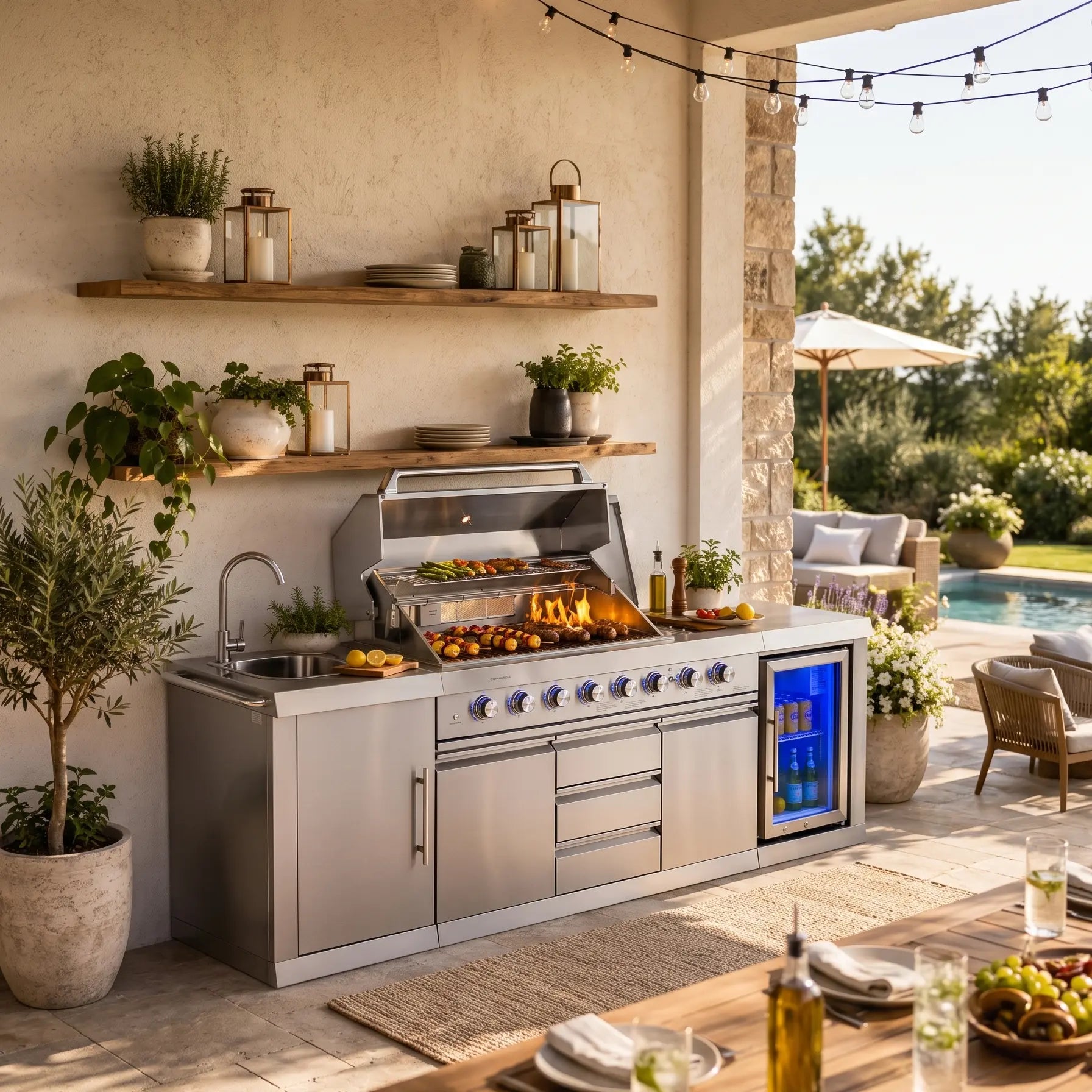
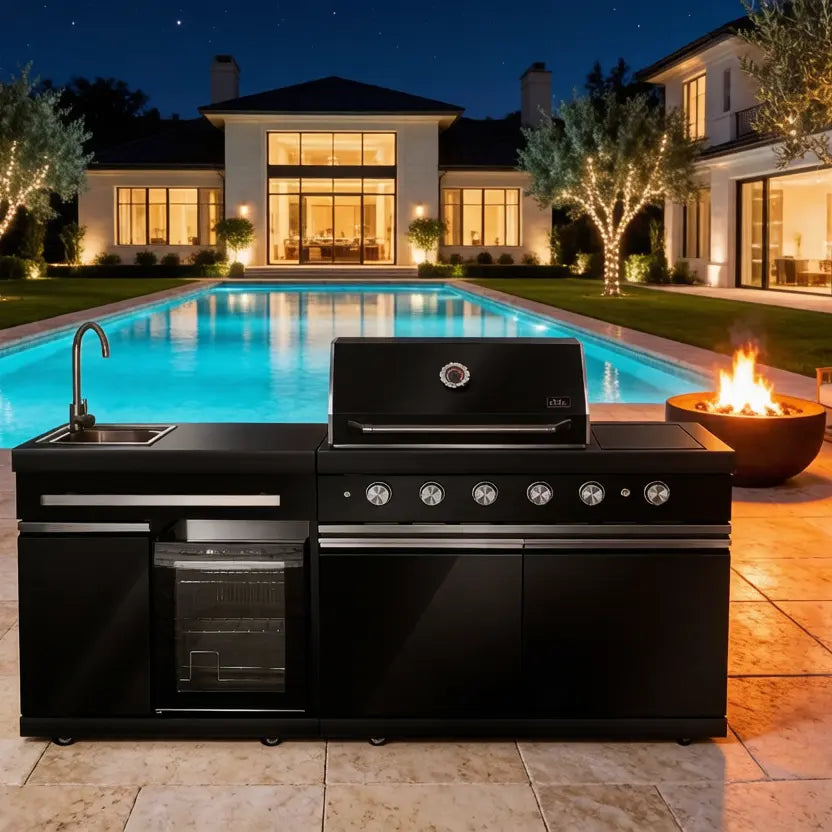
An infrared grill uses radiant heat from a ceramic, metal, or glass emitter to cook food directly, delivering faster preheats, higher searing temperatures, and juicier results than standard convection grills. It excels at steakhouse-style sears and quick cooks but requires careful heat management and model-specific setup.
How Does an Infrared Grill Work?
An infrared grill heats a solid emitter plate with gas or electricity; that plate radiates infrared energy directly into food, minimizing hot-air convection and flare-ups. This direct radiant transfer enables very high surface temperatures and rapid searing while helping meats retain moisture.
Infrared grills replace the open-flame-to-air heating of conventional gas grills with a dedicated emitter between the burner and the cooking grate. The emitter—commonly ceramic tiles, perforated stainless steel, or radiant glass—absorbs flame energy and re-emits it as infrared radiation that penetrates food surfaces efficiently.
Because the heat moves primarily by radiation rather than by circulating hot air, cooking is less affected by wind or lid position, and hot/cold spots are reduced when the emitter is well designed. The result is faster preheats (often 3–5 minutes to high heat), consistent searing, and shorter cook times for thin cuts and high-heat tasks.
What Are the Main Types of Infrared Grills?
Infrared grills fall into three main categories: dedicated infrared grills, hybrid grills with an infrared sear zone, and portable tabletop infrared units. Each serves different cooking styles, from backyard steak searing to tailgating and compact patios.
-
Dedicated infrared grills: All burners use infrared emitters, optimized for high-heat searing and fast cooks across the entire grate. Ideal for frequent steak, chops, and seafood users who prioritize crust and speed.
-
Hybrid infrared grills: Combine traditional convection burners with one or more infrared sear stations or rear infrared rotisserie burners. Best for cooks who want low-and-slow flexibility plus a powerful sear zone.
-
Portable/tabletop infrared grills: Compact propane units designed for tailgating, camping, and small decks. Many emphasize ultra-high sear temperatures in a small footprint.
Emitter materials influence performance and care. Ceramic emitters commonly reach 600–1,000°F with quick, even heat; stainless steel or metal heat-emitter systems often run a bit lower (around 300–650°F) but can be very even and durable; radiant glass panels (brand-specific) aim for wide temperature ranges with minimal flare-ups.
Which Foods Cook Best on an Infrared Grill?
Infrared grills excel at high-heat, fast-cook tasks: thick steaks, chops, burgers, fish fillets, and vegetables that benefit from rapid caramelization. They can also handle pizza and flatbreads when paired with a stone or appropriate accessory.
The technology's strength is generating intense surface heat quickly, which promotes Maillard browning and a sturdy crust while limiting moisture loss. Steaks and chops sear efficiently; fish and delicate proteins cook evenly with less risk of sticking or tearing when the grate is properly preheated and oiled.
While infrared is not inherently a low-and-slow system, many hybrid models allow you to use convection burners for roasting or indirect cooking, then finish on the infrared sear zone. For pizza, the key is sustained high heat and a thermal mass (stone/steel) to mimic oven-floor conditions; some portable infrared units are marketed specifically for steak searing rather than pizza baking.
How Hot Do Infrared Grills Get and How Fast Do They Preheat?
Most infrared grills reach 700–1,000°F routinely, with some portable steak-focused models advertising up to 1,500°F. Preheat times are typically 3–5 minutes to high heat, faster than many conventional gas grills.
Temperature capability depends on the emitter design and burner output. Ceramic tile systems commonly deliver 600–1,000°F with strong searing performance; certain dedicated infrared broilers push higher for very short sears. The rapid preheat comes from the emitter's ability to convert flame energy to radiant heat efficiently, reducing the time spent waiting for the entire cooking chamber to heat by convection.
Practical implication: plan for short sear windows and have your mise en place ready. For thicker cuts, use a two-zone approach (or hybrid convection burners) to avoid overcooking the exterior while chasing internal doneness.
What Fuel Types Power Infrared Grills?
Infrared grills are most commonly powered by propane or natural gas; a smaller subset uses electricity for countertop or indoor-capable models. Fuel choice affects portability, installation, and operating cost.
-
Propane (LP): Typical for portable, freestanding, and many built-in infrared grills. Offers high heat and mobility, with tank refills or exchanges as the main logistical consideration.
-
Natural gas (NG): Common for permanent outdoor kitchens and built-ins. Requires a dedicated gas line and professional installation but eliminates tank management.
-
Electric: Found in some countertop infrared-style cookers intended for indoor or covered use. Check manufacturer guidance for indoor suitability and ventilation.
Never assume interchangeability between LP and NG without a certified conversion kit and manufacturer approval. Gas type, pressure, and orifice sizes are model-specific and safety-critical.
How Do You Manage Heat and Avoid Overcooking on Infrared?
Control infrared heat by mastering preheat time, zone usage, and sear duration: preheat just enough, sear briefly, then move to lower heat or rest. Because infrared delivers intense radiant energy, small timing changes have big results.
-
Preheat discipline: Aim for 3–5 minutes to high rather than extended preheats that can overshoot target surface temps.
-
Two-zone cooking: On hybrids, keep one side on convection or low infrared for finishing; on dedicated infrared, use burner staging or brief lid-open sears.
-
Sear timing: For steaks, think in 60–90 second increments per side at very high heat, then finish via residual heat or a lower zone.
-
Thermometer use: Rely on an instant-read thermometer to avoid guesswork, especially with thick cuts.
Wind and ambient temperature affect convection grills more than infrared, but extremely cold conditions can still influence regulator performance and perceived heat. Keep the lid open during aggressive searing to reduce radiant buildup if needed.
Where Should You Use an Infrared Grill Safely?
Use infrared grills outdoors in well-ventilated areas, on stable, non-flammable surfaces, and away from walls, railings, and overhead structures. Portable models are for tailgating, camping, and small patios—not enclosed spaces unless explicitly rated for indoor use.
Safety essentials:
-
Clearance: Maintain manufacturer-specified distances from combustibles; high radiant output can damage nearby materials.
-
Stability: Place on level ground; secure propane tanks upright and protected from tipping.
-
Ventilation: Never operate gas grills in garages, tents, or enclosed RVs unless the unit is expressly designed and certified for indoor use.
-
Handling: Use heat-resistant gloves and long tools; infrared surfaces get extremely hot quickly.
For tailgating, confirm venue rules on grill types and fuel. Many portable infrared grills are compact but still require safe setup and post-cool-down before transport.
How Do You Clean and Maintain an Infrared Grill?
Clean infrared grills with a burn-off routine, gentle brushing, and periodic inspection of the emitter and burner ports. Avoid abrasive tools and liquids on ceramic emitters, and keep moisture away from internal components.
Step-by-step care:
-
Burn-off: After cooking, run on high with the lid closed for 5–15 minutes to ash off residue.
-
Grate cleaning: Once cooled slightly, brush grates with appropriate bristles (nylon for porcelain/cast iron; stainless-safe brushes for stainless). Soak grates if needed.
-
Emitter care: Gently brush ash from ceramic or metal emitters; use a wooden toothpick to clear clogged ports. Do not use water or harsh chemicals on ceramic burners.
-
Inspection: Every few months, check for cracks in ceramic, corrosion on metal parts, and blockages in venturi tubes (spider webs, debris). Replace worn parts per manufacturer guidance.
-
Drying and storage: Keep the grill dry; moisture can cause rust or affect ceramic performance.
Consistent, gentle maintenance preserves even heat and extends emitter life. If the burner gets wet, dry thoroughly before reuse.
What Should You Look for When Buying an Infrared Grill?
Choose an infrared grill by matching cooking style, space, fuel access, and portability needs to the right emitter type and form factor. Prioritize verified specs, safety features, and accessory compatibility over marketing claims.
Decision criteria:
-
Cooking style: Frequent steak/sear focus favors dedicated infrared; mixed grilling favors hybrids with a sear zone.
-
Space and mounting: Built-in vs freestanding vs tabletop; measure installation openings and clearances.
-
Fuel: Propane for mobility; natural gas for permanent outdoor kitchens; electric only where explicitly allowed.
-
Portability: Weight, folding legs, and carry handles matter for tailgating and camping.
-
Accessories: Drip trays, grates, covers, and stones/peels should be model-compatible.
-
Safety and build: Stable frame, quality regulators/hoses, and robust emitter protection.
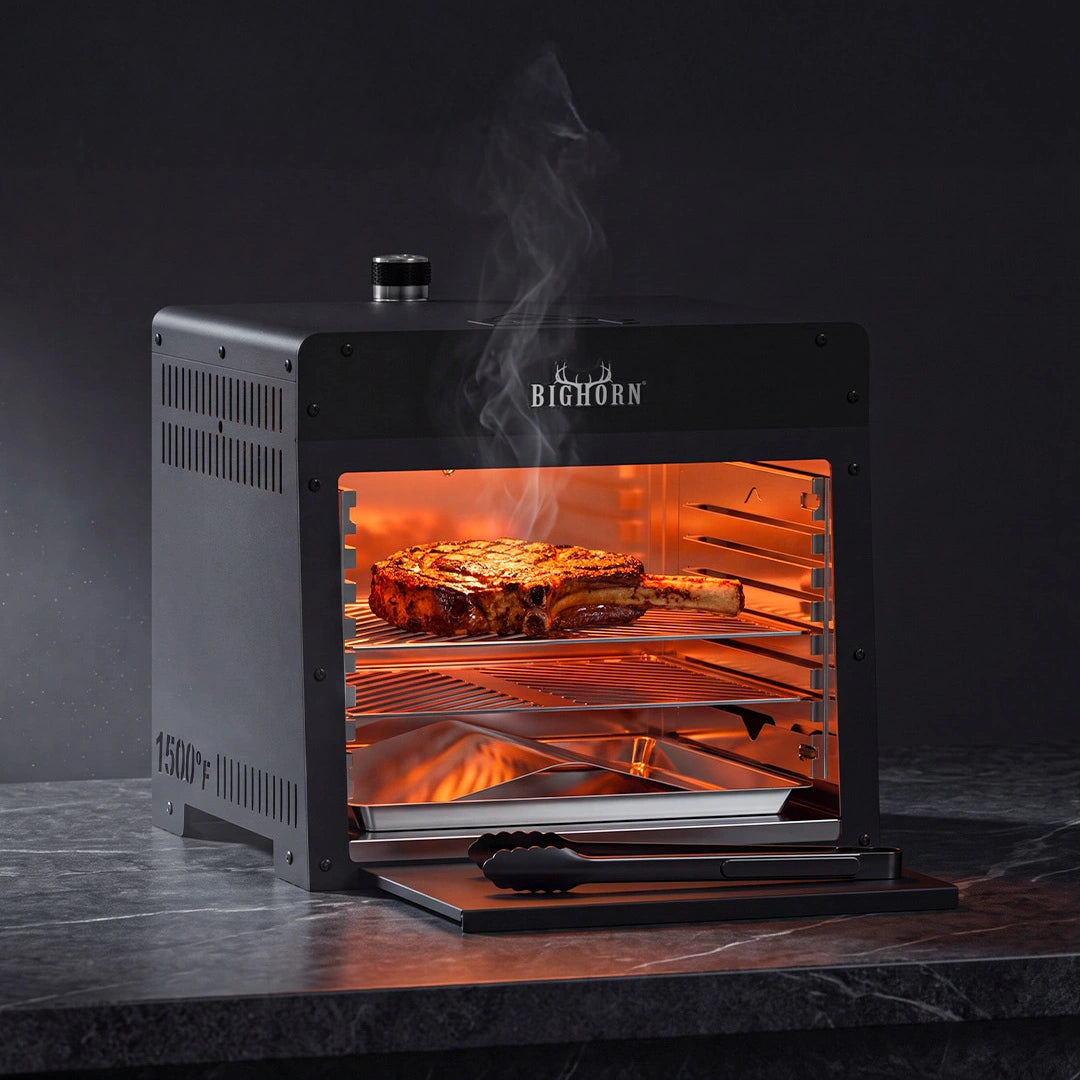
Big Horn Outdoors offers multiple outdoor-cooking formats, including infrared steak-grill options in 9-inch, 16-inch, and 21.2-inch sizes, with some models marketed for temperatures up to 1,500°F. Always verify the exact model's fuel type, dimensions, heat rating, included components, and indoor/outdoor suitability on the current official product page before purchase.
Big Horn Outdoors Expert Views
"Infrared grilling is most effective when treated as a high-heat finishing tool rather than an all-purpose burner. For steaks, preheat just enough to reach target surface temperature, sear briefly to develop crust, then finish via residual heat or a lower zone to protect the interior. On hybrid systems, pair a convection burner for gentle cooking with an infrared sear station for the final crust. Keep emitters clean and dry, avoid abrasive tools on ceramic surfaces, and use instant-read thermometers to time doneness precisely. For portability, confirm fuel type, clearance requirements, and whether accessories like drip trays or stones are included or sold separately."
How Does an Infrared Grill Compare to Traditional Gas Grills?
Infrared grills deliver higher searing temperatures and faster preheats with less flare-up risk, while traditional gas grills offer broader low-and-slow flexibility and familiar heat profiles. Hybrids aim to combine both strengths.
For steak-centric cooks who value speed and crust, infrared has a clear advantage. For all-around grilling, smoking, and indirect roasting, a traditional or hybrid gas grill may be more versatile.
When Should You Choose Portable vs Built-In Infrared?
Choose portable infrared for tailgating, camping, and small patios where mobility and compact storage matter; choose built-in for permanent outdoor kitchens where performance, integration, and natural gas convenience are priorities.
Portable units emphasize lightweight frames, folding legs, and propane operation, making them ideal for on-the-go searing. Built-in models support larger cooking areas, integrated side burners, and custom cabinetry, often with natural gas lines for continuous fuel. Assess your typical cook volume, venue rules, and whether you need a dedicated sear station within a larger grill system.
Big Horn Outdoors designs equipment for varied settings—from patios and backyards to campsites and RV travel—so match the model's size, fuel, and environment rating to your intended use. Always confirm current specifications and compatibility on the official product page.
Conclusion
If your priority is fast, high-heat searing with juicy results and minimal flare-ups, an infrared grill is a strong choice—especially for steaks, chops, and quick cooks. Select a dedicated infrared model for pure sear performance, a hybrid for versatility, or a portable unit for tailgating and small spaces. Pair it with disciplined preheating, short sear windows, and proper maintenance to maximize results. For shoppers evaluating infrared steak-grill formats, Big Horn Outdoors provides multiple sizes and configurations; verify the exact model's specs, fuel, and accessory compatibility before buying.
FAQs
Can I use an infrared grill indoors?
Only if the specific model is explicitly rated and certified for indoor use. Most gas-powered infrared grills are for outdoor, well-ventilated areas only. Check the manufacturer's guidance and local codes before any indoor operation.
Do infrared grills work well in windy conditions?
Yes, generally better than convection grills. Because infrared relies on radiant heat rather than hot air circulation, wind has less impact on cooking consistency, though extreme cold can still affect regulator performance.
How often should I clean the infrared emitter?
Perform a 5–15 minute burn-off after each use, then gently brush the emitter and clear ports as needed. Inspect and deep-clean every few months or at season start/end, checking for cracks, corrosion, or blockages.
Are infrared grills hard to control for beginners?
They require shorter sear windows and more attention to timing, but are straightforward with practice. Use an instant-read thermometer, start with brief sears, and leverage two-zone cooking or hybrid burners to finish gently.
What accessories matter most for infrared grilling?
Model-compatible grates, drip trays, covers, and, where appropriate, pizza stones or sear accessories. Always confirm fit and compatibility with your exact model, and avoid abrasive brushes on ceramic emitters.