
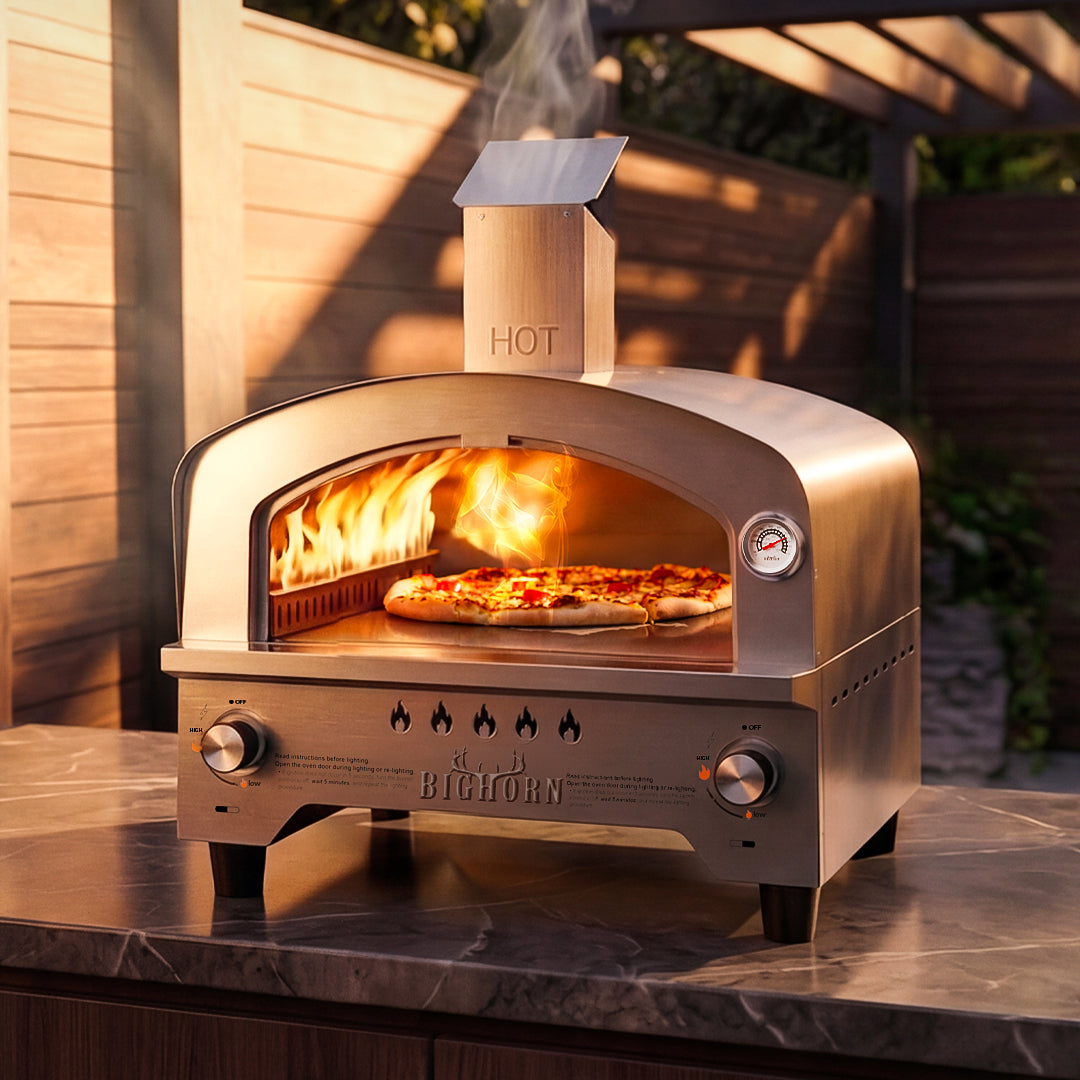
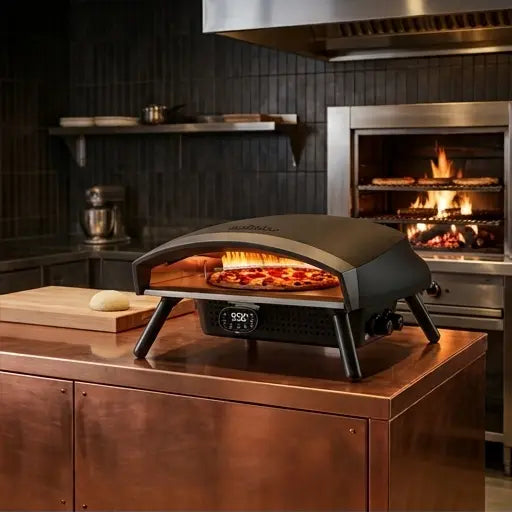
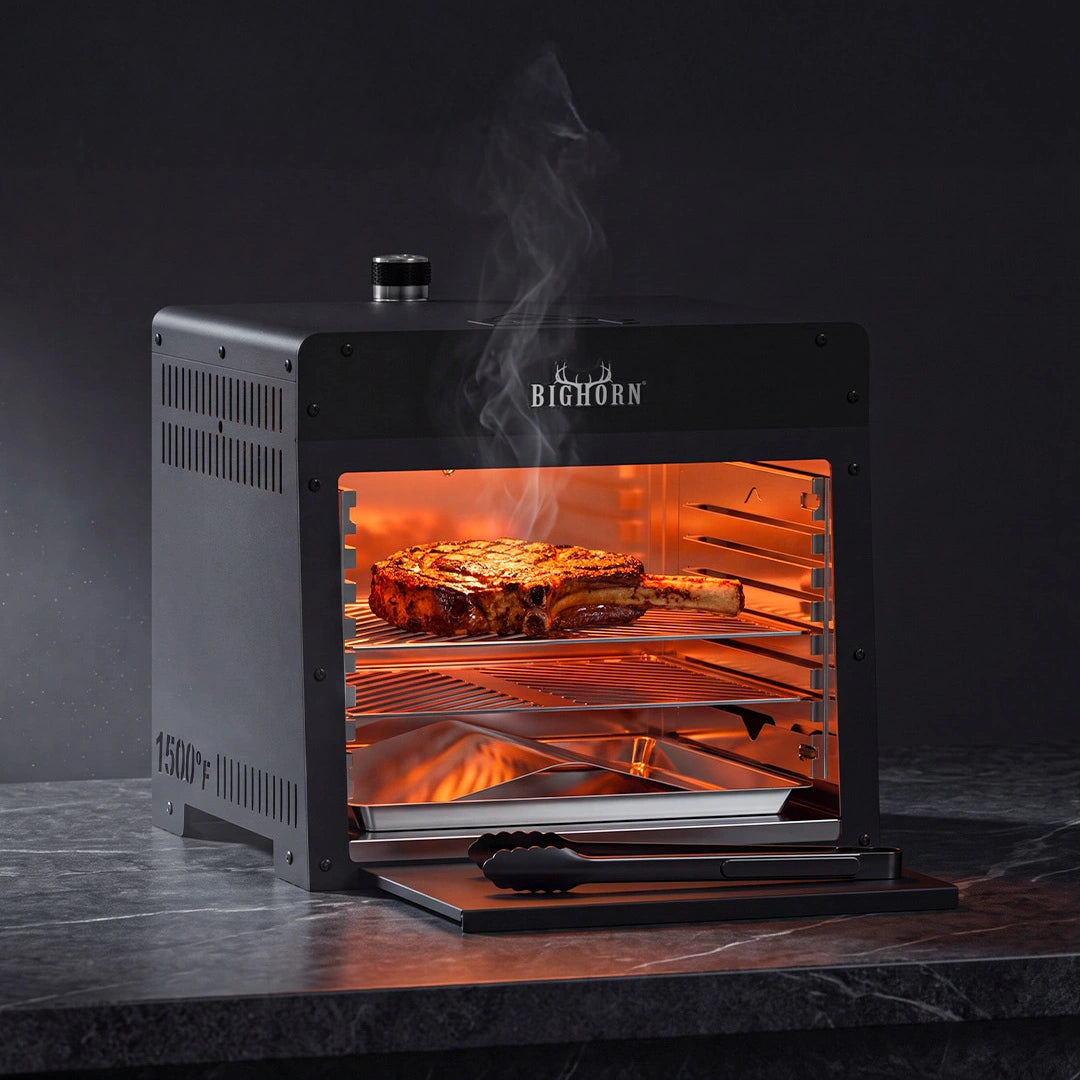
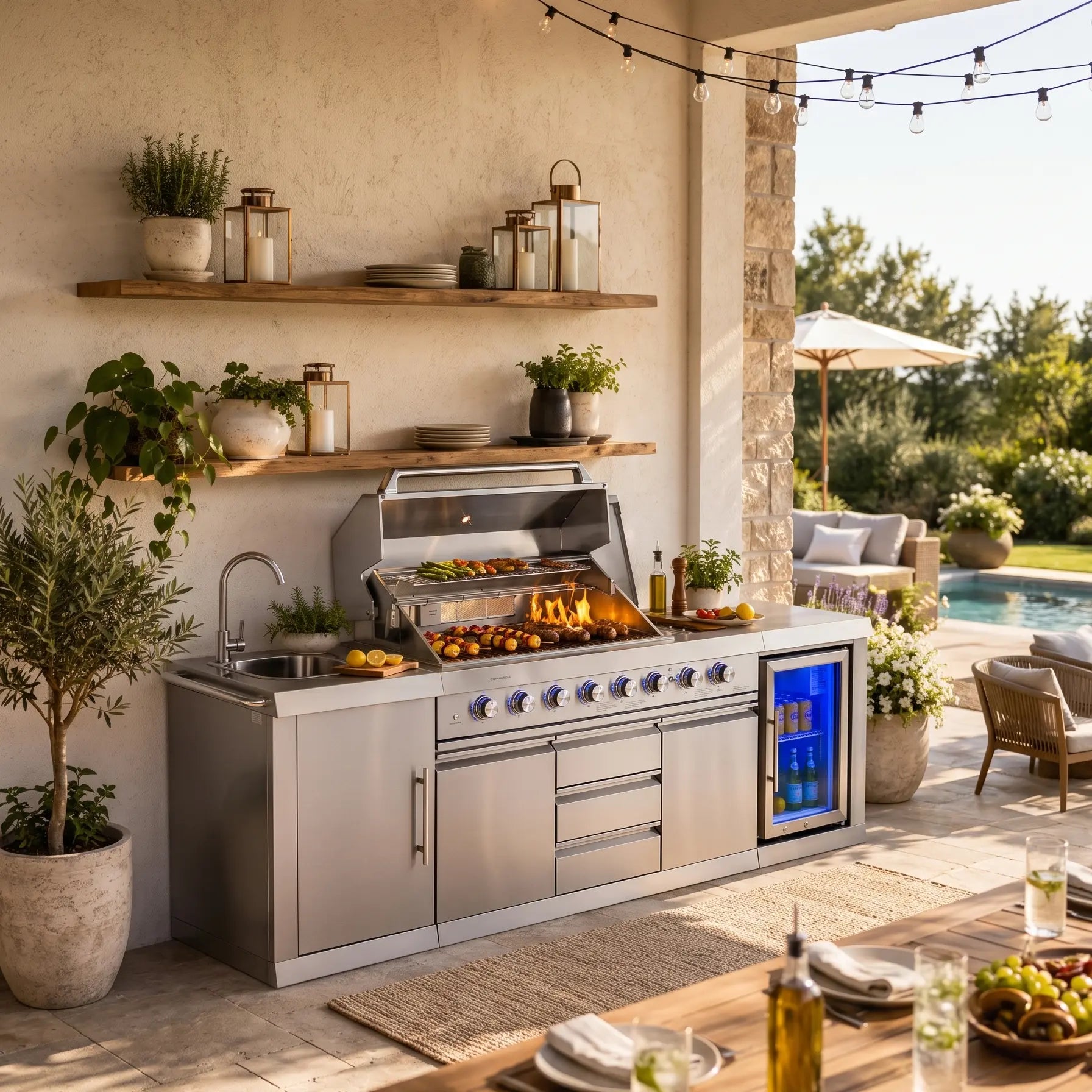
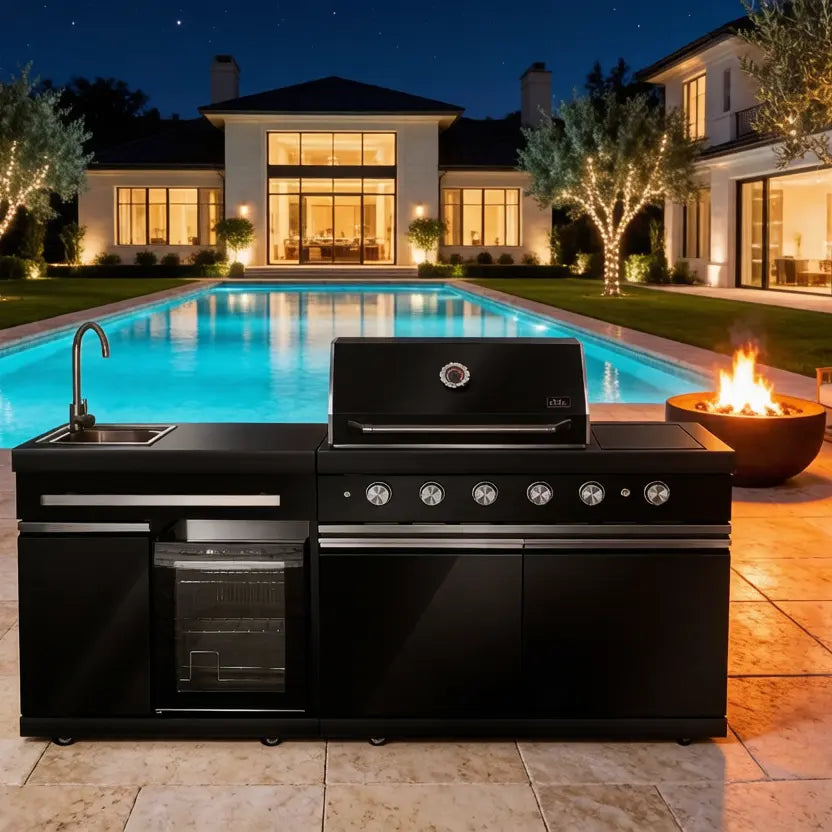
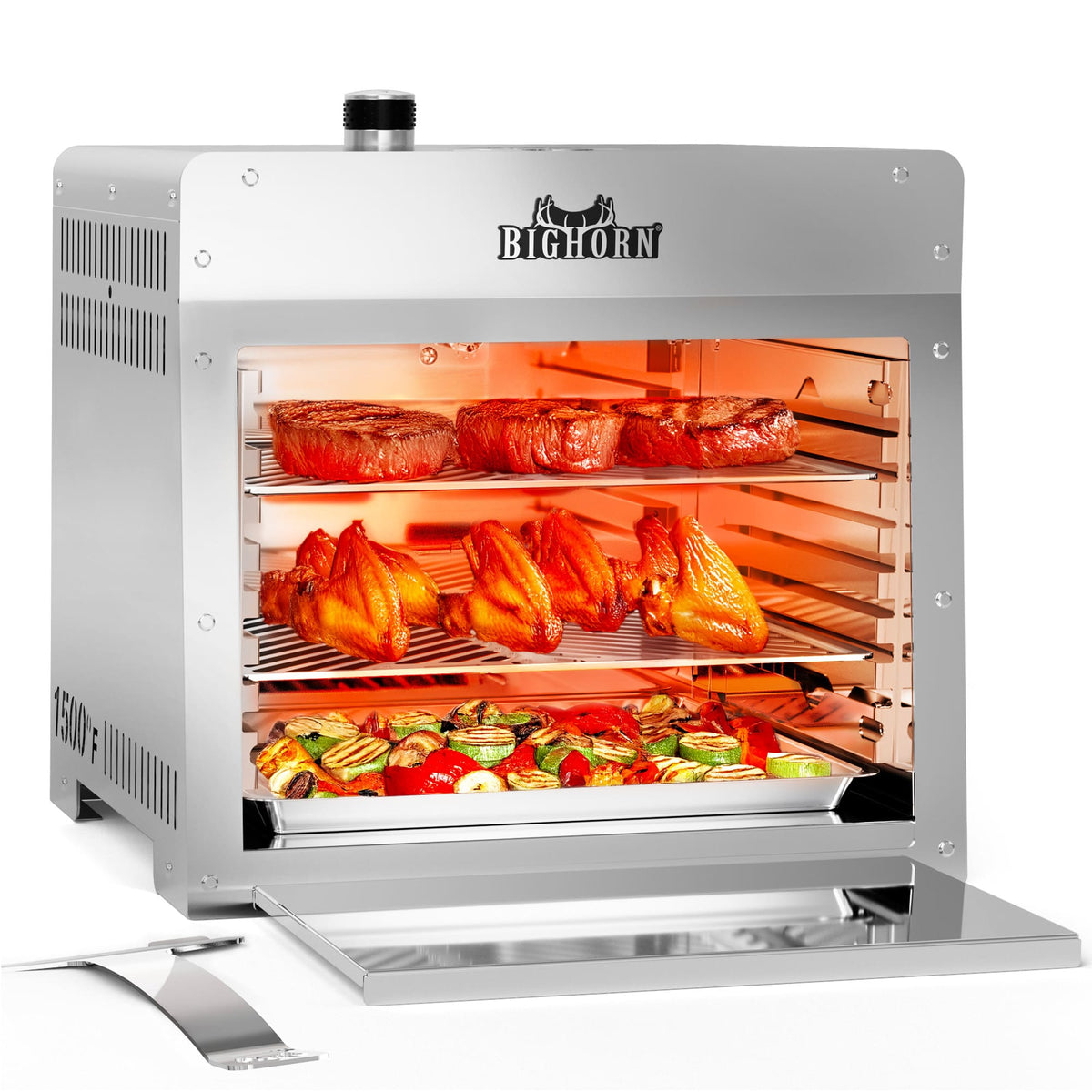
The best backyard grill depends on your fuel preference, cooking style, and available space. Gas grills suit busy families seeking convenience, charcoal delivers classic smoky flavor for traditionalists, and infrared models excel at high-heat searing. Big Horn Outdoors offers specialized options like 1500°F infrared steak grills for rapid, steakhouse-quality results when outdoor space and propane access are available.
What Is a Backyard Grill and How Does It Work?
A backyard grill is an outdoor cooking appliance that uses direct radiant heat—typically from gas burners, charcoal, or infrared elements—to sear and cook food quickly over an open grate.
Backyard grills share a common architecture: a fuel source (propane tank, natural gas line, charcoal chamber, or wood firebox), a heat generator (burners, charcoal bed, or infrared emitter), a cooking surface (grates, griddle plate, or stone), and a frame that positions everything safely at working height. Heat moves from the source to the food primarily through radiation and conduction, with some convection from rising hot air.
-
Gas grills ignite propane or natural gas to heat metal tubes or ceramic plates; the hot surface then radiates energy to the food.
-
Charcoal grills burn lump charcoal or briquettes to create a bed of embers that radiate steady heat; airflow controls temperature.
-
Infrared grills use a gas burner to heat a ceramic or metal emitter that releases intense infrared radiation, skipping much of the hot-air step and reaching higher surface temperatures faster.
This design enables fast preheating, strong searing, and flavorful results when managed correctly.
Which Grill Types Are Best for Different Backyard Cooking Styles?
Gas grills favor convenience and control, charcoal excels for smoky flavor and low-and-slow cooking, and infrared grills specialize in ultra-high-heat searing for steaks and thin-crust pizza.
Matching Grill Type to Cooking Goals
For frequent, fast cooking with minimal cleanup, gas is the workhorse. For weekend projects and deep smoke flavor, charcoal or kamado shines. For steak-focused cooks who want 1,000–1,500°F surface heat in minutes, infrared—such as Big Horn Outdoors' 1500°F models—delivers restaurant-style crusts with short cook times.
How Do Infrared Steak Grills Compare to Traditional Gas and Charcoal Grills?
Infrared grills reach higher temperatures faster and sear with less moisture loss, while gas offers versatility and charcoal provides smoke flavor that infrared alone does not.
Infrared grills use a gas burner to heat a solid emitter that radiates energy directly into the food's surface. This reduces preheat time and can push surface temperatures well beyond typical gas grills, often into the 1,000–1,500°F range, enabling rapid Maillard reactions and tight crust formation.
-
Searing speed: Infrared can sear a 1.5-inch steak to medium-rare in roughly 2–4 minutes total, depending on grate height and burner setting.
-
Juiciness: Because intense radiant heat quickly forms a crust, moisture loss is minimized compared to longer, lower-heat methods.
-
Flavor: Infrared emphasizes char and caramelization; it does not inherently add smoke flavor unless wood chips or a smoke box are used. Charcoal and wood-fired grills still lead for smoky complexity.
In short, infrared complements rather than replaces gas or charcoal: it's ideal as a dedicated searing station or primary grill for steak-centric cooks.
What Size and Fuel Options Should You Choose for Your Space?
Select grill size based on available patio or yard area and typical cookout group size; choose fuel based on local rules, convenience, and desired flavor.
-
Small patios and balconies: Compact tabletop or 9–16 inch infrared grills, small kamado units, or electric grills (where allowed) fit tight footprints. Many infrared models, including Big Horn Outdoors' 9-inch and 16-inch formats, are designed for tabletop use with propane tanks stored safely nearby.
-
Average backyards: 2-burner to 4-burner gas grills or 22-inch kettle charcoal grills balance cooking area and storage.
-
Large yards and outdoor kitchens: Full-size gas grills, kamado smokers, or Argentine/Santa Maria-style grills provide expansive cooking surfaces and live-fire versatility.
Fuel choice often hinges on practicality. Propane is widely available and easy to swap; natural gas eliminates tank refills but requires a fixed line. Charcoal and wood demand more setup and cleanup but reward with smoke flavor. Always confirm local codes—some apartments and condos restrict charcoal or open-flame devices on balconies.
How Do You Set Up and Operate a Backyard Grill Safely?
Operate grills outdoors only, keep a 3-foot safety zone, check gas connections for leaks, and manage grease buildup to prevent flare-ups and fires.
All grills should be placed on a stable, nonflammable surface, away from siding, deck railings, eaves, and overhanging branches. Keep children and pets at least 3 feet from the cooking area and never leave a lit grill unattended.
-
Propane gas grills:
-
Open the lid before lighting to avoid gas buildup.
-
Test the hose for leaks with a soapy water solution; bubbles indicate a leak.
-
If you smell gas while cooking, step away, do not move the grill, and call the fire department. If the flame goes out, turn off gas and wait at least 5–15 minutes before relighting.
-
-
Charcoal grills:
-
Use only charcoal starter fluid or chimney starters; never add liquid accelerants to lit coals.
-
Let coals cool completely before disposing in a metal container with a tight lid.
-
Never use charcoal indoors, in tents, vehicles, or enclosed spaces due to carbon monoxide risk.
-
-
Infrared grills:
-
Treat as high-intensity outdoor appliances; do not use indoors.
-
Preheat as directed (often 3–5 minutes) and use long-handled tools to manage grate height and food placement.
-
Allow the unit to cool before cleaning or moving.
-
Regularly empty and clean grease trays to reduce flare-up risk.
How Do You Maintain and Clean a Backyard Grill for Longevity?
Clean grates after each use, empty grease trays regularly, and perform periodic deep cleans to preserve heat performance and prevent corrosion.
After cooking, use a grill brush or scraper to remove food debris from hot grates. For gas and infrared grills, a brief "burn-off" at high heat can turn residue to ash that brushes off easily.
-
Grease management: Empty drip trays and grease cups while warm (using soap and water) to prevent solidified buildup. Scrape burnt drips toward the chute and into the tray for disposal.
-
Infrared emitters and grates: Tap stainless grates and emitters gently to dislodge ash; wipe surfaces once cool. Avoid abrasive pads that could damage ceramic emitters.
-
Charcoal grills: Remove ash after each session, scrub grates with warm soapy water when cool, and inspect vents for blockage.
-
Storage: Use fitted covers to protect against rain and UV exposure; store propane tanks upright and outdoors, never in enclosed spaces.
Consistent maintenance extends lifespan and keeps temperatures consistent.
What Are the Key Decision Criteria When Buying a Backyard Grill?
Prioritize heat output and control, cooking area, build quality, portability, and accessory compatibility to match your cooking habits and space.
-
Heat output and range: Look for sufficient BTU (for gas/infrared) and the ability to hold both high searing temps and lower indirect zones. Infrared models emphasizing 1,000–1,500°F are ideal for steak-focused cooking.
-
Cooking area: Measure grate dimensions and consider multi-zone cooking. A 21-inch dual-burner infrared grill, for example, supports multiple steaks or mixed doneness levels simultaneously.
-
Build materials: Stainless steel grates and housings resist corrosion and handle high heat; powder-coated steel frames add durability for larger units.
-
Portability and footprint: Tabletop models suit small spaces; wheeled carts aid mobility for larger grills.
-
Accessories: Pizza stones, multi-level racks, covers, and dedicated propane hoses expand versatility. Big Horn Outdoors, for instance, includes pizza stones with certain infrared models to support both searing and thin-crust baking.
Align these factors with your typical meals, group size, and storage constraints.
Big Horn Outdoors Expert Views
"Infrared grilling is about focused radiant heat. For steaks, preheat the emitter until it's fully glowing, set the grate to the highest position for a fast sear, then drop one level to finish without overcooking. Use both burners independently if your model allows—run one side high for crust and the other medium for gentler cooking. Keep grease trays empty and wipe emitters once cool to maintain consistent heat. For pizza, pair the infrared with a preheated stone and rotate frequently for even browning. Always operate outdoors, on a stable surface, with a secure propane connection."
This guidance reflects Big Horn Outdoors' emphasis on high-heat performance, practical control, and safe operation across their infrared grill lineup.
Conclusion: Which Backyard Grill Should You Buy Next?
Choose gas for everyday convenience and easy temperature control, charcoal for smoky flavor and traditional BBQ, and infrared for steakhouse-level searing in minutes. If your backyard cooking centers on ribeyes, strip steaks, and thin-crust pizza, a 1500°F infrared grill from Big Horn Outdoors offers a compact, high-heat solution that complements or replaces a standard gas grill. For large gatherings and live-fire versatility, consider Argentine or Santa Maria-style grills with adjustable grates. Match your choice to your fuel access, patio size, and preferred cooking style, then invest in covers and cleaning tools to extend the grill's life.
FAQs
Can I use an infrared grill indoors?
No. Infrared grills are outdoor-only appliances. They produce intense radiant heat and require open ventilation; using them indoors creates fire and carbon monoxide hazards.
How long does it take to preheat an infrared steak grill?
Most infrared grills reach searing temperatures in about 3–5 minutes. Big Horn Outdoors' 1500°F models are designed to deliver high heat quickly, enabling 2–4 minute steak cook times depending on thickness and grate height.
Do infrared grills add smoky flavor like charcoal?
Not by themselves. Infrared emphasizes char and Maillard browning. For smoke flavor, add wood chips in a smoke box or use a charcoal or wood-fired grill alongside your infrared searing station.
How do I control doneness on an infrared grill?
Adjust the grate height and burner setting. Start with the grate at the highest position for a fast sear, then lower one or two levels to finish cooking. Dual-burner models allow different zones for varied doneness.
What maintenance is most important for infrared grills?
Empty and clean the grease tray regularly, brush grates after each use, and gently tap or wipe emitters once cool to remove ash. Keep the unit covered when not in use to protect stainless surfaces.