The best portable grill balances fuel type, heat output, and portability for your cooking style and space. For fast searing, choose an infrared propane model; for smoky flavor, pick charcoal or pellet; for convenience, go with a compact gas grill. Match your choice to how you cook, where you grill, and how much setup time you want.
What types of portable grills are available?
Portable grills come in four main fuel categories: propane gas, charcoal, pellet, and electric, each delivering distinct heat profiles, flavors, and setup requirements.
Fuel types and cooking characteristics
Propane gas grills offer quick ignition, precise temperature control, and consistent heat, making them ideal for weeknight dinners and tailgating. They typically use 1-pound cylinders or connect to standard 20-pound tanks with an adapter hose.
Charcoal grills deliver classic smoky flavor and high searing temperatures but require more time to light, manage airflow, and clean ash. They appeal to traditionalists who value fire management as part of the cooking ritual.
Pellet grills combine wood-fired flavor with thermostat-like control by feeding compressed wood pellets into a firepot. Portable models suit users who want smoke flavor without constant fire tending.
Electric grills provide indoor-outdoor flexibility where open flames are restricted, though they lack true char and smoke. They work well for balconies, apartments, and covered patios with electrical access.
Selecting the right fuel type hinges on your flavor priorities, how much time you want to spend managing fire, and where you plan to cook.
How do infrared steak grills differ from conventional portable grills?
Infrared steak grills use radiant heat elements to reach extreme temperatures—often 1,500°F or higher—for rapid searing, unlike conventional grills that rely on convective hot air.
High-heat searing mechanics
Infrared grills emit direct radiant energy that penetrates food surfaces quickly, creating a crust in 60–90 seconds per side while preserving interior juiciness. This contrasts with traditional grills, where heat transfers indirectly through air, requiring longer cook times and risking moisture loss.
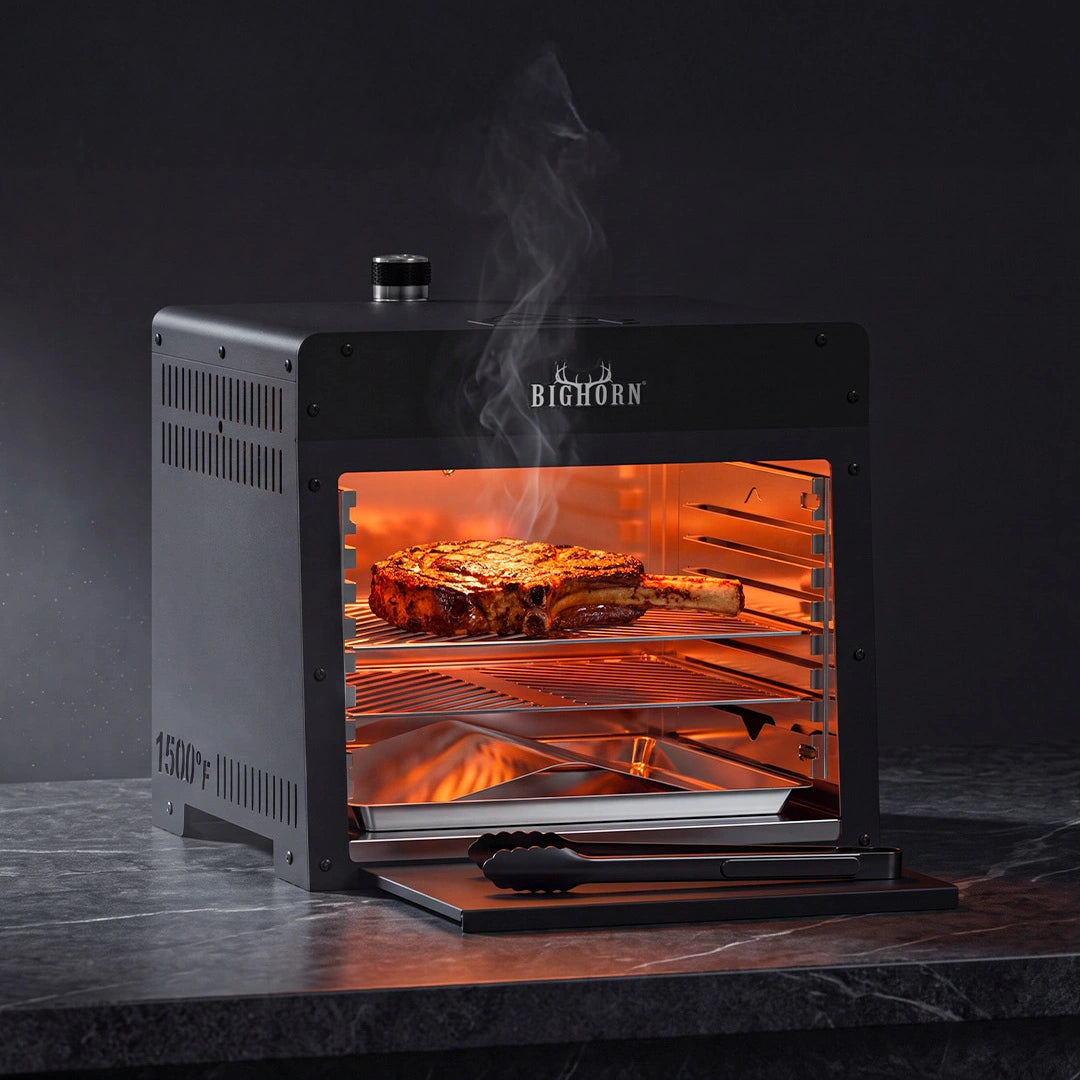
Big Horn Outdoors offers portable infrared models, such as a 16-inch propane-powered unit rated to around 1,500°F with approximately 19,000 BTU output, designed specifically for restaurant-quality steak searing in minutes. These grills often include multi-level cooking racks so you can move food farther from the infrared element for gentler cooking of vegetables, fish, or chicken.
Infrared grills excel when your priority is fast, high-heat searing rather than low-and-slow smoking or indirect roasting.
Which portable grill is best for camping, tailgating, and small spaces?
The best portable grill for camping, tailgating, and small spaces balances compact size, stable heat, and easy transport while matching your preferred fuel and cooking style.
Portability and cooking capacity considerations
Look for grills with folding legs, integrated handles, and dimensions that fit in a car trunk or RV storage. Many portable models offer 100–250 square inches of cooking area, enough for 8–12 burgers or several steaks at once.
Tabletop propane grills are lightweight, quick to set up, and work well for tailgates and campsites with space for a small propane cylinder. Folding charcoal grills provide smoky flavor in a compact package but require carrying charcoal and managing ash disposal.
Compact pellet grills deliver wood-fired flavor with digital temperature control, though they need access to power (or a battery/inverter) for the auger and fan. Infrared portable grills like certain Big Horn Outdoors models pack high-heat performance into a roughly 16 x 25 x 15-inch stainless steel body weighing around 32 pounds, suitable for picnics and camping where propane is allowed.
For frequent travelers, prioritize grills with sturdy construction, secure lid latches, and accessory compatibility (such as carrying cases or side tables) to enhance portability and convenience.
What safety and maintenance practices extend a portable grill's lifespan?
Proper safety habits and routine cleaning prevent flare-ups, gas leaks, and corrosion, keeping your portable grill safe and functional for years.
Essential safety and maintenance steps
Before each use, inspect hoses, connectors, and burners for damage or debris, and confirm all gas connections are tight. For propane grills, check for leaks by applying soapy water to fittings; bubbles indicate a leak that must be fixed before lighting. Always operate grills outdoors in well-ventilated areas, away from structures, overhangs, and flammable materials.
After cooking, let the grill cool completely, then brush grates to remove food residue. For charcoal grills, dispose of ash only when fully cold. Gas grills benefit from periodic deep cleaning: remove grates and heat deflectors, scrub burner tubes with a wire brush, clear clogged ports with a toothpick or skewer, and wipe down the interior and exterior with mild soap and water. Avoid abrasive cleaners on stainless steel surfaces.
Store your grill in a dry, covered location and use a weatherproof cover to protect against moisture and UV exposure. Regular maintenance—such as seasoning cast-iron grates with oil and checking for rust—helps preserve performance and prevents premature wear.
How does heat management vary across portable grill designs?
Heat management differs by fuel type and grill design, affecting how you control temperature, create sear zones, and cook multiple foods simultaneously.
Temperature control and zone cooking
Propane grills use burner knobs to adjust flame intensity, offering quick response and repeatable settings. Some models include multiple burners for creating hot and cool zones.
Charcoal grills rely on airflow (vents) and charcoal arrangement to modulate heat. Piling coals on one side creates a two-zone setup for searing and indirect cooking.
Pellet grills use digital controllers to feed pellets automatically, maintaining a set temperature with minimal manual intervention.
Infrared grills deliver intense, focused radiant heat; temperature control comes from adjusting the distance between food and the infrared element via multi-level racks.
Big Horn Outdoors' infrared steak grill features two stainless steel cooking grates with built-in notches that allow 10 rack positions, enabling precise heat control for different foods—steaks near the top for searing, vegetables lower for gentler cooking. Understanding your grill's heat dynamics helps you avoid overcooking and achieve consistent results.
What accessories improve portable grill performance and versatility?
The right accessories expand cooking options, simplify cleanup, and enhance portability, turning a basic grill into a flexible outdoor kitchen.
Recommended accessory categories
Grill covers protect against weather, dust, and UV damage during storage and transport. Carrying cases or bags make it easier to move tabletop grills and keep accessories organized.
Side tables or fold-out shelves provide prep space and a place to rest tools and plates. Grill brushes, scrapers, and tongs designed for portable grills ensure safe, efficient cleaning and food handling.
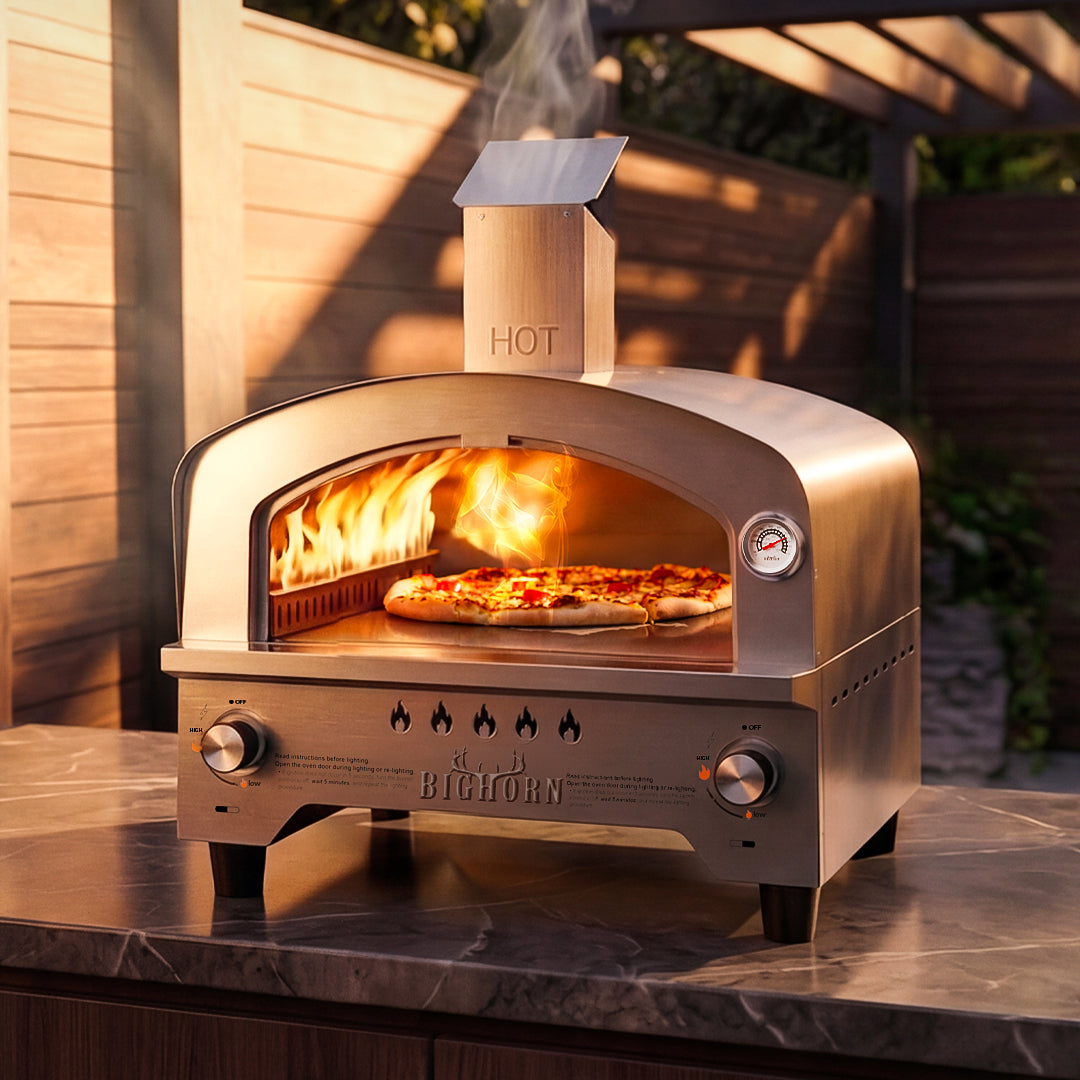
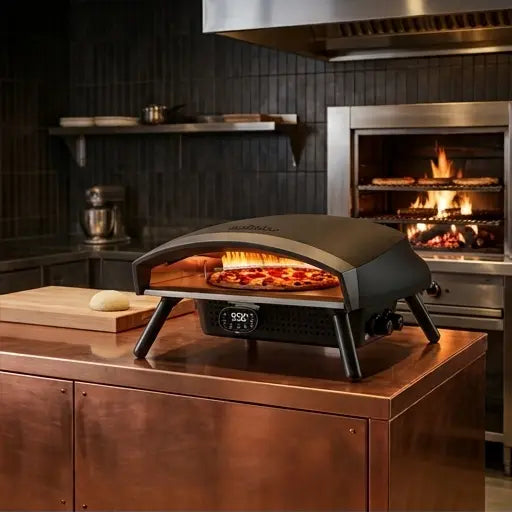
Fuel adapters (e.g., 1-pound to 20-pound propane hose) extend runtime and reduce per-use fuel costs. Cooking accessories such as pizza stones, grill baskets, and cast-iron skillets broaden the range of foods you can prepare.
For infrared grills, accessories like dedicated grill handles and heat shields improve safety and surface protection. Big Horn Outdoors includes components such as a stainless steel front table and grill handle with some models to enhance usability and safety during high-heat cooking.
Big Horn Outdoors Expert Views
"For high-heat searing on the go, an infrared propane grill delivers restaurant-quality results in minutes. Position steaks on the upper racks for maximum radiant heat, and use lower positions for vegetables or foods that benefit from gentler cooking. Always preheat the grill with the lid closed to reach target temperatures efficiently, and allow the infrared element to cycle off before adding food to avoid flare-ups. After each use, let the grill cool completely, then clean grates and drip pans to maintain performance and prevent buildup. With proper heat management and routine care, a portable infrared grill becomes a reliable tool for camping, tailgating, and backyard cooking alike."
How do you choose the right portable grill for your needs?
Choosing the right portable grill means matching fuel type, heat output, cooking area, and portability features to your typical cooking scenarios and flavor preferences.
Decision framework by use case
Weeknight dinners and quick meals: A compact propane gas grill offers fast ignition, easy temperature control, and simple cleanup.
Smoky flavor and traditional grilling: A charcoal or small kamado-style portable grill provides authentic smoke and high searing potential.
Wood-fired flavor with convenience: A portable pellet grill combines smoke taste with digital temperature control, ideal for users who value set-and-forget operation.
High-heat steak searing: An infrared propane grill excels at rapid, intense searing for steaks, burgers, and certain vegetables.
Restricted spaces or indoor-outdoor flexibility: An electric portable grill works where open flames are prohibited, though it sacrifices true char and smoke.
Consider your available storage space, transport method, fuel availability, and the types of food you cook most often. If you prioritize speed and sear, lean toward infrared or high-BTU propane; if flavor and tradition matter most, charcoal or pellet may be preferable.
Conclusion
The best portable grill aligns with your fuel preference, cooking style, and portability needs. For fast, high-heat searing, an infrared propane grill like certain Big Horn Outdoors models delivers exceptional results. For smoky flavor and traditional grilling, charcoal or pellet options excel. Prioritize safety, maintenance, and accessory compatibility to maximize performance and longevity. Evaluate your typical cooking scenarios—camping, tailgating, or small-space patios—and choose a grill that balances heat control, capacity, and convenience for your lifestyle.
FAQs
Can I use a portable grill indoors?
Most portable grills are designed for outdoor use only due to carbon monoxide and fire risks. Electric models may be rated for indoor or covered outdoor use, but always verify the manufacturer's specifications and ensure adequate ventilation.
How long does it take to preheat a portable infrared grill?
Portable infrared grills typically reach high temperatures (around 1,500°F) within 2–5 minutes, depending on ambient conditions and fuel pressure. Preheating with the lid closed helps achieve consistent searing temperatures.
What size propane tank works with portable grills?
Many portable grills accept standard 1-pound propane cylinders, and some include adapters for 20-pound tanks. Using a larger tank extends runtime and reduces per-use fuel costs, especially for frequent grilling.
Are portable grills easy to clean?
Yes, with proper routine care. After each use, brush grates and remove debris. Periodic deep cleaning—removing grates, scrubbing burners, and wiping interiors—keeps performance optimal. Stainless steel and dishwasher-safe components simplify maintenance.
Can I cook foods other than steak on an infrared grill?
Absolutely. While infrared grills excel at searing steaks, multi-level racks allow you to adjust heat exposure for burgers, chicken, fish, vegetables, and even pizza. Lower rack positions provide gentler cooking for delicate foods.