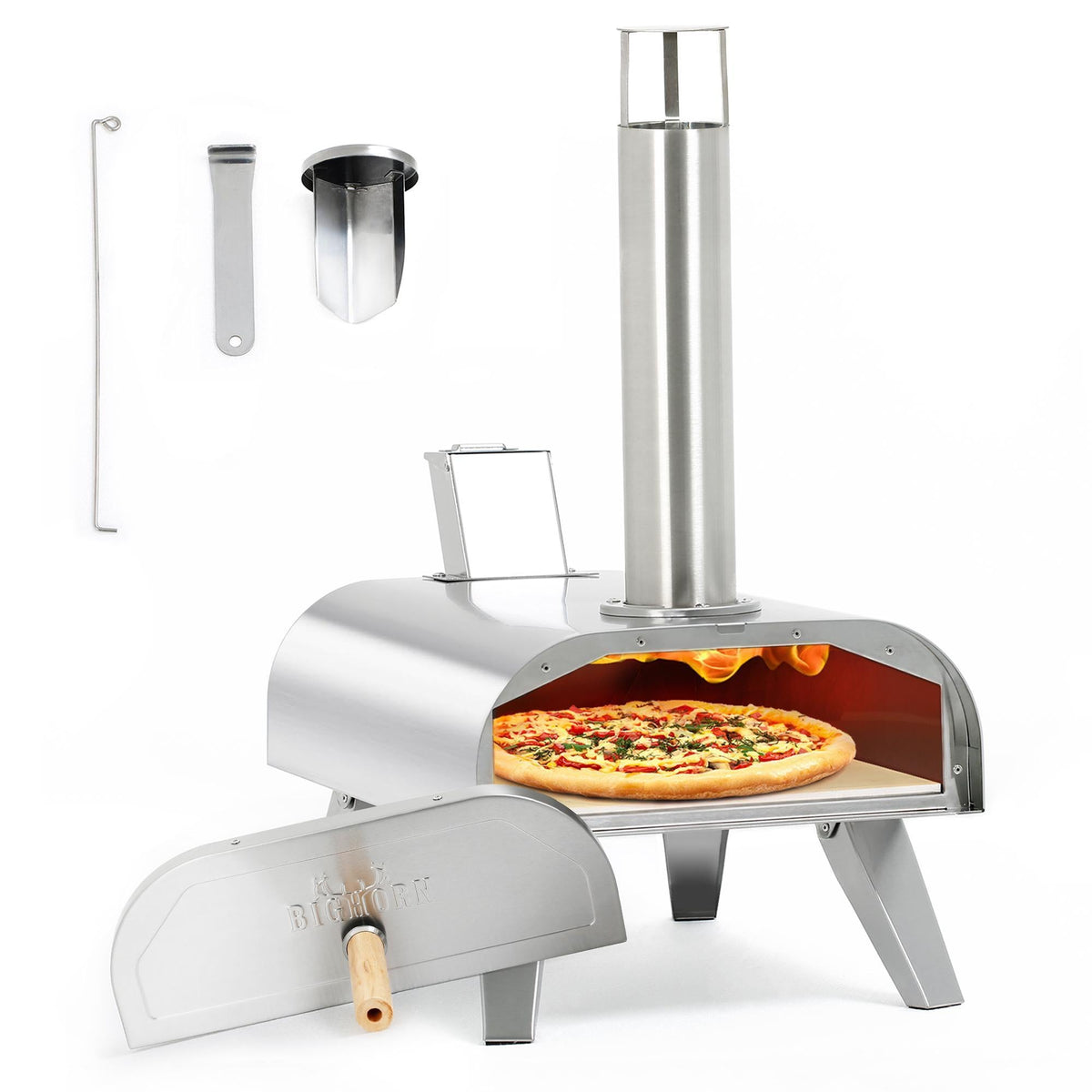
The best pizza oven under $500 is a compact unit that still reaches real high heat and holds a decent stone — the two fundamentals that decide the pizza. In this price band you can get a capable countertop electric or a portable pellet oven that bakes at 750 °F or higher, which is enough for the blistered crust that makes the craft worthwhile. The key is to spend on heat and a stone, not on extras.
What $500 buys in a pizza oven
Under $500 you are in the entry-to-mid tier: compact gas and countertop electric models that reach 700–850 °F, and portable pellet ovens that can go higher with a little patience. You give up large decks, premium multi-fuel flexibility, and the most polished controls. What you keep is the heat and the stone — the parts that actually bake the pizza.
The electric option in this range
A countertop electric oven around the $300–500 band delivers consistent 700–850 °F heat with simple presets, and it works indoors on a countertop. It is the lowest-effort path in the budget: plug in, preheat, and the stone does the work. This option suits small kitchens and households that want pizza without fuel or outdoor space.
The pellet option in this range
A portable pellet oven near the top of the budget reaches about 887 °F on dry hardwood pellets, adding wood-fired flavor for barely more money than a basic electric. It needs outdoor space, a 15–20 minute preheat, and a little fire management, but it delivers the smoke and char that electric cannot. If flavor is the priority, this is the smart buy under $500.

What to prioritize in this price band
Check the peak heat, the stone quality, and the preheat time before anything else. A modest oven that holds 750 °F+ with a thick stone makes genuine pizza; a feature-packed unit that cannot hold heat disappoints. Skip branding and decorative extras, and spend the budget on the fundamentals that decide the bake.
Where does the money go in a sub-$500 oven?
The budget mostly buys the heat system and the stone — the parts that bake the pizza — while cutting extras like large decks, multi-fuel flexibility, and premium controls. That trade is the right one for most cooks, because heat and a stone decide the results. You are paying for capability, and the savings show in the features you do not need.
Should I spend the full $500 or save the middle?
Spend up to the point where a higher price buys real heat or a better stone. If the $350 model and the $480 model share the same heat window and deck, take the cheaper one and add a good peel and thermometer. The budget should follow capability, not price steps.
What accessories should you add first?
A peel, a thermometer, and a cover make the biggest difference: the peel launches, the thermometer confirms the stone, and the cover protects the investment. Skip decorative extras and buy the few tools that change daily results.
Do sub-$500 ovens hold their heat?
Yes, for typical home use — compact models with thick stones hold baking temperature across a session, and recovery between pies is workable. The limits are capacity and occasional slower recovery on back-to-back bakes, not the quality of the bake itself. A good budget oven is a capable daily tool.
How do you pick between pellet and electric in this range?
Choose electric for the lowest effort and indoor-friendly use; choose pellet for wood-fired flavor if you have outdoor space and 15–20 minutes for preheat. Both deliver real results under $500, so the deciding factor is where you cook and how much ritual you want.
What should you check before buying?
Confirm the peak heat, stone quality, preheat time, and included accessories — a peel and cover may not ship in the box. Read reviews for recovery and durability, and check the warranty. The specs that matter are heat and a stone; the rest is convenience.
How does a sub-$500 oven compare with a $1000 one?
The gap is capacity, recovery, and features, not the fundamental bake. A well-chosen budget oven delivers the same blistered crust on individual pizzas; the premium buys a larger deck, faster recovery for groups, and easier controls. For a household, the budget oven covers most of the result.
Is portability worth paying for under $500?
If you camp or tailgate, a foldable pellet or compact gas unit adds real value in this band — the same oven serves the patio and the road. If the oven stays put, spend the portability premium elsewhere, like a thicker stone or better build. Match the feature to your use.
What is the biggest mistake buyers make?
Choosing on brand or a high marketing number instead of confirming the heat window and stone. A budget oven that holds 750 °F+ with a good stone makes real pizza; one that peaks high but cannot hold it disappoints. Verify the fundamentals, not the logo.
A well-chosen sub-$500 oven proves that price and quality are not the same equation — heat and a stone still win.
Budget pizza oven FAQs
Can a sub-$500 oven make good pizza?
Yes, if it reaches real heat (700 °F+) and has a decent stone. The best budget ovens produce genuinely good pizza; they just trade larger capacity and premium features for the price.
Electric or pellet under $500?
Choose electric for the lowest effort and indoor use; choose pellet for wood-fired flavor if you have outdoor space and patience for the preheat. Both make excellent pizza in this range.
Is a bigger budget oven worth saving for?
Only if you need larger capacity or multi-fuel flexibility. For a family or a new pizza cook, a well-chosen sub-$500 oven delivers most of the result for a fraction of the cost.
To see budget-friendly options, review the pizza oven collection and confirm the heat specs.