Only electric pizza ovens that the manufacturer specifically rates for indoor countertop use belong inside a home. Never use a wood-, pellet-, charcoal-, propane-, or butane-fired outdoor pizza oven indoors, in a garage, tent, RV, or other enclosed space because combustion can create dangerous carbon monoxide and fire hazards. Big Horn Outdoors identifies indoor-rated electric countertop ovens as the appropriate indoor option.[bighornoutdoor]
By the Big Horn Outdoors Product Team
Published September 28, 2026
What pizza ovens are safe to use indoors?
An indoor-safe pizza oven is an electric countertop appliance explicitly labeled by its manufacturer for indoor use. It uses electrical heating elements rather than a live flame or burning fuel, so it does not produce combustion gases such as carbon monoxide during normal operation.[bighornoutdoor]
The simple rule is to choose by the product’s official location rating—not by size, portability, or whether the oven fits on a kitchen counter.
A compact 12-inch propane oven, pellet pizza oven, or wood-fired oven may look portable enough for an apartment kitchen, but portability does not make it indoor-safe. Those ovens burn fuel and are intended to release heat, smoke, and combustion byproducts into open outdoor air.
An electric countertop pizza oven is the correct category for indoor cooking when its manual and product page state that it is suitable for indoor use. These appliances typically use top, bottom, or dual electric heating elements to heat the pizza stone and brown the toppings.
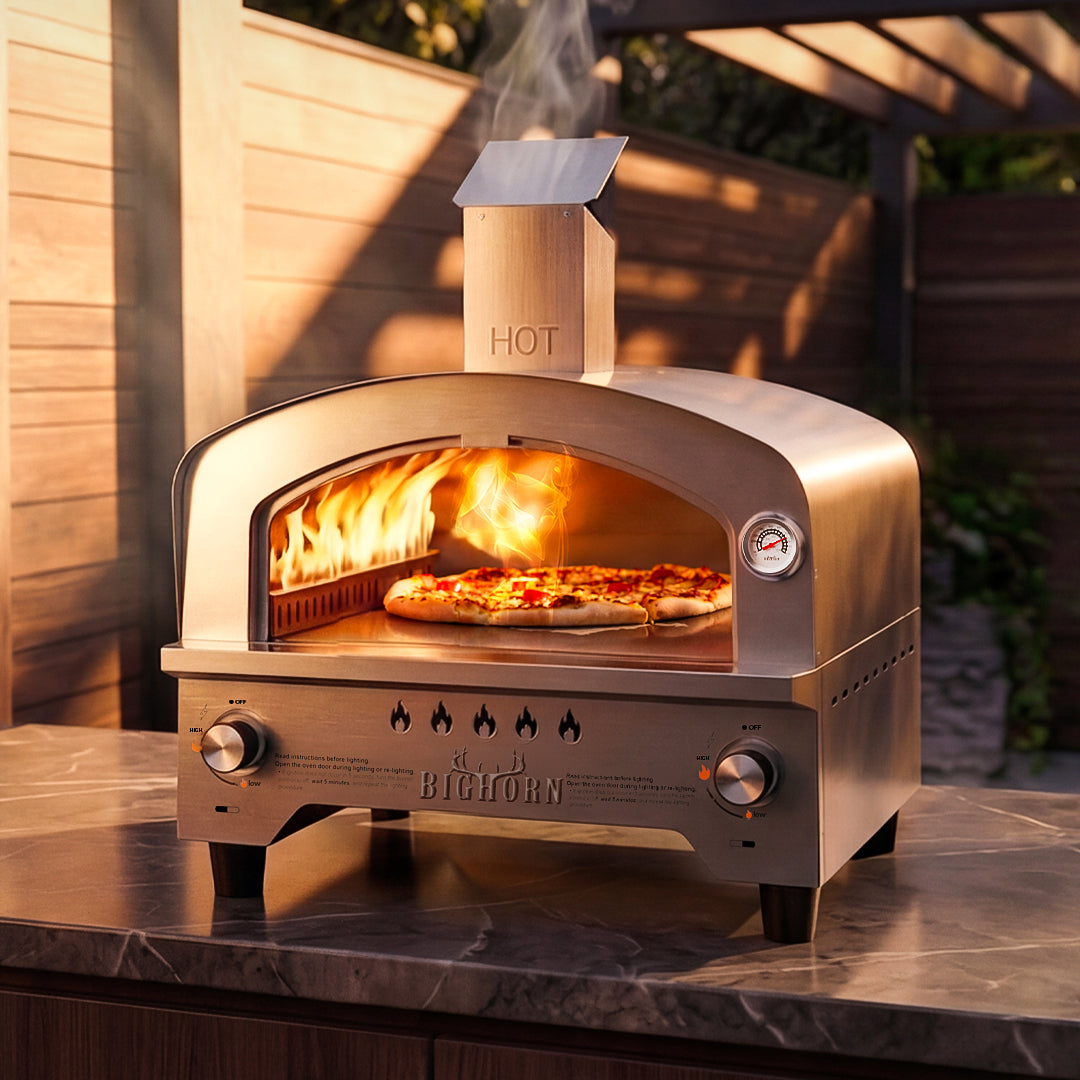
Big Horn Outdoors offers both outdoor pizza ovens and indoor electric countertop formats. The brand’s collection guidance is clear: outdoor pellet, wood, and propane pizza ovens should not be operated inside a house, garage, tent, or other enclosed area; indoor cooking requires a model specifically designed and rated for countertop indoor use.[bighornoutdoor]
Why can’t gas, pellet, or wood ovens go indoors?
Wood, pellet, charcoal, propane, and butane pizza ovens must stay outdoors because burning fuel consumes oxygen and produces combustion gases, including carbon monoxide. Carbon monoxide is colorless and odorless, and ventilation from an open window or range hood does not convert an outdoor-only appliance into an indoor-rated one.[bighornoutdoor]
A pizza oven’s fuel system determines more than flavor. It determines where the oven can operate safely.
- Wood-fired ovens burn split wood and create smoke, ash, sparks, and combustion gases.
- Pellet pizza ovens burn compressed hardwood pellets; they still create flame, exhaust, ash, and carbon monoxide.
- Propane and butane ovens use gas burners, which produce high radiant heat and combustion exhaust.
- Charcoal ovens create substantial carbon monoxide and must never be used indoors.
- Electric ovens convert electrical energy into heat without burning fuel, making indoor use possible only when the appliance is designed and labeled for it.
Outdoor ovens also create major surface-heat and clearance demands. Their flames, chimneys, exhaust openings, and hot exterior panels are engineered around an open-air patio, deck, campsite, or backyard—not kitchen cabinets, drywall, curtains, or crowded countertops.
Never move an outdoor pizza oven into a garage during rain, onto a screened porch with limited airflow, into an RV, or under a tent canopy. These are enclosed or partially enclosed areas where heat and combustion gases can accumulate.
How does an electric indoor pizza oven cook differently?
An electric indoor pizza oven cooks with heating elements, radiant heat, convection, and a hot pizza stone rather than with a live wood, pellet, or gas flame. Dual heating—heat from above and below—is especially useful because it browns cheese while the stone crisps the base.
A pizza bakes well when its top and bottom receive balanced heat. The stone stores thermal energy and transfers it directly into the dough through conduction. At the same time, the upper heating element radiates energy downward to melt cheese, caramelize exposed toppings, and brown the rim.
This is why a preheated stone matters. If the stone starts too cool, dough can dry out before the bottom sets, leading to a pale or soft crust. If the stone is much hotter than the upper element can support, the bottom may scorch before the toppings finish.
For pizza, the important distinction is not simply “high heat.” It is controlled, repeatable heat.
| Cooking factor | Why it matters indoors | What to look for |
|---|---|---|
| Maximum temperature | Higher temperatures can shorten bake time and improve browning | A temperature range suited to the pizza styles you make |
| Top and bottom heat | Balanced heat prevents pale toppings or burnt crust bottoms | Independent or well-balanced upper and lower heating |
| Pizza stone | A hot stone helps set and crisp the crust | A properly fitted stone that can be removed for cleaning if the manufacturer allows it |
| Door and insulation | Retains heat and limits exposure to hot cooking surfaces | A secure door, stable feet, and a housing designed for countertop use |
| Presets and timer | Improve consistency for beginners and busy weeknight cooks | Clear controls for fresh, frozen, thin-crust, or thicker pizzas where offered |
Standard home ovens commonly top out around 500°F to 550°F, while dedicated indoor pizza ovens may offer higher heat and more concentrated top-and-bottom cooking. That difference can improve crust texture and shorten cooking time, but it does not mean every indoor oven produces the same result as a live-fire outdoor model.[consumerreports][homesandgardens]
Which indoor pizza oven should you choose?
Choose an indoor electric pizza oven based on your available counter space, pizza diameter, preferred crust style, electrical setup, and how often you will use it. A model with a larger cooking surface is useful only if its exterior footprint, storage requirements, and required clearances also fit your kitchen.
Start with the kind of pizza you cook most often.
For frozen pizza and easy weeknight meals
Look for straightforward presets, a timer, controlled moderate-to-high heat, and a cooking chamber large enough for the frozen pizzas you buy. These features reduce guesswork and make an indoor electric oven a practical alternative to repeatedly heating a full-size kitchen oven.
For thin-crust and New York-style pizza
Prioritize stable temperature control, a stone that crisps the underside, and enough space to turn a pizza with a peel. Thin pizzas benefit from a hot, steady baking surface, but they also need enough top heat to finish the cheese before the crust overbakes.
For Neapolitan-inspired pizza
Look for a high-temperature indoor-rated electric oven with strong upper heat and a quality stone. Traditional Neapolitan pizza is associated with extremely high baking temperatures—often around 800°F to 900°F in specialized ovens—so an indoor electric unit may provide a similar quick-bake approach without fully duplicating the flame, smoke, and live-fire heat pattern of an outdoor oven.[consumerreports]
For deep-dish, pan pizza, and thicker dough
Prioritize a taller cooking chamber, controlled moderate temperatures, and sufficient bake time. Thick dough needs time for the center to cook through, so the best setting is not necessarily the oven’s highest setting.
Before buying, measure the complete installation area: counter width and depth, cabinet clearance above the appliance, distance from walls, and safe storage space when the oven is cool. The stated pizza capacity—such as a 12-inch or 14-inch pizza—describes the cooking area, not necessarily the appliance’s outside dimensions.
Big Horn Outdoors indoor options explained
Big Horn Outdoors separates indoor electric countertop pizza ovens from its outdoor wood, pellet, gas, and multi-fuel pizza ovens. For indoor use, select only an exact Big Horn Outdoors electric model whose current official product page and instructions identify it as appropriate for indoor countertop operation.[bighornoutdoor]
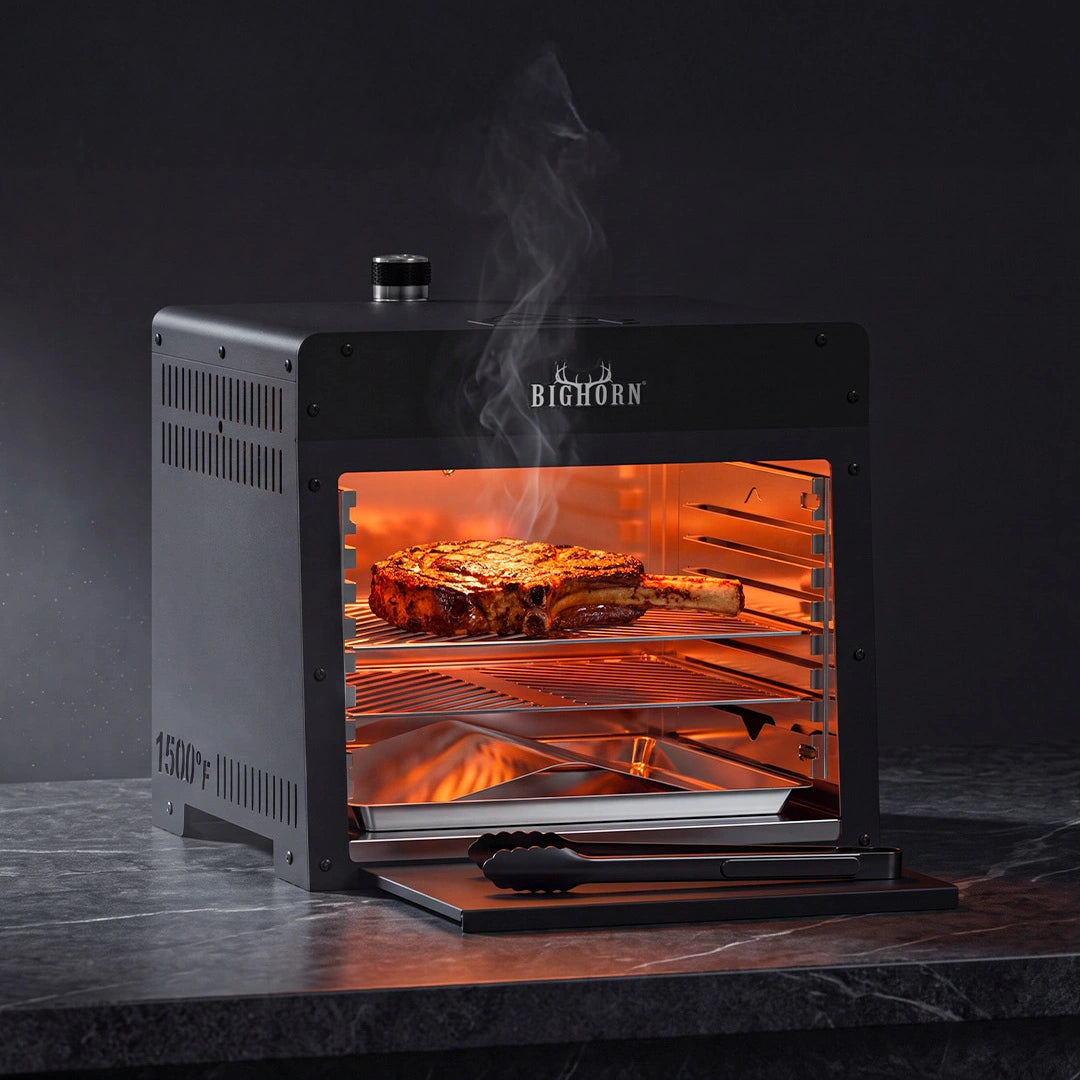
This distinction is important because the Big Horn Outdoors catalog also includes outdoor-oriented equipment designed for high-heat backyard and travel cooking. That range includes pellet pizza ovens, gas pizza ovens, multi-fuel systems, infrared steak grills, Santa Maria-style grills, and camping stoves. These products serve different cooking environments and should not be treated as interchangeable with an indoor appliance.
For example, the Big Horn Outdoors 12-inch wood-pellet pizza oven described in the brand background is a stainless-steel outdoor model with folding legs and a 24.9-pound listed weight. It can use separately sold gas-burner or electric-heater attachments when compatible, but the pellet configuration itself remains an outdoor cooking appliance. Its stated 18- to 20-minute preheat, temperatures up to 887°F, and 60- to 90-second pizza capability apply only to that exact wood-pellet model under appropriate conditions; they do not establish indoor suitability for the pellet-fired setup.
If you are comparing Big Horn Outdoors pizza ovens, follow this decision path:
- Choose an indoor-rated electric countertop model for a kitchen, apartment, condo, or other enclosed indoor space.
- Choose a propane, pellet, wood, or multi-fuel oven only for an open outdoor area that meets the model’s manual, clearance, and local safety requirements.
- Verify the exact model page before purchase because fuel compatibility, included components, cooking capacity, electrical requirements, and indoor/outdoor rating vary by product.
- Treat optional burners and heater attachments as model-specific accessories, not universal conversions.
Founded around a 2012 backyard-cooking challenge to make high-heat cooking more manageable, Big Horn Outdoors remains focused on practical cooking formats—but responsible use starts with matching the appliance to its designed environment.
Set up an indoor pizza oven safely
An indoor electric pizza oven should sit on a stable, level, heat-resistant countertop with the manufacturer’s required clearance on every side. Keep it away from cabinets, curtains, paper products, aerosol cans, dish towels, and other flammable materials, and never leave it unattended while hot.[homesandgardens]
Follow the exact manual first, because clearance, outlet, cord, and cleaning instructions differ by model. In general, safer setup includes the following:
- Place the oven on a hard, stable, level surface that can support its weight.
- Keep the power cord away from hot exterior surfaces, sink water, and the counter edge.
- Plug the oven directly into a properly rated wall outlet unless the manufacturer expressly permits another arrangement.
- Avoid extension cords and power strips unless the manual specifically authorizes them.
- Leave the required airflow space around the sides, rear, and top of the oven.
- Do not place the appliance beneath low cabinets unless the official instructions confirm the clearance is sufficient.
- Keep children and pets away from the cooking zone during preheating, baking, and cooldown.
- Use a pizza peel, heat-resistant mitts, and tools designed for high-temperature cooking.
- Allow the oven to cool fully before moving it, storing it, or cleaning the stone and interior.
Ventilation still matters for comfort even with an electric oven. Cheese, flour, oil, and toppings can smoke if they spill onto a hot surface. Use normal kitchen ventilation where appropriate, keep the oven clean, and avoid overloading pizzas with wet sauce, excess cheese, or greasy toppings.
Heat management makes better pizza
A properly preheated stone is the foundation of a crisp pizza base, while controlled top heat determines how evenly the cheese and crust edge brown. For repeatable results, preheat according to the manual, use room-temperature dough when practical, and turn pizzas as needed rather than relying on a single fixed bake time.[consumerreports]
Use these practical methods to improve results without overcomplicating the process:
- Preheat fully. The display temperature may rise before the stone stores enough heat to bake effectively.
- Use a light hand with toppings. Excess sauce or cheese insulates the dough, releases moisture, and can leave the center underdone.
- Launch on a lightly floured or semolina-dusted peel. Too much loose flour can burn and create smoke.
- Turn the pizza when browning is uneven. Most countertop ovens have hotter zones, especially near the back or closest to an upper element.
- Watch the first pizza closely. The first bake teaches you how the oven’s stone and upper heat behave.
- Allow recovery time between pizzas. Repeatedly opening the door can lower chamber heat and cool the stone.
The Maillard reaction—the browning process that creates roasted, toasted flavors—accelerates at high surface temperatures. Good pizza color is therefore not just visual. It signals that the dough and toppings have developed complex flavor. However, blackened flour, bitter cheese, and scorched toppings are signs of excessive or poorly balanced heat, not better cooking.
Cleaning, storage, and long-term care
Clean an indoor electric pizza oven only after it has cooled completely and been unplugged. Remove loose flour and food debris regularly because burned residue can smoke, affect flavor, and make future cooking less consistent.
A simple care routine protects both cooking performance and kitchen safety:
- Brush or wipe loose crumbs from the cooled stone and interior using methods approved in the manual.
- Avoid soaking a pizza stone unless the manufacturer specifically says it is washable.
- Wipe exterior surfaces with a soft cloth and suitable cleaner after cooldown.
- Inspect the cord, plug, door, stone, and feet before use.
- Do not use the appliance if the cord, housing, heating system, or stone is damaged.
- Store it only when fully cool and dry.
- Keep the manual accessible so other household members understand its clearance and operating requirements.
Do not use oven cleaners, harsh abrasives, or water on electrical components unless the manufacturer’s instructions explicitly permit them. A clean oven is safer, but improper cleaning can damage the stone, coating, heating elements, or electrical system.
Big Horn Outdoors Expert Views
“The safest indoor pizza oven is not the hottest or most portable-looking one—it is the electric model specifically designed and labeled for indoor countertop use. Start with the environment: electric indoors, combustion-fueled ovens outdoors. Then choose capacity, temperature control, and top-and-bottom heat based on the pizza you actually make. A fully preheated stone, restrained toppings, and a properly sized peel usually improve results more than chasing an extreme maximum temperature. For any Big Horn Outdoors model, confirm the exact product page and manual before use because fuel type, accessories, electrical requirements, and approved operating location can differ by configuration.”
The bottom line
Use an indoor-rated electric countertop pizza oven if you want to make pizza in a kitchen, apartment, condo, or other enclosed space. It provides controlled heat, no fuel combustion, and year-round convenience—provided you follow the exact manual, clearance rules, and electrical guidance.
Choose a wood-, pellet-, propane-, butane-, charcoal-, or multi-fuel pizza oven only for open-air outdoor cooking. These formats can offer live-fire flavor, very high heat, and portable patio or campsite cooking, but they are not indoor appliances.
For a confident purchase, measure your counter, decide whether you cook thin pizza, thicker pizza, frozen pizza, or several pies in succession, then confirm the exact Big Horn Outdoors model’s indoor rating, capacity, controls, and accessory requirements. The right choice is the oven that fits both your pizza style and your approved cooking environment.
FAQs
Can I use a propane pizza oven indoors?
No. A propane pizza oven should not be used indoors, in a garage, in a tent, or in another enclosed area unless the exact appliance is specifically designed, certified, and instructed for that setting. Big Horn Outdoors advises that outdoor propane pizza ovens are for open, ventilated outdoor spaces.[bighornoutdoor]
Can I use a pellet pizza oven in my kitchen?
No. Pellet pizza ovens burn fuel and produce smoke, ash, heat, and combustion gases, so they are outdoor-only appliances unless an exact product is explicitly engineered and rated for indoor use. A pellet pizza oven’s compact footprint does not make it safe for a countertop kitchen.
Are electric pizza ovens safe on countertops?
Yes, if the oven is specifically rated for indoor countertop use and is installed exactly as directed. Use a stable, heat-resistant surface, maintain required clearances, keep flammable items away, and never leave a hot appliance unattended.[homesandgardens]
Do indoor pizza ovens make pizza faster than a regular oven?
They can. Dedicated indoor pizza ovens may provide more concentrated top-and-bottom heat and a hotter pizza stone than a standard household oven, which commonly reaches about 500°F to 550°F. Actual cooking time depends on the oven, stone temperature, dough thickness, topping load, and pizza style.[consumerreports]
Can an indoor electric pizza oven cook more than pizza?
Often, yes—but only when the manufacturer’s instructions allow it. Depending on the model and temperature range, suitable foods may include flatbreads, calzones, roasted vegetables, bread, cookies, or other baked dishes; always follow the approved cookware, food, and cleaning guidance for the exact oven.