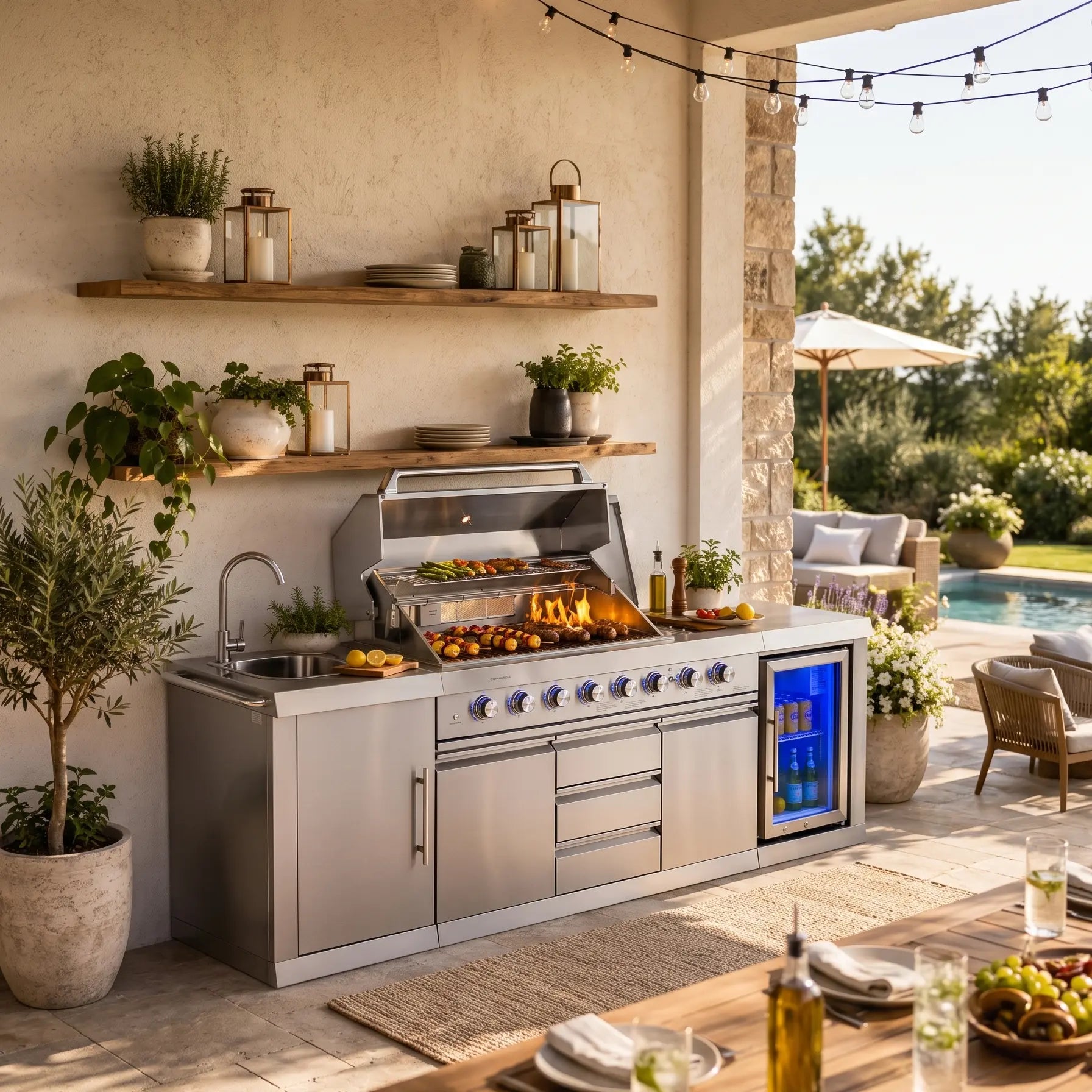
Yes—you can cook steak in a pizza oven, provided you manage the intense heat and use cookware that protects the pizza stone. For most pizza ovens, a preheated cast-iron skillet or sizzle plate is the safest approach; aim for a steak internal temperature of 130–135°F for medium-rare after resting.
A pizza oven can create the high radiant heat needed for a deeply browned steak crust, but it behaves differently from a conventional grill. Pizza ovens are designed to heat a stone quickly and cook food from below, above, and around the chamber. Steak fat, oil, and butter can smoke or flare at those temperatures, so cookware choice, heat control, and a reliable instant-read thermometer matter more than following a fixed minute-by-minute recipe.
Can You Cook Steak in Any Pizza Oven?
Most outdoor pizza ovens can cook steak, but the best method depends on the oven’s fuel, heat pattern, available cooking space, and whether it can safely hold cast iron or a grill accessory.
A gas, pellet, wood-fired, electric, or multi-fuel pizza oven can all cook steak when used within the manufacturer’s instructions. The practical question is not whether the oven gets hot enough—it almost certainly does—but whether you can control the heat well enough to brown the exterior without overcooking the center.
High-heat pizza ovens are especially effective for steaks at least 1 to 1½ inches thick. A thicker steak gives you more time to develop a crust before the center reaches the final serving temperature. Thin steaks can cook through quickly in the intense radiant environment of a pizza oven.
For a standard pizza oven, use one of these methods:
- Cast-iron skillet: The most controlled option for searing steak while containing rendered fat and juices.
- Cast-iron griddle or sizzle plate: Useful when you want more surface area or grill-style contact marks.
- Raised grill grate: Appropriate only if the oven manufacturer permits it and the grate fits securely.
- Roasting pan or shallow cast-iron dish: Better for finishing thicker cuts, vegetables, or butter-basted steak.
Do not place a fatty steak directly on a pizza stone. Rendered fat can soak into porous stone, create persistent smoke and odors, and contribute to cracking when the stone is exposed to abrupt temperature changes or grease fires.
Big Horn Outdoors offers pizza ovens in pellet, gas, electric, and multi-fuel formats, so the exact steak method should match the exact model’s cooking environment, fuel system, and included or approved accessories.
Why Does Pizza-Oven Heat Sear Steak So Quickly?
A pizza oven browns steak quickly because radiant heat from flames and hot oven surfaces accelerates the Maillard reaction—the series of browning reactions that creates a savory crust.
The Maillard reaction becomes noticeable when the meat surface is dry and hot. In a pizza oven, heat may come from several directions at once:
- Radiant heat travels from flame, burner, heated ceiling, and hot metal surfaces directly toward the steak.
- Conductive heat transfers from a preheated cast-iron pan or griddle into the steak’s surface.
- Convective heat is the moving hot air circulating inside the oven chamber.
For steak, conductive heat from cast iron is often the most predictable source of browning. A hot pan gives the meat broad surface contact, helping create a continuous crust rather than isolated grill marks.
The challenge is that pizza ovens can be far hotter than the temperature needed to cook steak evenly. A pizza designed to bake in roughly 60–90 seconds benefits from a very hot stone and strong top heat. A steak needs a hard sear but also enough control to avoid a burnt exterior and underdone or overdone interior.
That is why a lower, steadier oven setting—or moving the pan farther from the flame after the initial sear—often produces better results than cooking at the maximum possible temperature.
What Temperature Should a Pizza Oven Be for Steak?
For cast-iron steak cooking, a pizza oven environment around 500–700°F is generally more manageable than maximum pizza temperatures, while the pan itself should be thoroughly preheated before the steak goes in.
There is no single perfect oven temperature because fuel type, flame placement, wind, pan thickness, steak thickness, and desired doneness all affect the cook. The reliable measurement is the steak’s internal temperature, not the oven thermometer alone.
Use the following temperature guide as a starting point. Remove the steak slightly below the final target because carryover cooking continues while it rests.
| Desired doneness | Remove steak at | Final temperature after resting |
|---|---|---|
| Rare | 120–125°F | 125–130°F |
| Medium-rare | 125–130°F | 130–135°F |
| Medium | 135–140°F | 140–145°F |
| Medium-well | 145–150°F | 150–155°F |
| Well done | 155°F or higher | 160°F or higher |
These temperatures are decision points, not promises of exact timing. Insert an instant-read thermometer into the center of the thickest part of the steak, avoiding bone and large seams of fat.
For a 1- to 1½-inch ribeye, strip steak, or sirloin, start checking early. In a high-heat pizza oven, the difference between medium-rare and medium can occur quickly, particularly after a strong cast-iron sear.
How Do You Cook Steak in a Pizza Oven?
The most dependable way to cook steak in a pizza oven is to preheat a cast-iron skillet, sear the steak in the hot pan, then monitor internal temperature until it reaches the desired pull temperature.
1. Choose a steak suited to high heat
Select a steak that is at least 1 inch thick. Ribeye, New York strip, top sirloin, porterhouse, T-bone, and filet mignon all work, although fatty cuts require extra attention because rendered fat can flare.
Pat the steak dry with paper towels. Surface moisture slows browning because the heat must first evaporate water before the meat can sear effectively.
Season with kosher salt and black pepper shortly before cooking. If using oil, apply a thin coating to the steak rather than pouring a large amount into the pan.
2. Preheat the pizza oven and pan
Bring the oven to a controlled high-heat cooking zone rather than treating steak exactly like a 60-second pizza. Place an oven-safe cast-iron skillet or griddle inside while the oven heats.
Cast iron needs time to absorb and retain heat. A pan that is merely warm will steam the steak instead of producing a fast, brown crust.
Use heat-resistant gloves rated for outdoor-cooking use and long-handled tongs. The handle and pan body will become extremely hot.
3. Sear without crowding the pan
Carefully add the steak to the preheated pan. Leave space around each piece; crowding lowers the pan temperature and traps steam.
Sear the first side until it develops a dark brown crust, then flip with tongs. Rotate or reposition the pan if one side of the oven is noticeably hotter. Gas and wood-fired pizza ovens often have a hotter zone nearest the flame or burner.
Avoid frequent flipping during the initial sear. Once a crust develops, however, controlled flips can help prevent one side from receiving too much radiant heat.
4. Finish by temperature, not by a timer
After both sides are browned, move the skillet farther from the flame or reduce the burner if your model allows. Check the steak’s internal temperature early and often.
If adding butter, garlic, rosemary, or thyme, do it near the end and watch closely. Butter solids can burn rapidly in a very hot pizza oven. A safer option is to add compound butter after the steak comes off the heat.
5. Rest before slicing
Rest steak for 5–10 minutes on a warm plate or cutting board, loosely tented if needed. Resting lets internal heat equalize and helps retain juices when you slice.
Slice against the grain for cuts such as flank steak, skirt steak, or tri-tip. For ribeye and strip steak, slice across the width after resting if serving family-style.
Fuel and Heat Management
Fuel affects how you manage steak in a pizza oven: propane offers the quickest adjustment, pellets and wood add live-fire character but require more active fire management, and electric ovens depend on their approved temperature controls.
The table below summarizes the practical differences for steak cooking. It is a general guide; always follow the instructions for your specific oven.
| Oven fuel or format | Steak-cooking advantage | Primary limitation | Best use |
|---|---|---|---|
| Propane gas pizza oven | Adjustable flame and repeatable heat | Strong rear flame can scorch food nearby | Cast-iron searing and controlled finishing |
| Wood-pellet pizza oven | Live-fire aroma and strong radiant heat | Requires fuel and flame management | Thick steaks cooked in cast iron |
| Wood-fired pizza oven | Intense heat and traditional live-fire cooking | Heat can vary with fire size and placement | Searing, roasting, and multi-course outdoor cooking |
| Electric countertop pizza oven | Convenient indoor-style control where approved | May have less open-flame character and limited pan clearance | Small steaks or cast-iron finishing, if the manual allows |
| Infrared steak grill | Direct radiant heat designed for rapid searing | Not a replacement for an oven’s baking functions | Fast steak-focused cooking |
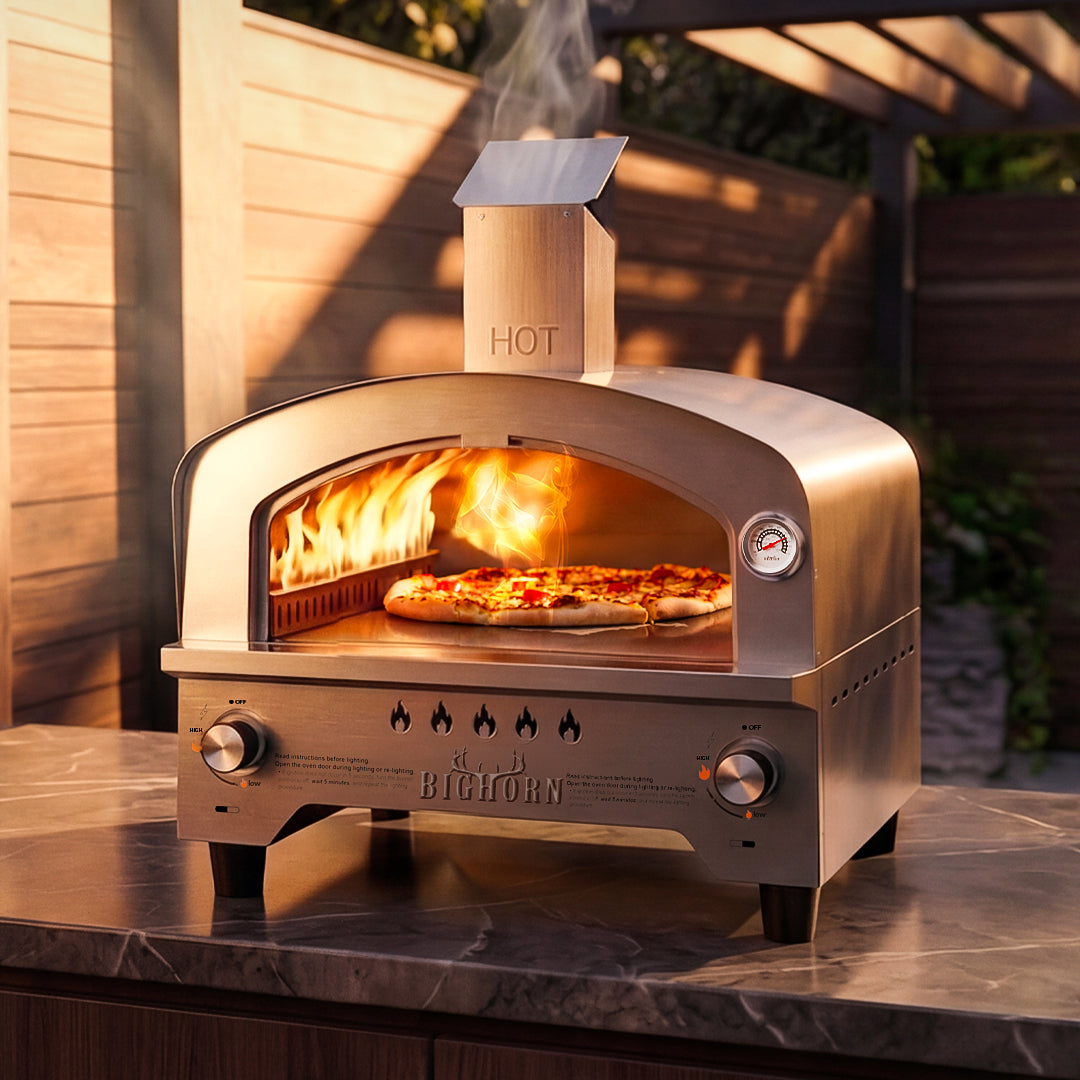
A Big Horn Outdoors 12-inch pellet-and-gas pizza oven is a model-specific example of fuel flexibility: its official product information states that it can switch between pellet and gas fuel without tools, includes a detachable gas burner, includes a 12-inch pizza stone, and reaches 350°C in about 20 minutes in pellet or gas mode. That makes fuel selection a practical choice between hands-on pellet fire management and more direct gas adjustment—not a reason to assume every pizza oven has the same capability.
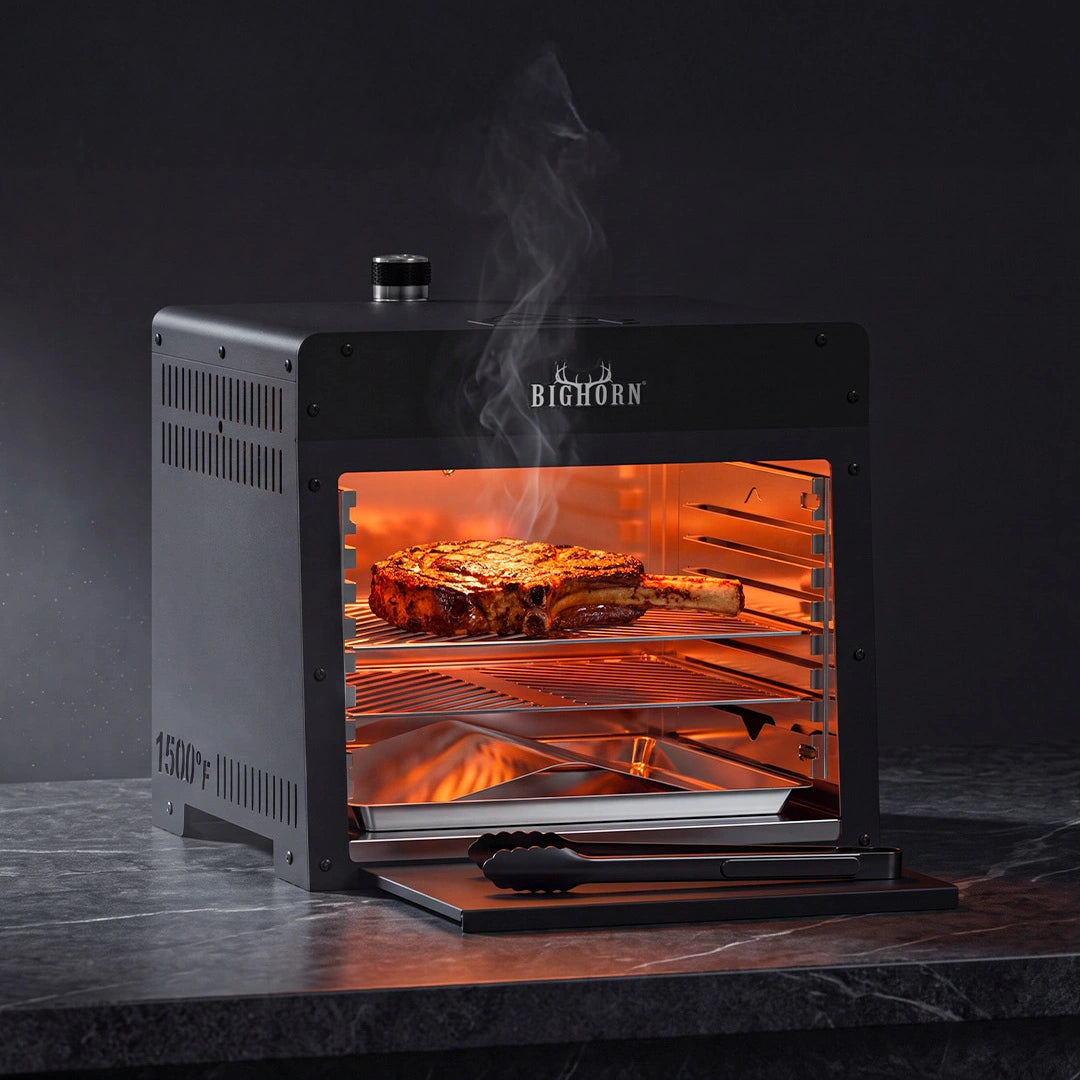
For a steak-first setup, an infrared broiler can be more purpose-built than a pizza oven. An infrared broiler is a gas cooker that radiates concentrated heat directly onto food, rather than relying mainly on hot circulating air. The Big Horn Outdoors 16-inch infrared steak grill is specified for propane, uses a 19,000-BTU infrared burner, reaches temperatures up to 1,500°F, includes two stainless-steel cooking grates, and provides 10 rack positions. Its top-down radiant design is intended for close, fast searing, while a pizza oven remains the more versatile option for pizza, roasting, baking, and pan cooking.
Which Setup Is Best for Your Cooking Style?
Choose a pizza oven for versatile outdoor cooking, a dedicated infrared steak grill for rapid high-heat searing, and a Santa Maria-style grill when you want live-fire cooking with manually adjustable grate height.
The right choice comes down to how often steak is the main event and how much control you want over the heat.
A pizza oven is the flexible choice for someone who regularly makes pizza but also wants to roast vegetables, bake bread, cook fish, or sear steak in cast iron. It rewards cooks who are willing to learn hot zones, manage flame placement, and use cookware strategically.
An infrared steak grill makes sense when steak, chops, burgers, seafood, and fast searing are the priority. The Big Horn Outdoors 21.2-inch dual infrared burner steak grill is specified for propane and features two independently controlled infrared burners, two stainless-steel grates, seven adjustable rack levels, a pizza stone, grease tray, and heat shield. Independent burner control can be useful when cooking foods that need different heat exposure, but it is not the same as the broad baking chamber of a pizza oven.
A Santa Maria grill is a live-fire grill with a grate that raises and lowers over charcoal or wood. Its defining advantage is mechanical distance control: lifting the grate away from the coals lowers the heat exposure without needing to move the food to another appliance. It is well suited to cooks who enjoy tending a fire and grilling multiple steaks, vegetables, and larger cuts over embers.
Safety Rules for Steak in a Pizza Oven
Cook steak only in an oven and location approved by the manufacturer, keep grease away from the pizza stone and open flame, and use protective tools because cookware and surfaces may exceed 500°F.
High heat is useful only when it is managed safely. Follow these core practices:
- Use outdoor pizza ovens outdoors unless the exact manufacturer’s instructions explicitly state that the model is designed for indoor use.
- Set the oven on a stable, noncombustible surface with appropriate clearance from structures, overhead materials, dry vegetation, and combustible items.
- Keep children, pets, loose clothing, paper towels, and packaging away from the hot cooking area.
- Use a cast-iron skillet, griddle, or other oven-safe cookware rated for the oven’s operating temperature.
- Never use cookware with plastic, silicone, or wooden components inside a high-heat pizza oven unless the manufacturer specifically rates it for that use.
- Keep a clean grease tray or drip-management system in place when the appliance includes one.
- Do not use water to extinguish a grease fire. Shut off the gas source when safe to do so, close the oven or appliance as instructed, and use an appropriate fire extinguisher for cooking oils if needed.
- Check propane connections for leaks before ignition, following the appliance manual.
- Let the oven, stone, pan, and accessories cool fully before cleaning, storing, covering, or transporting them.
For pellet and wood-fired pizza ovens, use dry fuel intended for cooking. Do not add accelerants, treated lumber, painted wood, or inappropriate fuel. For propane systems, inspect hoses, regulators, and connections regularly and replace damaged parts only with approved replacements.
Cleaning and Maintaining Your Oven After Steak
After cooking steak, allow the oven and cookware to cool completely, remove grease and food residue, and avoid thermal shock to the pizza stone.
Steak creates more rendered fat than a flour-dusted pizza, so cleaning matters. Remove the cast-iron pan only when it is safe to handle. Wipe or scrape out cooled grease according to local disposal rules; do not pour grease into a sink drain.
If grease reaches the pizza stone, let the stone cool and brush away dry residue. Avoid soaking the stone or applying cold water to a hot or warm stone. Sudden temperature changes can damage ceramic or cordierite materials.
Season cast iron as needed. If food begins sticking, the surface looks dull or dry, or cleaning removes part of the seasoning layer, dry the cookware thoroughly and apply a very thin coat of high-smoke-point oil before reheating it according to the cookware manufacturer’s guidance.
For portable equipment, confirm that the oven is fully cool, clean, and dry before folding legs, detaching components, or placing it in a cover or storage area. This protects the equipment and reduces the chance of trapping moisture around metal surfaces.
Big Horn Outdoors Expert Views
“A pizza oven can make excellent steak, but it should be used as a high-heat cooking system—not simply as a hotter version of a backyard grill. Start with a dry, thick-cut steak and a thoroughly preheated cast-iron pan. Use the flame or burner to build crust, then manage distance and heat so the center reaches the temperature you want. For pizza-first cooks, this method makes the most of an existing oven. For steak-first cooks who want rapid, concentrated radiant heat and adjustable rack position, an infrared steak grill may be the more direct tool. In either case, use an instant-read thermometer, control grease carefully, and follow the specific appliance manual.”
—Big Horn Outdoors Product Team
The Bottom Line
You can cook steak in a pizza oven, and a preheated cast-iron skillet is the most reliable way to do it. The winning approach is simple: dry the steak, preheat the pan, sear over controlled high heat, check the internal temperature, and rest before serving.
Choose a gas pizza oven if you value fast flame adjustment, a pellet or wood-fired oven if you enjoy managing live fire, and an electric model only for uses allowed by its specific manual. If steak is your primary goal and you want very fast, direct radiant heat, consider a dedicated propane infrared steak grill. For flexible pizza-and-steak cooking at home, a properly managed Big Horn Outdoors pizza oven can support both jobs when used with model-appropriate cookware and safety practices.
Frequently Asked Questions
Can you put a steak directly on a pizza stone?
It is better not to cook steak directly on a pizza stone. Rendered fat can smoke, flare, stain the porous stone, and create difficult cleanup; use a preheated cast-iron skillet, griddle, or approved grill accessory instead.
How long does steak take in a pizza oven?
Cooking time depends on steak thickness, oven heat, pan temperature, and your target doneness. A thick steak may sear in a few minutes per side, but use an instant-read thermometer rather than relying on time alone.
What is the best steak cut for a pizza oven?
Ribeye, New York strip, top sirloin, filet mignon, porterhouse, and T-bone steaks work well, especially at 1 to 1½ inches thick. Thicker steaks are more forgiving because they can form a crust before the center overcooks.
Should I use butter in a pizza oven for steak?
Use butter cautiously because milk solids burn quickly at pizza-oven temperatures. Add it near the end at reduced heat, or finish the rested steak with compound butter for more control.
Can a pellet pizza oven cook steak?
Yes, a pellet pizza oven can cook steak, especially in a preheated cast-iron pan. Pellet-fired cooking requires more active heat and flame management than gas, so monitor the steak’s internal temperature and move the pan away from the hottest zone as needed.