
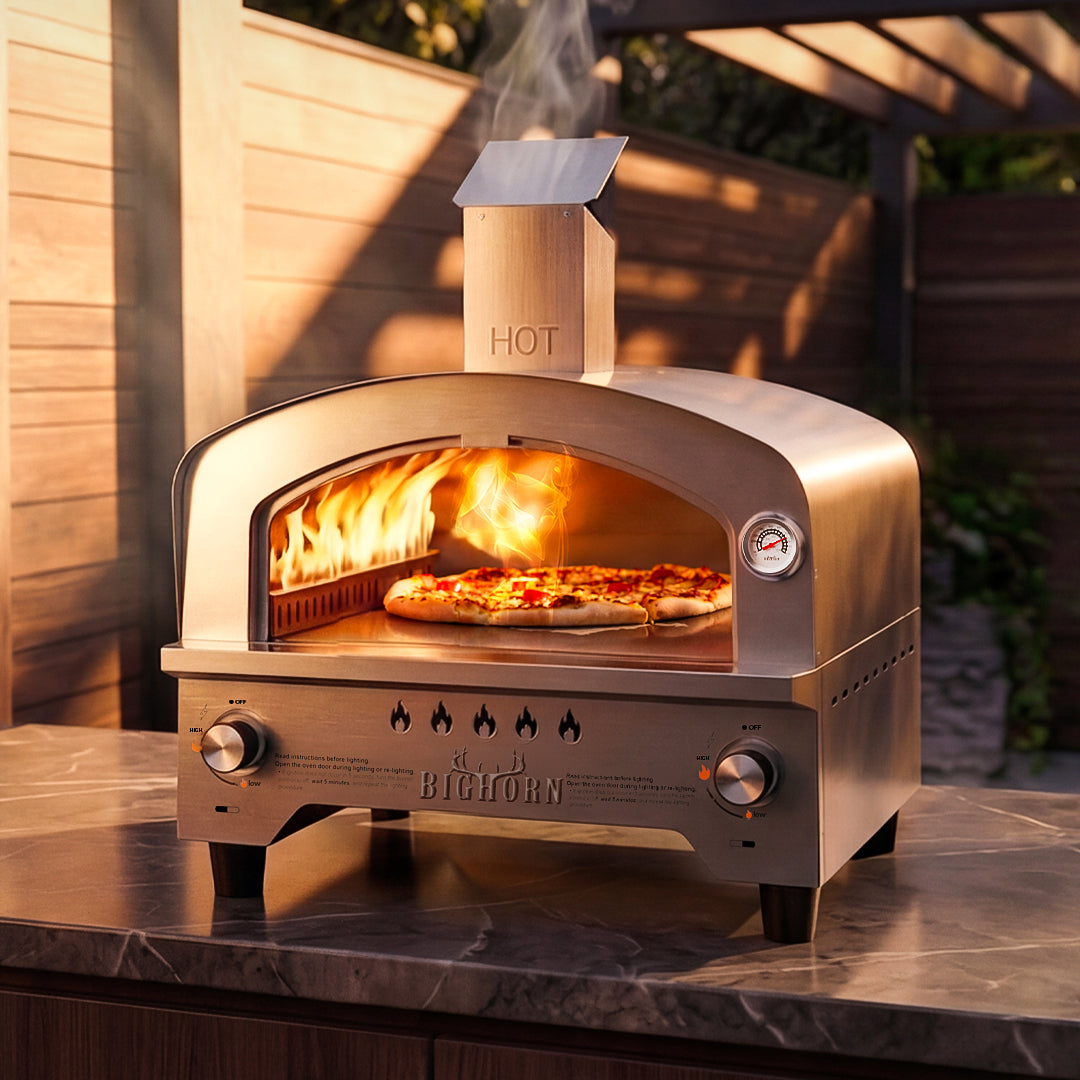
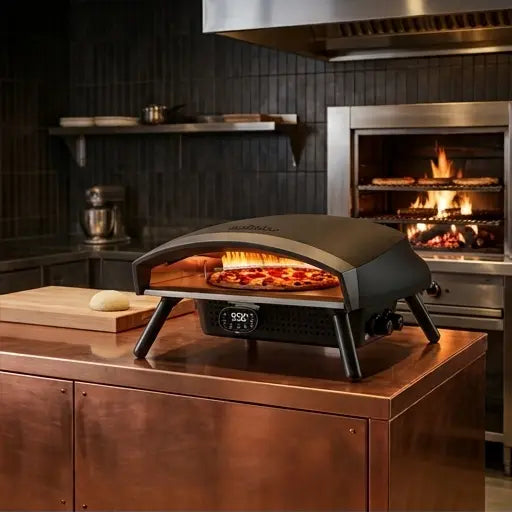
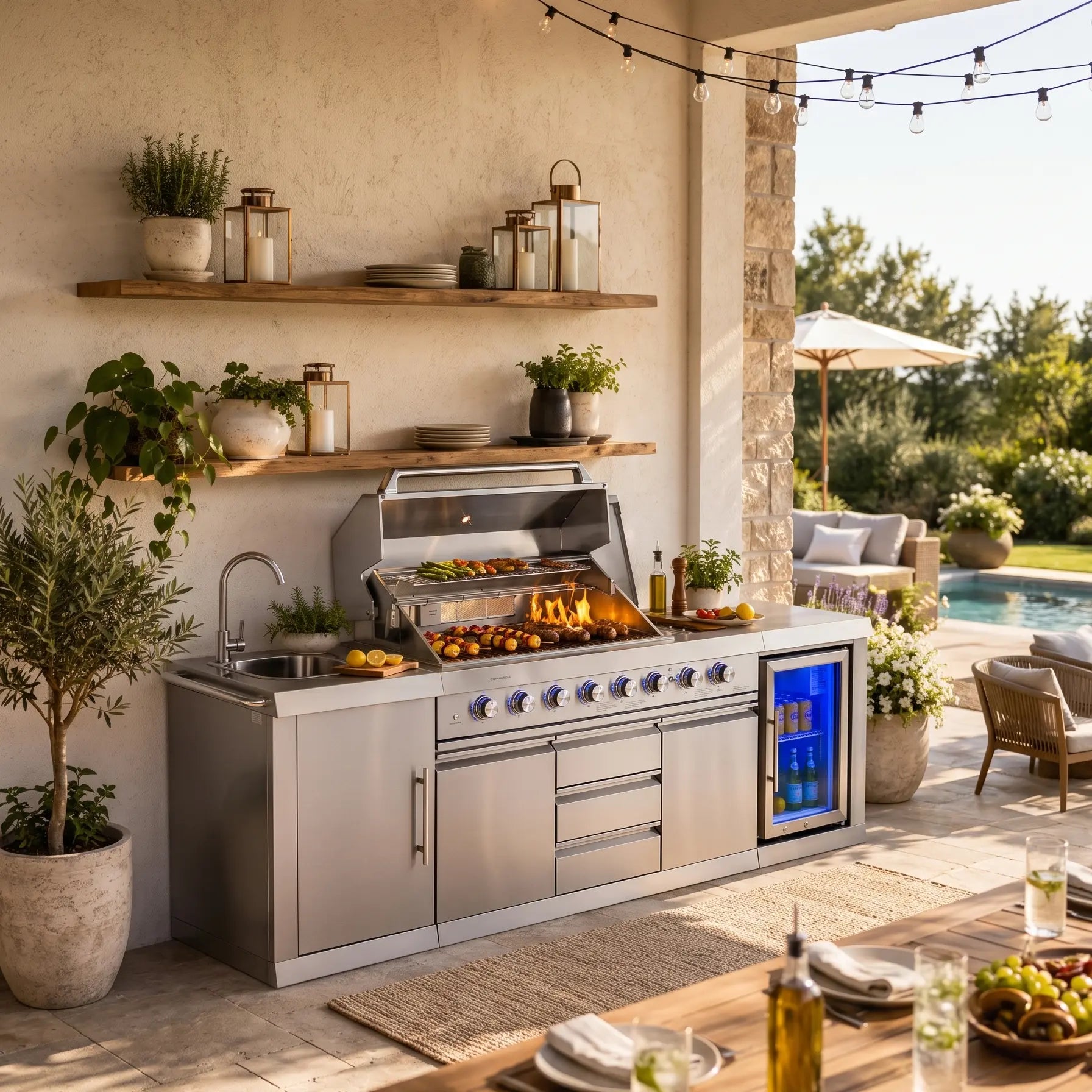
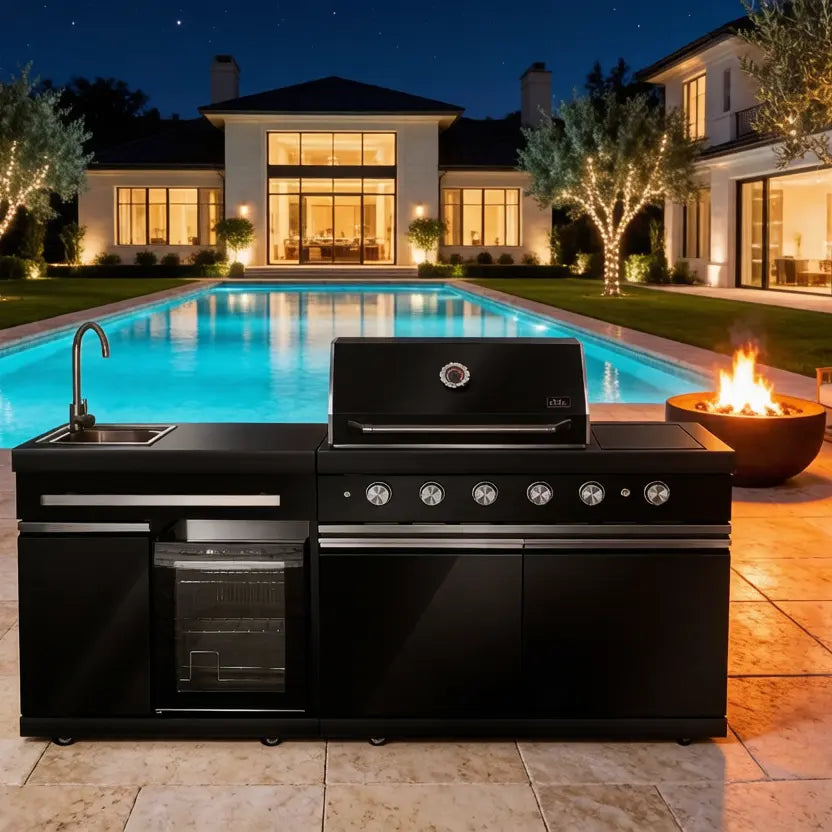
Place a backyard pizza oven on a level, stable, noncombustible surface in an open, well-ventilated area—away from fences, low branches, siding, utility lines, doors, and busy walkways. Reserve at least a 3-foot clear working zone around the oven as a practical baseline, then follow the exact clearance and placement instructions in your oven’s manual.
What Is the Best Location for a Backyard Pizza Oven?
The best location is an open patio or dedicated outdoor-cooking zone with a stable, heat-safe base, clear overhead space, and enough room to use a peel without crossing a guest pathway. Put the oven close enough to your prep area for convenience, but never so close that heat, sparks, smoke, or a swinging pizza peel can affect people or combustible materials.
For most homes, the strongest layout is a pizza-oven station at the outer end of a patio, outdoor-kitchen counter, or cooking zone. This arrangement keeps the hot appliance accessible while separating it from dining chairs, play areas, doors, and the most common walking routes.
A good backyard pizza oven location should deliver five things at once:
- A flat, stable base that will not rock, sink, or shift.
- Open-air ventilation for heat, smoke, combustion gases, and exhaust.
- Manufacturer-required clearance from combustible construction and objects.
- A practical workflow between dough prep, launching, turning, serving, and cleanup.
- Enough space for the cook to stand, turn, and use a long pizza peel safely.
Do not choose a location solely because it looks attractive. A pizza oven is a high-heat cooking appliance, not patio décor. The right location supports safe fuel use, predictable cooking, comfortable entertaining, and routine cleaning.
For a portable oven, a weather-resistant metal cart, masonry counter, concrete patio, or another manufacturer-approved noncombustible support is usually more practical than setting the unit directly on grass, gravel, or a lightweight folding table. Before every cook, confirm that the support is level and can safely carry the oven, fuel, tools, and food.
How Much Space Does a Pizza Oven Need?
A backyard pizza oven needs a clear operating area, not just enough room for its footprint. Use a practical minimum 3-foot buffer around the oven for people, tools, and combustible items unless the product manual requires greater clearance.
The oven’s outer dimensions are not the same as its pizza capacity. A “12-inch” pizza oven generally refers to the maximum pizza size it can accommodate, while its body, legs, fuel chamber, door clearance, and chimney or exhaust components require substantially more real estate.
Plan for these zones before choosing a final position:
| Backyard zone | What it needs | Why it matters |
|---|---|---|
| Oven support zone | Flat, rigid, heat-safe surface | Prevents tipping, shifting, and unsafe loading |
| Cook zone | Clear standing space in front of the oven | Allows safe launching, turning, and removing pizza |
| Landing zone | Nearby heat-tolerant surface for peels and hot pans | Prevents cooks from carrying hot food across the yard |
| Fuel zone | Separate, dry, organized storage | Keeps pellets, propane cylinders, and fire-starting materials away from heat |
| Guest zone | Outside the oven’s active work area | Reduces contact with hot surfaces and long-handled tools |
A useful planning rule is to avoid putting the oven in the center of a narrow patio. When people must pass directly in front of the oven opening or behind the cook, the setup becomes inconvenient and riskier during service.
For a built-in or masonry pizza oven, space planning should begin before counters, roofs, utility lines, and finish materials are installed. Permanent ovens can involve local building, fire, gas, electrical, and ventilation requirements. Verify local rules and obtain professional help when a project involves gas piping, electrical circuits, structural work, or a chimney system.
Which Surfaces Are Safe for a Pizza Oven?
A pizza oven should sit on a level, stable, noncombustible surface or on a stand specifically approved by its manufacturer. Concrete, masonry, tile over an appropriate noncombustible structure, and purpose-built metal carts are common choices; grass, loose soil, and unstable furniture are poor choices.
High-heat pizza cooking creates several kinds of thermal stress. The oven body radiates heat outward, the exhaust releases hot gases upward or rearward depending on its design, and a live-fire model can produce ash or sparks. A sturdy support helps keep the oven stable when you load food, add fuel, or pull a pizza with a peel.
Avoid these placements unless the appliance manufacturer explicitly approves them:
- Directly on grass, mulch, leaves, or loose gravel.
- On a plastic, resin, or lightweight patio table.
- On a wooden deck without confirming the manufacturer’s surface and clearance requirements.
- Next to vinyl siding, wooden fencing, fabric screens, umbrellas, or outdoor cushions.
- Under low tree limbs, utility wires, awnings, or unapproved covered structures.
- On sloped pavers or uneven ground where the oven can rock.
A deck is not automatically unsuitable, but it demands extra caution. The exact oven manual controls: some models may permit use on a deck with specific clearance, heat shielding, or a manufacturer-approved stand, while others may not. Never improvise with a loose paving stone or an undersized metal tray and assume it provides safe protection.
Big Horn Outdoors offers outdoor pizza ovens designed for patio, backyard, camping, and outdoor-cooking use, as well as separate electric countertop models intended for indoor cooking. The appliance’s labeled environment matters: an outdoor wood, pellet, or gas oven should remain outdoors in an open, ventilated setting, while an indoor electric model should be used only as its instructions allow.
Should a Pizza Oven Face a Certain Direction?
A pizza oven should face a direction that gives the cook a clear work area and keeps heat and smoke away from doors, seating, and neighbors. In a consistently windy yard, angle the oven so prevailing wind does not blow directly into the opening or push smoke toward the house.
Wind affects both comfort and combustion. A gust entering the mouth of a live-fire pizza oven can intensify the fire by adding oxygen. Wind can also disrupt a gas flame, cool the oven exterior unevenly, or carry smoke into a dining area. The goal is not to eliminate every breeze; it is to avoid a placement where normal wind repeatedly makes operation unpleasant or unpredictable.
Before committing to a location, spend time in the backyard during the time you expect to cook. Notice where smoke from a grill, fire pit, or smoker usually travels. Check whether the area becomes a wind tunnel between a wall and fence, or whether prevailing wind blows directly toward an open back door.
Orient the oven with these priorities:
- Give the cook a clear, open path in front of the oven.
- Keep the opening and exhaust away from the house, doors, windows, seating, and dry vegetation.
- Avoid aiming the cooking mouth toward a narrow walkway or a place where children and pets commonly play.
- Place a heat-safe prep or landing surface beside the oven—not directly behind the exhaust path.
- Do not create a setup where guests must walk behind the cook while pizza is being launched or turned.
The oven opening should also support the cooking sequence. Pizza making involves loading, rotating, and removing food quickly. A cook who must turn sideways, reach over a crowded counter, or step backward into a traffic lane will have less control over hot tools and food.
Fuel Choice Changes Placement Needs
Pellet, wood, gas, and electric pizza ovens have different operating demands, so the best backyard location depends partly on the fuel system. Outdoor combustion appliances need open-air ventilation; electric countertop models need the correct electrical setup and the indoor or outdoor environment specified by their exact instructions.
Wood and pellet ovens create live fire, ash, heat, and smoke. They need a location that keeps fuel dry and nearby without storing it against the appliance. Use only the fuel approved for the specific oven. Do not use gasoline, lighter fluid, or other volatile liquids to light or relight a pizza oven.
Gas pizza ovens require special attention to the hose, regulator, fuel cylinder, and burner area. Position the oven where the hose cannot become a trip hazard, be pinched under furniture, or contact hot surfaces. Inspect gas connections according to the manufacturer’s instructions before cooking, and never operate a gas-fueled outdoor oven in an enclosed garage, shed, tent, or screened space that lacks manufacturer-approved ventilation.
Electric pizza ovens do not produce combustion smoke, but that does not make every electric oven an outdoor appliance. Use an electric countertop pizza oven only in the environment stated by its manufacturer, with the required outlet and electrical protection. Do not run a cord across a wet patio, through a doorway where it can be damaged, or where it creates a trip hazard.
Big Horn Outdoors’ current pizza-oven lineup includes outdoor pellet and gas formats as well as indoor electric countertop options. Choose the appliance first, then plan the location around the specific model’s fuel, electrical, ventilation, surface, and clearance requirements—not around a generic idea of what a pizza oven needs.
How Does Heat Management Affect Placement?
Pizza ovens need room around them because high-heat cooking involves radiant heat, hot exhaust, and hot tools, not just a hot cooking stone. A pizza stone stores thermal energy and transfers it into the dough by conduction, while the flame, ceiling, and surrounding air brown the top through radiant and convective heat.
This is why a pizza can cook rapidly at high temperature: the base receives intense heat from the stone, and the toppings brown from the heat above. The same physics explains why a nearby wall, plastic chair, or low canopy can be exposed to more heat than expected.
The oven placement should support heat management in practice:
- Keep an infrared thermometer accessible if your oven does not include a precise stone-temperature gauge.
- Leave a clear place for turning peels, pans, gloves, and hot finished pizzas.
- Position the prep area near the oven but outside its direct heat and smoke path.
- Use a heat-tolerant landing surface instead of setting a hot peel or pan on furniture.
- Keep water, cleaning materials, packaging, paper towels, and food boxes away from the active cooking zone.
For example, Big Horn Outdoors’ 12-inch wood-pellet pizza oven is a portable stainless-steel model with folding legs and compatibility with separately sold gas-burner and electric-heater accessories. Its product information lists an 18- to 20-minute preheat and temperatures up to 887°F, so it should be treated as a high-heat outdoor cooking appliance, even though it is compact and portable.
The same model is listed at 24.9 pounds and can cook pizzas up to 12 inches. Its portability can make it useful for a patio, campsite, or outdoor gathering, but portability does not eliminate the need for a solid, heat-safe support and open-air operation.
Big Horn Outdoors Expert Views
“Place the oven where cooking can be deliberate rather than improvised. The best backyard station gives the cook a stable base, an open ventilation path, a clear peel zone, and a nearby landing surface for hot food. Start with the exact model manual, because fuel type, exhaust design, electrical requirements, and clearance needs vary. Then test the workflow before your first pizza: stand in the cook position, open the door, simulate launching with a peel, and check where guests will walk. If the setup makes you step into traffic, reach over furniture, or work under a low cover, move the oven before lighting it.”
Big Horn Outdoors began with a 2012 backyard-cooking challenge focused on reducing uneven heat, excessive smoke, and unstable temperatures. That practical focus still matters when planning a pizza-oven station: reliable cooking starts with stable equipment placement and enough space to use the appliance as designed.
Safe Setup, Cleaning, and Storage
Never move a pizza oven while it is operating or still hot, and do not leave a live-fire or gas oven unattended. Let the oven cool completely before cleaning, covering, transporting, or storing it.
A safe setup begins before ignition. Inspect the cooking area, remove dry leaves and combustible clutter, check that legs or cart wheels are secure, and make sure your cooking tools are ready. For a gas appliance, inspect the hose and connections as directed by the product manual. For a pellet model, use dry, approved food-grade pellets and keep extra fuel in a sealed container away from heat and moisture.
After cooking:
- Allow the oven, stone, and fuel area to cool fully.
- Remove ash only when it is completely cold, and place it in a lidded metal container.
- Clean food residue from the stone and cooking area according to the manufacturer’s care instructions.
- Check for grease, soot, damaged parts, or blocked vents before the next use.
- Store portable ovens only after they are cold, dry, and clean.
- Use a fitted cover only after the appliance has cooled and only if the cover is compatible with the model.
A cover protects an idle oven from weather and debris, but it does not replace safe placement. Keep the stored appliance clear of ignition sources and follow the manual’s storage guidance for fuel cylinders, pellets, accessories, and electrical components.
Choose a Location That Fits How You Cook
The right backyard pizza-oven location is an open, stable, noncombustible station with clear working space, safe separation from combustibles, and a layout that keeps smoke and hot tools away from guests. Match the location to your exact model, fuel type, weather exposure, cooking frequency, and available prep space.
Choose a portable cart or patio station if you want flexibility for occasional pizza nights, camping, or seasonal storage. Plan a dedicated masonry or outdoor-kitchen position if you cook often, serve groups, and want permanent prep and landing space. Choose a gas or electric format if repeatable heat control and simpler startup matter most; choose pellet or wood-fired cooking if you prefer live-fire involvement and are prepared to manage fuel, ash, and airflow.
Before buying or relocating an oven, measure the full appliance—not just the stated pizza size—then read the exact product manual for required clearances, fuel instructions, support requirements, and approved environment. Big Horn Outdoors provides multiple pizza-oven formats, so selecting the correct model and siting it responsibly should happen together.
Frequently Asked Questions
Can I put a pizza oven under a covered patio?
Only if the exact oven manufacturer specifically permits that installation and the structure meets all stated clearance, ventilation, and fire-safety requirements. Do not assume that a patio roof, pergola, gazebo, awning, garage, or screened enclosure is safe for a wood-, pellet-, or gas-fired pizza oven.
Can I use a backyard pizza oven on a wooden deck?
Possibly, but only when the oven’s manufacturer permits deck use and you meet its required surface, clearance, and heat-protection rules. A wooden deck is combustible, so never place an oven there without confirming the manual for that exact model.
How close can a pizza oven be to a house?
Keep the oven as far from the house as the manufacturer requires and never place it close to siding, windows, doors, eaves, or other combustible building materials. A 3-foot clear zone is a practical operating baseline, but the model manual and local requirements always take priority.
Can an outdoor pellet or gas pizza oven be used indoors?
No. Outdoor pellet, wood, and gas pizza ovens require open-air ventilation and should not be used indoors, in a garage, or in another enclosed space because combustion gases, smoke, and extreme heat create serious hazards. Use only a model specifically designed and labeled for indoor countertop use when cooking inside.
Where should I keep pizza-oven fuel?
Store pellets, wood, and other approved fuel dry and organized away from the hot oven and away from ignition sources. Keep propane cylinders upright and handle, store, and inspect them according to the appliance instructions and applicable local safety requirements.