Yes—one pizza oven can handle a backyard party when the menu and workflow match its capacity. A single-pizza oven is best treated as a continuous service station: prepare dough and toppings before guests arrive, cook one pie at a time, and plan roughly 2–3 slices per guest rather than expecting every pizza to appear at once. A larger 15- or 16-inch format gives the cook more room to launch, turn, and serve family-size pizzas.
Can one pizza oven feed all your guests?
One pizza oven can feed a backyard party of about 6–12 guests comfortably when pizzas are served in rounds, not all at once. For larger groups, one oven can still work, but the cook needs a planned service window, ready-to-launch pizzas, and additional snacks so guests are not waiting hungry.
The key distinction is capacity versus throughput. Capacity is the number and size of pizzas that fit on the cooking surface at one time. Throughput is how many finished pizzas the oven can produce over the full party.
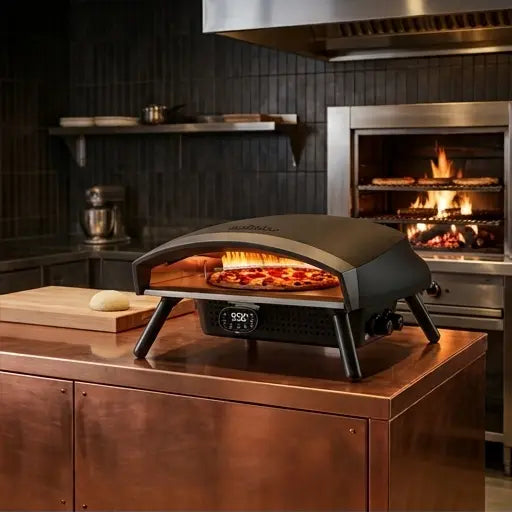
A compact pizza oven may bake one 10- to 12-inch pizza at a time. That does not automatically make it unsuitable for entertaining. It means the host should think like a small open kitchen: launch a pie, turn it as needed, remove it, let the stone recover if necessary, and launch the next pie.
For a casual backyard pizza night, people usually do not need to eat simultaneously. Guests can share slices, compare toppings, and return for another piece when the next pizza comes out. That style of serving makes one oven more practical than a “one pizza per person” plan.
Use these planning assumptions as a starting point:
- Plan 2–3 slices per adult when pizza is the main meal.
- Plan 1–2 slices per guest when serving salads, appetizers, grilled vegetables, or dessert.
- Use smaller pizzas for a tasting-style party where guests want multiple topping combinations.
- Use larger pizzas when you want fewer launches and a simpler service flow.
- Add a second cooking appliance only when simultaneous service matters more than the social experience of pizzas arriving in rounds.
A single oven becomes less practical when 15 or more hungry guests expect a full meal at the same moment, when the host has little time to cook during the party, or when guests need large pizzas rather than shareable personal pies.
What determines pizza-oven party capacity?
Cooking-surface size, stone recovery, fuel supply, and the cook’s workflow determine whether one pizza oven can keep a party moving. The oven’s maximum temperature matters, but a hot stone that recovers predictably between pizzas is just as important during a long service.
A pizza oven is not judged only by its stated peak temperature. For party cooking, consider the complete heat system:
- The cooking stone stores heat and transfers it into the bottom of the dough through conduction.
- The flame, burner, pellets, or heating elements heat the air and upper oven surfaces.
- Radiant heat from the dome, ceiling, or flame-side wall browns the top of the pizza.
- The oven must restore heat to the stone after each pizza pulls energy out of it.
This is why the first pizza may cook differently from the fifth. Every raw dough ball, sauce layer, and topping load absorbs heat. If pizzas are launched too quickly, the stone can cool and produce a pale, under-crisped bottom even while the toppings brown rapidly.
For party use, choose a pizza format that fits how people will eat. A 12-inch oven can support a small group through sequential cooking. A larger oven gives more room around the pizza, which can make turning easier and may accommodate larger pies. However, a larger oven does not eliminate the need for prep, fuel management, and active monitoring.
| Party situation | One-oven approach | Practical decision |
|---|---|---|
| 4–6 guests | One pizza at a time with prepared dough and toppings | A compact oven can be sufficient |
| 6–12 guests | Serve pizzas in rolling rounds; assign one person to prep and one to cook if possible | Choose the largest cooking surface that fits your usual space and storage needs |
| 12–16 guests | Build a longer service window and serve appetizers before pizza | One oven can work, but a second heat source reduces waiting |
| More than 16 guests | Treat pizza as one menu station or use two ovens | A single small oven may create a long line |
The table is a planning guide rather than a promise of output. Dough thickness, pizza diameter, topping moisture, outdoor temperature, wind, fuel type, and the cook’s experience all change real-world pace.
Which pizza-oven size works for parties?
A 12-inch pizza oven is practical for small gatherings and sequential service, while 15- and 16-inch formats are generally easier for hosts who regularly cook larger pizzas. The right size is the one that matches your usual group size, storage space, and willingness to cook continuously during the event.
A larger cooking chamber provides operational advantages beyond pizza diameter. It can give the peel more clearance, create more turning room, and make it easier to move food away from the hottest zone. Those details matter when you are cooking several pizzas in succession.
At the same time, portability matters. A large oven may be more appropriate for a fixed patio station, while a compact, folding-leg model can be easier to transport, store, and use at a campsite or tailgate.
Big Horn Outdoors offers pizza-oven formats that vary by fuel source and size, including pellet, gas, electric countertop, and multi-fuel-compatible options. Choose by the exact model’s official specifications rather than assuming that a feature on one Big Horn Outdoors oven applies to every model.
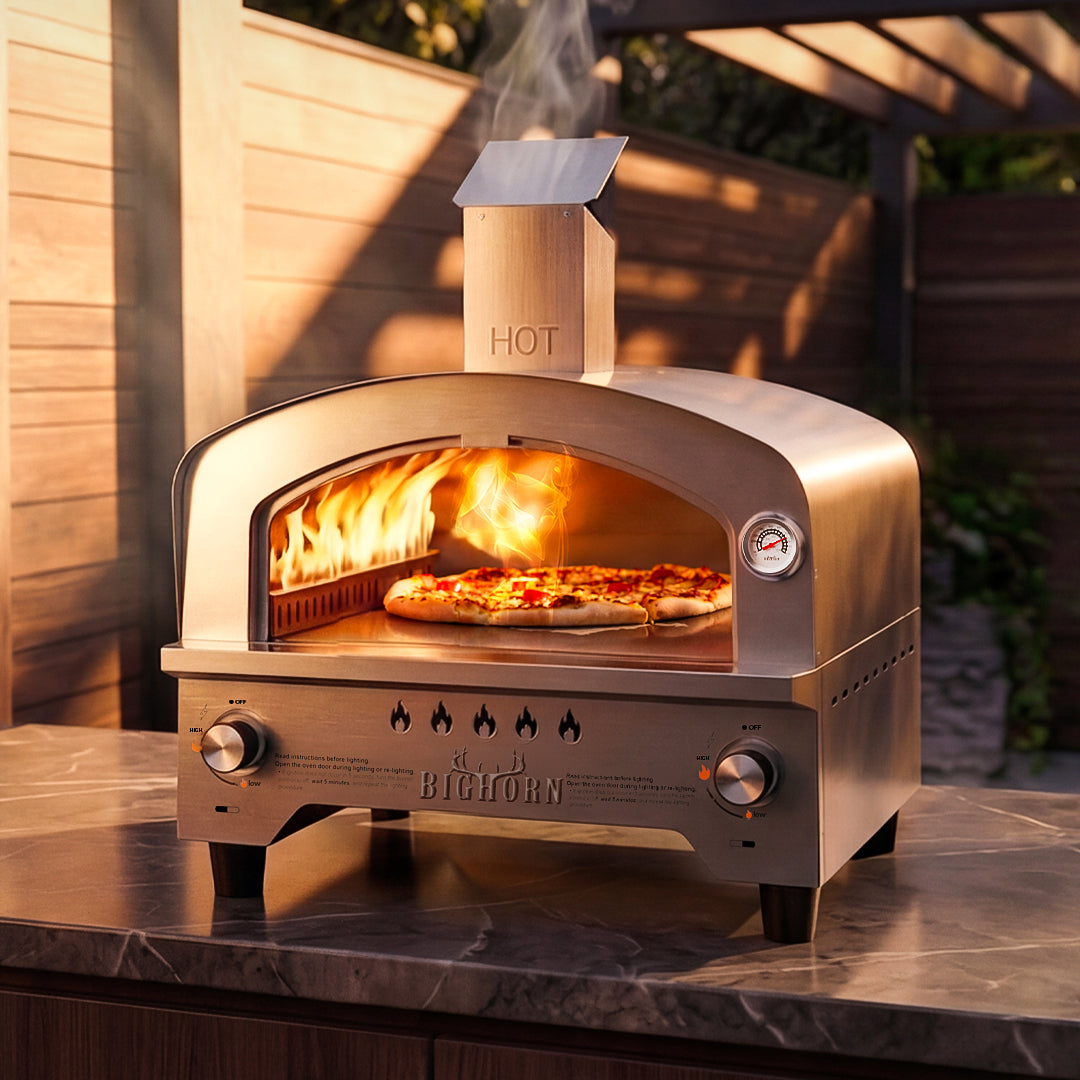
For example, the Big Horn Outdoors 12-inch wood-pellet pizza oven is a stainless-steel model with folding legs and a listed weight of 24.9 pounds. Its official product information lists an 18–20-minute preheat, temperatures up to 887°F, and 60–90-second pizzas under appropriate conditions. Those facts apply to that specific 12-inch pellet model only; they should not be used to describe all Big Horn Outdoors pizza ovens.
Fuel choice changes the party workflow
Gas, wood pellets, electricity, and compatible multi-fuel systems produce different cooking rhythms, so fuel choice should match the host’s priorities. Gas generally favors quick adjustment, pellets create a live-fire routine that requires fuel attention, and electric countertop ovens depend on their model-specific indoor or outdoor operating instructions.
Gas pizza ovens
A gas pizza oven uses a burner to create flame and radiant heat. For party cooking, the main advantage is control: the cook can adjust the flame during preheating, baking, and recovery rather than managing a solid-fuel fire.
Gas can simplify a busy backyard service because there is no ash to manage during cooking. However, the host still needs to inspect the gas connection, use the correct regulator and fuel cylinder, keep the appliance upright, and follow the exact model’s manual for lighting and shutdown.
Wood-pellet pizza ovens
A pellet pizza oven burns compressed hardwood pellets to create heat, flame, and combustion gases. Pellet cooking can be rewarding for hosts who enjoy fire management, but it requires a more deliberate rhythm than turning a gas control knob.
Start with dry, food-safe hardwood pellets intended for cooking. Keep extra pellets protected from rain and humidity. Add fuel in manageable amounts, avoid overfilling the fuel area, and monitor the fire rather than leaving the oven unattended.
For the 12-inch Big Horn Outdoors wood-pellet model described above, the listed high-temperature cooking capability can support fast pizza baking under appropriate conditions. In practice, the cook must still manage the live fire and wait for the stone to regain enough heat between pizzas.
Electric countertop pizza ovens
An electric countertop pizza oven uses electrical heating elements rather than combustion. It can be useful where a model is explicitly designed and approved for indoor countertop use, but it is not a substitute for an outdoor fuel-burning oven unless the product’s instructions say otherwise.
Never move an outdoor gas- or pellet-fired oven indoors, into a garage, under an enclosed patio, or into a tent. Combustion appliances can create fire and carbon-monoxide hazards in enclosed or poorly ventilated spaces.
How do you keep pizzas moving without losing heat?
The fastest way to serve a party is to finish all dough, sauce, cheese, toppings, peels, and serving trays before preheating the oven. During service, the cook should focus on launching, turning, checking the bottom, removing the pizza, and restoring the oven for the next one.
A party-friendly pizza station separates preparation from cooking. The oven operator should not be measuring flour, shredding cheese, or searching for a peel while the oven is hot.
Set up before guests arrive
Prepare the following before lighting or preheating:
- Portion dough into individual balls and allow adequate time for proofing.
- Shape or partially stretch dough close to service time.
- Use small topping containers so ingredients are easy to reach.
- Keep high-moisture toppings, such as fresh mozzarella or vegetables, drained to reduce soggy centers.
- Place flour or semolina near the prep area for peel dusting.
- Keep a turning peel or suitable turning tool ready if your cooking method requires one.
- Set out a landing board, cutter, and serving trays.
- Keep a covered container or cooler available for ingredients that require refrigeration.
Do not overload the pizza. Excess sauce, cheese, or wet toppings increase the risk of sticking during launch and can prevent the center from cooking before the rim darkens.
Manage the stone, not only the flame
The stone temperature determines whether the bottom crisps and sets quickly. The upper heat determines how quickly the cheese melts, toppings cook, and crust edge browns.
If the top is browning before the bottom is crisp, the stone may need more recovery time. If the bottom is scorching before the toppings finish, the stone may be too hot for that dough style or the pizza may be sitting too long in one location. Turn the pizza frequently enough to manage uneven radiant heat, particularly in ovens with a stronger flame or heat source on one side.
An infrared thermometer can help the cook monitor the stone surface, but it does not replace observation. The appropriate stone temperature depends on dough formulation, pizza style, toppings, and the oven’s design. Follow your oven manufacturer’s guidance, then adjust based on how the crust is actually baking.
Big Horn Outdoors Expert Views
“For a backyard party, the best pizza oven is not simply the one with the highest advertised temperature. It is the one whose cooking surface, fuel system, setup requirements, and service pace fit the way you host. Prepare every pizza component before preheating, cook in a steady sequence, and use the oven’s exact manual as the final authority for fuel, placement, clearances, and operation. A smaller one-pizza oven can create a memorable party when guests expect fresh pizzas in rounds; a larger cooking surface becomes more valuable when you need bigger pies and faster handoffs.”
— Big Horn Outdoors Product Team
Big Horn Outdoors traces its backyard-cooking focus to a 2012 effort to make high-heat outdoor cooking easier to manage. That practical focus is most useful when it helps buyers select a model for their actual cooking conditions rather than choosing based on a single headline specification.
Safe setup is part of party capacity
A pizza oven should be placed outdoors on a stable, noncombustible surface with adequate clearance from structures, overhead materials, guests, and flammable items. Safe placement protects people and property, and it also gives the cook the working space needed to launch, turn, and remove pizzas without crowding.
Do not place a fuel-burning pizza oven on a plastic table, dry grass, combustible deck surface, or unstable cart unless the manufacturer explicitly permits that setup. Check the exact owner’s manual for required clearances, approved fuels, assembly steps, and weather restrictions.
For a backyard party, create a practical safety zone:
- Keep children and pets away from the oven, fuel supply, and hot tools.
- Route gas hoses where people cannot trip over them.
- Keep paper plates, napkins, cardboard boxes, and loose packaging away from the appliance.
- Use heat-resistant gloves and long-handled tools where appropriate.
- Keep an appropriate fire extinguisher accessible and know how to use it.
- Never leave an operating oven unattended.
- Let the oven cool completely before covering, moving, cleaning, or storing it.
Wind deserves special attention. Strong gusts can affect flames, increase heat on exposed surfaces, and make launching pizzas harder. If weather conditions prevent safe operation under the model’s instructions, postpone cooking or switch to another approved appliance.
Maintenance protects performance between parties
A clean stone, clear burner or fuel path, dry fuel supply, and protected storage help a pizza oven perform more consistently over time. Maintenance should always begin after the appliance has cooled fully and according to the model-specific manual.
Brush loose flour, burnt cheese, and food debris from the cooking surface after it has cooled enough to handle safely. Avoid using soap or soaking a porous pizza stone unless the manufacturer specifically instructs otherwise; absorbed moisture can affect later heating and may damage some stone materials.
For gas models, inspect the hose, regulator, and connections before use. If you smell gas, do not light the appliance; turn off the gas supply, move away from ignition sources, and follow the manufacturer’s leak-check and safety instructions.
For pellet models, remove ash only when the unit is completely cold. Store pellets in a dry, sealed container, because damp pellets burn poorly and can interfere with reliable ignition and heat production.
Use a cover only after the appliance has cooled fully. Big Horn Outdoors accessories, including pizza stones, peels, covers, and other tools, should be selected for compatibility with the exact oven model rather than by appearance or approximate size alone.
Should you buy one oven or two?
Buy one pizza oven when you enjoy cooking as part of the event, have room for staggered service, and usually host up to about 12 guests. Consider two ovens, or an oven plus a grill or indoor backup, when you regularly serve larger groups, want less waiting, or need to cook pizza alongside other foods.
One oven is often the better choice for a first backyard pizza setup. It takes less space, requires less fuel management, and lets the host build skill with dough handling, launching, turning, and heat control before adding complexity.
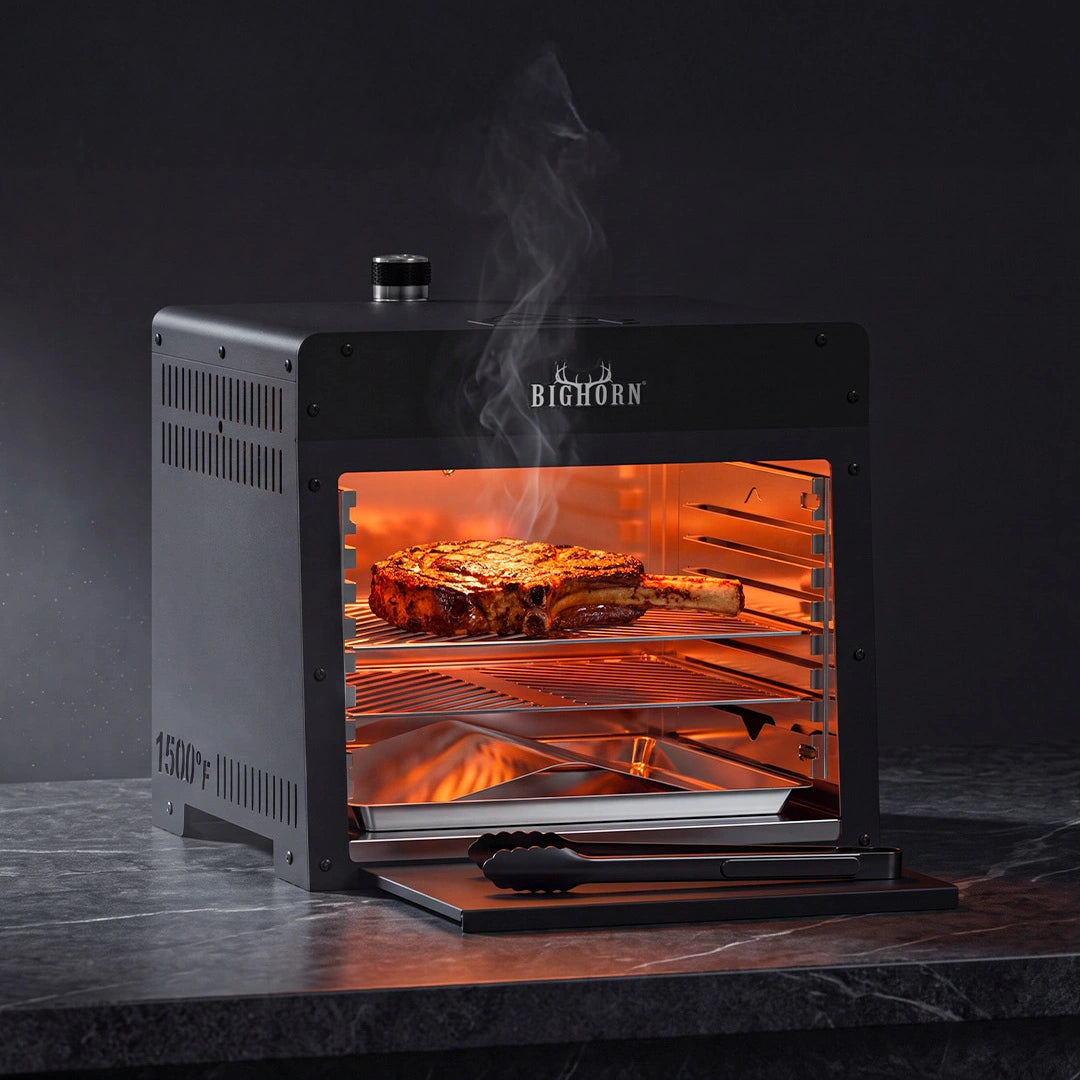
A second appliance can be valuable for more than pizza volume. An infrared steak grill can handle searing while the pizza oven stays dedicated to pies. A Santa Maria-style grill can cook vegetables, chicken, or larger cuts over adjustable live-fire heat. A propane camping stove can warm sauces or cook side dishes away from the high-heat pizza station.
The best choice depends on the menu:
- Choose one portable pizza oven for smaller gatherings, travel, and a pizza-centered experience.
- Choose a larger pizza format for regular family-size pizzas and easier handling.
- Choose a gas oven if direct flame adjustment is your priority.
- Choose a pellet oven if you want a hands-on live-fire workflow and can manage fuel during service.
- Choose an electric countertop model only when its exact product instructions match your intended environment.
- Add a second appliance when the party menu requires simultaneous cooking, not simply because a single oven cooks one pizza at a time.
Conclusion
One pizza oven can absolutely handle a backyard party, provided the host plans for continuous cooking rather than instant buffet-style service. For 6–12 guests, a single oven, fully prepared toppings, a clear launch-and-serve workflow, and complementary snacks can produce a relaxed, memorable pizza night.
Match the oven to your typical use: select a compact, portable format for small groups and travel; move toward a larger cooking surface for regular entertaining; choose gas for adjustable burner control or pellets for a live-fire cooking routine. Most importantly, verify the exact Big Horn Outdoors model’s fuel, operating location, accessory compatibility, and safety instructions before buying or cooking.
FAQs
Can a 12-inch pizza oven handle a party?
Yes. A 12-inch pizza oven can handle a small backyard party when you serve pizzas one after another and prepare all dough and toppings in advance. It is best for a rolling, shareable pizza service rather than simultaneous full meals for a large crowd.
How many pizzas should I plan for 10 guests?
Plan according to pizza size, appetite, and side dishes. If pizza is the main meal, a practical starting point is enough for 2–3 slices per guest, plus extra dough and toppings for unexpected appetite or mistakes during launching.
Is gas or pellet better for a pizza party?
Gas is often easier for hosts who want adjustable heat and a more direct operating routine. Pellets suit cooks who want a live-fire process and are comfortable monitoring fuel, flame, and stone recovery throughout the event.
Can I use a pizza oven under a covered patio?
Only if the exact manufacturer instructions explicitly allow that location and all clearance, ventilation, and fuel-safety requirements are met. Do not assume an outdoor pizza oven is safe under an awning, enclosed patio, tent, garage, or low roof.
Do I need a second pizza oven for 15 guests?
Not always. One oven can work if the event allows a longer serving window and you offer appetizers or other foods. A second oven or a separate grill becomes more useful when guests need faster, simultaneous service or when pizza is only one part of a larger menu.