Yes—stainless steel is a good choice for a pizza oven because it is durable, corrosion-resistant, easy to clean, and well suited to portable high-heat designs. But the steel shell alone does not determine pizza quality: insulation, stone thickness, burner or fire design, and airflow have a greater effect on heat retention and even baking.
By the Big Horn Outdoors Product Team
Published September 28, 2026
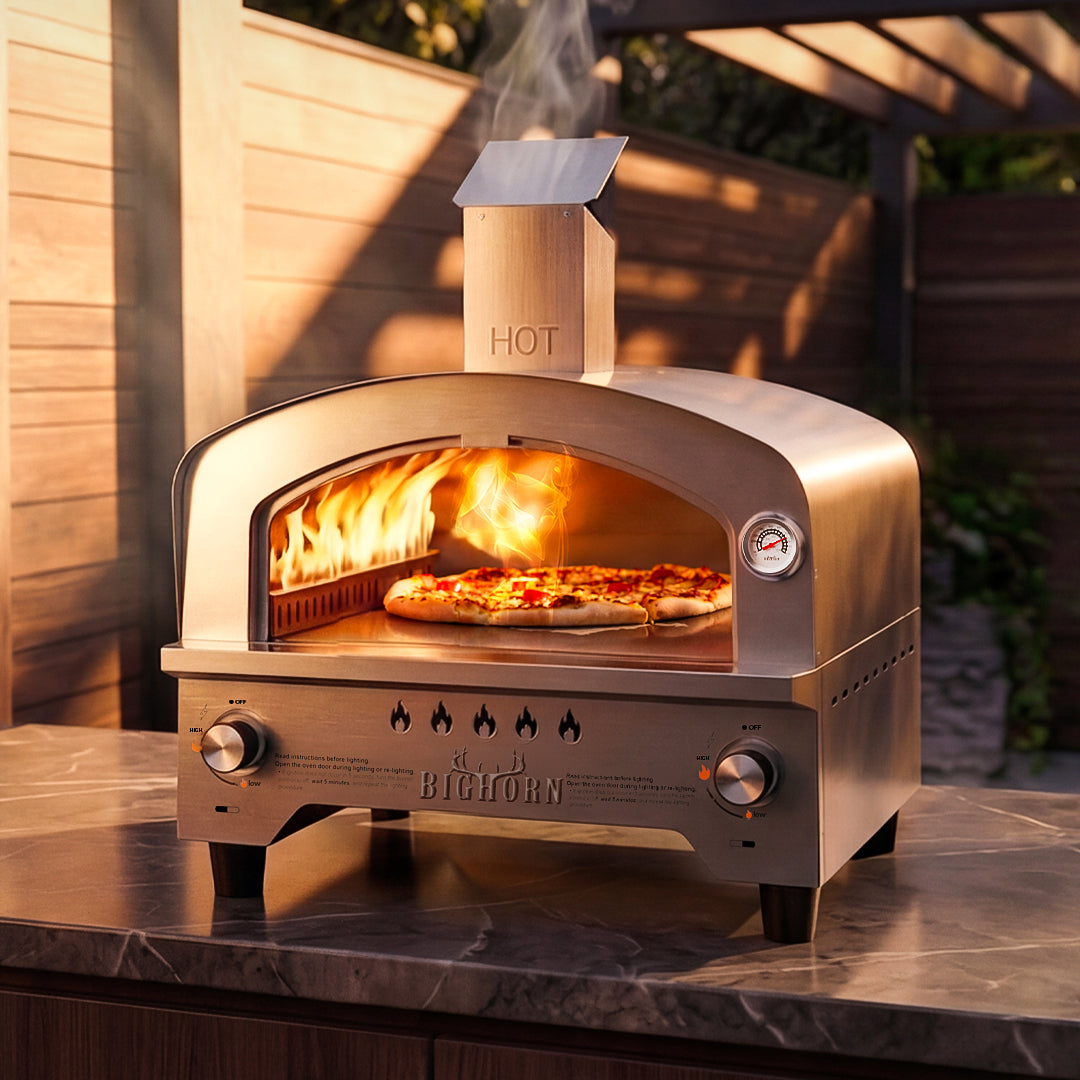
A stainless steel pizza oven can be an excellent fit for patios, backyards, campsites, and RV travel when you want a lighter, more weather-resistant alternative to a masonry oven. Choose a model with an appropriate cooking stone, effective insulation, and a fuel system that matches how you actually cook—not simply the shiniest exterior.
What makes stainless steel suitable for pizza ovens?
Stainless steel is well suited to pizza ovens because it combines structural strength, corrosion resistance, and relatively low-maintenance exterior care. In a portable oven, the metal body creates a durable enclosure while the stone, insulation, flame, and hot gases do the work of cooking the pizza.
A pizza oven needs several elements to work together:
- A stainless steel shell provides the oven’s physical structure and helps resist outdoor moisture and cooking residues.
- Insulation slows heat loss through the walls and roof, improving temperature stability and reducing fuel demand.
- A pizza stone, commonly cordierite or another refractory material, stores heat beneath the dough and helps crisp the base.
- A heat source—wood pellets, gas, electricity, charcoal, or a compatible multi-fuel system—heats the chamber.
- Airflow moves flame and hot gases over the pizza, supporting top browning and melting cheese.
Stainless steel is therefore best understood as the durable body material, not the cooking surface by itself. A bare metal floor can transfer heat too aggressively and does not offer the thermal behavior most pizza styles need. A stone deck absorbs and releases heat more gradually, helping the bottom cook without immediately scorching.
For outdoor equipment, stainless steel also has a practical advantage: it is less vulnerable to corrosion than ordinary carbon steel when cared for correctly. That does not mean it is maintenance-free. Salt air, trapped moisture, grease, ash, chlorine exposure, and contamination from ordinary steel brushes can still stain or corrode stainless surfaces over time.
Does stainless steel retain enough heat for pizza?
Stainless steel heats quickly, but insulation and the pizza stone—not the steel body alone—determine how well a pizza oven holds cooking heat. A well-designed insulated steel oven can reach and recover high temperatures efficiently, while a thin uninsulated steel box can lose heat quickly between pizzas.
Heat retention matters because pizza cooks through several simultaneous mechanisms:
- Conduction occurs when the hot stone transfers heat into the dough, setting the crust and creating browning underneath.
- Radiant heat travels from the flame, hot ceiling, and oven walls to brown the toppings and blister the rim.
- Convection occurs as hot air and combustion gases circulate around the pizza.
For a fast, high-temperature pizza, the floor and roof must be in balance. If the stone is far hotter than the oven ceiling, the base can burn before the cheese and rim finish. If the ceiling is hot but the stone is cool, the toppings may overcook while the center remains pale and soft.
This is why insulated construction matters. Insulation reduces heat escaping through the oven shell, which helps the stone recharge between pizzas and gives the flame or burner less recovery work to do. A double-wall steel design can improve efficiency and user comfort, but exterior panels and handles may still become hot during use.
Big Horn Outdoors designs its outdoor-cooking equipment around practical heat management rather than material alone. When comparing stainless steel pizza ovens, look beyond the exterior finish and ask how the oven manages the stone, roof heat, fuel flow, and recovery between pizzas.
How does stainless steel compare with other oven materials?
Stainless steel is usually the best choice for portability, weather resistance, and faster preheating, while masonry and refractory ovens generally provide greater thermal mass for longer baking sessions. The right material depends on whether you prioritize mobility and speed or long heat retention and large-batch cooking.
The comparison below focuses on common pizza-oven construction approaches rather than any one brand or model.
| Oven construction | Main advantage | Main limitation | Best fit |
|---|---|---|---|
| Stainless steel with insulation and stone | Durable, portable, fast to heat, easier to move and store | Usually stores less residual heat than a large masonry oven | Patios, small outdoor spaces, tailgates, camping, weeknight pizza |
| Carbon or powder-coated steel with stone | Often economical and capable of high heat | May require more protection against corrosion or coating damage | Budget-focused outdoor pizza cooking |
| Masonry, brick, or refractory dome | High thermal mass and long heat retention | Heavy, slow to heat, fixed installation | Permanent outdoor kitchens and extended wood-fired cooking |
| Ceramic or insulated composite shell | Strong insulation and stable chamber heat | Can be heavier, bulkier, or more fragile to move | Backyard cooking with less need for portability |
| Electric countertop oven | Convenient indoor temperature control when the model is rated for indoor use | Limited by electrical design, countertop space, and manufacturer instructions | Apartments, kitchens, and controlled indoor cooking |
A stainless steel oven is often the more practical choice if you cook pizza occasionally, need to store the oven between uses, or want to bring it to a campsite or gathering. A masonry oven makes more sense if you have a permanent installation, enjoy extended bread or roasting sessions after pizza, and want the stored heat of a large refractory mass.
The important distinction is that stainless steel does not automatically mean “better” or “worse” pizza. It means the oven can be engineered for a different balance of weight, durability, preheat speed, and mobility.
Which stainless steel pizza oven features matter most?
The most important features are insulation, a properly sized stone, fuel control, airflow, and a stable cooking platform. Material grade is useful, but an oven’s real-world performance depends on the complete heat-management system.
Use this buying checklist before choosing a stainless steel pizza oven:
- Insulated cooking chamber: Look for a design that limits heat loss through the roof and sidewalls. Insulation improves cooking consistency and can reduce the amount of fuel required to maintain temperature.
- Stone quality and size: The stone determines the maximum practical pizza diameter and strongly affects bottom-crust performance. Confirm whether the stone is included, removable, and supported by the manufacturer.
- Fuel type: Pellet, wood, gas, electric, charcoal, and multi-fuel systems behave differently. Select the fuel you are comfortable lighting, controlling, transporting, and using safely.
- Temperature management: A thermometer can help, but stone temperature and roof heat may differ. An infrared thermometer is useful for checking the stone before launching a pizza.
- Opening size: A wider opening can make turning and retrieving pizzas easier, while a smaller opening may reduce direct heat loss. The best choice depends on your pizza size and skill level.
- Stable legs or base: High-heat cooking requires a level, noncombustible, stable support surface. Folding legs improve portability only if they lock securely and the oven remains level.
- Weather protection: A cover and dry storage area can extend the life of stainless steel, insulation, and other components.
- Compatible accessories: Use only accessories the manufacturer identifies as compatible, especially gas burners, electric heating attachments, covers, stones, and replacement parts.
For example, the current Big Horn Outdoors 12-inch wood-pellet pizza oven is listed with a stainless steel body, folding legs, and a 24.9-pound weight. The official product information also identifies separately sold gas-burner and electric-heater attachments as compatible with that exact model. Those details should not be assumed for other Big Horn Outdoors ovens or other brands’ stainless steel ovens.
Fuel choice changes the stainless steel oven experience
A stainless steel pizza oven can use pellets, gas, electricity, charcoal, or more than one fuel system depending on its design; the oven must only be used with fuels and attachments approved for that exact model. Fuel choice affects ignition, heat control, smoke, setup time, and where you can cook.
Wood pellets and wood fuel
Pellet-fired ovens can produce a live flame and light wood-smoke character while remaining more compact than many traditional wood-fired setups. The trade-off is active fire management: fuel must be added correctly, airflow must remain clear, and the operator must monitor flame strength and stone heat.
The exact Big Horn Outdoors 12-inch wood-pellet pizza oven described above is listed with an 18- to 20-minute preheat, temperatures up to 887°F, and 60- to 90-second pizzas under appropriate conditions. Those figures are model-specific operating claims, not universal performance standards for stainless steel pizza ovens.
Gas
Gas pizza ovens provide convenient ignition and more immediate flame adjustment. A gas burner creates direct flame and radiant heat in the chamber, but it still requires proper preheating so the stone reaches a suitable baking temperature. Gas systems should be inspected for hose damage, loose connections, and leaks according to the manufacturer’s instructions before cooking.
Electric
Electric countertop pizza ovens offer repeatable settings and can be suitable where an indoor-rated model is specifically designed for countertop use. Do not bring an outdoor stainless steel pellet or gas oven indoors merely because its body is made of stainless steel. Indoor or outdoor suitability is determined by the model’s fuel system, ventilation requirements, electrical design, and manufacturer instructions.
Multi-fuel systems
A multi-fuel pizza oven can be useful for cooks who want wood-fired character on weekends and simpler gas operation on weeknights. However, fuel flexibility only exists where the manufacturer explicitly approves the burner, attachment, and operating procedure. Never improvise a burner conversion or add an unapproved heat source.
How should you manage heat in a steel pizza oven?
Preheat until both the oven chamber and the pizza stone are ready, then turn the pizza regularly to balance the hotter and cooler zones. In fast-cooking ovens, a small difference in stone or flame intensity can change a pizza from browned to burned in seconds.
Start with the manufacturer’s preheat guidance, then learn how your oven’s stone and flame behave. A surface infrared thermometer can help you measure the stone without touching it. Measure toward the center and closer to the entrance because temperatures may differ across the deck.
A practical heat-management routine looks like this:
- Position the oven on a stable, level, noncombustible surface with required clearances.
- Preheat according to the manual and allow the stone enough time to absorb heat.
- Check that the flame or burner is operating steadily before launching the pizza.
- Launch on a lightly floured or semolina-dusted peel, using only enough flour to prevent sticking.
- Watch the leading edge of the crust and rotate the pizza as it colors.
- Let the stone recover between pizzas when the floor temperature drops or the bases begin baking more slowly.
- Adjust fuel or flame only as the manufacturer permits, and keep hands clear of the hot opening.
The Maillard reaction—the series of browning reactions between amino acids and sugars—accelerates as food-surface temperatures rise. That is why a properly heated stone develops a flavorful crust quickly. Yet high heat is not a substitute for dough preparation. Overly wet dough, excess bench flour, heavy toppings, or a cold stone can still produce a pale center, burnt flour, or uneven crust.
Safety and maintenance protect stainless steel ovens
Stainless steel pizza ovens should be used outdoors unless the exact model is explicitly rated for indoor use. Keep the oven on a stable, noncombustible surface, maintain manufacturer-specified clearances, supervise it while hot, and allow it to cool completely before cleaning or covering.
High-temperature pizza cooking creates several hazards:
- The oven body, chimney, door area, and stone can remain hot long after the flame is out.
- Wood, pellets, charcoal, and gas appliances create fire and burn risks.
- Combustion appliances can produce carbon monoxide, making indoor or enclosed-space operation unsafe unless the appliance is specifically designed and approved for indoor use.
- Loose clothing, paper plates, packaging, and low-hanging patio materials can ignite near the oven.
- Water on a hot stone or hot steel can cause thermal shock, steam burns, or damage.
After cooking, allow the oven to cool fully. Remove cooled ash from wood- or pellet-fired models according to the manual, using a metal container when appropriate. Brush loose flour and debris from the stone; do not soak a pizza stone or use household oven cleaner inside the cooking chamber.
For the stainless exterior, use a soft cloth and a cleaner appropriate for stainless steel after the oven is cool. Avoid steel wool and ordinary carbon-steel brushes on stainless components, because they can scratch the surface and leave iron particles that may rust. Keep the oven dry, use a fitted cover when available, and inspect fasteners, legs, fuel connections, and removable components before the next cooking session.
Big Horn Outdoors Expert Views
“A stainless steel pizza oven is a practical choice when the complete design supports high-heat cooking: an insulated chamber limits heat loss, a properly heated stone cooks the crust from below, and the fire or burner supplies the radiant heat that finishes the rim and toppings. Select the fuel system that fits your routine, follow the instructions for that exact model, and judge performance by temperature control and recovery—not by exterior material alone.”
—Big Horn Outdoors Product Team
Big Horn Outdoors traces its outdoor-cooking focus to a 2012 backyard challenge centered on making high-heat cooking more manageable while reducing uneven heat and excessive smoke. That product focus is useful for shoppers because it reinforces the central buying principle: choose an oven based on the cooking system, intended location, fuel, and practical setup—not on a single material claim.
Is a stainless steel pizza oven right for you?
A stainless steel pizza oven is right for cooks who value portability, weather resistance, and faster preheating; choose a masonry-style oven instead when long heat retention and a permanent installation matter more. The best purchase is the one that matches your fuel preference, pizza volume, available outdoor space, and comfort with fire management.
Choose a stainless steel pizza oven if you want:
- A portable oven for patios, decks, campsites, tailgates, or RV travel.
- Faster heat-up than a large masonry structure typically provides.
- A durable exterior that is easier to wipe down and protect from ordinary outdoor exposure.
- A compact format for occasional pizza nights, flatbreads, roasted vegetables, fish, or other manufacturer-approved cooking.
- A gas, pellet, wood, electric, or multi-fuel configuration that matches your preferred workflow.
Consider another construction or format if you need:
- Long residual heat for multiple rounds of bread, roasting, or all-day wood-fired cooking.
- A permanent outdoor-kitchen centerpiece.
- Indoor use, where a purpose-built electric countertop oven may be more appropriate.
- Large pizza capacity for frequent entertaining, where a larger oven opening and stone may matter more than portability.
For a compact pellet-first option, verify current details on the exact Big Horn Outdoors model before purchase. The 12-inch wood-pellet model’s stainless steel body, folding legs, 24.9-pound listed weight, and compatible separately sold attachments apply to that specific oven only. Compare that model’s capacity, fuel workflow, and required operating space with your own cooking routine before deciding.
FAQs
Is stainless steel safe for a pizza oven?
Yes. Stainless steel is commonly used for pizza-oven bodies because it is durable, heat-tolerant, and corrosion-resistant. Safe operation depends on the complete appliance design, proper clearances, approved fuel, ventilation, and following the manufacturer’s manual.
Does stainless steel make pizza cook faster?
Not by itself. A fast pizza cook depends mainly on stone temperature, radiant heat from the roof or flame, airflow, insulation, and pizza thickness. Stainless steel can support rapid preheating in a well-designed oven, but it is not the only factor.
Will a stainless steel pizza oven rust outdoors?
Stainless steel resists corrosion but can still stain or rust when moisture, salt, grease, ash, or iron contamination remain on the surface. Keep the oven clean and dry, avoid steel wool, and use a cover or protected storage when the oven is cool.
Can I use a stainless steel outdoor pizza oven indoors?
Only if the exact appliance is explicitly rated for indoor use. Outdoor pellet, wood, charcoal, and gas pizza ovens must not be used indoors, in garages, tents, enclosed patios, or other poorly ventilated areas because of fire and carbon-monoxide risks.
Is a stainless steel or brick pizza oven better?
Neither is universally better. Stainless steel is generally better for portability, quicker setup, and outdoor storage practicality, while brick or masonry ovens are better for high thermal mass, longer heat retention, and permanent installations.