Choosing an outdoor pizza oven comes down to fuel type, cooking temperature, pizza capacity, heat retention, portability, and safety. Look for an oven that can reach approximately 700–900°F, maintain sufficient heat between pizzas, and fit your outdoor cooking space. The right choice should match how often you cook, how many people you serve, and how much fire management you enjoy.
By the Big Horn Outdoors Product Team
Published: September 19, 2026
What Features Matter Most in an Outdoor Pizza Oven?
The most important outdoor pizza oven features are reliable high-temperature performance, an adequately sized cooking stone, manageable heat controls, durable construction, and a fuel system that fits your cooking routine. A good oven should cook the pizza's base and toppings evenly without requiring constant temperature corrections.
A pizza oven is more than a hot metal chamber. Its cooking performance depends on how heat moves through three areas:
- The cooking stone: Transfers heat directly into the dough, helping the bottom crust become crisp.
- The oven chamber: Surrounds the pizza with hot air that contributes to cooking.
- The flame or heating element: Supplies radiant heat to brown the crust and melt toppings.
These heating mechanisms must work together.
For example, an oven may have enough flame power to brown the top of a pizza quickly, but if its stone has not fully preheated, the bottom can remain pale or undercooked.
Likewise, a very hot stone combined with insufficient overhead heat can burn the base before the toppings finish cooking.
When comparing ovens, look beyond advertised maximum temperatures. Pay attention to the cooking surface, heating design, temperature control, and how easily the oven returns to cooking temperature after each pizza.
A well-designed outdoor pizza oven should make those elements manageable rather than leaving you to fight uneven heat throughout the cooking process.
Which Fuel Type Should You Choose for an Outdoor Pizza Oven?
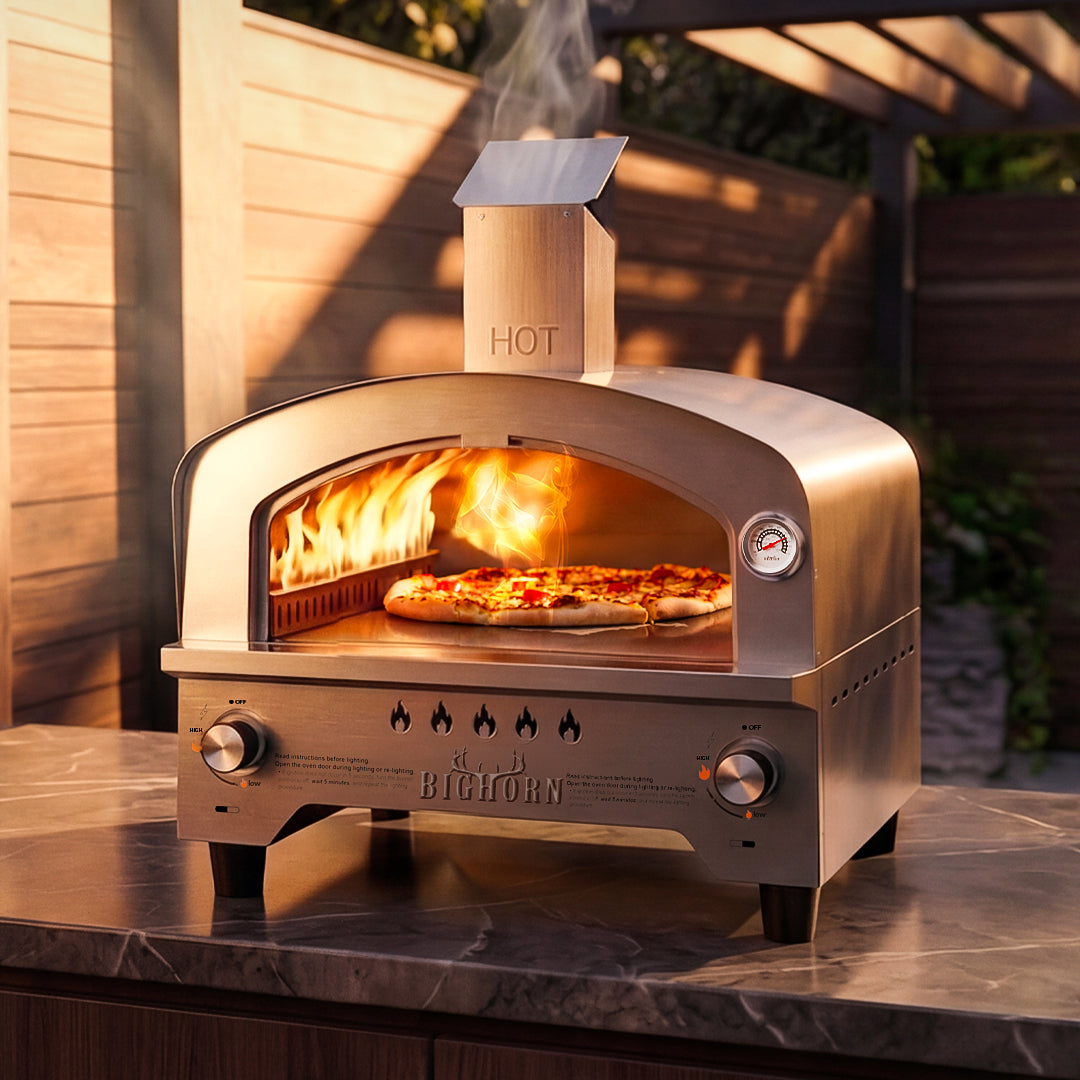
Gas, wood pellets, traditional firewood, and electricity offer different cooking experiences. Propane provides convenient flame adjustment, pellets and firewood offer a hands-on live-fire experience, and electric heating simplifies temperature management when used in an appropriately rated oven.
The right fuel depends on where you cook and how involved you want to be.
| Fuel Type | Main Advantage | Main Consideration | Suitable For |
|---|---|---|---|
| Propane gas | Adjustable heat and convenient ignition | Requires a compatible gas supply | Regular backyard pizza nights |
| Wood pellets | Compact fuel with wood-fired aroma | Requires fuel monitoring and ash removal | Portable outdoor cooking |
| Firewood | Traditional live-fire cooking | Requires fire management and appropriate storage | Enthusiasts who enjoy tending a fire |
| Electricity | Convenient temperature control | Requires a suitable electrical connection | Locations and models approved for electric cooking |
| Multi-fuel | Flexibility between compatible heating systems | Burners or heating accessories may cost extra | Cooks who want more than one fuel option |
Gas Pizza Ovens
A propane pizza oven is useful when convenience and repeatable cooking matter.
Gas burners allow you to adjust the flame without adding solid fuel, making them practical for cooking multiple pizzas during family meals or backyard gatherings.
Gas also avoids the ash cleanup associated with wood-fired ovens.
However, you still need to account for propane cylinder storage, hose placement, and the manufacturer's operating clearances.
Wood Pellet Pizza Ovens
Wood pellet pizza ovens burn compressed hardwood pellets in a designated firebox or fuel hopper.
They are especially suitable for people who enjoy building and maintaining a fire but want a compact cooking setup.
Use food-grade hardwood pellets approved for the oven, rather than heating pellets containing unknown additives.
Pellet ovens require attention to combustion, airflow, and refueling. Adding too much fuel at once can interfere with a stable fire, while letting the fuel supply run too low can reduce cooking temperature.
Multi-Fuel Pizza Ovens
A multi-fuel oven can be particularly useful when your cooking habits change between weekdays and weekends.
Big Horn Outdoors offers a 12-inch wood pellet pizza oven designed to accept compatible gas-burner and electric-heater accessories sold separately.
This configuration allows owners to use the supported heating options without purchasing an entirely separate oven.
However, not every Big Horn Outdoors pellet oven has the same compatibility. Confirm the exact product variant and required attachments before buying.
How Hot Should an Outdoor Pizza Oven Get?
Look for an outdoor pizza oven capable of reaching approximately 700–900°F if you want to prepare high-temperature pizza styles. Neapolitan-style pizza typically uses particularly intense heat, while thicker or heavily topped pizzas often benefit from a lower baking temperature and longer cooking time.
Temperature matters because pizza dough needs rapid heat transfer to achieve its characteristic crust.
At high temperatures, moisture evaporates from the dough's surface while browning reactions develop color and flavor.
The Maillard reaction, which occurs between amino acids and reducing sugars, contributes to the browned appearance and complex flavor of a well-baked crust.
However, the maximum advertised oven temperature is only one part of the equation.
Stone Temperature vs. Oven Temperature
The cooking stone and the air inside the chamber can reach different temperatures.
A built-in thermometer may indicate that the oven is hot, but it does not necessarily tell you whether the entire stone is ready for pizza.
An infrared thermometer is useful for checking the stone's surface temperature before launching each pizza.
For high-temperature pizza cooking, a stone temperature around 700–800°F can be a useful starting point, depending on the dough, hydration, toppings, and oven design.
Adjust your target according to the manufacturer's instructions and the results you want.
Why Heat Recovery Matters
Heat recovery describes how effectively an oven restores its cooking temperature after a pizza removes heat from the stone.
This becomes especially important when preparing several pizzas consecutively.
An oven that reaches 900°F but loses substantial stone heat after every pizza may be less convenient for entertaining than one that maintains an appropriate cooking temperature consistently.
Look for an insulated cooking chamber, an effective heating arrangement, and a stone capable of storing sufficient heat.
What Size Outdoor Pizza Oven Do You Need?
A 12-inch pizza oven is a practical choice for smaller households, portable cooking, and individual pizzas. A 14- or 16-inch oven provides additional room for larger pies, easier turning, and more flexible outdoor entertaining.
The advertised pizza diameter is an important specification, but it does not tell you everything about usable cooking space.
A pizza needs room to be launched, rotated, and removed without catching its crust against the oven opening.
For beginners, extra working space can make a noticeable difference.
Consider the following:
| Oven Size | Typical Use | Main Advantage |
|---|---|---|
| 12 inches | Personal pizzas and smaller households | Compact size and easier transportation |
| 14 inches | Everyday family cooking | More working room |
| 16 inches | Larger pizzas and entertaining | Greater flexibility for turning and positioning pizzas |
A larger cooking surface does not automatically mean faster cooking.
If the oven can only bake one pizza at a time, feeding a large group still requires a sequence of cooking rounds.
For frequent entertaining, consider the oven's heat recovery alongside its cooking capacity.
Also check the dimensions of the opening. A wide stone is less useful if the oven opening makes launching and rotating pizzas awkward.
Why Do Pizza Stone Quality and Heat Retention Matter?
The pizza stone stores heat and transfers it directly into the dough. Look for a durable cooking surface that heats evenly, tolerates repeated thermal cycling, and can recover sufficient temperature between pizzas.
Many portable pizza ovens use cordierite stones because this ceramic material offers useful thermal stability and resistance to thermal shock.
Other ovens may use refractory materials suited to their construction and operating temperatures.
Stone thickness also affects cooking behavior.
A thicker stone can store more heat, although it may require additional preheating time. A thinner stone may heat relatively quickly but can lose temperature more noticeably during repeated cooking.
Neither is automatically the correct choice for every oven.
The heating system, insulation, and stone should be evaluated together.
What About Oven Insulation?
Insulation helps limit heat loss through the oven body.
That can contribute to more stable chamber temperatures and improved efficiency, particularly when outdoor conditions are cold or windy.
Look for a construction design that supports consistent heating rather than focusing exclusively on exterior appearance.
Stainless steel construction is valuable for outdoor durability, but the presence of stainless steel alone does not prove that an oven has effective insulation.
Compare the complete heating design and the manufacturer's stated performance.
How Portable Should Your Outdoor Pizza Oven Be?
A portable pizza oven should be manageable to lift, transport, assemble, and store. Weight, folding legs, removable components, and overall dimensions matter more than a product simply being advertised as portable.
Before purchasing, decide whether the oven will remain on a backyard counter or travel regularly.
For occasional camping, tailgating, and outdoor gatherings, consider the entire setup rather than the oven alone.
You may need to transport:
- The pizza oven and cooking stone
- Fuel or a propane cylinder
- A pizza peel and turning tools
- An infrared thermometer
- Heat-resistant gloves
- A suitable cooking table or stand
The oven's storage dimensions should also fit your vehicle, garage, or outdoor storage area.
A Practical Big Horn Outdoors Example
The compatible-accessory version of the Big Horn Outdoors 12-inch wood pellet pizza oven provides an example of a compact outdoor cooking design.
Its official product specifications include:
- Stainless steel construction
- A 12-inch pizza format
- A listed weight of 24.9 pounds
- Folding legs
- A removable chimney
- A stated maximum temperature of 887°F
- An advertised 18–20-minute preheat
- A stated 60–90-second pizza cooking time under appropriate conditions
This makes it a relevant configuration to examine when comparing compact pellet ovens with optional fuel flexibility.
The stated heating and cooking performance should not be assumed to apply to other Big Horn Outdoors models.
What Safety Features Should You Check Before Buying?
An outdoor pizza oven needs a stable, heat-resistant installation surface, adequate ventilation, sufficient clearance from combustible materials, and a fuel system suitable for its intended operating environment. Safety should be evaluated before deciding where the oven will sit.
Pizza ovens operate at temperatures far above those of many conventional kitchen appliances.
Their exterior surfaces, chimneys, doors, and cooking openings can become extremely hot.
Outdoor Placement
Place an outdoor pizza oven on a stable surface approved for the oven's weight and heat output.
Follow the manufacturer's specified clearance requirements for nearby walls, fences, roof structures, and other combustible materials.
Do not assume that an outdoor oven is suitable for an enclosed porch, garage, tent, or indoor kitchen.
Fuel-burning pizza ovens produce combustion gases, including potentially dangerous carbon monoxide.
An electric heating accessory also does not automatically make a multi-fuel oven suitable for indoor operation. The exact oven and configuration must be explicitly approved for that environment.
Fuel and Electrical Safety
For propane models, inspect the hose, regulator, and connections according to the manufacturer's instructions.
Keep fuel cylinders in their approved positions and locations.
For electric ovens, check the required voltage, power rating, outlet type, and electrical protection.
If an extension cord is permitted, use only one that meets the appliance manufacturer's requirements.
Safe Cooking Practices
Keep children and pets away from the cooking area.
Use suitable heat-resistant tools and avoid touching the oven body while it is operating.
Allow the appliance to cool completely before cleaning, disassembly, covering, or transportation.
How Easy Should an Outdoor Pizza Oven Be to Clean?
Choose an oven with accessible cooking surfaces, manageable ash removal where applicable, and components that can be maintained according to the manufacturer's instructions. A simple cleaning routine makes frequent pizza cooking more practical.
Wood-fired and gas ovens have different maintenance requirements.
Pellet ovens require periodic ash removal and inspection of the fuel path.
Gas ovens generally avoid solid-fuel ash but still need attention to burner cleanliness and gas connections.
Pizza stones also require appropriate care.
Avoid soaking a porous cooking stone in water or using soap unless the manufacturer explicitly permits it.
Instead, follow the recommended procedure for removing food residue after the stone has cooled.
A hot pizza stone should never be exposed to cold water, as sudden temperature changes may cause cracking.
When comparing ovens, check whether replacement stones, compatible covers, and approved cleaning accessories are available.
What Accessories Should You Budget for Before Buying?
A pizza peel, an infrared thermometer, and suitable heat-resistant gloves are among the most useful accessories for an outdoor pizza oven. These tools support safer handling, more consistent baking, and easier temperature management.
Some ovens include selected accessories, while others are sold as the oven alone.
Check the product package before assuming everything needed for cooking is included.
Pizza Peel
A pizza peel allows you to transfer prepared dough onto the cooking stone.
Choose a peel narrow enough to move comfortably through the oven opening.
Infrared Thermometer
An infrared thermometer measures the stone's surface temperature without direct contact.
It helps determine when the oven is ready for the first pizza and whether sufficient heat has returned between cooking rounds.
Turning Peel
A turning peel makes rotating pizzas easier, particularly in high-temperature ovens where one side may brown faster.
Protective Cover
An appropriately sized cover helps protect the oven from dust and weather exposure during storage.
Only cover the appliance after it has cooled completely.
Compatible Heating Accessories
For multi-fuel systems, confirm the specific burner or heating element required for your oven.
Big Horn Outdoors sells compatible heating accessories for selected pizza oven models, but compatibility and included equipment vary.
Check the exact model rather than assuming all 12-inch or 16-inch ovens accept the same attachments.
How Can You Tell Whether an Outdoor Pizza Oven Is Worth Buying?
An outdoor pizza oven is worth considering when its cooking performance, usable size, construction, and maintenance requirements match how often you intend to use it. Compare the complete ownership experience rather than the initial purchase cost alone.
Before ordering, answer five practical questions.
Where will the oven be used?
A permanent backyard setup has different requirements from an oven transported to campsites.
How often will you cook?
Frequent use makes convenient ignition, cleaning, and heat control particularly valuable.
How many people will you serve?
An oven suitable for preparing two personal pizzas may feel restrictive when cooking for a large gathering.
Which fuel will you realistically use?
Multi-fuel flexibility has little practical value if you only intend to use one heating system.
What is included in the purchase?
Account for required burners, regulators, cooking tools, covers, and any other model-specific accessories.
For someone buying their first oven, straightforward setup and manageable heat control can be more useful than advanced features that rarely get used.
Experienced outdoor cooks may place greater importance on cooking capacity, fuel flexibility, and fine temperature management.
Big Horn Outdoors Expert Views
The most useful way to evaluate an outdoor pizza oven is to consider the entire cooking process, not just the advertised maximum temperature.
Start with the fuel you are comfortable managing, then check the usable stone size and the oven's ability to maintain heat between pizzas. A compact oven can work well for occasional family cooking, while a larger cooking chamber may provide more flexibility when entertaining.
For portable cooking, consider the total equipment you need to transport. For permanent backyard installations, prioritize suitable placement, ventilation, and safe operating clearances.
At Big Horn Outdoors, the focus is on matching the heating system and oven configuration to the way the customer intends to cook. That helps prevent buyers from selecting a larger, more complicated, or less convenient oven than they actually need.
Conclusion: What Should You Prioritize When Choosing an Outdoor Pizza Oven?
The right outdoor pizza oven should make your preferred cooking style easier, not more complicated.
For casual backyard cooking, prioritize manageable heat control and a cooking surface large enough for your usual pizzas.
For camping and tailgating, consider weight, folding components, fuel transportation, and storage dimensions.
For regular entertaining, give additional attention to cooking capacity and heat recovery.
If you enjoy managing a live fire, wood pellet or firewood cooking may be appealing. If convenience matters more, consider a suitable propane model.
If you want different cooking options, explore compatible multi-fuel systems while checking which heating components are included.
Big Horn Outdoors offers several pizza oven configurations for different outdoor cooking needs, including compact pellet ovens, gas models, and selected multi-fuel systems.
The best purchase decision starts with your available space, preferred fuel, normal serving size, and willingness to manage the cooking process.
Frequently Asked Questions
Is a 12-inch outdoor pizza oven big enough for a family?
A 12-inch oven can work well for a family when you are comfortable preparing several individual pizzas consecutively. If you regularly want larger pizzas or additional working space, consider a 14- or 16-inch oven.
Do you need an infrared thermometer for an outdoor pizza oven?
An infrared thermometer is highly useful because it measures the cooking stone's surface temperature. This helps you determine when to launch pizzas and whether the stone has recovered enough heat for another bake.
Can you leave an outdoor pizza oven outside all year?
It depends on the manufacturer's storage recommendations and the local climate. Use an appropriate protective cover when permitted, keep the oven dry, and store removable components according to the instructions for your specific model.
Can outdoor pizza ovens cook food other than pizza?
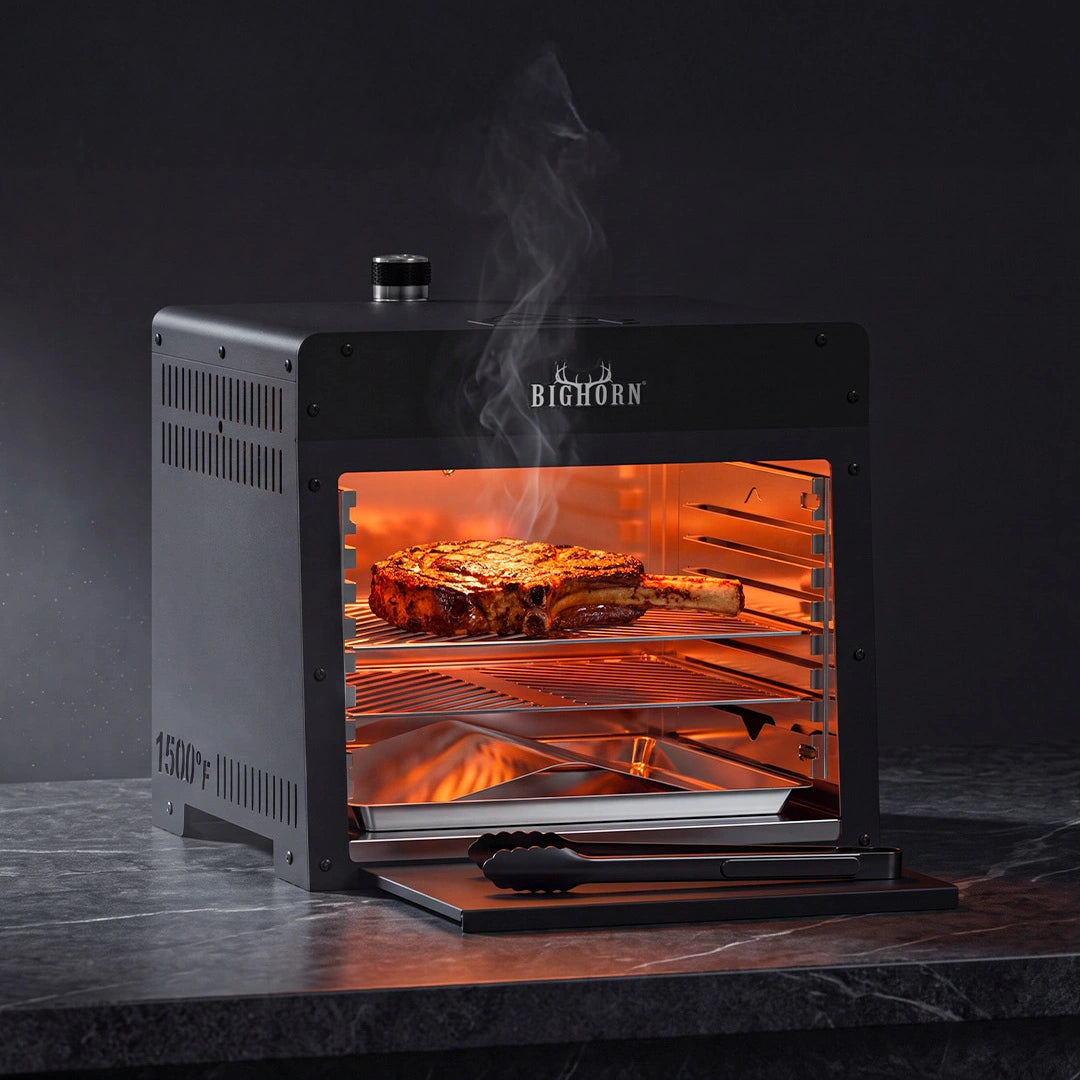
Many outdoor pizza ovens can cook suitable bread, vegetables, fish, and meats using appropriate cookware and temperature settings. Always check the oven manufacturer's guidance because cooking capacity, approved cookware, and heating controls vary by model.
Is a wood pellet pizza oven difficult for beginners?
A wood pellet pizza oven is manageable for beginners who are willing to learn basic fire management. Consistent fuel feeding, adequate airflow, proper stone preheating, and pizza rotation are important skills for achieving reliable cooking results.