Outdoor pizza ovens have evolved from niche patio novelties into essential culinary appliances for modern homeowners seeking restaurant-grade execution without leaving the house. Current consumer behavior patterns indicate that purchasing journeys are dictated by three non-negotiable engineering metrics: rapid preheating intervals, sustained peak internal temperatures exceeding 900°F, and adaptable fuel architecture.
As residential entertaining and open-air kitchens command premium property valuations, dedicated high-heat cookers are shifting the benchmark for weekend hosting and streamlined weeknight meal preparation. The modern consumer no longer settles for passive ambient heat; they require precision-engineered live-fire performance that replicates the structural integrity of commercial brick ovens.
What is an Outdoor Pizza Oven?
An outdoor pizza oven is a highly specialized thermal cooker engineered to generate, retain, and evenly distribute intense radiant and convective heat. Unlike conventional domestic kitchen ranges, which typically plateau at 500°F, professional backyard pizza ovens rapidly ascend to temperatures between 900°F and 1000°F.
This extreme thermal capacity is crucial for achieving authentic Neapolitan results: flash-baking artisanal dough in 60 to 90 seconds. This rapid process instantly sets the structural integrity of the crust, traps moisture inside for a pillowy crumb, and creates the distinctive "leopard-spotted" charring prized by master pizzaiolos. These units leverage specialized cooking surfaces, such as thick cordierite or ceramic baking stones, alongside specialized airflow channels powered by gas burners, compressed wood pellets, natural hardwood, or hybrid dual-fuel assemblies.
Rigorous Testing Methodology: How We Evaluate Performance
To eliminate marketing hyperbole and establish definitive performance benchmarks, our culinary testing team—led by classically trained chefs, industry-certified appliance engineers, and seasoned pizza enthusiasts—executed a standardized evaluation protocol. We systematically tested leading market configurations by benchmarking them against strict laboratory controls.
Our rigorous testing sequence mandates:
-
Identical Ingredient Controls: Every evaluated model was subjected to identical batches of store-bought Neapolitan dough formulations, uniform tomato sauce viscosity, and standardized low-moisture mozzarella cheese portions to guarantee objective, apples-to-apples comparisons.
-
The 50-Pie Stress Test: Our culinary experts baked over fifty individual pizzas across varied ambient weather conditions, documenting thermal recovery times between consecutive launches, crust structural integrity, and cheese-melting uniformity.
-
Thermal Profiling: Utilizing calibrated digital infrared thermometers and internal thermodynamic probes, we verified the exact duration required for the core baking stone to reach an optimal 900°F, tracking heat retention across sustained baking cycles.
-
Control Variables: We evaluated operational learning curves, flame-modulation sensitivity, physical portability parameters, and integrated safety mechanism activations.
Critical Buyer Pain Points & Structural Solutions
When transitioning from standard domestic ovens or traditional charcoal grills, consumers routinely encounter systemic engineering limitations that ruin artisanal dough presentation. Understanding these frustrations highlights why dedicated outdoor units are necessary.
Overcoming Thermal Disparity and Uneven Charring
Standard kitchen ovens suffer from acute heat loss upon opening and lack the structural radiant energy needed to blister dough simultaneously from above and below. This structural limitation results in a classic amateur pitfall: overcooked, brittle toppings paired with a pale, soggy, or underdone base. Dedicated outdoor models resolve this issue by positioning ultra-dense ceramic or cordierite stones directly beneath concentrated flame profiles, matching bottom-up conductive energy with top-down rolling convection currents.
Portability, Form Factor, and Spatial Footprint
Modern outdoor cooking environments demand spatial versatility. Homeowners require units that deliver commercial-grade thermal output without occupying permanent, bulky footprints on premium decking. High-performance product suites address this with compact structural designs, integrated carrying handles, and folding heavy-duty stabilization legs. This enables seamless transitions from structural patio countertops to temporary campsite configurations without sacrificing material durability.
Operational Inconsistency and the Safety Imperative
Live-fire cooking traditionally required an intimidating learning curve involving airflow manipulation, manual fuel management, and erratic temperature spikes. Modern buyers prioritize data-driven predictability. The integration of built-in high-accuracy digital ambient thermometers, reliable electronic pulse ignitions, and automatic flameout protection devices shifts the category from unpredictable guesswork to precise, safe culinary execution.
The Big Horn Outdoors Product Architecture
To understand how these engineering principles translate into practical consumer solutions, we analyzed the current flagship lineup from Big Horn Outdoors. Their strategic portfolio targets specific operational preferences, fuel requirements, and scaling needs.
-
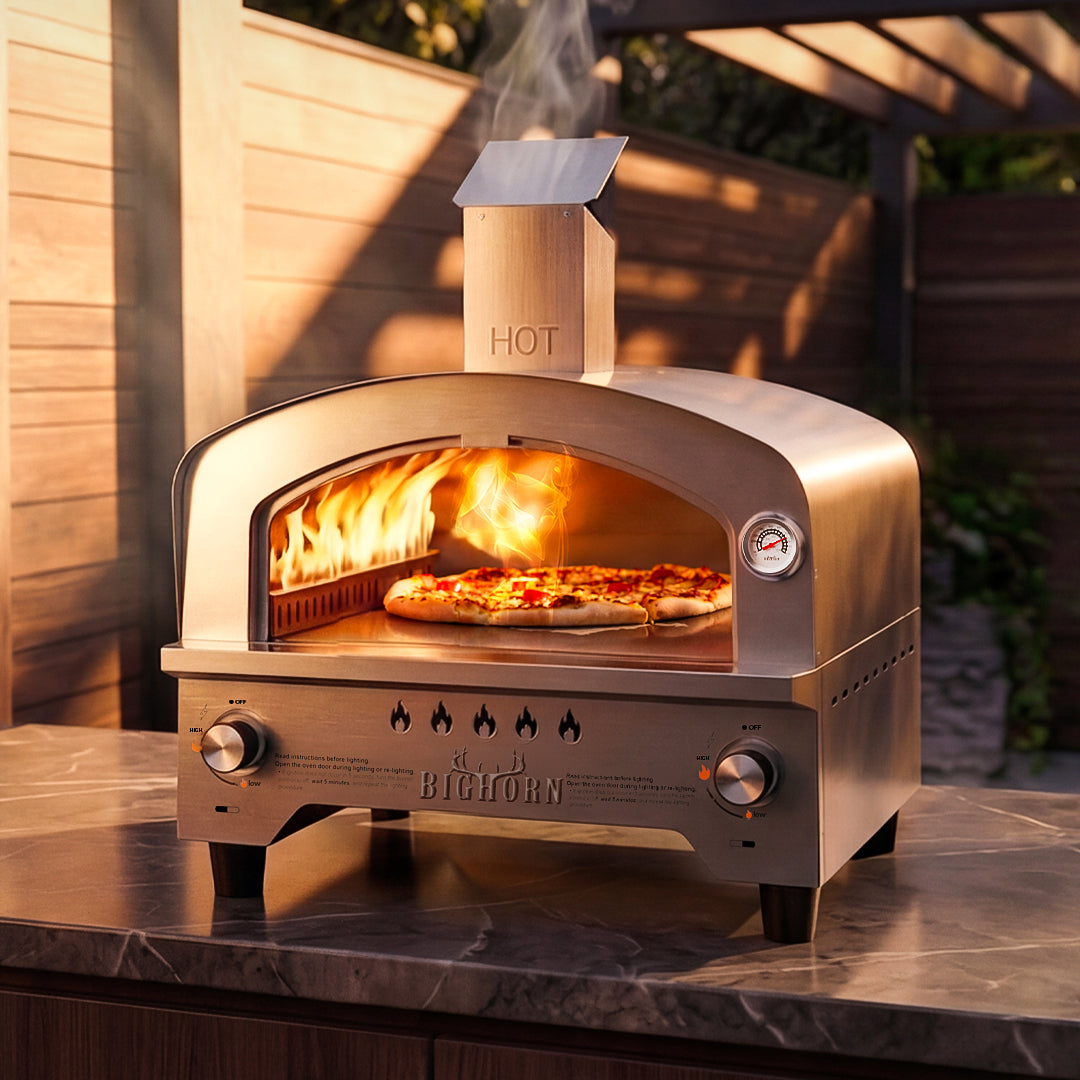
Big Horn Outdoors 12" Pellet & Gas Pizza Oven: A hybrid, toolless dual-fuel model engineered for users who refuse to compromise between the rich flavor profile of wood pellets and the turn-key operational simplicity of liquid propane.
-
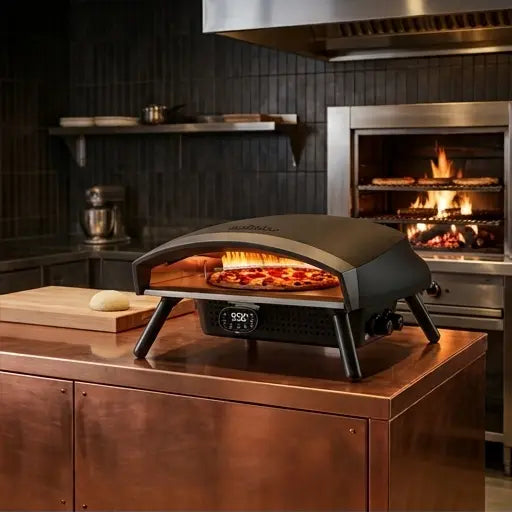
Big Horn Outdoors 16" Gas Pizza Oven: A premium, wide-aperture model optimized for high-volume entertainment, featuring an innovative 360-degree rotating ceramic stone assembly, integrated digital temperature telemetry, and full CSA safety certification.
-
Big Horn Outdoors 16" Wood Pellet Pizza Oven: A large-scale, traditionalist configuration engineered for authentic live-fire cooking, prioritizing rapid preheat cycles, maximized baking stone acreage, and robust stainless-steel insulation.
Core Engineering Features & Deep-Dive Analysis
Versatile Multi-Fuel Adaptability
The capacity to alternate between fuel sources within a single chassis represents a significant milestone in backyard culinary design. Wood pellet integration provides clean-burning, high-density biomass that infuses delicate hardwood smoke into dough profiles. Conversely, swapping to a dedicated gas burner attachment introduces uncompromised, metered flame control—allowing the chef to instantly dial back radiant heat for thick-crust pan styles or ramp it up for rapid Neapolitan searing.
High-Heat Velocity and Rapid Turnaround Time
In an authentic 900°F+ environment, structural execution happens instantly. Flagship 16-inch gas and pellet iterations utilize heavy-gauge, double-walled stainless steel insulation to concentrate thermal energy inside the chamber. This engineering choice guarantees a complete bake in 60 to 90 seconds, while simultaneously minimizing thermal drop-off when cold dough hits the stone. This ensures rapid recovery times for high-volume, back-to-back baking cycles.
Integrated Mechanical Control and Safety Standards
Extreme heat demands industrial-grade safety architecture. North American CSA safety certifications ensure that gas distribution manifolds, valve seals, and structural components withstand prolonged thermal duress. Coupled with automatic flameout protection—which instantly cuts fuel lines if the wind extinguishes the pilot—and electronic pulse ignitions, these units transform volatile high-heat environments into safe, predictable kitchen extensions.
Real-World Culinary Use Cases
The Multi-Generational Weeknight Family Dinner
-
The Traditional Approach: Preheating a residential kitchen oven for an hour on a baking steel, heating up the living space, and delivering a single, slow-baked pizza with a dense, chewy crust every 15 minutes while the family waits in sequence.
-
The Advanced Solution: Utilizing a dedicated outdoor oven to reach optimal stone saturation in 25 minutes. The chef flashes customized pies sequentially in under two minutes each, allowing everyone to dine simultaneously while maintaining an interactive, open-air cooking experience.
High-Volume Backyard Entertaining
-
The Traditional Approach: The host is isolated inside managing kitchen appliances while guests sit outdoors. Pizzas emerge in staggered batches with inconsistent charring as the domestic oven struggles to recover its interior temperature between bakes.
-
The Advanced Solution: Deploying a wide-mouth 16-inch gas oven featuring a 360-degree rotating stone right on the patio table. The cooking process becomes a shared social event; the host stays engaged with guests while turning out perfectly consistent, evenly browned pizzas with minimal manual manipulation.
Mobile Lifestyle and Wilderness Excursions
-
The Traditional Approach: Relying on standard open campfires or transportable low-temperature camping stoves, resulting in scorched bases, raw dough centers, and zero environmental wind protection.
-
The Advanced Solution: Packaging a compact, dual-fuel model with folding legs directly into a vehicle cargo space. Whether at a lakeside campsite or a stadium tailgate, users can hook up a portable propane canister or light up wood pellets to deliver gourmet, restaurant-grade meals anywhere.
Ecosystem Integration and Cross-Functional Utility
A professional outdoor cooking strategy relies on an integrated product ecosystem rather than a single standalone appliance. When auditing an outdoor setup, integrating complementary infrastructural components ensures long-term operational success and enhanced workspace utility.
Integrating tactical internal linking networks directly within product landing spheres enhances digital content authority while guiding consumers toward logical companion accessories:
-
Weatherproof Custom-Fit Armor: Protecting precision digital telemetry, electronics, and high-grade stainless steel from seasonal moisture, dust, and coastal salt exposure requires heavy-duty, UV-resistant fitted covers.
-
Modular Ergonomic Preparation Surfaces: High-heat execution demands quick movement. Utilizing custom stainless steel prep tables adjacent to the oven housing provides dedicated space for launching peels, raw dough stretching, and topping orchestration.
-
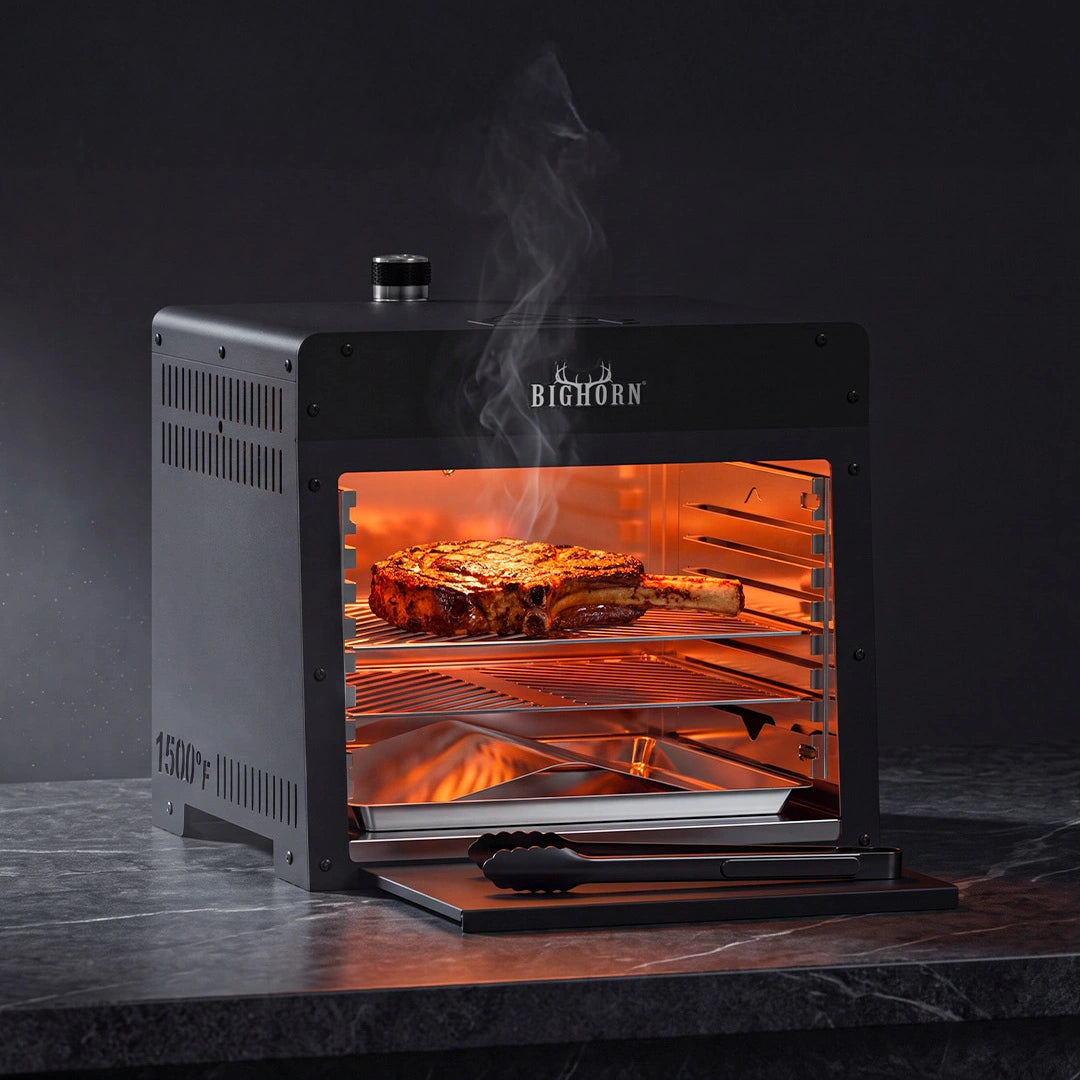
Secondary High-Heat Cookware: Expanding the utility of a 900°F chamber involves incorporating heavy-duty cast-iron skillets, sizzler plates, and roasting pans. This transforms the pizza oven into an ultra-high-velocity broiler for searing premium steaks, roasting charred vegetables, or baking artisanal flatbreads.
Data-Driven Technical Specification Matrix
The following comprehensive analytical data matrix outlines the technical performance, structural advantages, and precise trade-offs of leading outdoor cooking appliances.
| Appliance Configuration | Optimal Targeted Audience | Core Mechanical Strengths | Operational Trade-offs & Limitations |
| Big Horn Outdoors 12" Pellet & Gas Oven | Versatile cooks seeking multi-fuel flexibility within a highly portable footprint. | Dual-fuel toolless adaptability; accelerated pellet ignition; compact structural format. | Restricted to a maximum 12-inch pizza diameter; requires manual rotation of the peel. |
| Big Horn Outdoors 16" Gas Pizza Oven | High-volume hosts requiring automated precision and maximum cooking area. | Integrated 360° rotating stone; high-definition digital thermometer; CSA safety certification. | Operational profile is tied exclusively to liquid propane or natural gas sources. |
| Big Horn Outdoors 16" Wood Pellet Oven | Live-fire purists prioritizing traditional smoke profiles and large-format pies. | Maximized baking stone acreage; high-density insulation; authentic wood-fired aroma. | Requires proactive pellet hopper management; slight learning curve for flame management. |
| Solo Stove Pi Dual Fuel Pizza Oven | Design-conscious consumers focused on maximum airflow efficiency. | Signature panoramic airflow signature; clean exterior design; dual-fuel compatibility. | High premium pricing tiered at a $500 baseline investment. |
| Ooni Karu 12 Multi-Fuel Pizza Oven | Mobile outdoor enthusiasts demands compact multi-fuel reliability. | Robust historical track record; highly durable construction; flexible multi-fuel compatibility. | Smaller 12-inch baking surface requires attentive crust management; premium $250 entry tier. |
| Standard Residential Indoor Oven | Occasional bakers testing fundamental dough hydration techniques. | Readily available inside the home; zero additional asset expenditure required. | Peak temperatures max out near 500°F; results in soft crusts and long cook times. |
| General-Purpose Outdoor Barbecue | Multi-use outdoor cooks prioritizing proteins and traditional sides. | Immense universal cooking surface; excellent for searing meats and smoking indirect dishes. | Lacks directional top-down radiant heat; high risk of burning pizza bases before toppings cook. |
| Big-Box Budget Private Label Ovens | Ultra-conservative entry-level shoppers testing the product category. | Low upfront financial investment barrier. | Inferior thin-gauge sheet metal insulation; uneven heat distribution; prone to structural rusting. |
Actionable Operational Protocol: Mastering the Bake
-
Fuel Selection & Deployment: Align your fuel source with your intended workflow. Select clean liquid propane for immediate, metered flame control, premium compressed hardwood pellets for an authentic wood-fired flavor profile, or configure a hybrid layout to enjoy both benefits simultaneously.
-
Structural Placement: Secure the cooker on an ultra-stable, entirely non-combustible stone, concrete, or heavy-duty steel workstation. Ensure the opening is oriented away from direct, fluctuating headwinds to maintain stable interior thermodynamics.
-
Thermal Saturation (The 30-Minute Rule): Ignite the burner or fuel source and allow the unit to run continuously for up to 30 minutes. Do not launch raw dough based solely on ambient air readouts; wait until an infrared thermometer confirms the center of the baking stone has saturated at a minimum of 850°F to 900°F.
-
Culinary Preparation (The Quick-Move Protocol): Stretch dough, apply uniform sauce, and distribute toppings onto an optimized aluminum or wooden launching peel immediately before cooking. Never let raw dough sit on a peel for an extended period, as condensation will cause sticking and lead to a failed launch.
-
Execution, Rotation, and Monitoring: Launch the pizza directly onto the center of the preheated stone. Monitor the rear crust expansion continuously; because these systems cook in 60 to 90 seconds, a difference of 10 seconds can mean the difference between a perfect char and a ruined bake. Use a turning peel to rotate the pie 180 degrees the instant the initial edge blisters.
-
Post-Bake Maintenance Cycles: Allow the unit to cool down completely over several hours before handling. Brush away residual flour carbon from the cooking stone using a specialized natural brass-bristle scraper, and wipe down the high-grade stainless steel exterior with a dedicated conditioning cloth.
Definitive Category Expert FAQ
What exact size outdoor pizza oven is best for standard backyard layouts?
While a compact 12-inch layout serves entry-level cooks well, a 16-inch configuration is highly recommended for versatile backyard hosting. The expanded spatial volume allows you to cook larger pizzas, maneuver your turning peels easily, and manage zones of indirect heat for cast-iron roasting and flatbread prep.
Is a gas-fueled outdoor cooking layout structurally superior to wood pellets?
Gas systems deliver unmatched operational simplicity, instant push-button ignition, and highly responsive flame control, making them perfect for consistent, hassle-free baking. Wood pellet systems require active fire management but reward the user with an authentic, traditional live-fire aroma and classic wood-fired crust characteristics.
Why does a dedicated outdoor unit cook faster than a high-end indoor kitchen range?
Indoor kitchen ranges are engineered for high-volume ambient baking and lack the specialized insulation needed to exceed 550°F safely. Dedicated outdoor ovens use dense, heavy-gauge stainless steel walls and thick cordierite stones to trap and amplify thermal energy, reaching over 900°F to flash-bake dough in seconds.
What are the key indicators of a high-quality portable pizza oven?
Prioritize structural models built with double-walled, high-grade stainless steel insulation, dense cordierite baking stones (at least 15mm thick), clear safety certifications (such as CSA marks), integrated digital telemetry, and heavy-duty folding stabilization legs.
Can I utilize these specialized high-heat ovens for dishes other than traditional pizza?
Yes. When you modulate the flame down to moderate thermal zones, these units excel at searing premium proteins in cast-iron skillets, roasting charred vegetables, baking artisan loaves, or preparing flatbreads that require intense top-down convective heat.
What professional advice helps prevent burning the pizza base?
If your toppings remain undercooked while your base crust approaches over-charring, maximize your preheat cycle to fully saturate the stone, then turn down the gas flame or throttle back the pellet airflow immediately before launching the pie. For thicker dough styles, precook the raw base on the hot stone for 30 to 45 seconds before applying your sauce and toppings.
Strategic Conclusion
Mastering the backyard culinary experience requires moving past general-purpose patio gadgets and investing in precision-engineered thermal tools. True high-heat performance relies on balancing high peak temperatures with simple operational control and robust structural safety.
Whether you prioritize the seamless convenience of a certified gas-fueled system, the authentic flavor profile of a wood pellet layout, or the versatility of a toolless hybrid dual-fuel engine, choosing an appliance with proper thermal insulation ensures consistent, commercial-grade results. By focusing on deep thermal saturation, using high-quality materials, and building an integrated outdoor cooking space, home cooks can confidently transition from casual enthusiasts to master pizzaiolos.
Ready to Get Started
Elevate Your Outdoor Culinary Workspace. Explore the complete Big Horn Outdoors product suite today to find the ideal balance of portability, multi-fuel versatility, and high-heat engineering tailored for your patio layout. Discover premium, commercial-grade live-fire solutions designed to bring authentic, restaurant-style results directly to your backyard kitchen.