Under $500, the best pizza oven is the one that matches your fuel and placement first, because the budget eliminates high-end ovens but not the category decision. At this price you can buy a capable gas, pellet or electric model — but not one oven that is best at all three jobs. This guide splits the under-$500 range into two practical bands, explains what each band realistically buys, and shows how Big Horn's gas and electric models fit the picture. Prices change quickly, so treat the bands as guidance and verify current store prices before you buy.
Start with fuel and placement, then the price
The under-$500 question is really three questions: indoor or outdoor, which fuel, and what size. An indoor countertop cook with a standard outlet should be looking at electric models regardless of budget; an outdoor cook who wants fast starts should look at gas; a cook who wants wood-fired flavor should look at pellet. Price only filters within the category that the first questions select. Buyers who skip this order end up comparing a $450 gas oven against a $450 electric oven as if they were interchangeable — they are not, and the "wrong" one will be wrong no matter how good it is.
What $200–350 buys
In the lower band, you are buying function over refinement: a capable oven with a real stone, but fewer extras and smaller capacity. Expect countertop electric models with moderate temperature peaks and preset modes, or compact gas models sized for 12-inch pizzas. The trade-offs at this price are preheat speed, stone recovery between pizzas, and build details like door seals and thermometer accuracy. If you bake one or two pizzas at a time and want to try pizza ovens without a big commitment, this band is the sensible entry point.
What $350–500 buys
The upper band buys the features that make frequent cooking easier: larger capacity, faster preheat, better temperature control, auto-rotating stones on some gas models, and multi-mode electric ovens. This is also where pellet ovens become practical for many buyers, since the fire-management hardware adds cost. In this band you should expect a stone that holds heat between pizzas and controls that let you dial in a style rather than just "hot." If you plan to cook weekly or host groups, the upper band is the better long-term value even when the lower band has a tempting price.
| Spec to compare | Why it matters under $500 |
|---|---|
| Pizza size capacity | The largest pie you actually make must fit |
| Maximum temperature | Determines which crust styles you can attempt |
| Stone thickness / recovery | Affects back-to-back bakes at parties |
| Preheat approach | Electric and gas differ; check for your routine |
| Included accessories | A bundled peel or cover changes the real price |
| Warranty and support | Longer warranties signal confidence in the build |
Use the table to compare only models in the same fuel category. A gas oven's preheat advantage is irrelevant to an indoor cook, and a pellet oven's wood-fired flavor is irrelevant to a cook who will never manage a fire. Filtering by the first questions keeps the spec comparison honest.
Where reviews help
At this price point, reviews matter most for reliability and real-world behavior: preheat times, stone recovery, temperature accuracy and how the oven holds up after a season. Look for reviewers who describe their pizza size and cooking frequency, and weigh patterns of complaints over single raves. A recurring comment about uneven browning or a wobbly door is worth more than a five-star review from someone who baked once. If the reviews cannot tell you whether the oven holds heat between pizzas, ask the seller or look for a video review that shows a full bake session.
Upgrade path and resale thinking
An under-$500 oven is often a first oven, so think about the upgrade path. Buy the oven that teaches you the style you want — a compact gas oven that shows you whether you cook outdoors enough, or a countertop electric that shows you whether indoor pizza nights stick. If you later upgrade, the first oven becomes a tailgate or cabin unit rather than a waste, which is a strong argument for buying a solid, portable model in this range rather than stretching the budget for one marginal feature. The accessories you buy for it — peels, covers, stones — transfer to the next oven, so spending on those is never wasted.
Hidden costs decide whether the budget holds. Factor the fuel, the cover for outdoor models, a peel and a thermometer into the real price, and remember that "under $500" usually means the oven alone. If the oven needs a stand or cart, a natural-gas conversion kit or a dedicated outlet, add those too. The buyers who stay under budget are the ones who price the system, not the oven.
A quick buying script
When you are ready to buy, run the decision in five short steps. Write indoor or outdoor and your fuel choice at the top of a page. Note your largest regular pizza size and your outlet or fuel situation. Open the product pages for the two or three models that survive those filters, and copy their specs into the comparison table. Read the current price and availability on each page, and add the system items — fuel, cover, peel — to the total. Then choose the model that passes the filters, fits the system budget and has reviews that match your cooking frequency. The script takes ten minutes and prevents the two most common under-$500 mistakes: buying the wrong fuel category and forgetting the system cost until checkout.
If two finalists remain after the script, decide on the tiebreaker that matches your real routine: the model with the faster preheat if you cook on weeknights, the larger stone if you host, the simpler cleaning if you cook alone. There is rarely a wrong choice between two well-matched finalists — only a choice that fits your routine slightly better. Buy that one, keep the receipt and the box until the first full cook, and let the first few pizzas confirm the decision.


Comparing the Big Horn models in range
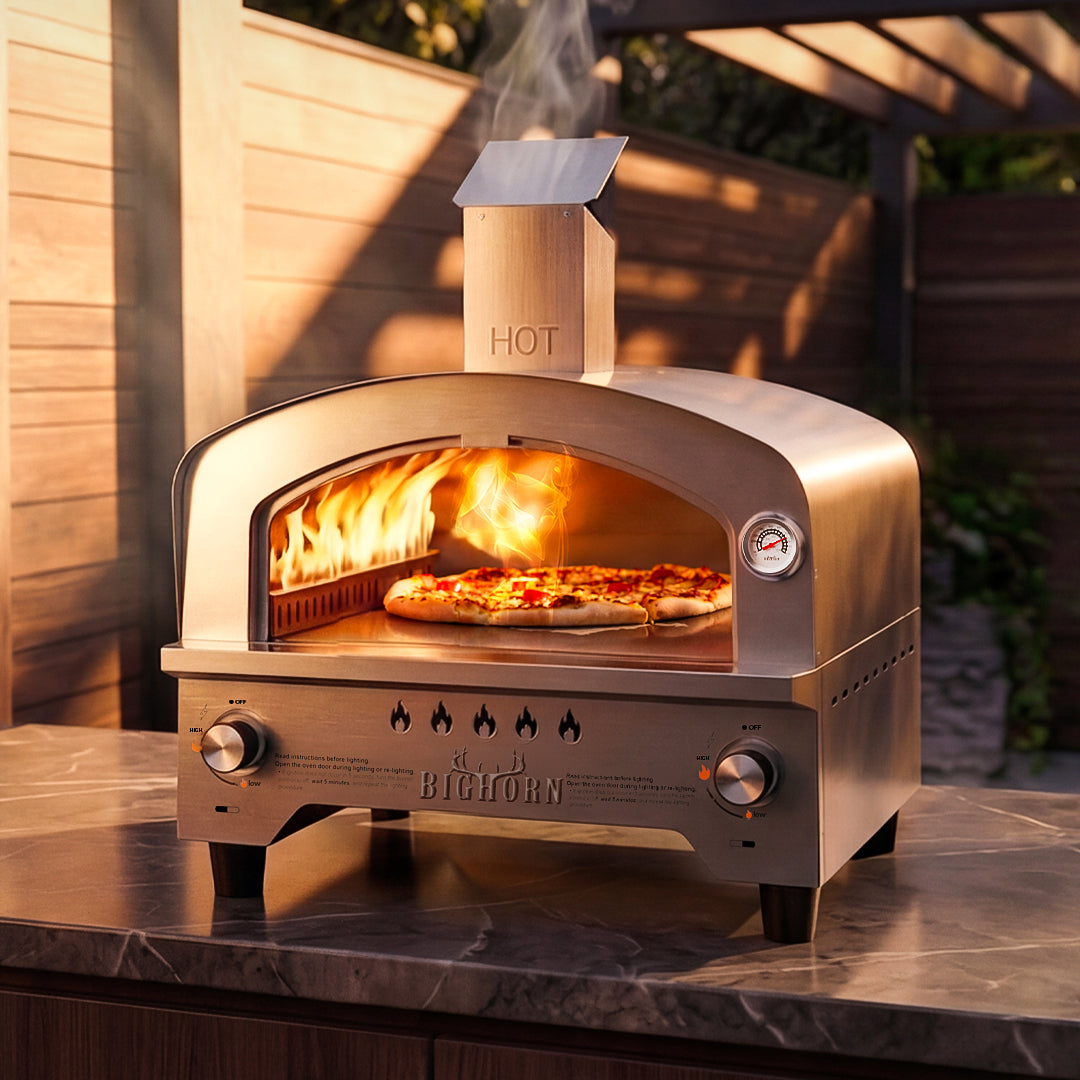
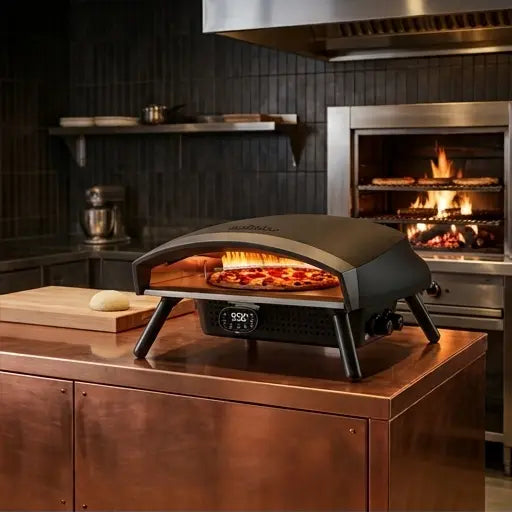
Big Horn's current range includes models that land in the under-$500 conversation: the pellet pizza ovens for wood-fired flavor outdoors, gas models like the 16-inch gas pizza oven with an auto-rotating stone, and the 14-inch electric countertop oven for indoor use. Rather than list prices that will change, check the current price on each product page against your band and compare the specs — size, temperature, presets and stone — using the criteria from the choose-a-pizza-oven guide. The clearance collection is also worth checking for previous-season models within budget.
The total system cost
Remember that the oven is not the whole purchase. A gas oven needs a tank, hose and regulator (often included, sometimes not); a pellet oven needs pellets, a cover and a starter; an electric oven needs counter space and an outlet. Add the fuel, a peel, a cover for outdoor models, and the table or stand the oven will live on, and the real budget is the oven price plus a system margin. Under $500 is a realistic oven budget for many buyers, but the full system usually costs more than the headline number — plan for it so the first cook does not stall on a missing part.
The final advice is the same at any price: decide indoor or outdoor and which fuel first, compare within that category, verify current prices, and buy the oven whose system you can actually support. Do that and the under-$500 range delivers more good pizza than most buyers expect.
Product details and prices in this guide were verified against official Big Horn Outdoors listings during the September 5, 2026 review; re-check prices and availability at checkout.