
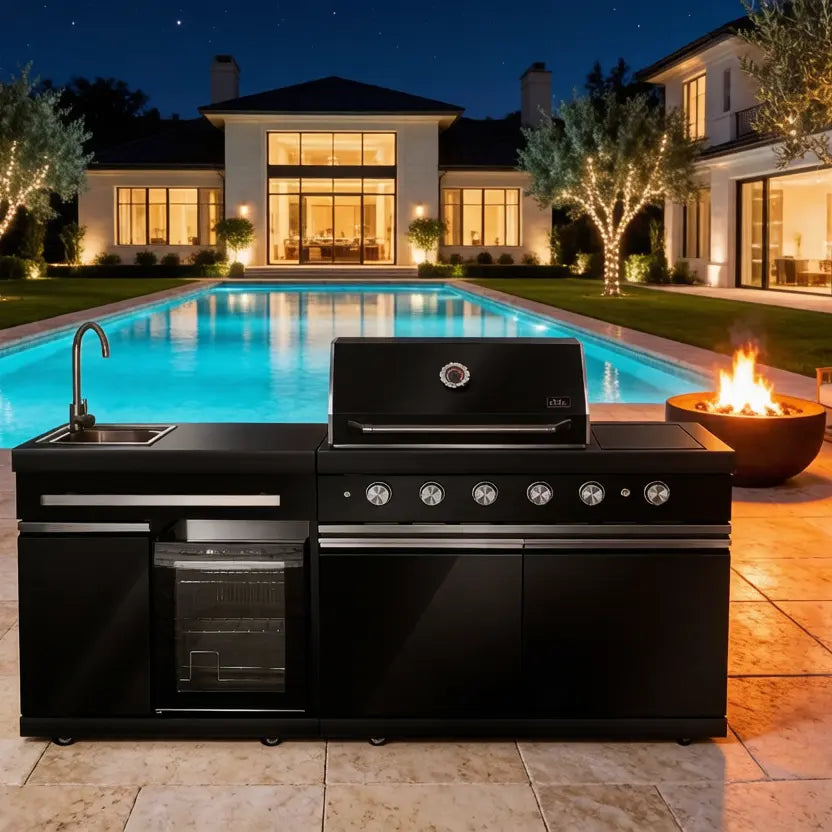
The biggest outdoor kitchen decision is not which grill — it is whether the grill becomes part of the yard or stays a moveable piece of equipment. A built-in grill island anchors a permanent cooking corner with counter space, storage and often a gas connection, while a portable cart or freestanding grill keeps the kitchen flexible, affordable and movable. Both produce the same food; they differ in permanence, cost, utilities and what happens when you move. This guide lays out the decision framework so you can choose the setup that matches your home, your budget and how long you plan to stay. Once the built-in direction wins, the island choosing guide covers materials, burner layout, gas hookup and long-term service in depth; this page keeps its focus on the format decision itself.
Defining built-in vs portable
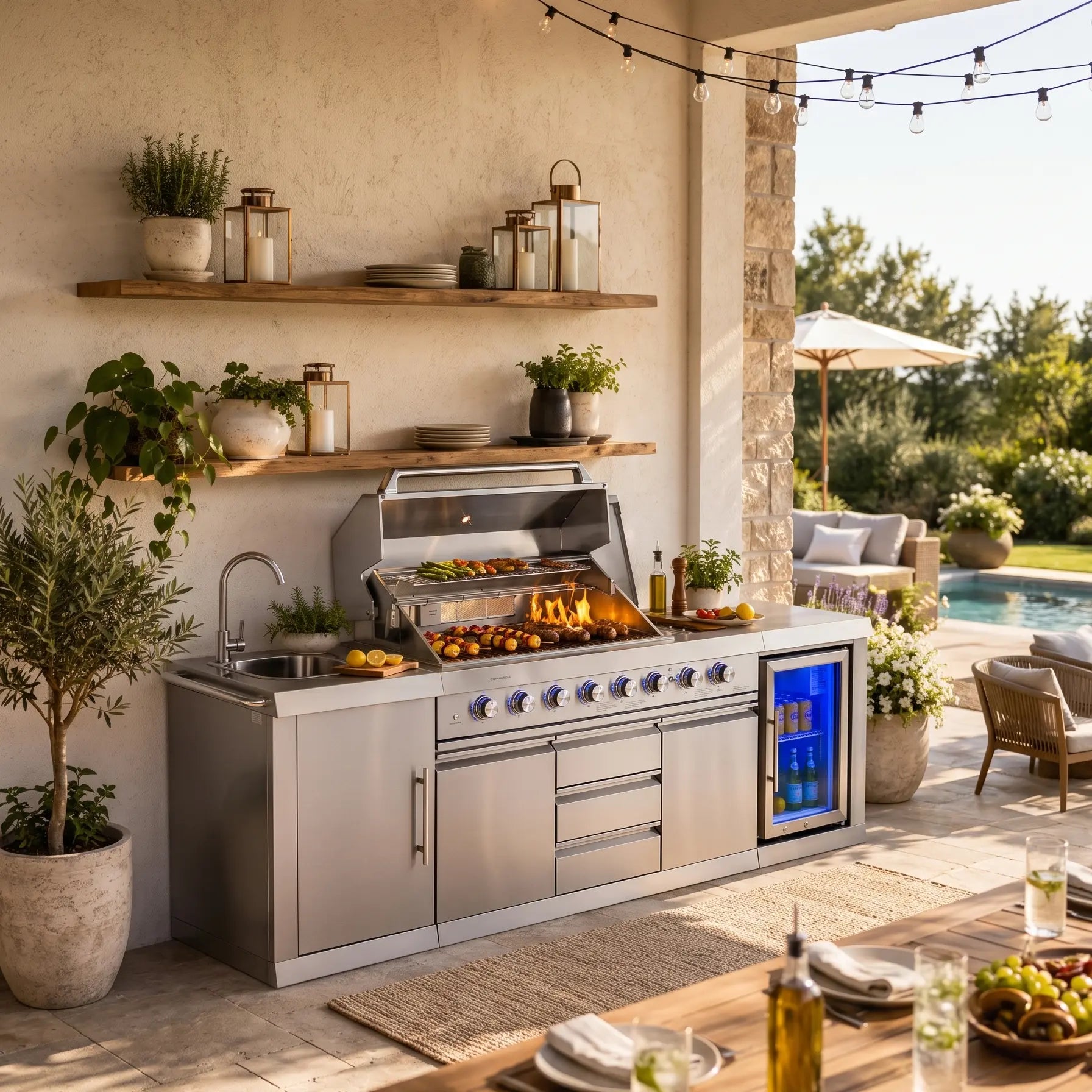
A built-in grill is designed to sit inside a permanent surround — an island, counter or masonry base constructed around it, with the grill's controls and burners built into the structure. The island can be factory-built and delivered as a complete station, or constructed on site with the grill inserted into a custom surround. The defining feature is permanence: the grill and its station are installed as one system and are not meant to move. A portable setup is the opposite: a freestanding grill or a wheeled cart that carries the cooker, fuel and tools, stored under cover when not in use and moved wherever the cooking happens.
The middle ground matters too. A heavy freestanding island-style grill with wheels is portable in name only — most owners park it and never move it again — while a compact cart with a real load rating genuinely travels. So the honest question is not "built-in or portable" as two camps; it is how much permanence your situation can absorb. Renters, first-time owners and evolving yards should lean portable; settled homeowners with a dedicated cooking corner are the natural candidates for built-in.

Cost and installation realities
Cost is where the two setups separate fastest. A portable grill or cart costs the least and arrives ready to cook — put it on a level spot, connect fuel and grill. A built-in island costs multiples of that: the island unit itself, delivery, a level fire-safe base, and any gas or electrical hookup work, which often requires a licensed installer and permits. Installation guidance varies by region and by the island's fuel system, so the honest budget includes quotes for the specific site rather than a national average. If the numbers are close in your head, they will not be close after delivery and hookup are added.
Think about the total cost of ownership, not just the purchase. A built-in island adds value to the property when it is well built and matches the yard, but it also adds maintenance — the surround, counters and gas hardware age in the weather. A portable grill has a lower ceiling on both cost and value: less to maintain, but nothing permanent to improve the home. The right question is what the money buys for you: a finished outdoor room you will use for years, or a cooking tool you can take with you.
Fuel and utilities sit inside the cost question. A portable grill runs on a propane tank it carries itself, which works anywhere with a fuel supply nearby; a built-in island can hide the tank in a cabinet or connect to a natural gas line, which removes the tank from the routine but adds installation work, permits and, for gas lines, a licensed professional in most areas. Built-in islands with refrigeration or power add electrical work to the list. Before choosing, check what utilities your patio can support and what the hookup will cost at your address — a built-in that needs a new gas line and a new circuit is a different budget from one that connects to an existing line.
Cooking power and storage
Built-in islands usually carry more cooking power because they are built to hold it: more burners, larger cooking areas, side burners, rotisserie kits and sometimes refrigeration or a sink built into the station. The structure lets the island hold heavy extras that a portable cart cannot support, and the counter space gives the cook a real prep and landing zone. If the cooking plan includes big gatherings, multiple proteins or full meals outdoors, the built-in's capacity is a genuine advantage, not a luxury.
A portable setup answers with sufficiency and storage. Most portable grills and carts handle a family cook comfortably — four to six burners on an island-style portable, fewer on a compact cart — and the cart's shelves hold the fuel, tools and covers. The portable kitchen stores away between cooks, which matters on patios where space is shared with dining or play. If the cooking needs fit within a portable's capacity, the portable is not a compromise; it is the right-sized tool. If the needs outgrow the cart every season, the built-in earns its permanence.
Rental, resale and permanence
Permanence is the question most buyers skip. A built-in island stays with the house: it is part of the outdoor structure, and when you sell, it becomes part of the property — an asset if it is well designed, an obstacle if the next owner does not want it. Renters should rarely build in; a portable setup moves to the next rental and keeps the security deposit safe. Homeowners who plan to stay should weigh how the island fits the yard's long-term layout, because moving a built-in station is a demolition project, not a relocation.
Resale cuts both ways. A quality built-in island can be a selling point and raise the perceived value of the backyard, especially in climates where outdoor living matters; a poorly built or poorly maintained one can be a liability that buyers discount. A portable grill adds no property value but also never becomes a problem at resale — it is just a grill that moves with you. If you are unsure about the next five years of your life, the portable setup keeps every option open, and the money saved can fund the built-in at the next house.
Flexibility of portable setups
Portable setups are flexible in three ways that matter. Location flexibility: the grill moves to the sunny side of the patio, the driveway for a party or the campsite for a weekend. Budget flexibility: you can start with a grill and add a cart, then add storage, without committing to a full island at once. And layout flexibility: if the yard changes — a new patio, a new dining area, a different use for the corner — the portable setup changes with it. For anyone still figuring out how the yard is used, this flexibility is the strongest argument in the portable column.
The flexibility has a limit: a portable setup is not a permanent outdoor kitchen, and it will never look or feel like one. The grill and cart sit under a cover or in storage when not in use, the fuel tank is visible or stored, and the cooking corner lacks the finished counter and built-in storage of an island. Some owners bridge the gap with a cart that looks substantial and stays parked in a dedicated corner — the visual permanence of a station with the practical mobility of a cart. That hybrid is often the wisest first step.
Decision matrix for your yard
| Your situation | Setup that fits | Why |
|---|---|---|
| Renter or likely to move | Portable | Takes the kitchen with you; no structural commitment |
| Yard layout still evolving | Portable first | Learn where cooking belongs before building in |
| Settled homeowner, dedicated corner | Built-in island | Permanent station, storage and counter value |
| Frequent large gatherings | Built-in | More burners, prep space and integrated extras |
| Budget-limited first season | Portable cart | Cook now; upgrade later with the yard |
| Want both worlds | Parked island-style cart | Station look and storage with wheels under it |
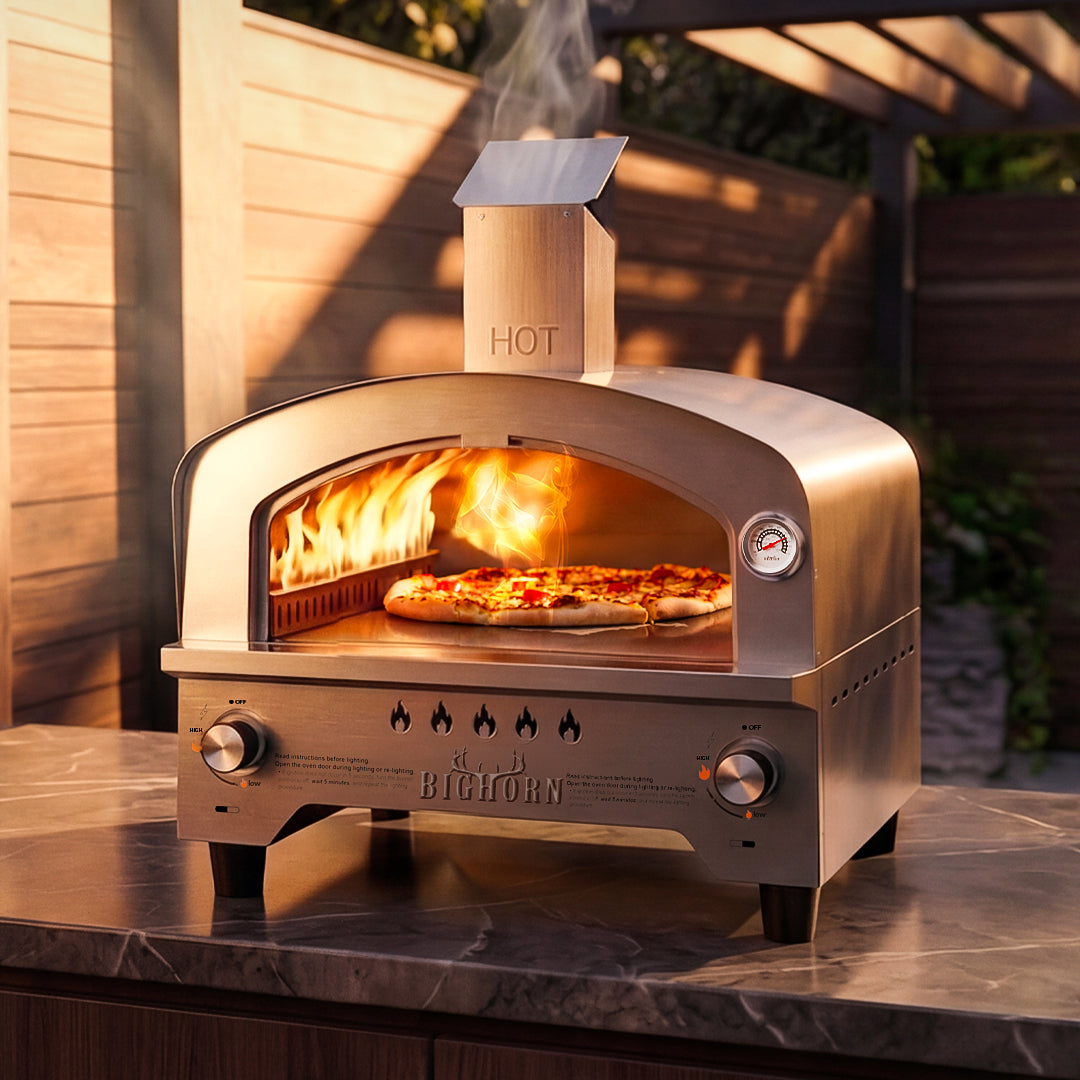
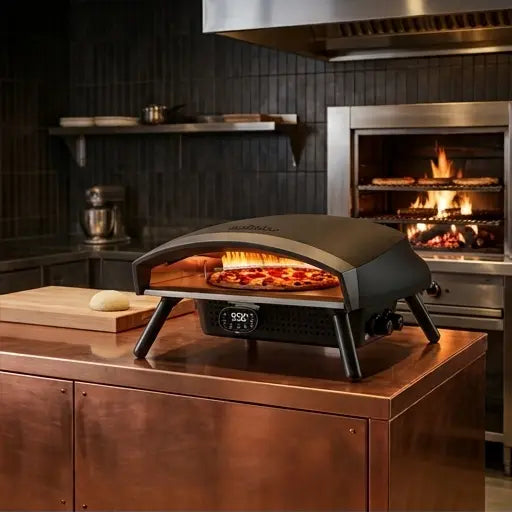
Run the matrix honestly: the deciding variables are how long you will stay, whether the yard has a permanent cooking corner and how much cooking capacity the plan really needs. Big Horn's built-in grill island collection and outdoor kitchen island collection represent the permanent end, with models like the stainless island with 4+2 burners; the portable end starts with a stainless grill cart and pizza oven table that can hold a grill or an oven.
Choose by the horizon of your life in the house, not by the size of the grill. If the kitchen should outlast a lease and survive a move, go portable and spend the difference on cooking gear; if the yard is home for the long term and the cooking corner is settled, build the island and make it part of the property. Either way, the grill cooks the same steaks — the setup is about the life around the grill, and the right choice is the one that fits both.
Product details and prices in this guide were verified against official Big Horn Outdoors listings during the September 5, 2026 review; re-check prices and availability at checkout.