







The expensive miss is a fire table that looks like a dining piece in the catalog, then refuses to be a grill the first time someone shows up with skewers. Ownership cost is not only the purchase price. It is fuel, ash, covers, cooking tools, and whether the object actually warms the chairs you already own. A fire pit versus a fire table is that set of costs, not a styling contest.
A fire pit vs a fire table: propane height, or a pit that can cook with wood
A fire table is usually a propane feature at table height. A fire pit can be a lower bowl or ring that burns wood or gas, sometimes with a grate that can cook. Compare heat height, fuel, ash, cooking limits, and the footprint around your chairs. Do not assume a tabletop flame is a grill.
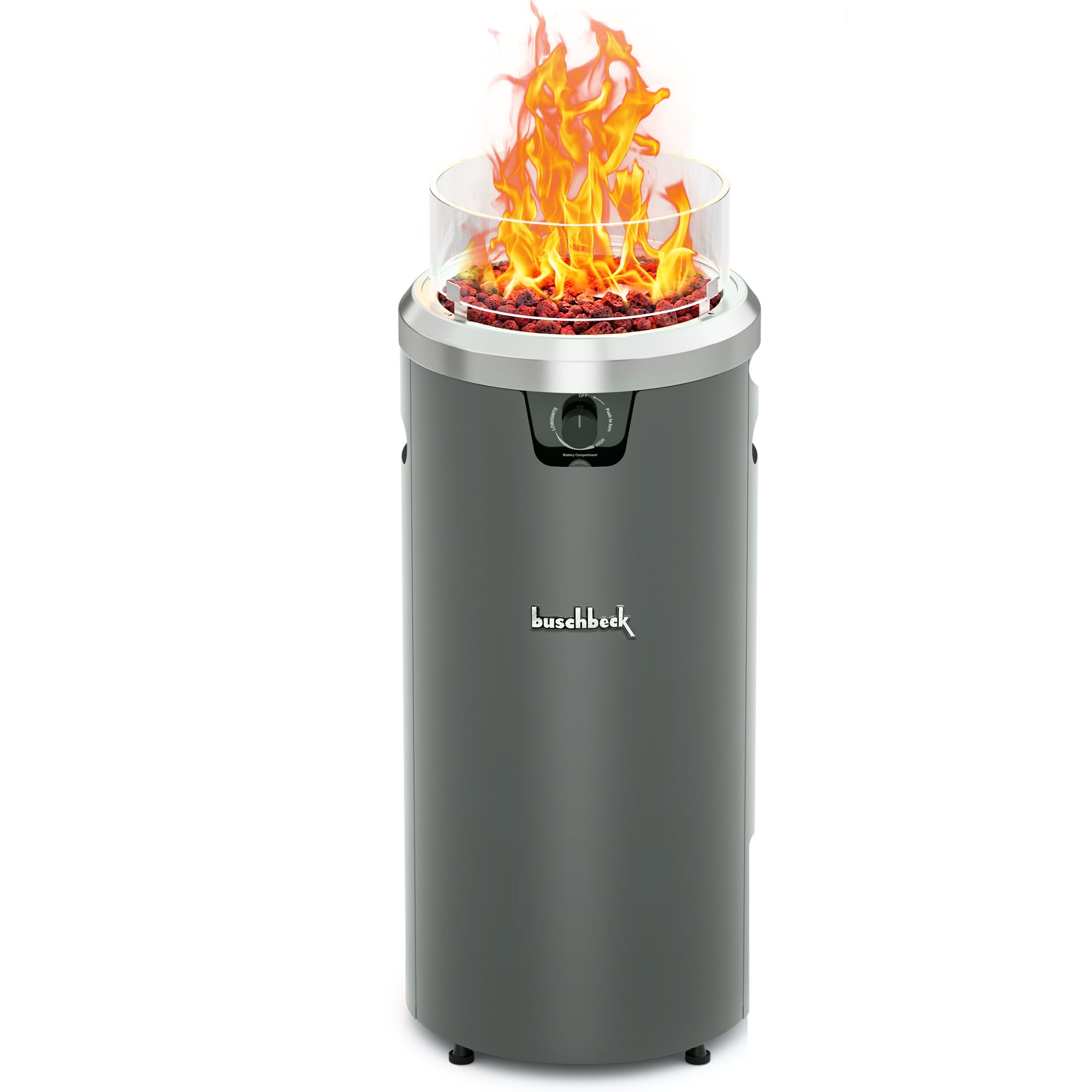
The names overlap in stores. Some "pits" are tall propane columns. Some "tables" are shallow bowls with a wide shelf. Read the listing for fuel and for whether cooking is actually approved. The column propane fire pit in the photos is a gathering appliance with a compact burner and media, not a wood pit and not a substitute for a cook grate unless its manual says otherwise.
Heat, conversation height and a patio-fit table
Heat is felt at the distance and the height where people sit. A table-height flame can feel immediate to people leaning in with a drink. A lower pit can warm shins and the space above the bowl, and a wood coal bed keeps radiating after the flames calm down. Neither shape is "warmer" in the abstract, which is why a seating test beats a marketing adjective.
Patio fit is also height plus clearance, not just diameter. A wide tabletop needs room for knees and for the clearances in the manual. A low bowl needs room for a ring of chairs and for a spark path. NFPA grilling fire-safety guidance and U.S. Fire Administration cooking-fire prevention are official reasons to treat any of these as fire appliances, not as coffee tables that happen to glow.
Cooking limits on a fire table vs a pit with a grate
If you want to cook, the first filter is whether the appliance is listed for it. A fire table with fire glass is often a "do not cover the burner with a fry pan" design. A wood pit with an approved grate, or a fire feature sold with a grill accessory the manufacturer accepts, is a different tool. Matching cooking fuel to the approved appliance is the page for that rule, and it applies here with force.
Buying a table for atmosphere and then improvising a grill is how food, glass media, and a burner get into the same bad evening. If cooking is a real requirement, shop a pit or a grill that is built for it, or accept that the table is for gathering only.
Fuel, ash and a neighbor-smoke picture
Propane tables and propane pits give you a knob, a shutoff, and little or no ash, with the tank or gas-line rules that come with that fuel. Wood pits give you a live fire, a shutdown ritual, and smoke that neighbors can smell. That smoke picture, not the furniture style, is often what decides a tight patio or an HOA lot.
Wood-burning versus propane fire pits already compares those fuels. This page only adds the table-versus-pit shape: a propane table usually leans even further toward clean gathering and away from wood cooking. If you do choose wood, the firewood guide and a legal burn day still matter more than the bowl's finish. Smokey Bear's campfire-safety guidance is the shutdown habit for wood; a propane table still needs its own valve-off routine.
A comparison table for small patios
The first table is about living with the object on a tight patio. It is not a scorecard, and it does not invent prices or BTU ratings.
| Question | Typical fire table | Typical fire pit |
|---|---|---|
| Seated height | Flame near table height, close to hands and glasses. | Often lower, unless it is a column-style propane pit. |
| Fuel and mess | Usually propane or natural gas, little ash, a tank or a line to plan. | Wood or gas; wood adds ash, sparks, and a longer shutdown. |
| Cooking | Limited, and only if listed for a grate or cookware. | More plausible when the pit includes an approved grate. |
| Small-patio pressure | Needs clearances around a tabletop and a tank location. | Needs a seating ring, a spark plan, and sometimes more horizontal room. |
A chimenea is a third shape, with a mouth and a chimney, and it does not belong in this comparison as a tie-breaker. Use the chimenea versus fire pit page if that is the real choice.
How this differs from chimenea-vs-pit and wood-vs-propane-pit pages
Those two live articles already own fuel choice and the chimenea question. This article owns the tabletop-versus-bowl decision: conversation height, cooking limits, and how the piece sits in a seating group. If you blur all three into one "which fire feature" essay, you will buy the wrong constraint.
Propane safety, tank placement, and patio rules for a gas feature still sit on the propane fire-pit safety page. A fire table does not get a free pass from those habits just because it has a tabletop.
A buying path
Decide the job first: gathering only, occasional cooking, or a true wood fire. Then decide the fuel you are allowed and willing to manage. Then tape the footprint into the patio and sit in your own chairs. Only after that should style, finish, and a cover enter the conversation.
Count the hidden costs in a year of use, not in the first checkout. Propane means tanks to refill or a line to install, plus a cover and a legal place to keep the tank upright. Wood means a dry stack, ash disposal, and evenings that end later than the conversation. A table that needs replacement media is one kit; a pit that needs a grate, a screen, and a shovel is another. This page will not invent prices for those kits, but they belong on your list before you fall for a finish.
There is also a middle object in today's catalogs: a column-height propane pit that behaves more like a compact fire feature than like a low wood bowl. Shop it by listing and by seating test, not by arguing whether the marketing name says pit or table. If it cannot cook, do not buy it to cook. If it needs the same tank rules as any other patio gas appliance, budget that work the way you would for a fire table.
If cooking is essential, drop most pure fire tables. If ash and smoke are unacceptable, drop wood pits. If you want a propane feature at conversation height, a table or a column pit can both be candidates, provided the listing, the tank plan, and the clearances fit. Ready.gov home-fire guidance and Red Cross fire guidance are the official reminder that you are still buying a fire, not a piece of coffee-table decor.

A seating-height test with the chairs you already own
Bring the actual chairs onto the patio. Tape a circle or a rectangle the size of the product, including the clearances in the manual, not just the pretty diameter. Sit, set a glass down where a tabletop would be, and notice whether you would be staring into a flame, kicking a low bowl, or blocking a walkway.
| Ownership factor | What to count before you buy | Why it changes the choice |
|---|---|---|
| Fuel and refills | Tanks or a gas line versus a wood pile you will actually keep dry. | A "simple" table still has a tank to hide or a line to permit. |
| Ash and shutdown | A knob versus a drown-stir-feel routine. | This is time and mess, not only romance. |
| Cooking tools | An approved grate and fuel, or a decision that you will not cook here. | Improvised cookware is a common way to damage a table burner. |
| Cover and storage | A cover that fits, and a place for the tank or the unused wood. | Small patios run out of hiding places first. |
If the chairs fail the test, the catalog photo does not get a vote. Notice also whether a tank would stand in a walkway, or whether a wood stack would block the same gate you use every day. Those storage details are part of patio fit, even though they rarely appear in a product shot. EPA's carbon monoxide overview is also a hard stop: neither a pit nor a table belongs in an enclosed porch used as a room. Buy the shape that fits the job, the fuel, and the seats you already have.
If you want a propane patio feature at conversation height, look at a listed column design such as the 15-inch column round propane fire pit, and still compare it against a wood pit if cooking or a wood fire is the point of the purchase.
FAQ
Is a fire table warmer than a fire pit?
Not in a single, reliable way. A fire table often puts a propane flame at roughly table height, so seated guests feel heat closer to their hands and faces. A lower wood or gas pit can throw a wider, lower warmth and, if it is a wood bowl, a different kind of radiant heat from coals. Wind, seating distance, and the actual burner or wood load change the result more than the product category name. Sit in your own chairs around a taped outline before you buy warmth you have only seen in a photo.
Can you cook on a fire table?
Usually only in a limited way, and only if that table is listed for the cookware or the grate you want to use. Many fire tables are gathering appliances with fire glass or a compact burner, not grills. A wood pit with an approved grate can cook more seriously, and a propane column pit is still not automatically a grill. If cooking is the reason you are shopping, start with the appliance's approved fuel and cook setup, not with a table that was designed as a centerpiece.
Is a fire table a better fit for a small patio than a fire pit?
It can be, when you want conversation height, a propane shutoff, and less ash, and when the table's clearances actually fit the space. A deep wood bowl can demand more horizontal room, more spark management, and a shutdown ritual. A small patio can still be the wrong place for either one if the setbacks, the overhead, or the neighbors' smoke path do not work. Measure the furniture you already own, then compare the two shapes in that real footprint.
Do fire tables always use propane, and do fire pits always burn wood?
No. In current patio shopping, a fire table is usually a propane or natural-gas feature with a tabletop around the flame. A fire pit can be wood, propane, or sometimes another listed fuel, in a bowl, ring, or column form. Read the listing, not the nickname. The wood-versus-propane decision is a fuel choice; the pit-versus-table decision is also about height, cooking, and how the object sits in the seating group.
