







Outdoor Kitchen & Islands
A grill-and-griddle island fails when the flat-top is only there for the brochure. The griddle sits shiny, the grate does all the work, and you still carry a skillet outside for eggs. If a flat-top is going to earn its slot, it has to show up in the weekly menu, in the way you read the surface, and in a cleanup you will actually finish.
This is a companion to a combo island, not a redo of the broader category choice. If you are still asking whether a grill or a standalone griddle fits you at all, use the existing gas grill versus griddle guide and then come back here for the combined cabinet.
What a griddle unlocks on an island
A flat-top earns its keep when you regularly cook food that wants a continuous surface: smashed burgers, breakfast, chopped vegetables, fried rice, or a soft item that would slip through grate bars. It also helps when you want to keep a sauce or an egg away from open flame. None of that requires a dramatic speech about lifestyle. It requires an honest look at last month’s meals.
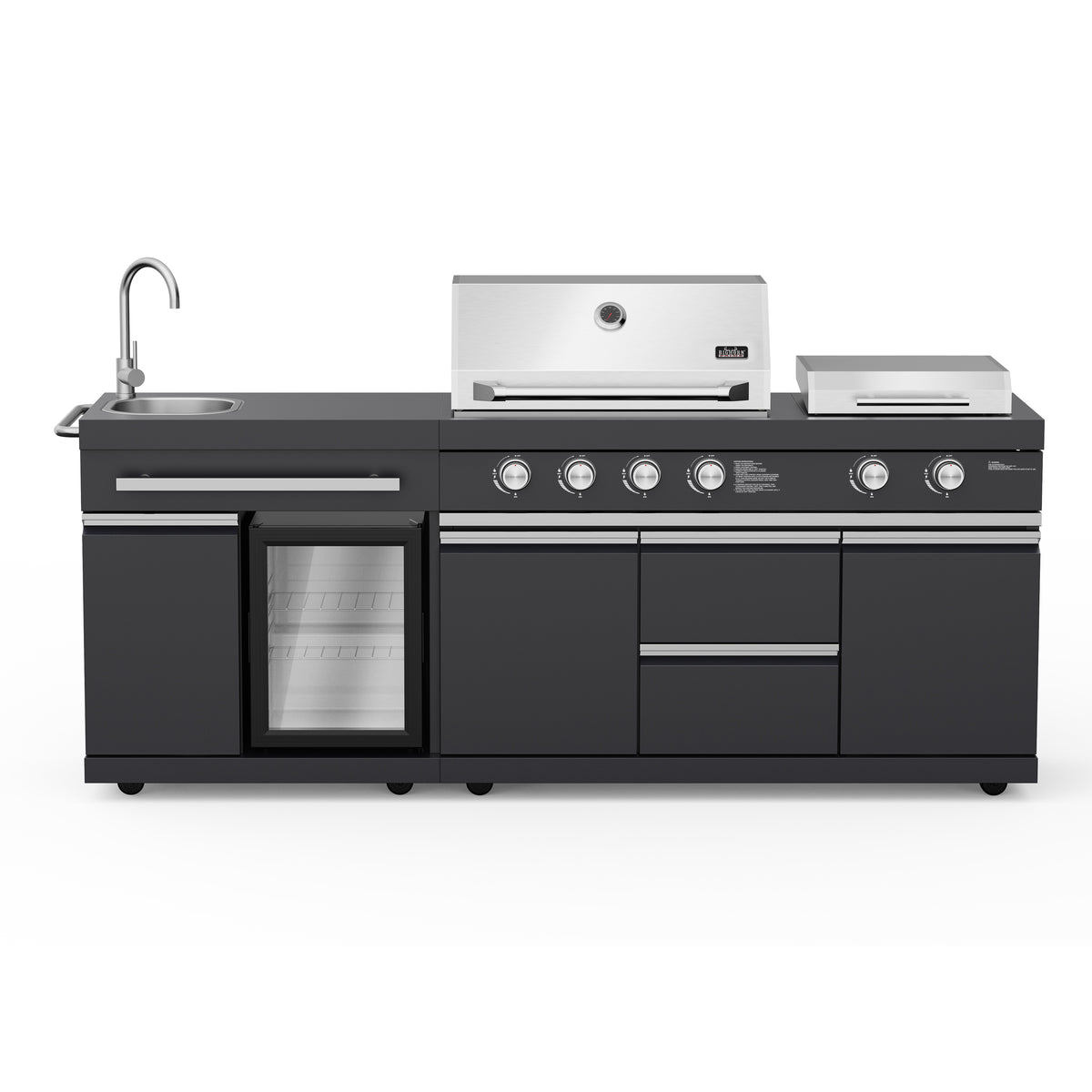
The current outdoor kitchen grill and griddle combo page describes 304 stainless grill grates and a griddle, a sink, an outdoor refrigerator, cabinets and drawers, a full-width pull-out grease tray, and a weather-resistant cover. Treat those as current-page claims. If breakfast is a real outdoor habit, the existing outdoor griddle breakfast ideas page is a menu companion, not a second hardware essay.
How to read BTU and surface claims
Read the split, not just the total.
A headline BTU number describes the whole cabinet. What you cook on is the grate rectangle and the griddle rectangle, each with its own size. Confirm those figures on the live listing before you plan a party around them.
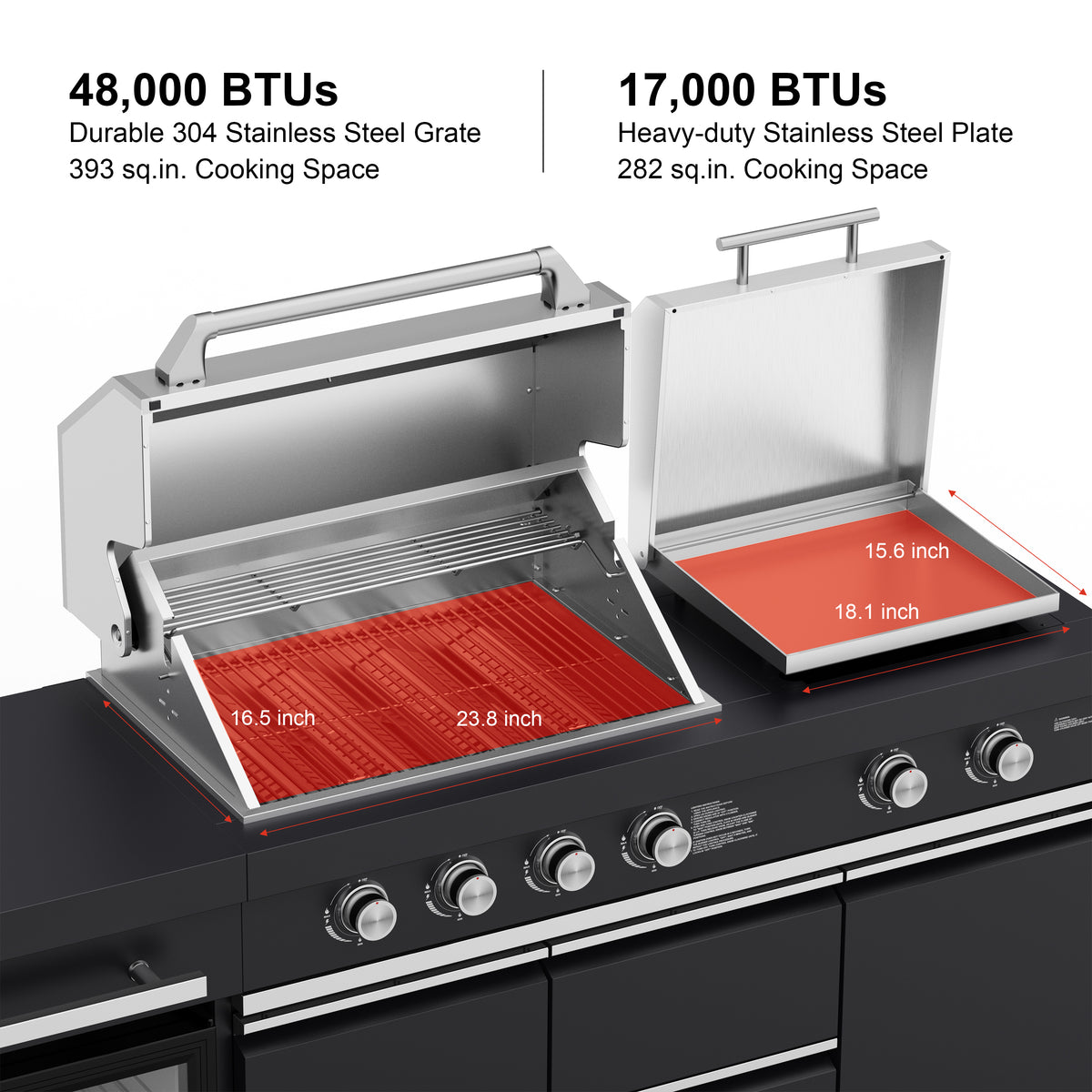
The current combo page lists 65,000 BTUs from six tubular burners and 675 square inches of cooking area, with a grate at 23.8 inches wide by 16.5 inches deep and a griddle at 18.1 inches wide by 15.6 inches deep. That is a shared station, not two full-size appliances glued together. A grate-only island in the outdoor kitchen island collection may list a larger single cooking area; that does not automatically make it a better weeknight tool if you needed the flat-top.
Do not invent a heat map this article cannot measure. Preheat, learn the two surfaces, and keep propane outdoors and upright, following NFPA grilling safety pages and the island manual.
| Weekly habit | Combo island usually helps when | Grate-only may be enough when | Still confirm |
|---|---|---|---|
| Breakfast and smashed burgers | You will actually light the flat-top most weeks | Those meals stay indoors | Current griddle size on the live page |
| Steaks and corn, almost no pan food | You still want a small flat space for a side | You would rather have more grate area | How the cabinet splits the cook surface |
| One host, mixed menu | You can work both surfaces without leaving the island | A second person already runs a separate griddle | Landing space and grease-tray access |
Menu planning on two surfaces
Write the order down if the menu is mixed. A smash-burger night can start with onions on the flat-top, move patties to the same surface, and use the grate for a second protein or a hearty vegetable, but only if you have already cleared a landing board. A steak night can ignore the griddle entirely, which is useful information: if that is most of your year, the combo may be more cabinet than you will use.
Plan the board so the griddle and the grate finish in a polite order. Eggs or onions can start on the flat-top while steaks take the grate, but only if you have a landing zone and you are not crowding raw and cooked food. Official handling from FDA kitchen food-safety guidance still applies when two surfaces share one cabinet. Use a thermometer on meat; the FDA safe food handling page lists 145°F plus a three-minute rest for steaks and 165°F for poultry.
Do not treat the fridge as a long-term raw-meat locker unless the appliance manual supports that use. Many outdoor refrigerators are happiest as beverage and short-hold storage. NCHFP storage guidance is a safer leftover reference than a sunny cabinet top.
Cleaning two surfaces
The combo asks for a two-surface routine: grate and flat-top, plus the shared grease tray. Clean only when the metal is safe to touch, and follow the manual rather than flooding a hot grease path with a sink of water. The current page’s pull-out tray helps if it is emptied, not if it is ignored until it overflows.
A cover is useful after the island is fully cool. Keep the area outdoors, and review U.S. Fire Administration cooking-fire pages if you are new to a large propane cabinet. The Big Horn Prime collection is a catalog view if you are comparing combo and grate-only islands in the same family, not a cleaning shortcut.
When a grate-only island wins
Choose grate-only when your menu is almost all direct-grill food, when you want a larger single cooking area, or when you do not want a second surface to season and scrape. A 4+2 or 6+2 grate-led island can still include a sink and a fridge. The missing flat-top is only a loss if you were going to use it.
A separate portable griddle is another honest path if the island is already bought and you only need a flat-top occasionally. That adds a second footprint and a second cover, which may be fine in a wide yard and awkward in a narrow one.
Who should skip the combo
Skip it if the flat-top would be a display surface.
If nobody in the household cooks breakfast or smashed burgers outdoors, and you would rather have more open grate, a combo is extra steel you will still have to clean. Skip it, too, if you already own a griddle you like and you only needed an island for the grill, sink, and fridge.
Keep local gas and fire rules in the decision, and do not operate the island in an enclosed space. Official home-fire guidance from Ready.gov home fire pages and Red Cross fire safety pages is worth a pass before the first mixed-surface party.
Key takeaways
- A combo island earns its slot only if the weekly menu uses the flat-top.
- Read current BTU and surface figures as a split between grate and griddle, not as a single trophy number.
- Plan the board so both surfaces finish politely, with ordinary food-safety habits.
- Cleanup includes two cook surfaces and a grease tray, once they are safe to touch.
- A grate-only island, or a separate griddle, is the honest alternative when the flat-top would sit idle.
If a weekly flat-top menu would actually get used, start with the current grill and griddle combo island listing and confirm the grate and griddle sizes before you plan the first mixed cook.
FAQ
When does a grill-and-griddle combo earn the slot on an island?
It earns the slot when your weekly menu actually uses a flat-top: smashed burgers, breakfast, vegetables, fried rice, or anything that would otherwise need a separate pan. If you only grill steaks and rarely cook breakfast outdoors, a grate-only island may be the simpler station. The combo is a menu decision, not a default upgrade.
How should I read the BTU and surface numbers on a combo island?
Read them as current-page claims for that model, not as a score that automatically beats every grate-only island. The current combo listing describes 65,000 BTUs, six tubular burners, and 675 square inches split between a grate and a griddle with published surface sizes. Confirm the live page, and judge the split by the food you cook, not by a single headline number.
Is a combo harder to clean than a grate-only island?
You are maintaining two cooking surfaces plus the shared grease path, sink, and cabinets. That is more routine, not a different kind of chemistry. A pull-out grease tray helps if you actually empty it. Plan a short cleanup for both the grate and the flat-top after the cook, once the surfaces are safe to touch.
Can I just use a separate outdoor griddle instead of a combo island?
Yes, if you already have a grill and a place for a second appliance. A combo island is for households that want both surfaces in one cabinet, with a shared sink and fridge. A standalone griddle, or even a breakfast recipe on a separate flat-top, is a different footprint and a different cleanup.
More to Read
Fireproof Grill Mat Under Pizza Ovens and Infrared Grills
Place a fireproof grill mat to catch grease and sparks under ovens and grills. Confirm the live 48-by-30-inch claims, and use a cart when you need ...
No Oven Spring on a High-Heat Pie: Dough Temp, Launch and Floor
Diagnose no oven spring on a high-heat pizza by checking dough temperature, launch handling, and floor heat before you spend another mix changing t...
Heat-Resistant BBQ Gloves: Temperature Ratings and Wet-Grip Limits
Read a 1472°F glove rating as a short, dry, instant figure. Wet or oily conditions change grip, so let long peels reach into hot ovens and grills.
