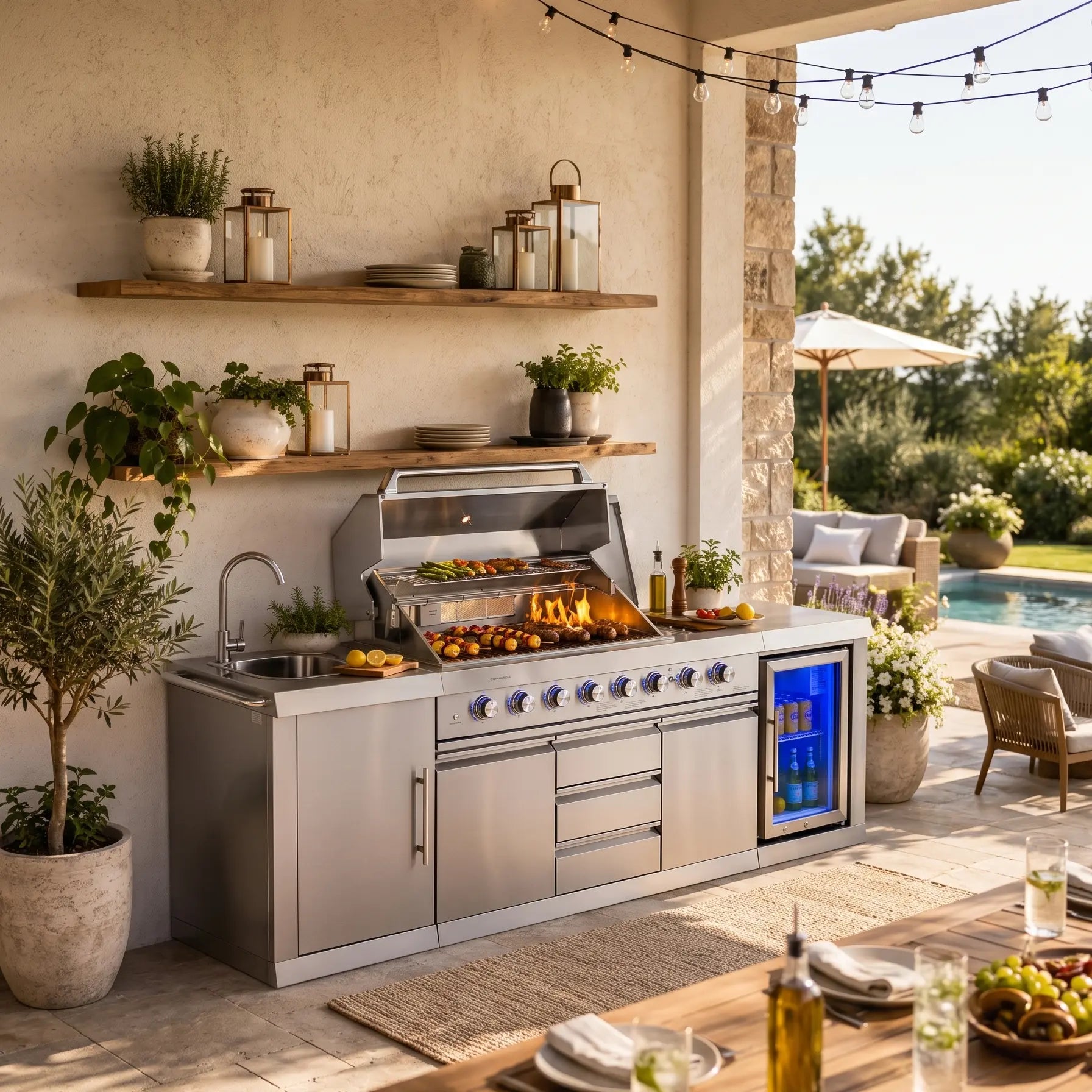
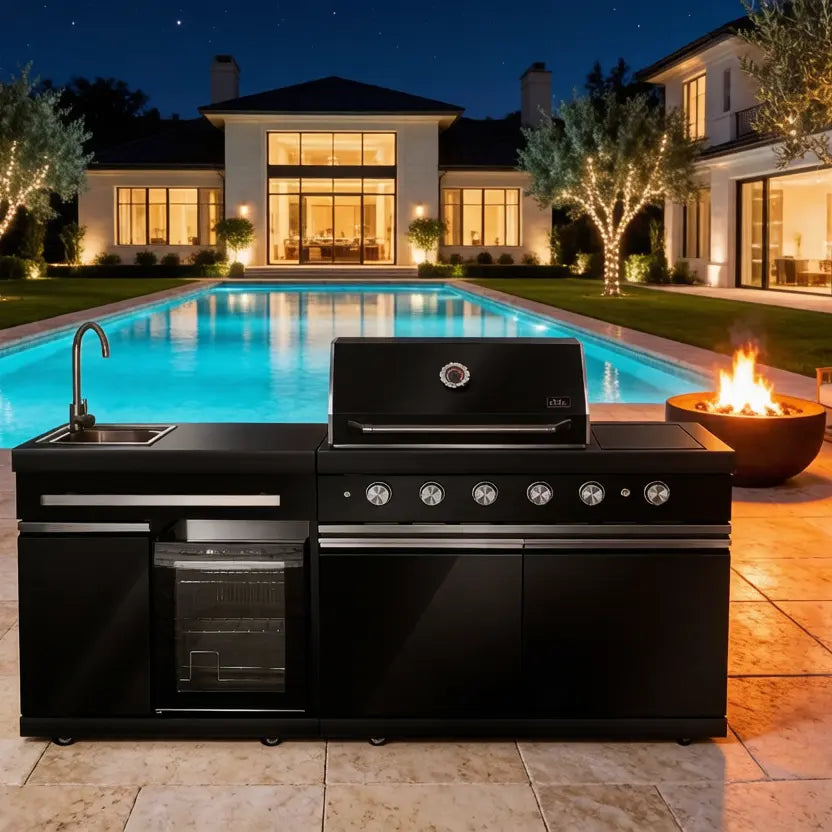
A gas grill and a griddle cook the same outdoor meals differently: the grill sears through open grates with flame and smoke, while the griddle cooks on a flat, hot surface that handles eggs, pancakes and small pieces without anything falling through. Most outdoor cooks do not need to choose permanently — a flat-top insert or griddle plate turns many gas grills into both — but understanding the differences tells you which surface to use for which meal. This guide compares the two across food suitability, sear, cleanup and setup, with the reversible insert as the bridge that gives you both.
What each surface does well
Grills excel at anything that benefits from open flame and smoke: steaks and chops with char marks, burgers with a crusty exterior, vegetables that want a little fire. Griddles excel at foods that need a continuous flat surface: eggs and pancakes, delicate fish, chopped vegetables, stir-fry-style cooking, and small pieces like diced onions that would fall through grates. The two surfaces are complementary rather than competing — a grill is for flame-cooked food, and a griddle is for flat-top food, and most busy outdoor cooks need both across a season.

Sear and heat differences
The sear difference is about contact and airflow. Grill grates leave char marks where the metal touches the food and let smoke and flame flavor the gaps; a griddle gives full-surface contact, producing an even, continuous crust that works beautifully for smash burgers and breakfast foods. Both can reach high heat, but they deliver it differently: grates concentrate heat in lines, while the flat top spreads it evenly. If you want the classic steakhouse grill marks and live-fire flavor, use the grates; if you want an even crust with no gaps, use the griddle. Matching the surface to the crust you want is the whole technique.
Food suitability at a glance
| Food | Better surface |
|---|---|
| Steaks and chops | Grill grates (char and smoke) |
| Burgers (smash style) | Griddle (even crust) |
| Eggs, pancakes, breakfast | Griddle |
| Delicate fish and shrimp | Griddle (nothing falls through) |
| Vegetables with char | Either — grates for marks, griddle for even roast |
| Whole chicken or roasts (indirect) | Grill with the lid closed |
Use the table as a starting point and adjust for your menu. A griddle insert on a gas grill means the same burner setup can switch between the two surfaces in minutes, which is why the "grill vs griddle" question often becomes "both, on one grill."
Cleanup and care
Cleanup differs enough to shape the decision. Grill grates clean with a brush after a burn-off, with grease falling to the drip tray; a griddle needs scraping while warm, a wipe-down and a light oil coat to keep the surface seasoned. Neither is difficult, but a griddle asks for the scrape-and-oil habit after every cook, while grates tolerate a little more neglect before they need attention. Cast-iron griddle inserts also need dry storage to avoid rust, while stainless or coated inserts are more forgiving. Choose the upkeep you will actually maintain, because a poorly kept griddle performs worse than a well-kept grill and vice versa.
Grill or griddle: the honest test
If your cooking is mostly steaks and burgers with char, the grill grates are the priority and a griddle is a nice extra. If your outdoor cooking includes breakfast, fish and flat-top meals, the griddle earns its space quickly. If you are not sure, buy a grill with a flat-top insert or reversible griddle plate so the choice happens per meal rather than per purchase. Big Horn's grills and griddles collection shows the gas grill range and the compatible cooking surfaces, and the island gas grill above gives you the multi-burner base that makes switching surfaces practical.
There is no wrong answer between grill and griddle — only the wrong surface for a particular meal. Learn what each does well, keep both options available if you can, and let the menu choose. That is the approach that turns an outdoor cooker into a complete kitchen.
Switching surfaces on one grill
The bridge between the two is the insert: many gas grills accept a flat-top griddle plate or a reversible cast-iron grate that is flat on one side and ridged on the other. Switching takes a few minutes once the grill is cool enough to handle the insert safely — remove the grates, place the griddle over the burners, and preheat it before cooking. A reversible plate is the practical choice for a single grill because it gives you both surfaces without storing a second appliance. When you buy an insert, confirm it fits your grill model and that it is rated for the heat your burners produce; a mismatched plate can warp or cook unevenly.
Temperature management on a flat top
A griddle changes how you think about heat zones. With grates, you sear over one burner and cook gently over another; with a flat top, you can do the same by lighting one side high and the other low, creating a hot zone for searing and a warm zone for holding. Flat tops also respond to food volume — a full griddle drops in temperature more than grates do, so preheat thoroughly and avoid overcrowding when you need a hard sear. Learn your flat top's hot and cool sides the same way you learned your grill's, and the same two-zone logic applies to both surfaces.
Breakfast and flat-top meals
The griddle earns its keep at breakfast and for flat-top dinners. Eggs, pancakes, hash browns and bacon all cook together on one surface, with the bacon fat seasoning whatever cooks next. For dinner, the flat top handles smash burgers, fajitas with peppers and onions, teriyaki-style chicken, and delicate fish that would fall through grates. The griddle's even heat and easy scraping make it the surface you reach for when the meal is a mix of small pieces that need to cook together. If those meals are part of your rotation, the griddle is not an extra — it is the main surface for those nights.
First-purchase advice
If you are buying your first outdoor cooker and meals like breakfast, fish and stir-fry are regulars, look for a grill that accepts a griddle insert or buy a reversible plate alongside it; if your cooking is steaks, burgers and roasts, the grates alone will serve you well and the insert can come later. Whichever you start with, buy a cover, a thermometer and tools that work with both surfaces, because those carry over when you add the other. The grill-versus-griddle question is really a question about your menu, and the menu is the best guide to the answer.
Big Horn's grills and griddles collection keeps the compatible cookers and surfaces together, so the "both" answer is a practical one rather than a wish. Choose by meal, switch by insert, and the outdoor cooker becomes the most flexible appliance on the patio.
Product details and prices in this guide were verified against official Big Horn Outdoors listings during the September 5, 2026 review; re-check prices and availability at checkout.