A high temperature pizza oven is a unit engineered to reach and hold 750 °F to 950 °F (400 °C to 510 °C), which is what lets it bake a pizza in 60–90 seconds instead of 8–15 minutes. That heat window changes the chemistry of the bake: moisture in the dough vaporizes instantly, puffing the rim and crisping the base before the toppings overcook. For anyone who wants authentic Neapolitan-style crusts at home, the heat ceiling is the defining feature, not a marketing number.
What counts as a high temperature pizza oven
The category describes performance, not a brand: a specialized unit that reaches high heat quickly, retains it across multiple bakes, and uses a stone or deck that stays hot between pizzas. Dense insulation, a thick stone floor, and good thermal circulation (an engineered dome or burner layout) separate a real high-temperature oven from a basic cooker that hits a peak then loses it.
The heat is only half the equation; the techniques around dough hydration, stone temperature, and bake timing decide whether that heat becomes a great crust. The dedicated guide to getting the perfect pizza crust walks through those controls in detail.
Why high heat gives the perfect crust
Browning and puffing are heat-driven reactions. At 500 °F a home oven bakes slowly, drying the dough into a cracker-like base and rubbery cheese. At 750–950 °F, radiant heat vaporizes surface moisture instantly, the crust puffs into an airy rim, and the stone sets the base crisp before the toppings finish. The result is leopard-spotted char and a soft, foldable center — the texture that defines the style.
How it compares with a conventional oven
| Oven | Peak heat | Bake time | Result |
|---|---|---|---|
| Standard kitchen oven | 500–550°F | 8–15 min | Dense, cracker-like crust |
| High-temperature pizza oven | 750–950°F | 60–90 s | Puffy rim, crisp base |
The difference is not cosmetic; it is the difference between a flatbread and a Neapolitan-style pie. The heat window is why dedicated ovens exist.
What to look for before you buy
- Peak temperature — needs to reach at least 750°F and hold it.
- Stone or deck — thick and heat-retentive, so it does not drop between pies.
- Recovery — fast heat recovery between consecutive bakes.
- Insulation — holds the chamber stable in wind and outdoor temperatures.
- Fuel and placement — matches your patio, fuel preference, and outlet or tank setup.
These five decide whether the oven performs when it matters, not just on the spec sheet.
How to get the best from a high-heat oven
What preheat time should you expect?
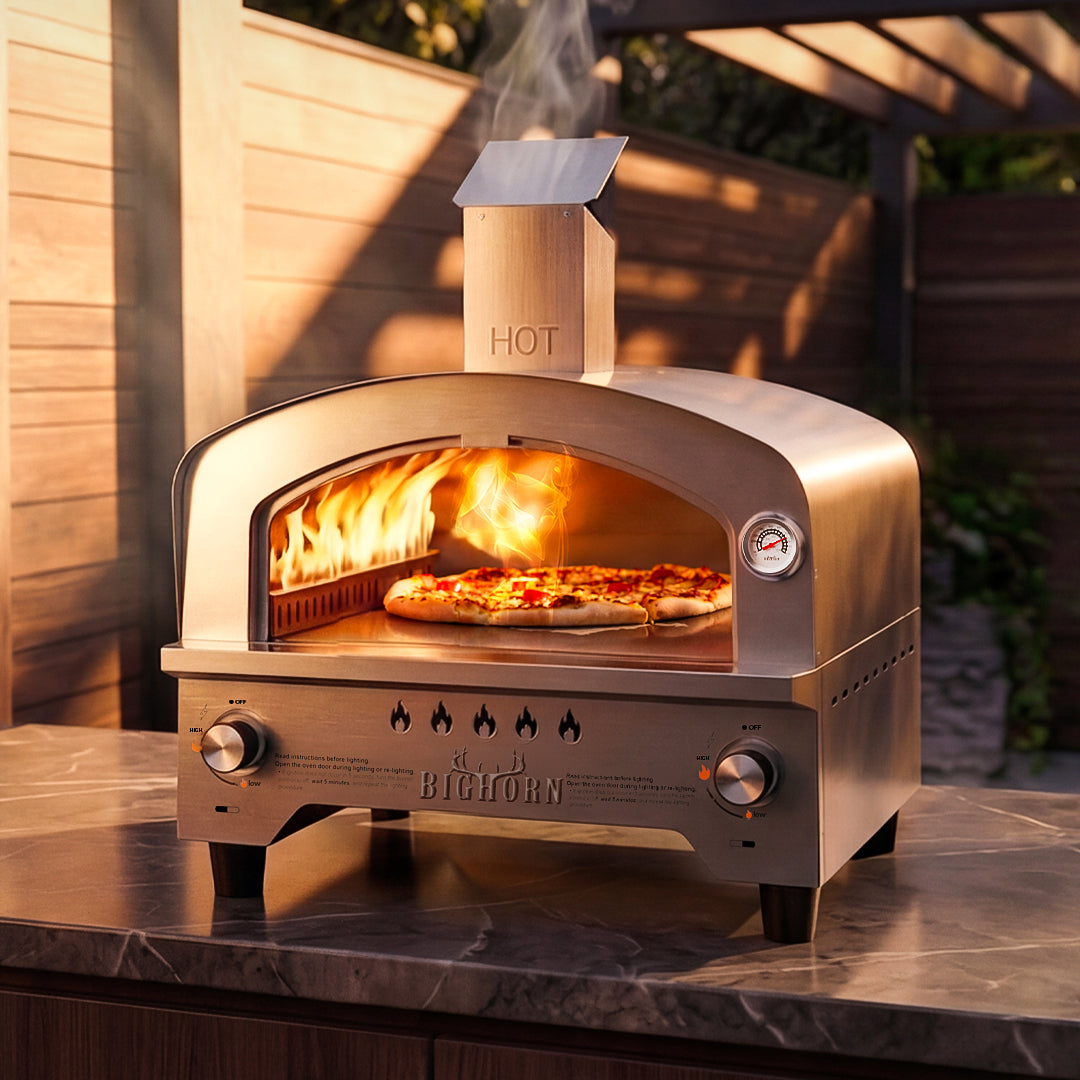
Preheat depends on the fuel and chamber. A compact pellet oven like the Big Horn 12-inch reaches the target in 18–20 minutes; gas climbs faster, often in around 10 minutes. The stone is the bottleneck — it must saturate with heat, not just the air around it, so plan the warm-up as part of the recipe. A thermometer on the stone removes the guesswork.
How do you keep the heat steady across multiple pizzas?
Steady heat is a management habit as much as an equipment spec. Keep the fuel feed consistent, avoid opening the oven more than needed, and give the stone a short recovery between launches. A pellet oven that has passed its peak and a gas unit with both burners set will both hold a workable window; the failure mode is letting heat bleed during slow service.
Which fuel reaches high heat most easily?
Gas is the fastest path to a steady 750–950 °F because it ignites and dials in minutes. Pellet reaches the same window with smoke flavor and takes 15–20 minutes to warm. Choose by whether you want speed or flavor, not by peak temperature — both can hold the heat the style needs.
How do you avoid burning at high temperature?
High heat burns fast, so the defense is preparation and attention. Use dough that can take the heat, keep toppings light, and stay at the oven for the 60–90 second bake. Rotate once, and pull the pizza the instant the rim blisters. Over-browning at this heat is a seconds-scale failure; being present is the technique.
Is 950°F better than 800°F?
Not necessarily — past a point, hotter is harder to manage and starts to char before the bake finishes. What matters is holding a steady window that matches your style, plus a stone that recovers. A unit that holds 850 °F consistently beats one that peaks at 950 °F then drops.
How does insulation affect performance?
Insulation holds the heat you generate. A well-insulated chamber stays stable in wind and cold, recovers faster between pizzas, and uses less fuel to maintain temperature. Thin-shelled ovens can reach peak heat but bleed it quickly, which shows up as sagging crusts on the second and third bakes. Treat insulation as a performance spec, not an invisible detail.
Why does the first pizza sometimes bake worse than later ones?
Usually because the stone was never fully saturated. The air may hit temperature while the stone still climbs. Give the oven a longer preheat before the first launch, or run a test pizza to calibrate. Once the stone is loaded, the first pie is as good as the twentieth.
How do you choose between 750°F and 950°F windows?
Choose the window that matches your style. 750–850 °F suits a wider range of doughs and is easier to manage; 900–950 °F is ideal for Neapolitan purists who want the fastest, most dramatic bake and are ready to manage short windows. Most home cooks get great results at the middle of the range with better consistency.
What does "leopard spotting" tell you?
Leopard spotting — uneven dark patches on the rim — signals that the heat was high and the bake short enough to char the surface while the interior stayed soft. It is the visual signature of a proper high-heat bake, and chasing it is a good way to learn the window your oven really holds.
Why do home ovens reach only 500°F?
Standard home ovens are built for general baking and broiling, not for pizza’s high-heat window, and they prioritize even general air temperature. A dedicated pizza oven routes intense heat to the stone and chamber for exactly one job: fast, blistering bakes. That single-purpose design is why they reach 750–950 °F instead of topping out near 500 °F.
How do you care for a high-heat oven?
Let the oven cool completely after a bake, brush the stone without soap, wipe the shell, and keep the fuel system clean. A high-heat oven goes through more thermal cycling than a conventional one, so the stone deserves gentle, dry care and the chamber deserves a dry cover between uses. Routine maintenance is short; plastic or moisture is the real enemy.
High temperature pizza oven FAQs
Is a higher peak always better?
Not after you are past searing range — once above roughly 950°F, bake management gets harder rather than easier. What matters more is holding a steady 750–950°F window and recovering quickly between pies.
Do I need a commercial unit for this heat?
No. Compact backyard ovens like the Big Horn pellet and gas models reach the 887 °F and above window that the style needs, without commercial scale.
Will a high-heat oven dry out pizza?
No — the short bake is what protects it. The fast heat puffs the crust and sets the base quickly, so moisture is trapped rather than dried out.
To compare high-heat options across fuels, review the pizza oven collection and confirm the peak heat and preheat specs on the product pages.