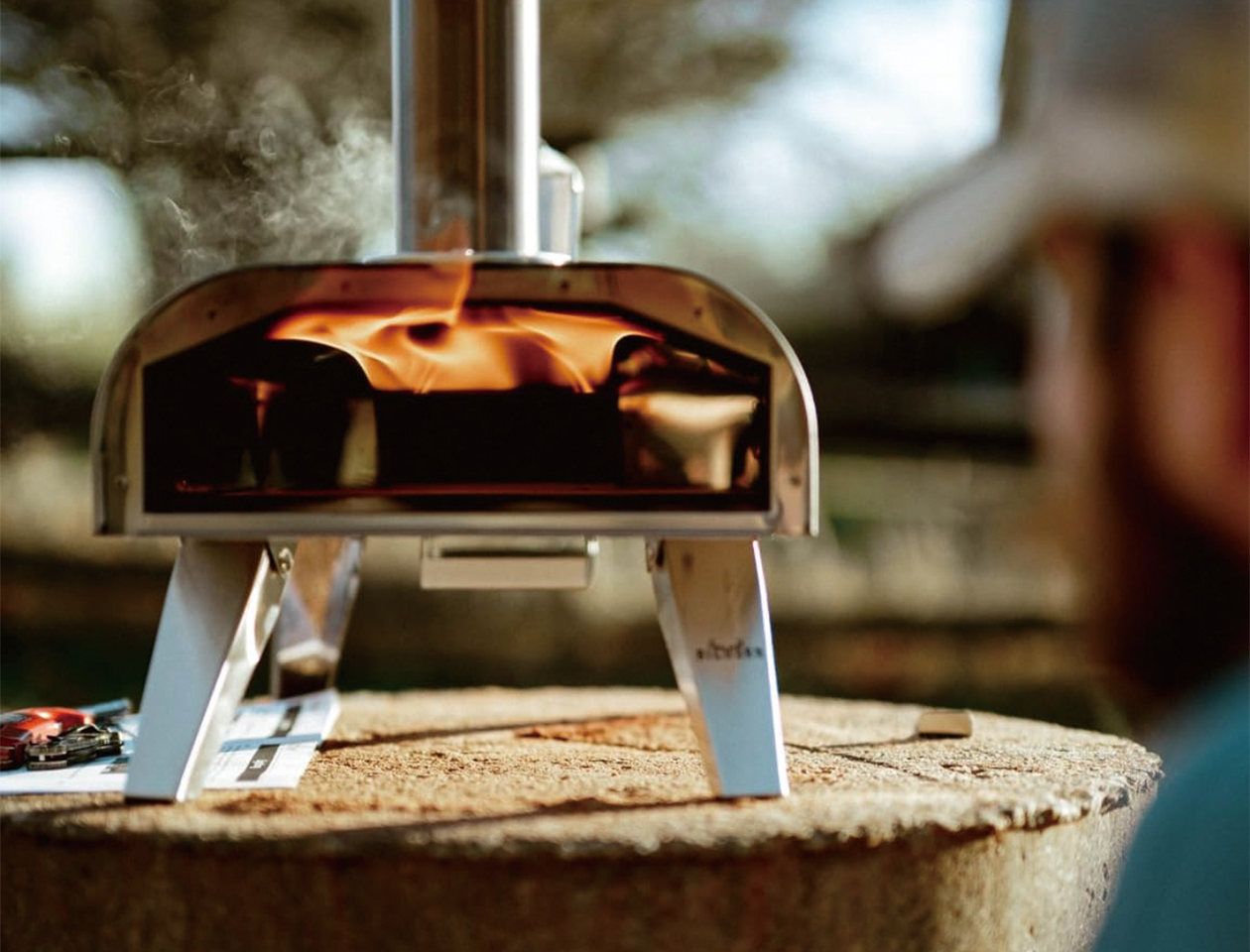
A home pizza oven can turn pizza night into a repeatable outdoor cooking routine, but the right choice depends on more than maximum heat. Fuel, cooking location, pizza size, temperature control, storage, cleaning, and included accessories all affect how easily you can use the oven.
Big Horn Outdoors offers pellet, gas, electric, and multi-fuel pizza oven options. This guide explains how to compare them, what to confirm before buying, and how to use a home pizza oven safely without confusing outdoor fuel-burning equipment with indoor electric appliances.
What Is a Home Pizza Oven?
A home pizza oven is a compact cooking appliance designed to bake pizza with concentrated heat on a cooking surface, often a pizza stone. Compared with a standard kitchen oven, a dedicated pizza oven is designed around direct stone baking, focused heat, and easier access for launching and rotating pizza.
When choosing a home pizza oven, evaluate these factors:
-
Fuel type: Pellet, propane gas, and electric systems create different workflows and require different operating conditions.
-
Cooking location: Outdoor fuel-burning ovens require open-air use. Only use an electric model indoors when the specific product page and manual clearly approve indoor operation.
-
Cooking surface: A listed pizza size does not automatically describe the oven’s external dimensions or the amount of space needed around it.
-
Heat control: Gas and electric models may offer a more predictable adjustment process, while pellet systems require fuel and flame management.
-
Portability and storage: Compact designs may suit patios, camping trips, RV storage, and tailgating, but the oven must be cooled completely before moving or covering it.
-
Accessories and maintenance: A peel, cover, replacement stone, or table may be compatible without being included in the box.
Big Horn Outdoors organizes its current selection through the Pizza Ovens collection, including outdoor and electric categories. Always confirm the exact model specifications before purchase.
Why This Choice Is Harder Than It Looks
Fuel affects the entire cooking routine. Pellet ovens require suitable cooking pellets and attention to the fire, ash, and fuel supply. Propane gas ovens require the correct cylinder, regulator, hose, and approved burner arrangement. Electric ovens require an appropriate power source and may be subject to location restrictions. These systems are not interchangeable.
Indoor and outdoor use are different safety categories. An outdoor pellet, wood, gas, or charcoal appliance should not be used in a home, garage, tent, vehicle, enclosed porch, or other enclosed area. Opening a door or window does not make a fuel-burning appliance suitable for indoor cooking.
The advertised pizza size is not the same as the footprint. A 12-inch or 14-inch designation generally relates to the intended cooking capacity, but the exterior also includes insulation, housing, handles, fuel components, and ventilation space. Measure the complete setup area, not only the countertop or stone.
Compatible does not mean included. A product may support a gas burner, electric element, pizza peel, cover, or table without including that item in the package. Check the specific product description and manual before assuming an accessory is supplied.
High heat increases the learning curve. Pizza can burn quickly when the stone is too hot, the dough is too wet, the oven has uneven heat, or the pizza is not rotated. Preheating is only one part of the workflow; launching, turning, checking the underside, and managing toppings matter too.
Key Outdoor Cooking Insight
Choose the home pizza oven that matches your real cooking location and fuel routine—not the one with the most impressive feature list.
Compare the Main Options
A multi-fuel oven can provide more than one operating method, but “multi-fuel” does not mean that fuels should be burned together. Use one approved configuration at a time and change components only as directed by the manufacturer.
Why Big Horn Outdoors May Fit This Use Case
Big Horn Outdoors provides several pizza oven categories rather than a single universal design. Its Multi-Fuel Pizza Ovens collection presents pellet-and-gas and pellet-and-electric options, allowing shoppers to compare different cooking workflows.
The broader Pizza Ovens collection describes outdoor pellet, gas, and other pizza oven categories alongside electric models. The collection also distinguishes outdoor appliances from electric models intended for specific indoor applications. Do not generalize indoor use from the word “electric”; confirm the exact model’s instructions.
Big Horn Outdoors also provides a Pizza Calculator for planning dough quantities and hydration. Treat calculator settings as recipe guidance rather than a guarantee of cooking results, because dough temperature, flour, fermentation, toppings, and oven conditions all affect the finished pizza.
For supporting equipment, the Accessories collection includes pizza preparation and protection products. Check each accessory listing for the supported oven size and whether the item is sold separately.
Related Products and Resources
-
Pizza Ovens: Browse outdoor and electric pizza oven categories and compare the current selection.
-
Multi-Fuel Pizza Ovens: Review ovens designed around more than one approved heating method.
-
Accessories: Find items such as peels, covers, stones, and other pizza preparation equipment; verify compatibility before ordering.
-
Pizza Calculator: Estimate dough quantities and review starting points for pizza preparation.
How to Choose and Use It Safely
-
Confirm the cooking location. Decide whether the oven will be used in an open backyard, patio, campsite, or indoors. Outdoor fuel-burning equipment must remain outdoors in a well-ventilated area. Never use it in a garage, tent, vehicle, enclosed porch, or enclosed balcony.
-
Match the fuel to your routine. Pellet ovens need suitable cooking pellets and ash management. Propane models require the correct fuel cylinder and manufacturer-approved connections. Electric models require a compatible outlet and safe placement. Do not convert propane to natural gas, connect a butane container to a propane system, or modify a burner, nozzle, regulator, hose, or heating element.
-
Measure the full setup. Account for the oven body, handles, legs, chimney or ventilation components, fuel connection, working space, and clearance from combustible materials. A stable, level surface is important, especially when launching or turning pizza.
-
Check what is included. Review the product page and manual for the pizza stone, rack, door, chimney parts, burner, electric element, hopper, peel, cover, and other components. If an item is described as compatible or optional, do not assume it is included in the original package.
-
Assemble and preheat according to the manual. Use only the specified parts and tools. For gas equipment, inspect the cylinder, hose, regulator, and connections before lighting. If you smell gas, see damaged components, or notice an abnormal flame, shut off the fuel and move away from ignition sources. Do not repeatedly attempt to relight the appliance.
-
Control the bake, not only the oven temperature. Prepare pizzas that fit the cooking surface without touching the sides. Launch onto the heated stone, monitor the underside, and rotate with an appropriate peel when the crust begins to color. Start with conservative toppings and adjust your dough and handling technique after observing the results.
-
Cool, clean, and store completely. Turn off the fuel or power as directed, allow the oven and stone to cool fully, then remove residue using the method specified by the manual. Do not expose a hot pizza stone to cold water, soak it, place it in a dishwasher, or move the oven while hot unless the instructions specifically allow it. Store the cooled appliance under suitable weather protection.
For foods beyond pizza, use a reliable food thermometer. Cooking time and oven temperature are not substitutes for checking the internal temperature of meat and poultry. Follow current USDA FSIS guidance for the food being prepared.
Use Cases
Scenario: Backyard pizza nights with family or friends.
What matters: Cooking capacity, repeatable heat control, preparation space, and safe placement away from the house, railings, eaves, and foot traffic.
Suitable Big Horn Outdoors route: Start with the Pizza Ovens collection, then compare the exact fuel and cooking-surface specifications.
Check before use: Confirm clearance, ventilation, included components, and whether a peel or cover must be purchased separately.
Scenario: A cook who wants to alternate between pellet flavor and another heating method.
What matters: Approved fuel configurations, switching procedures, storage for components, and access to the correct fuel.
Suitable Big Horn Outdoors route: Review Multi-Fuel Pizza Ovens.
Check before use: Verify whether the burner or electric element is included, and never operate multiple fuel systems simultaneously unless the manual explicitly instructs you to do so.
Scenario: A patio, balcony, or space with restrictions on open flames.
What matters: The exact product’s indoor or outdoor approval, electrical access, countertop stability, and clearance from heat-sensitive surfaces.
Suitable Big Horn Outdoors route: Compare the electric models in the Pizza Ovens collection.
Check before use: Confirm that the specific model—not merely the category—is approved for the intended location. Building, lease, and local fire rules may impose additional limits.
Scenario: Camping, RV trips, or tailgating.
What matters: Portability, fuel availability, stable placement, cooling time, and protection during transport.
Suitable Big Horn Outdoors route: Compare portable pizza oven options and review Accessories for covers or preparation tools.
Check before use: Confirm campsite or venue rules, carry the oven only when fully cool, and keep all fuel containers and connections compatible with the model.
Scenario: Expanding an outdoor cooking station.
What matters: Counter space, weather protection, food-preparation workflow, storage, and separation from combustible materials.
Suitable Big Horn Outdoors route: Browse Big Horn Prime and related outdoor cooking products.
Check before use: Confirm delivery access, floor or surface capacity, transportation routes, utilities, ventilation, clearances, and local regulations. Do not assume installation, gas connection, electrical work, or permitting services are included.
FAQ
Can I use an outdoor home pizza oven indoors?
No. Pellet, wood, gas, and other combustion-based outdoor ovens should not be used indoors, in garages, tents, vehicles, or enclosed patios. Use an electric model indoors only when the specific product page and manual expressly approve that use.
Are pellet, propane, and electric ovens interchangeable?
No. Each fuel system uses different operating components and safety requirements. Use only the fuel, burner, regulator, hose, heating element, and accessories approved for the exact model.
Does a 12-inch or 14-inch label describe the oven’s exterior size?
Usually, the label refers to the intended pizza or cooking capacity rather than the complete outside footprint. Review both the cooking surface and external dimensions before selecting a table, cart, or countertop.
Will a pizza stone or peel always be included?
Not necessarily. Inclusion varies by model. A product or accessory may be compatible with an oven without being included in the original package, so check the current listing and manual.
How should I clean the pizza stone?
Allow it to cool fully and follow the model’s instructions. Avoid treating it like a metal pan; do not soak it, use a dishwasher, or expose it to sudden temperature changes unless the manufacturer specifically permits the method.
What should I do if I smell propane or notice an unusual flame?
Do not light the oven or create sparks. Turn off the fuel if it is safe to do so, move away from the area, and follow the manual’s emergency and inspection instructions. Do not use the appliance again until damaged or leaking components have been properly addressed.
Does Big Horn Outdoors offer returns?
The current Refund Policy states that eligible items may be returned within 30 days after receipt, subject to condition, original packaging, proof of purchase, exclusions, and the company’s return instructions. Review the policy before ordering because return shipping and eligibility can depend on the circumstances.
Which home pizza oven is best for a beginner?
There is no single best choice. Electric may suit someone who prioritizes a controlled plug-in workflow where indoor use is specifically approved; gas may suit an outdoor cook who wants adjustable heat; pellet may suit someone who enjoys a more hands-on fuel routine. Compare your location, fuel access, cooking capacity, and maintenance tolerance first.
Conclusion
The right home pizza oven should fit the way you actually cook. Start by confirming indoor or outdoor use, then compare pellet, propane, electric, and multi-fuel workflows, followed by cooking capacity, included components, storage, cleaning, and safety clearances.
To continue, browse the current Pizza Ovens collection, confirm model compatibility for accessories, review the product manual, and use Contact Us if a specification or support question remains unclear.