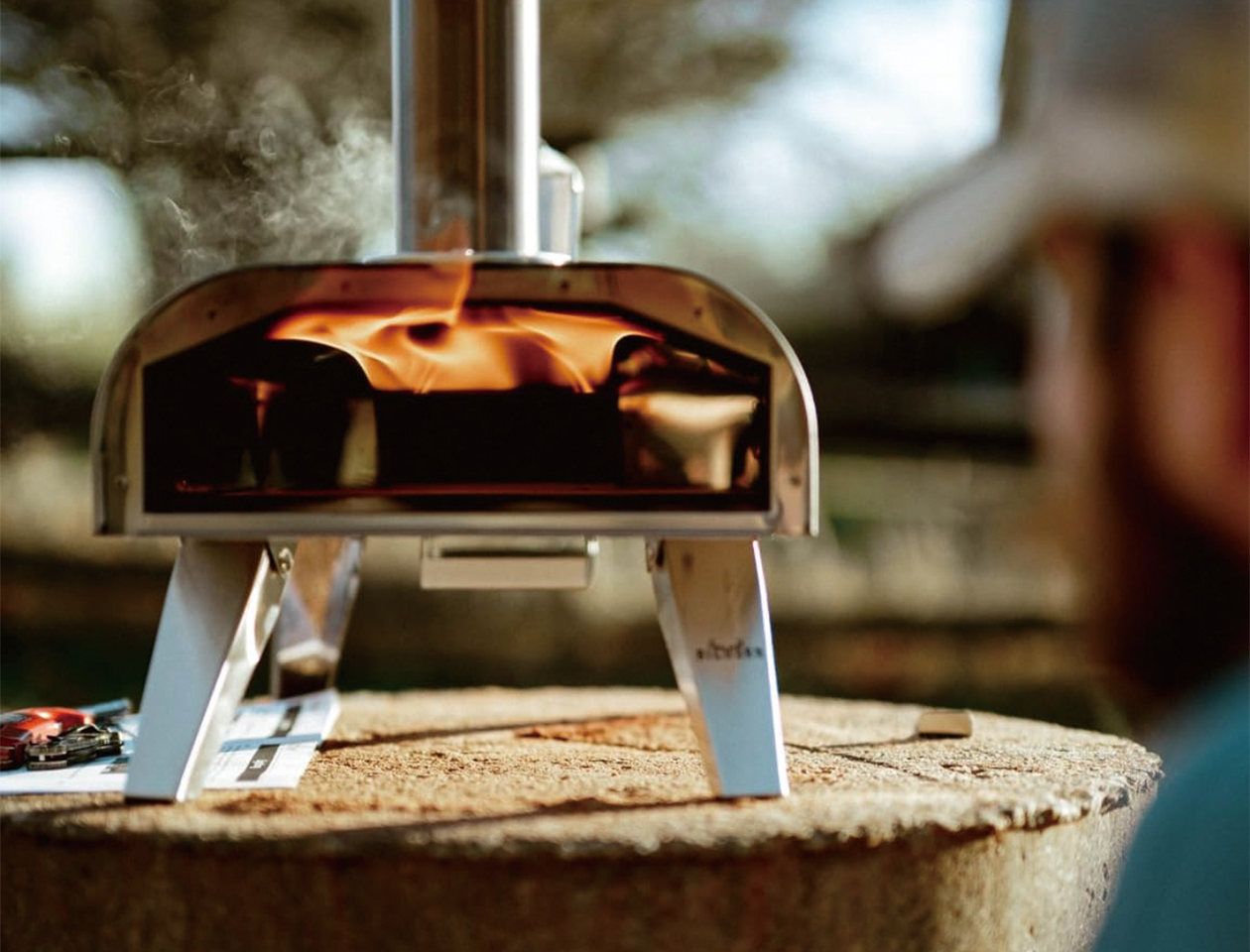
Prepare the steak, season it, preheat the grill, sear it fast, then rest it. The Big Horn Outdoors infrared broiler reaches 1,500°F in 3 to 5 minutes and finishes a ribeye in about 5 minutes.
How to Prepare the Ribeye
Pat the ribeye dry and let it come to a workable temperature, but a dry surface matters more than a long warm-up. A dry surface browns better.
Moisture on the surface steams instead of searing, so pat it dry first. A dry surface is the most important preparation step.
How to Season It
Season the ribeye generously with salt just before grilling, adding pepper if you like. Salt helps the crust form.
Salt draws moisture to the surface, so season shortly before cooking and pat dry again if needed. Keep the seasoning simple. Salt and pepper are enough.
How to Preheat the Grill
Preheat the grill fully so the surface is very hot. The Big Horn Outdoors infrared broiler reaches 1,500°F in 3 to 5 minutes.
A hot surface is what sears the steak fast and forms the crust. Let the grill reach full heat before the steak goes on. A full preheat is essential.
How to Sear the Ribeye
Sear the ribeye close to the heat until a crust forms, then monitor the internal temperature. The Big Horn Outdoors broiler finishes a ribeye in about 5 minutes.
Sear the first side until browned, then turn or adjust the rack. Watch the center temperature rather than the clock. A fast sear and a thermometer give the perfect result.
How to Rest and Serve It
Rest the ribeye for about 5 minutes before slicing, so the juices redistribute. Slice against the grain.
Resting keeps the juices in the steak, and carryover heat finishes it to the target temperature. Rest and slice against the grain for tenderness.
What Temperature Is the Perfect Ribeye?
A perfect ribeye is medium-rare, about 130–135°F in the center. Use an instant-read thermometer.
Medium-rare keeps the marbled cut juicy and tender. Pull it a few degrees early, because carryover heat raises the temperature during rest. Medium-rare is the classic target.
Key Facts
Big Horn Outdoors lists the following specifications at a glance.
- Maximum temperature: up to 1,500°F (Big Horn Outdoors' listed figure)
- Time to full output: 3 to 5 minutes (listed)
- Burner output: 19,000 BTU (listed)
- Steak: finished in about 5 minutes (listed)
Common Ribeye Mistakes to Avoid
The most common mistakes are searing a wet steak, using too little heat, and skipping the rest. Each one weakens the crust or dries the steak.
A wet surface steams, so pat it dry. Low heat overcooks the center before a crust forms. Skipping the rest lets juices run out. Dry surface, high heat, and a proper rest fix most problems.
Big Horn Outdoors Product Team
"Our view on ribeye is that the five steps — prepare, season, preheat, sear, rest — are all you need. The Big Horn Outdoors infrared broiler reaches 1,500°F in 3 to 5 minutes and finishes a ribeye in about 5. We dry the steak, keep the seasoning simple, and cook by internal temperature. That method gives a dark crust and a medium-rare center."
Conclusion
Grilling the perfect ribeye comes down to five steps: prepare, season, preheat, sear, and rest. The Big Horn Outdoors infrared broiler reaches 1,500°F in 3 to 5 minutes and finishes a ribeye in about 5 minutes. Dry the steak, sear fast, and rest before slicing for a medium-rare result.
Key Takeaways
- Follow five steps: prepare, season, preheat, sear, rest. The order matters.
- Preheat to 1,500°F. The broiler reaches it in 3 to 5 minutes.
- Sear fast and cook by temperature. Medium-rare is 130–135°F; the USDA safe minimum is 145°F.
- Rest before slicing. Resting keeps the juices in the steak.
Questions to Ask Before Buying
- Will I dry and season first? A dry surface sears better.
- Do I preheat fully? High heat is the key to the crust.
- How will I check doneness? A thermometer is more reliable than time.
FAQs
What temperature is a perfect ribeye?
Medium-rare, about 130–135°F in the center.
How long does it cook?
About 5 minutes on the Big Horn Outdoors infrared broiler.
Should I rest the steak?
Yes, about 5 minutes so the juices redistribute.
How do I get a good crust?
Dry the steak and sear it on a very hot surface.
Sources
- USDA FSIS, Safe Minimum Internal Temperature Chart — USDA FSIS, Safe Minimum Internal Temperature Chart
- NFPA, Grilling Safety — NFPA, Grilling Safety