A gas grill can produce real smoke flavor without a dedicated smoker, but the honest version of the method is this: wood-chip packets over a lit burner, a steady low-heat zone, and foods sized for a few hours rather than an overnight cook. Gas-grill smoke is lighter and shorter-lived than the smoke from an offset smoker or a long charcoal fire, so it suits ribs, chicken, pork shoulder and vegetables — foods that pick up a smoke layer in a few hours — better than it suits marathon briskets. This guide covers the wood options, the packet method, the two-zone setup and the timing that turns a gas grill into a capable smoke machine.
How much smoke can a gas grill produce?
Set expectations before you light it. A gas grill burns clean propane or natural gas, which produces no smoke of its own — all the smoke flavor has to come from the wood you add, and that wood smolders rather than burns the way it does over live coals. The result is a lighter, cleaner smoke that flavors the food's surface and the first layers of meat, not the deep, pervasive smoke ring of a dedicated smoker. For many cooks that is exactly the right amount: ribs and chicken with a gentle wood character, no fire tending, and dinner ready in an afternoon instead of an overnight project.
Match the food to the method. Gas-grill smoke works beautifully for baby back ribs, chicken pieces or a spatchcocked bird, pork shoulder for pulled pork, vegetables and even hard cheeses; it struggles with cuts that need twelve hours of continuous smoke, because the wood supply in a gas grill runs out and needs replacing, and the light smoke never builds the way a smoker's does. If your goal is championship-level brisket with a deep bark and smoke ring, buy a smoker. If your goal is smoky ribs and chicken from the grill you already own, this method delivers.
Wood chip options
| Wood form | Best use on a gas grill | Notes |
|---|---|---|
| Chips | Foil packets | Fast smoke; refresh every 45–60 min |
| Chunks | Smoker box or foil tray | Longer-lasting; good for 2–3 hour cooks |
| Pellets | Foil pouch on a tray | Clean, even smoke; replace when spent |
| Dust / shavings | Small packets | Short bursts; convenient for finishing |
Choose the wood by the food. Fruit woods like apple and cherry give mild, sweet smoke that suits chicken and pork; hickory and mesquite are stronger and suit beef; oak sits in the middle with a clean, versatile character. Most gas-grill cooks keep two woods — a mild fruit wood for chicken and ribs and a stronger hardwood for beef — and buy chips because they fit the packet method best. Dry chips smoke sooner and cleaner than chips that must steam first, so skip the soaking debate unless a recipe you trust calls for it and start with dry wood.
Making and placing smoke packets
The foil packet is the simplest smoke delivery system a gas grill has. Tear off a sheet of heavy-duty foil roughly a foot long, pile in a loose handful of wood chips, and fold the foil into a sealed flat packet — then poke several holes in the top so the smoke can escape. Make two or three packets at once so you can swap them without fumbling mid-cook. Place the packet directly on the lit burner or on a heat plate just above it, where the burner's flame will heat the chips to smoldering rather than burning them outright.
Packet placement is a trial-and-error lesson per grill. A packet over the hottest burner smokes fast and can burn out in under an hour; a packet on a cooler part of the burner smolders longer but produces less smoke. Start with one packet over the lit burner and watch the smoke through the vents — you want a thin, steady stream of pale blue smoke, not a thick white cloud. When the packet stops smoking, swap in a fresh one. Keep a small heatproof tray under the packet so drips and ash do not fall into the burner, and never let a packet sit dry and burning long enough to catch fire inside the grill.
Low-heat two-zone setup
Smoking on a gas grill is a two-zone cook: one burner (or two on a larger grill) runs on low to create the heat, and the food sits on the unlit side, never over direct flame. Preheat with the lid closed, then set the cooking-side burners low and place the meat on the cool side. The goal is a steady ambient temperature around 225–275°F for most smoke cooks, read from the lid thermometer or a probe in the grill chamber. Expect drift and adjust the burner in small steps — a gas grill's low setting is the smoke cook's best tool, and small knob movements hold the zone better than big swings.
Use the unlit side fully. On a three-burner grill, light one burner and set the food on the opposite side; on a four-burner island grill, light the two outside burners on low and center the food between them for a wider even zone. A water pan on the cool side under the meat adds moisture and helps steady the temperature, and it catches drips that would otherwise vaporize into flare-ups on the burner below. Close the lid and leave it closed — every opening costs heat and smoke, so bundle checks and keep the cook moving in one direction.

A rib timeline you can follow
A practical first smoke cook is baby back ribs, because the timeline fits an afternoon and the result forgives small mistakes. Start with the membrane removed and a rub applied the night before. Set up the two-zone heat at about 250°F, add a smoke packet over the lit burner, and put the ribs on the cool side with the lid closed. Refresh the smoke packet roughly every hour. After about two and a half to three hours, check for tenderness with a probe — the ribs are ready when the probe slides in with little resistance, usually around 195–205°F for the tender, pull-from-the-bone texture most home cooks want.
If you want a deeper smoke layer, smoke the ribs for the first hour and a half before wrapping or glazing, because the smoke flavor sets early in the cook while the surface is still moist and receptive. Spare ribs and St. Louis racks run longer — roughly three to four hours at the same heat — and pork shoulder for pulled pork needs four to six hours or more, which is pushing the practical limit of a gas grill's smoke supply. The full rib method, including the wrap decision and glaze, is covered in the gas-grill ribs guide; this timeline is the smoke version of the same cook.
Avoiding bitter, dirty smoke
The line between smoky and bitter is the quality of the smoke. Thin, pale, almost invisible smoke flavors the food gently; thick white or black smoke deposits creosote on the meat and tastes acrid and ashy. Dirty smoke usually comes from wood that is smoldering too wet, burning too hot or running out of oxygen — the packet is sealed too tight, the chips are damp or the burner is too high. Open a vent or poke another hole in the packet, use dry chips, and lower the heat so the wood smolders instead of choking.
Smell the smoke as it leaves the grill: clean wood smoke smells sweet and appetizing, while dirty smoke smells sharp and chemical. If the flavor turns bitter mid-cook, remove the packet, let the grill run clean for a few minutes and start a fresh, drier packet rather than leaving the bad smoke on the meat. And remember that more smoke is not better — most foods take on all the smoke they need in the first hour or two, and after that the cook is about heat and tenderness. The gas grill's advantage is control, and the smoke method's art is using that control to keep the smoke clean and the heat steady.
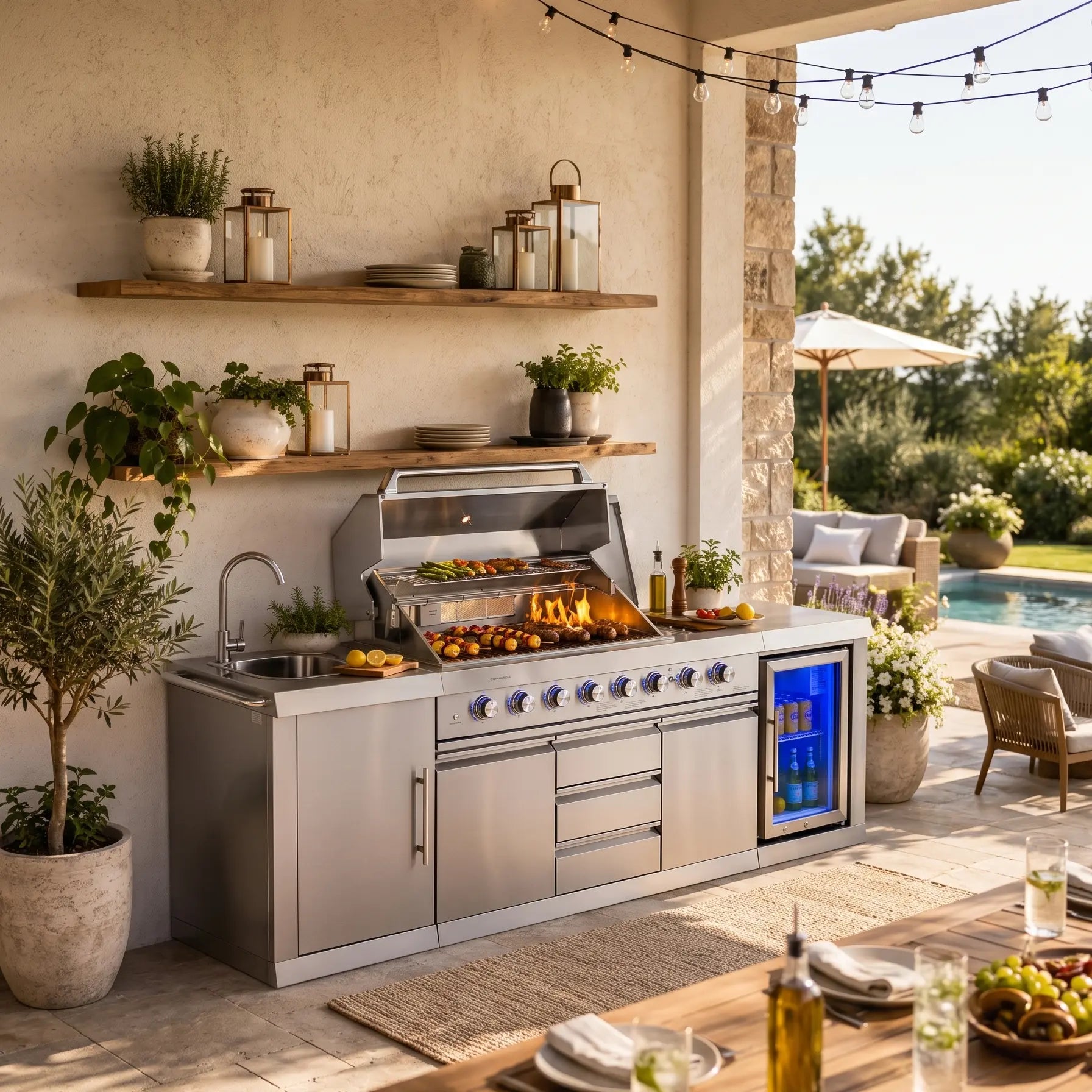
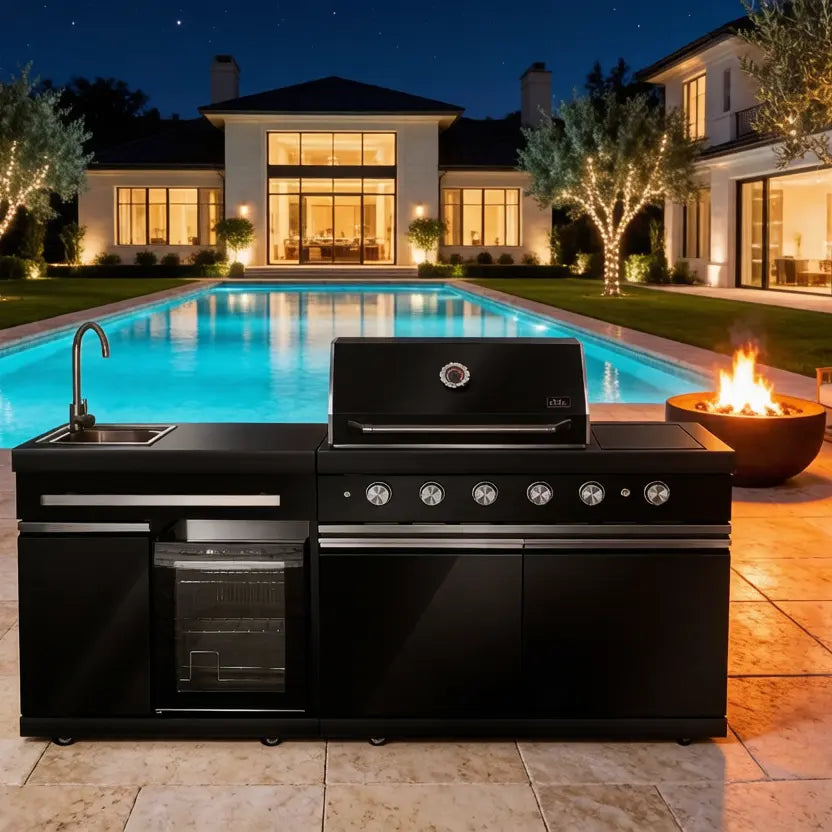
Big Horn's six-burner deluxe island grill and 4+2 burner island have the burner count for a steady smoke zone, the gas-grill ribs guide covers the full rib cook, and the grills and griddles collection shows the range. Start with dry chips in foil packets, a steady 250°F zone and ribs or chicken, and the gas grill earns its smoke — lighter than a smoker's, cleaner than a fire's, and exactly right for a backyard afternoon.
Product details and prices in this guide were verified against official Big Horn Outdoors listings during the September 5, 2026 review; re-check prices and availability at checkout.