
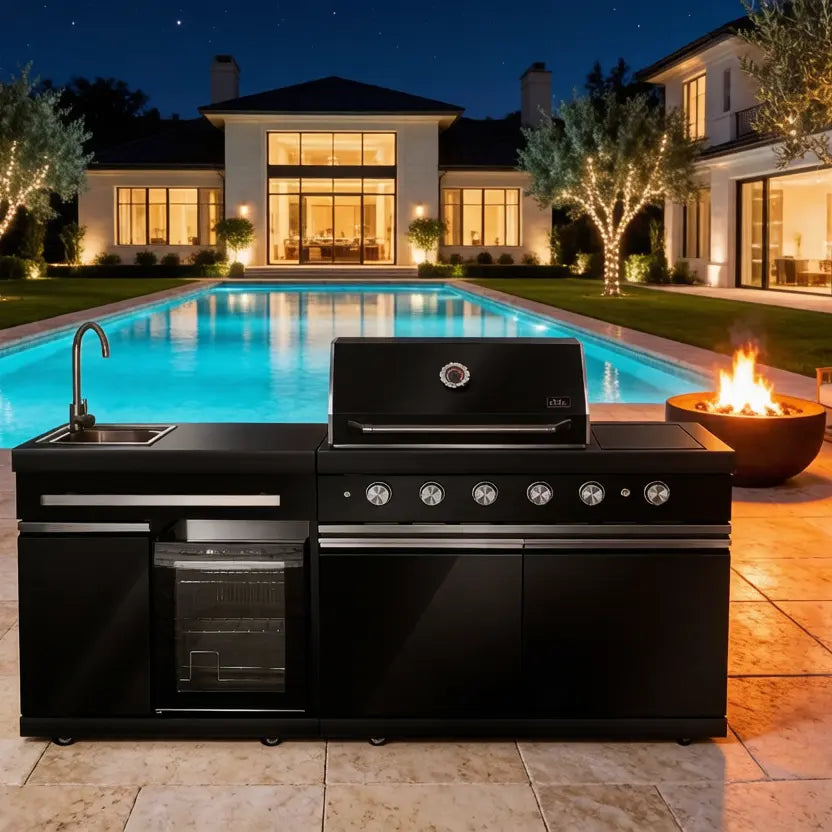
Infrared grills are safe when used the way they are designed: outdoors, on a stable level surface, with the propane system leak-tested, the food cooked to a safe internal temperature, and the intense heat managed with the rack positions and a thermometer. The most common infrared safety questions are about health effects and flare-ups; this guide answers them with the facts, explains the operating safety that matters with 1500°F-class heat, and separates real risks from myths.
This page covers consumer infrared grill safety for outdoor propane models like the Big Horn portable broiler; for model-specific details always defer to the manual that came with your grill.
What actually matters for infrared safety
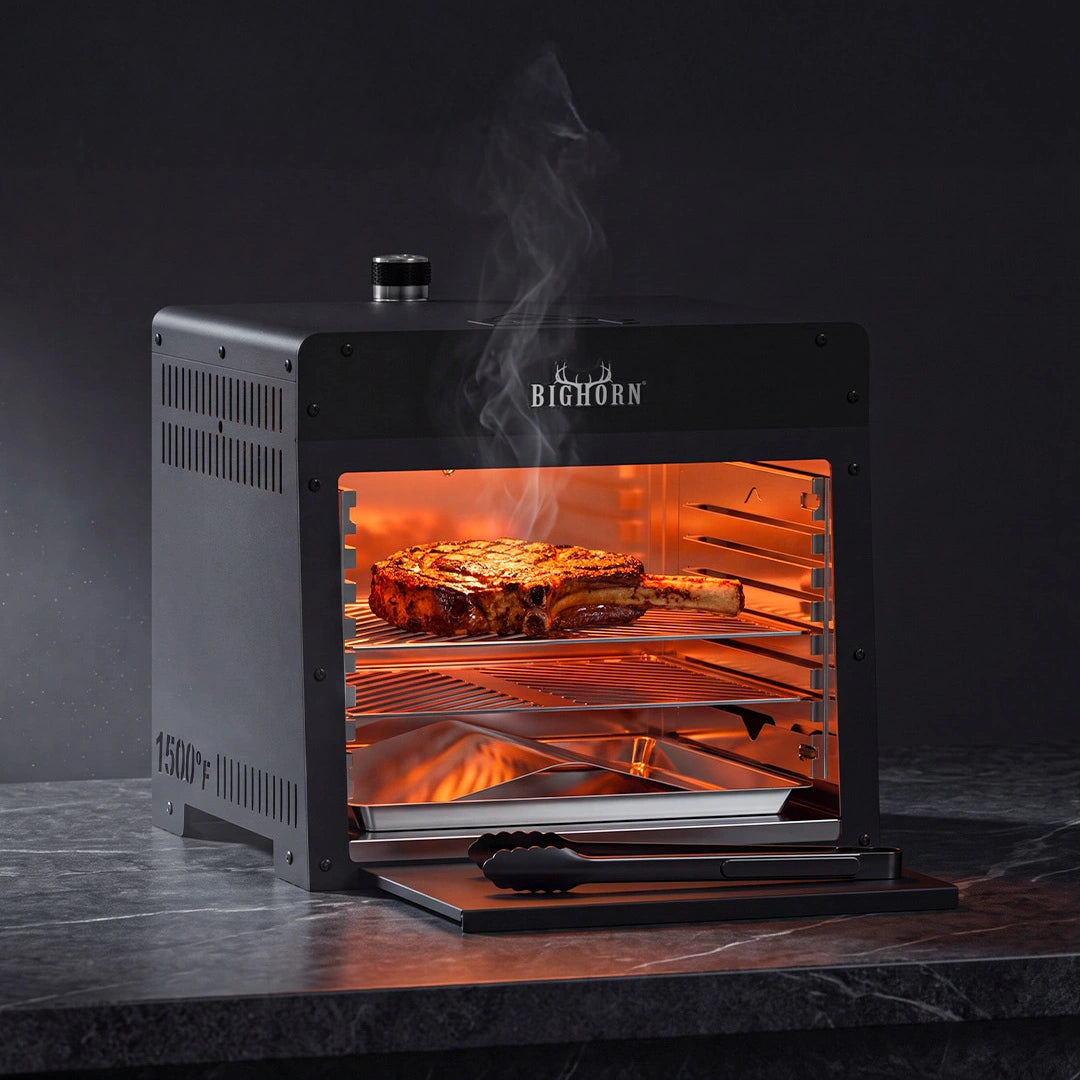
Four things decide whether an infrared grill is used safely: outdoor placement and clearance, a leak-tested propane connection, heat management that prevents burns and fires, and food cooked to a safe internal temperature. The heat is intense — a 16-inch model can reach about 1500°F (815°C) — but that is not inherently dangerous; danger comes from treating it like a conventional grill and skipping the operating basics.
Flare-ups and fire risk
One of infrared’s advantages is fewer flare-ups: the design keeps the flame away from the food and radiates heat from a ceramic emitter, so dripping fat is less likely to catch fire than on a conventional gas grill. That does not make flare-ups impossible. Grease still collects, and at very high heat built-up residue can smoke or flare on the next cook. Manage it the same way every session: clean the cooking area and drip tray after use, keep the emitter clear of residue, and never walk away from a hot grill with a fatty cut over the highest zone.
Health effects of infrared cooking
There is no established evidence that infrared grilling is harmful to health as a cooking method. Infrared is radiant heat — the same kind of energy you feel from a warm surface — and when it cooks food it browns the surface through the Maillard reaction, the same browning that happens in a hot oven or pan. The known health considerations in grilling are the same ones that apply to any high-heat meat cooking: cooking meat at very high temperatures can form heterocyclic amines (HCAs) and polycyclic aromatic hydrocarbons (PAHs), and the practical limiters are trimming excess fat, avoiding charring, and not eating charred portions. This page does not make medical claims; if you have specific health questions, consult a qualified professional.
Heat safety and burns
The biggest physical risk with an infrared grill is the heat itself. At 1500°F-class temperatures, surfaces near the emitter stay dangerously hot for a long time after cooking. Keep hands, arms, and any flammable material away from the cooking area; use the grill’s handle, mitts or gloves, and let the unit cool fully before cleaning or moving it. Position the grill so a child or pet cannot reach the hot surface, and never use it indoors, in a garage, or under an unvented canopy — propane appliances must be used outdoors with clearance and ventilation.
Propane and gas system safety
Before each season — and after the grill has been stored or moved — leak-test the propane connection. Check the hose and regulator for cracks or wear, confirm the connection is tight, and test the joint with soapy water before lighting. Store and transport propane tanks upright and away from heat, and replace any damaged part before use. These are the same checks that apply to any propane grill; on a high-heat infrared model they are the difference between a safe session and a failure.
Common mistakes and how to avoid them
- Using the grill indoors or in a garage. Propane grills are outdoor appliances; carbon monoxide and gas leaks are serious.
- Cleaning the emitter while hot. Let the grill cool fully; brush debris off the ceramic emitter gently, never aggressively.
- Skipping the leak test. A cracked hose or loose fitting is a real risk; test the joint before lighting.
- Leaving flammable items too close. Keep clearances per the manual and never hang towels over the hot grill.
- Ignoring the thermometer. The intense heat overcooks fast; use a probe so food reaches the safe internal temperature without burning.
Realistic expectations and results
Used correctly, an infrared grill is a safe, powerful cooking tool: fast preheat, hard sear, fewer flare-ups, and a controlled way to finish food at a lower zone. Used casually, the same tool is a 1500°F surface that deserves respect. The safety picture is not mysterious — it is a leak test, outdoor placement, heat awareness, clean cooking surfaces, and food cooked to temperature.

The takeaway in one paragraph
Infrared grill safety is straightforward: use it outdoors with clearance, leak-test the propane, respect the heat with gloves and cool-down time, keep the cooking surfaces clean, and cook food to a safe internal temperature. There is no established evidence that infrared grilling is harmful as a cooking method, and the real risks — burns, flare-ups from built-up grease, and propane system failures — are all preventable with the same care any high-heat grill deserves.
Get the infrared grill that handles the heat safely. Big Horn portable infrared broiler · full infrared safety guide
FAQ
What are the disadvantages of using an infrared grill?
The main disadvantages are the learning curve and specialization: the heat is intense and fast, so thin cuts can overcook quickly; the format is not built for low-and-slow smoking; and a tabletop unit has a smaller cooking area than a full-size grill. Manage them with a thermometer, a lower rack zone, and the right expectations.
Are there any health effects from infrared cooking?
There is no established evidence that infrared grilling is harmful as a cooking method. As with any high-heat grilling, cooking meat at very high temperatures can form compounds like HCAs and PAHs; the practical limiters are trimming excess fat, avoiding charring, and not eating charred portions. Consult a qualified professional for specific health questions.
What are the pros and cons of infrared BBQ compared to gas BBQ?
Infrared pros: faster preheat, harder sear, fewer flare-ups because the flame does not touch the food. Cons: intense heat needs more attention, and the format is a specialist tool rather than a low-and-slow grill. Gas BBQ pros: versatility, gentle heat control, large cooking areas. Cons: slower preheat and more flare-up potential with fatty cuts.
Are there any health concerns with infrared heaters?
Infrared heaters and infrared grills both use radiant heat, but they are different products and the questions are different. For cooking, there is no established evidence that radiant-heat grilling is harmful; normal food-safety practice — cook to a safe internal temperature and limit charring — applies. For infrared heaters used as heating appliances, follow the manufacturer’s placement and ventilation instructions; this page is about grills.