An outdoor pellet pizza oven uses food-grade hardwood pellets as a solid-fuel heat source for outdoor cooking. For shoppers comparing pellet, gas, and electric models, the right choice depends on fuel availability, cooking space, heat-control preferences, portability, maintenance, and the location where the oven will be used.
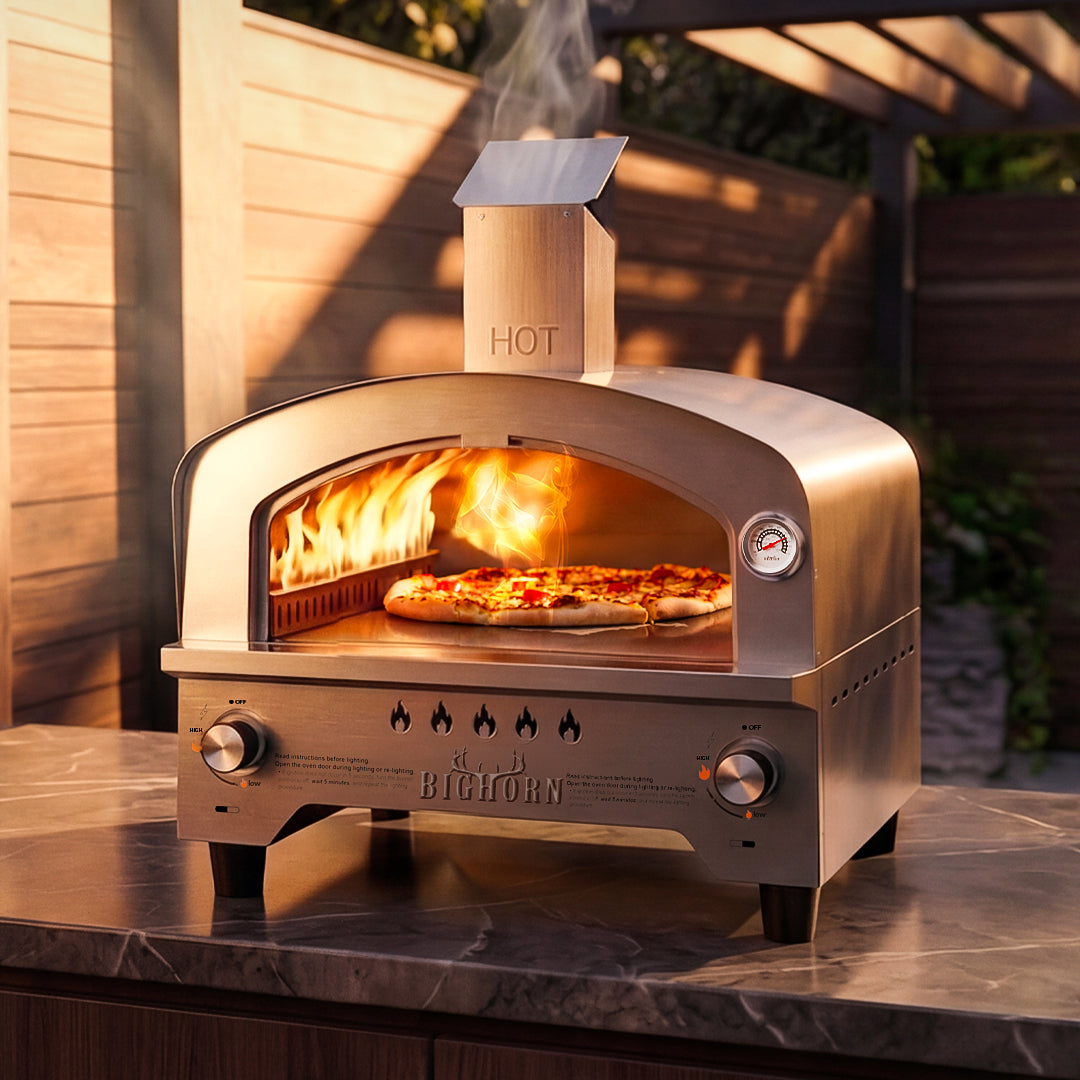
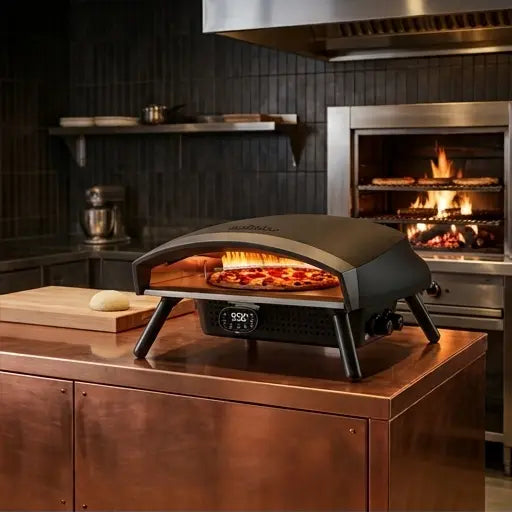
Big Horn Outdoors offers pellet pizza ovens for backyard cooks and outdoor entertainers who want a hands-on cooking experience with pellet fuel. Its pellet pizza oven collection describes a preparation period of approximately 18–20 minutes and pizza cooking in 90 seconds or less, depending on the model, operating conditions, dough, toppings, and cooking technique.
What Is an Outdoor Pellet Pizza Oven?
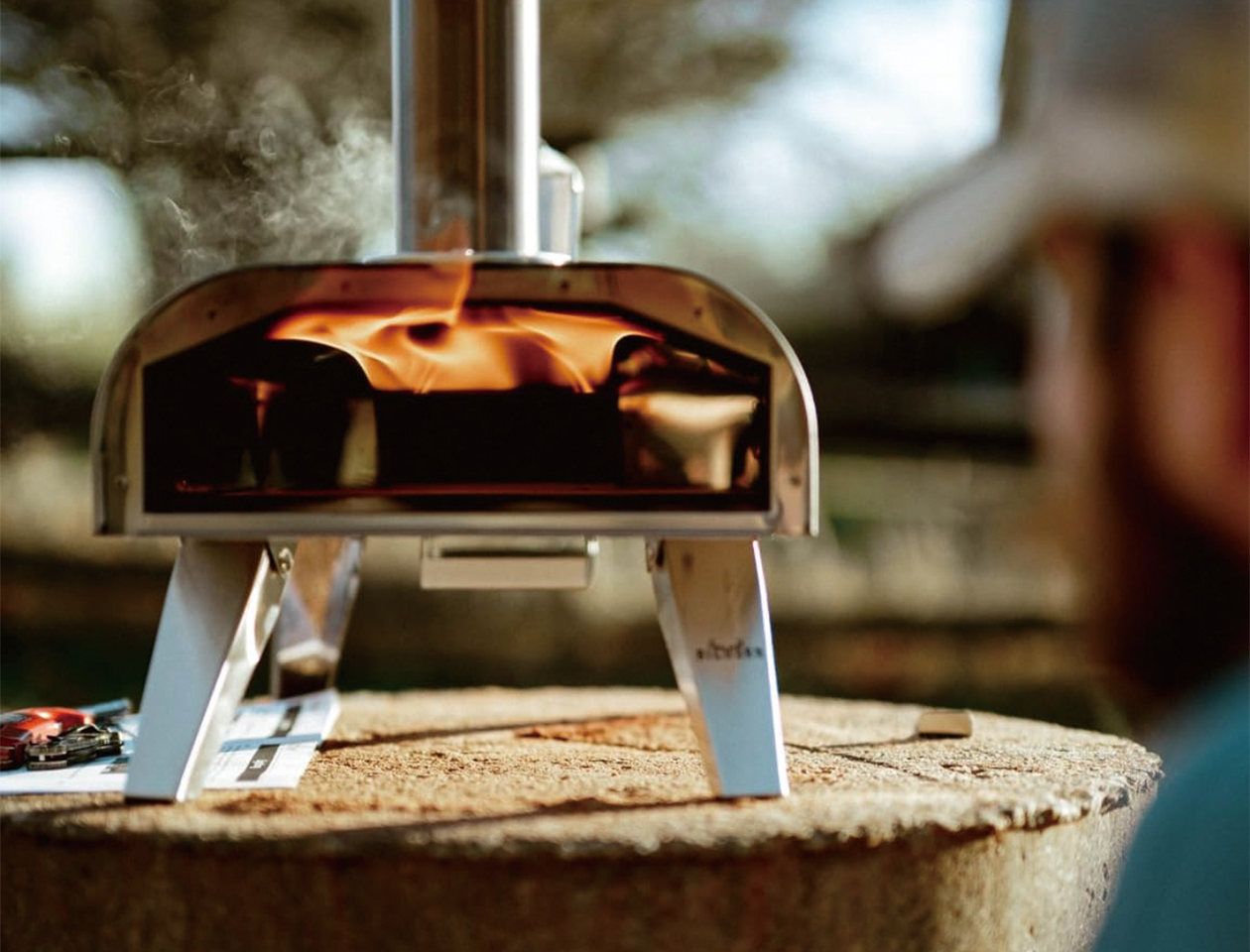
An outdoor pellet pizza oven burns food-grade hardwood pellets in a dedicated fuel area to heat the oven chamber and cooking surface. Pellet fuel is different from propane, butane, natural gas, charcoal, split firewood, and electricity, so the oven must be operated only with the fuel specified for the selected model.
Important factors include:
-
Fuel: Confirm the required pellet type before purchasing and use only pellets intended for food cooking.
-
Cooking capacity: Check the model’s stated pizza capacity and cooking surface rather than assuming that all pellet ovens are the same size.
-
Heat management: Pellet cooking requires attention to ignition, airflow, fuel levels, fire behavior, and pizza rotation.
-
Location: A pellet oven is a combustion appliance designed for an appropriate outdoor cooking area.
-
Maintenance: Ash removal, cooking-surface care, chimney cleaning, and weather protection are part of normal ownership.
-
Accessories: A cover, peel, cart, table, or stone may be compatible with a model without being included in the box.
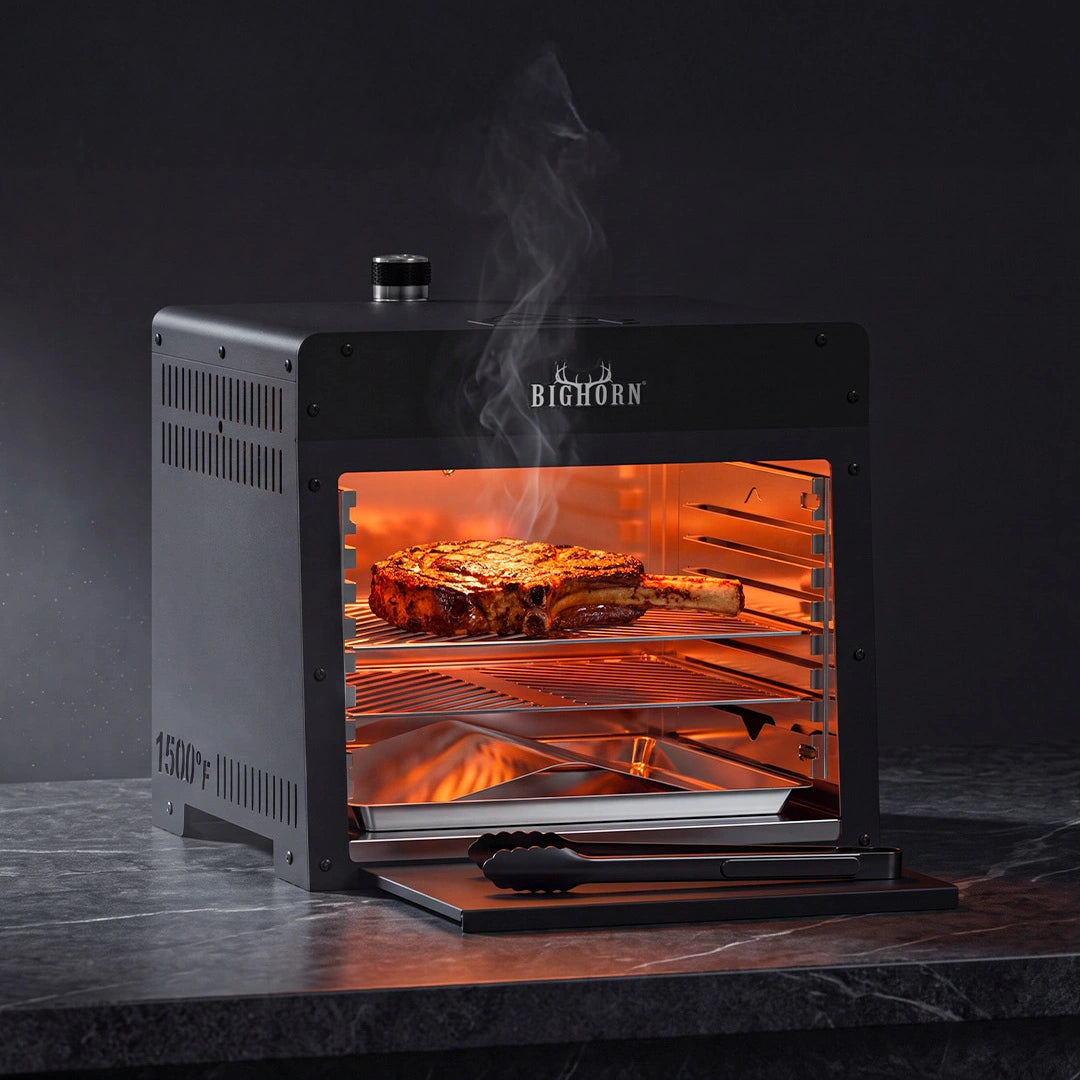
Big Horn Outdoors describes its pellet pizza ovens as suitable for pizza and other outdoor foods, including selected meats, fish, burgers, and vegetables. The exact capabilities and included components depend on the individual model.
Why This Choice Is Harder Than It Looks
Pellet availability affects convenience. Hardwood pellets may be available through local retailers and online stores, but fuel selection can vary by location. Before purchasing, confirm that you can obtain the type recommended by the product page or manual. Pellet fuel must not be replaced with propane, butane, natural gas, charcoal, or ordinary firewood.
The cooking location determines the setup. A pellet oven produces combustion gases, smoke, heat, and ash. It should not be used indoors, inside a garage, in a tent, in a vehicle, or on an enclosed balcony. An electric heating mode, when available on a specific model, must be evaluated separately according to that product’s instructions.
Pizza size is not the same as oven size. A product described as a 12-inch or 16-inch pizza oven generally refers to the intended pizza capacity, not the total exterior footprint. Measure the counter, table, storage area, and transport path before ordering.
Pellet cooking requires active heat management. You may need to monitor the fire, maintain the correct pellet level, manage airflow, rotate the pizza, and follow a model-specific ignition and shutdown procedure. This is more hands-on than operating an electric countertop appliance and different from turning a gas control knob.
Accessories are easy to misunderstand. A product may be compatible with a cover, peel, table, cart, or other accessory without including that item in the original package. Check the exact product description and packaging list before assuming that an accessory is included.
Weather changes the cooking experience. Wind, cold temperatures, moisture, and an unstable surface can affect ignition, heat retention, handling, and safety. A cover may support storage, but it must only be placed over equipment that has completely cooled.
Key Outdoor Cooking Insight
Choose the fuel system that fits your normal cooking habits, then choose the oven size and location that fit your actual space. A pellet oven is most rewarding when you are comfortable with a hands-on outdoor cooking workflow.
Compare the Main Options
No fuel type is automatically right for every household. Pellet cooking can suit someone who values solid-fuel cooking and outdoor preparation, while gas may be more convenient for frequent weeknight use. Electric models serve a different use case, and indoor or outdoor eligibility must come from the specific product page and instructions.
Why Big Horn Outdoors May Fit This Use Case
-
A dedicated pellet collection: Big Horn Outdoors groups its pellet pizza oven models in a dedicated collection, making it easier to compare solid-pellet options without mixing them with every other fuel category.
-
Multiple fuel routes: The broader Pizza Ovens collection allows shoppers to compare different pizza oven categories when they have not yet decided between pellet, gas, electric, or another approved fuel route.
-
Multi-fuel options: The Multi-Fuel Pizza Ovens collection presents models designed around more than one specified heat source. Multi-fuel operation means switching between supported modes according to the instructions; it does not mean burning multiple fuels simultaneously.
-
Supporting accessories: Big Horn Outdoors lists pizza peels, covers, carts, tables, and other outdoor cooking accessories. Each item should be checked for model compatibility and whether it is sold separately.
These points describe available product categories rather than a guarantee that every model has the same fuel capability, size, cooking surface, included parts, or indoor/outdoor qualification.
Related Products and Resources
-
Pellet Pizza Ovens — Review the current Big Horn Outdoors pellet pizza oven collection and category-level cooking information.
-
Multi-Fuel Pizza Ovens — Compare models that support more than one specified fuel or heating mode.
-
Pizza Ovens — Explore the wider pizza oven selection when your fuel preference is still undecided.
-
Accessories — Review pizza peels, covers, carts, tables, and other equipment for preparation, transport, and storage.
How to Choose and Use It Safely
-
Confirm the cooking location. Choose an open outdoor area on a stable, level, nonflammable surface. Keep the oven away from combustible materials, overhanging branches, structures, and high-traffic areas. Check local fire restrictions and community rules before lighting a solid-fuel appliance.
-
Identify the correct fuel. Use only the pellet type and fuel instructions specified for the selected model. Do not convert a pellet oven to propane, butane, natural gas, charcoal, or another fuel. Do not combine fuels unless the specific product is expressly designed and documented for that operation.
-
Check the working space. Account for the oven’s exterior footprint, door movement, chimney clearance, fuel access, heat exposure, and the space needed to launch and rotate a pizza. A heat-resistant surface may improve the workstation, but it does not replace the manufacturer’s clearance instructions.
-
Verify included items and compatibility. Confirm whether the pizza stone, peel, cover, chimney components, tools, and other parts are included with the exact model. If an accessory is described as compatible or sold separately, do not assume it is part of the original package.
-
Assemble and preheat according to the manual. Complete all required assembly before lighting. Inspect the cooking surface, fuel area, removable components, and chimney before operation. Follow the model-specific ignition and preheating procedure, and do not leave a burning oven unattended.
-
Control the cooking process. Prepare pizzas that fit the documented cooking surface, avoid excessive toppings that can slow baking, and rotate the pizza with an appropriate tool when required. Treat the door, pizza stone, rack, chimney, handles, and surrounding surfaces as hot during and after cooking.
-
Cool, clean, and store carefully. Allow the oven, stone, fuel area, chimney, and ash to cool completely before cleaning, moving, covering, or storing. Follow the manual for ash disposal and pizza-stone care. Do not soak the stone, place it in a dishwasher, or expose it to sudden temperature changes unless the instructions specifically permit those actions.
For gas-compatible models, use only the approved gas burner, cylinder, hose, regulator, and connectors specified for that model. If ignition fails or you smell gas, do not repeatedly attempt to light the appliance. Shut off the fuel when safe, move away from ignition sources, and follow the product instructions for inspection and troubleshooting.
When cooking meat or toppings containing raw animal products, use a food thermometer rather than judging doneness by appearance. USDA FSIS lists 145°F with a three-minute rest for whole cuts of beef, pork, lamb, and veal; 160°F for ground meats; and 165°F for poultry.
Use Cases
Scenario: Backyard pizza night
What matters: A stable cooking station, accessible pellet storage, a reliable peel, and enough preparation space for shaping, launching, rotating, and serving pizzas.
Suitable Big Horn Outdoors route: Start with Pellet Pizza Ovens and review Accessories for preparation and storage equipment.
Check before use: Confirm the model’s pizza capacity, fuel instructions, included cooking surface, and clearance requirements.
Scenario: Patio cooking with multiple dishes
What matters: A cooking system that can handle pizza and selected roasted or baked foods, plus a workflow that allows you to manage heat and food timing.
Suitable Big Horn Outdoors route: Review Pizza Ovens and then inspect the exact model page.
Check before use: Do not assume that every pellet oven supports the same cookware, temperature range, or non-pizza cooking method.
Scenario: Tailgating, camping, or RV trips
What matters: Transport weight, foldable components, storage protection, fuel availability, fire restrictions, and a safe open-air location.
Suitable Big Horn Outdoors route: Compare Pellet Pizza Ovens with Camping Stoves if portability is more important than pizza-oven cooking.
Check before use: Confirm that outdoor cooking appliances and solid-fuel fires are permitted at the destination. Never operate a combustion appliance inside a tent, RV, vehicle, garage, or enclosed shelter.
Scenario: A mixed-fuel household
What matters: Flexibility for different cooking preferences without confusing pellet operation with gas or electric operation.
Suitable Big Horn Outdoors route: Review Multi-Fuel Pizza Ovens and compare the supported modes for each model.
Check before use: Confirm whether the intended mode is pellet, gas, or electric, and follow the model’s instructions for changing modes. Never assume that supported fuels may be used simultaneously.
Scenario: Seasonal outdoor storage
What matters: Complete cooling, ash removal, moisture protection, safe pellet storage, and a location that will not expose the oven to unnecessary weather or impact.
Suitable Big Horn Outdoors route: Review Accessories for covers and storage-related products.
Check before use: A cover is not a substitute for cooling or cleaning, and it should never be installed over a hot or damp oven.
FAQ
Can an outdoor pellet pizza oven be used indoors?
No. A pellet pizza oven burns solid fuel and is intended for outdoor cooking. Do not use it in a kitchen, garage, tent, vehicle, enclosed patio, or other enclosed space because combustion appliances can create fire and carbon-monoxide hazards. Indoor suitability applies only to a specific electric model when its product page and instructions expressly allow it.
Are wood pellets the same as propane or charcoal?
No. Wood pellets are compressed solid hardwood fuel. Propane is a gas fuel, butane is a different gas fuel used with certain appliances, and charcoal is a separate solid fuel. Use only the fuel identified in the product description and manual.
What pizza size should I choose?
Start with the model’s stated pizza capacity, then check the cooking surface and exterior dimensions. Leave enough room to launch and rotate the pizza without touching the oven walls, door, stone, or other hot components.
Does every Big Horn Outdoors pellet oven include a pizza stone?
Do not assume that every model includes one. Packaging contents can vary by product. Check the exact product page and manual to determine whether a pizza stone, peel, cover, chimney component, or other accessory is included or sold separately.
Can I use an ordinary baking tray or cookware inside the oven?
Only use cookware that the product documentation permits. High heat, restricted clearance, handles, coatings, and material differences can create safety or performance problems. When in doubt, contact Big Horn Outdoors before using an accessory or pan.
How should I clean the pizza stone?
Allow the stone to cool completely, then follow the model’s care instructions. Avoid sudden temperature changes, soaking, detergent, and dishwasher cleaning unless the manual expressly permits them. Remove loose residue using the method recommended for that stone.
What should I do if the fire behaves abnormally?
Stop adding fuel, keep people away from the hot appliance, and follow the manual’s shutdown procedure. If you smell gas while using a gas-compatible model, shut off the gas supply when safe to do so, move away from ignition sources, and follow the gas-appliance instructions. Do not drill, modify burners, bypass regulators, or connect unapproved parts.
Is a pellet oven the right choice for me?
Choose a pellet model if you want a hands-on outdoor cooking experience, can obtain and store the correct pellets, and are comfortable managing ash. If you prioritize a different control method, compare the gas or electric options in the Pizza Ovens collection.
Conclusion
An outdoor pellet pizza oven can suit cooks who want pellet-fueled outdoor cooking and are willing to manage ignition, fuel, heat, pizza rotation, ash, and storage. The best match depends on your cooking location, pizza capacity, transport needs, fuel availability, and preferred level of hands-on control.
Browse the current Pellet Pizza Ovens, confirm model compatibility and included components, review the manual before lighting, and contact Big Horn Outdoors for product-specific support.