A pellet pizza oven uses cooking wood pellets as its fuel source to create outdoor cooking heat for pizza and other foods. For backyard cooks, campers, tailgaters, and pizza enthusiasts, the main decision is not simply whether a pellet oven can bake pizza—it is whether the fuel, cooking location, workflow, maintenance requirements, and oven size match the way you plan to cook.
Big Horn Outdoors offers a dedicated Pellet Pizza Oven collection alongside other pizza oven categories. This guide explains how pellet pizza ovens work, how they compare with other fuel types, what to check before buying, and how to use one responsibly outdoors.
What Is a Pellet Pizza Oven?
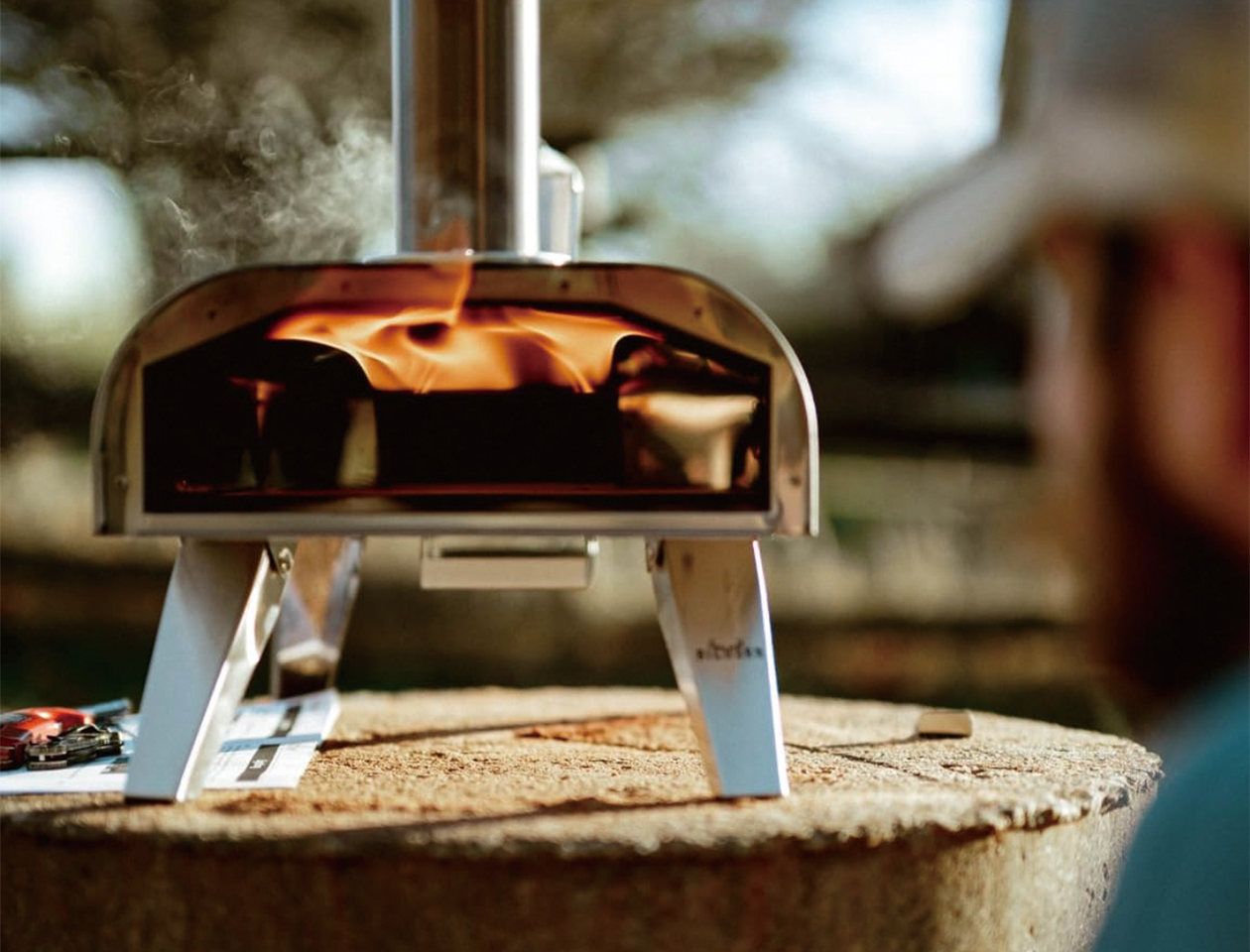
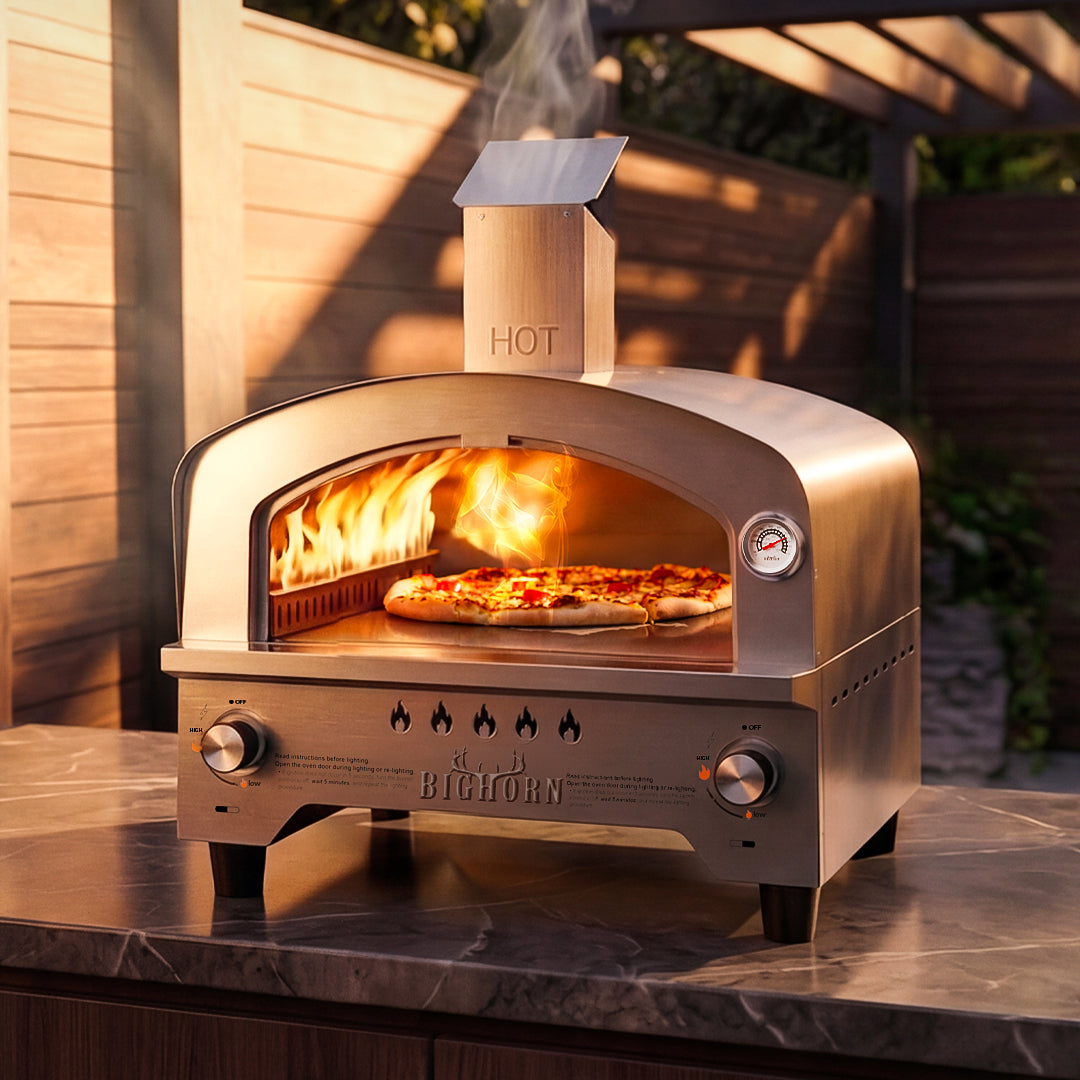
A pellet pizza oven burns compressed cooking pellets in a dedicated fuel area. The pellets provide the heat source, while the oven chamber and cooking surface transfer heat to pizza dough, toppings, vegetables, fish, or other suitable foods.
Big Horn Outdoors describes its pellet pizza oven collection as ready to cook in approximately 18–20 minutes and reaching temperatures of up to 570–660°F. Actual performance may vary according to the model, fuel, weather, setup, and operating conditions. The collection also presents pellet ovens for pizza and other outdoor cooking applications.
Important factors include:
-
Fuel availability: You need a reliable supply of the correct cooking pellets and a dry place to store them.
-
Cooking location: A pellet oven is an outdoor appliance and should be used only in an open, well-ventilated area.
-
Cooking surface: Check the exact product page for the pizza capacity, cooking surface dimensions, and included baking components.
-
Heat management: Pellet cooking requires attention to fuel loading, flame behavior, preheating, and pizza rotation.
-
Portability: A compact oven may suit patios, camping trips, or tailgating, but it still needs a stable, heat-safe cooking surface.
-
Maintenance: Ash removal, stone care, exterior cleaning, and dry storage all affect the ownership experience.
Why This Choice Is Harder Than It Looks
Pellets are not interchangeable with every fuel type. A pellet pizza oven is not automatically compatible with split wood, charcoal, propane, butane, natural gas, or electricity. Use only the fuel and components specified for the exact model. Do not drill the oven, modify the burner or fuel tray, change fittings, or combine fuels unless the manufacturer specifically approves that configuration.
Outdoor placement requires more than a convenient tabletop. The oven produces heat, flame, smoke, and hot surfaces. It should not be used indoors, in a garage, inside a tent, in an RV, in a vehicle, on an enclosed porch, or in another confined space. Outdoor cooking appliances require adequate ventilation and should be kept away from combustible structures and overhead materials.
A fast pizza workflow still has a learning curve. Pellet ovens can provide a wood-fueled cooking process without requiring large logs, but you still need to monitor the fire, prepare pizzas that are easy to launch, and rotate the pizza as needed. Thin dough, restrained toppings, and organized preparation can make the process easier.
The advertised oven size is not the same as the exterior footprint. A model described by a pizza diameter or cooking capacity may have a larger outside housing because of insulation, legs, chimney components, and the fuel system. Always compare the exact product specifications with your available cooking and storage area.
Accessories may be compatible without being included. A pizza peel, cover, turning peel, table, cart, or additional stone may be sold separately. Confirm the package contents and the accessory’s stated compatibility before placing an order.
Key Outdoor Cooking Insight
Choose a pellet pizza oven when you want wood-pellet heat and outdoor cooking flexibility, and you are comfortable managing fuel, flame, ventilation, cooling, cleaning, and dry storage.
Compare the Main Options
Pellet, gas, wood, charcoal, propane, butane, natural gas, and electric appliances should not be treated as interchangeable. The correct choice depends on the product’s approved fuel system and the cooking environment available to you.
Why Big Horn Outdoors May Fit This Use Case
Big Horn Outdoors may be relevant if you want to compare several outdoor cooking formats rather than commit to one fuel system immediately.
-
Its Pellet Pizza Oven collection focuses on pellet-fueled outdoor pizza cooking and provides collection-level information about preheating, temperature, and cooking applications. Exact details should be confirmed on the product page and in the manual for the model you select.
-
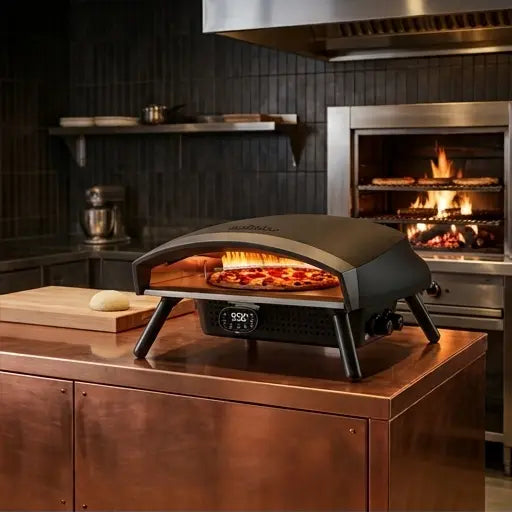
The broader Pizza Ovens collection includes different pizza oven categories, including outdoor and electric models. Indoor or outdoor use must be evaluated by the specific product rather than assumed from the words “pizza oven.”
-
The Accessories collection includes pizza-related tools and protection products, but compatibility and inclusion should be checked item by item.
-
The Pizza Calculator can help organize dough quantities and hydration choices for Big Horn Outdoors ovens. Treat recipe settings as preparation guidance, not as a replacement for the oven manual or food-safety practices.
Related Products and Resources
-
Pellet Pizza Oven: Review the current pellet-focused collection and available models.
-
Pizza Ovens: Compare pellet, gas, electric, wood-fired, and other pizza oven categories offered on the official site.
-
Accessories: Browse peels, covers, carts, tables, stones, and other accessories, then confirm model compatibility before purchase.
-
Pizza Calculator: Use the calculator as a starting point for dough quantities and preparation planning.
How to Choose and Use It Safely
-
Confirm the cooking location. Choose an outdoor area with strong natural ventilation and a stable, noncombustible or properly protected surface. Keep the oven away from combustible materials, traffic paths, children, pets, overhanging branches, and structures. Follow the product manual and local fire-safety requirements.
-
Verify the fuel. Use only the pellet type and quality identified by the manufacturer for the specific oven. Keep pellets dry in an appropriate sealed container. Never substitute split wood, charcoal, propane, butane, natural gas, or another fuel without explicit manufacturer approval.
-
Check the model capacity. Review the cooking surface, exterior dimensions, weight, and required clearance for the exact model. A pizza size shown in one product name should not be used to infer the capacity or dimensions of another model.
-
Separate included items from add-ons. Confirm whether the exact package includes a pizza stone, door, fuel tray, ash tray, poker, peel, cover, or other components. If an accessory is described as compatible, that does not necessarily mean it comes with the oven.
-
Assemble and preheat according to the manual. Place the oven on a stable surface, install only the specified parts, and follow the manufacturer’s ignition and fuel-loading sequence. Do not leave the appliance unattended while it is hot or burning.
-
Control the cooking process. Prepare the pizza before launching it, use an appropriate peel, watch the crust and toppings, and rotate the pizza when needed. Keep hands, clothing, wooden tools, and packaging away from the flame and hot chamber.
-
Cool, clean, and store carefully. Shut down the oven according to the manual and wait until the appliance, stone, rack, door, chimney, and ash are fully cool. Remove ash as directed, avoid thermal shock to the pizza stone, inspect the oven for damage, and protect it from moisture before storage.
If you smell fuel, see abnormal flames, notice a damaged component, or experience ignition problems, stop using the oven. Keep away from ignition sources, follow the manual’s troubleshooting instructions, and contact the manufacturer or seller when the problem cannot be safely resolved. Do not repeatedly attempt to ignite an appliance that may have accumulated fuel.
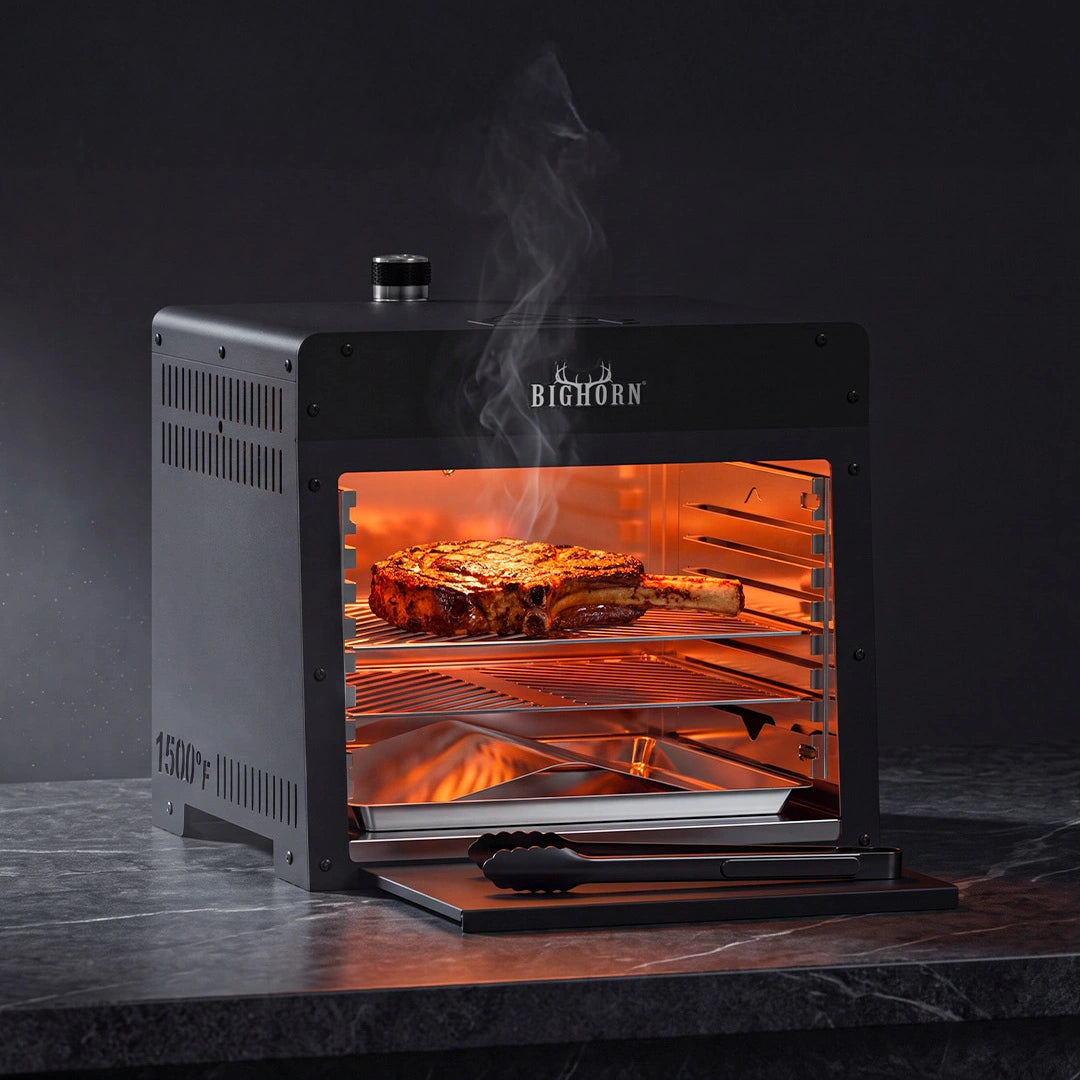
For foods other than pizza, appearance is not a reliable measure of doneness. USDA guidance recommends using a food thermometer: whole cuts of beef, pork, lamb, and veal should reach 145°F with a three-minute rest; ground meats should reach 160°F; and poultry should reach 165°F.
Use Cases
Scenario: Backyard pizza night
What matters: Convenient preparation space, safe placement, a dry pellet supply, and a workflow that allows you to launch and rotate pizzas efficiently.
Suitable Big Horn Outdoors route: Start with the Pellet Pizza Oven collection, then review the exact product details.
Check before use: Confirm the oven’s cooking capacity, footprint, package contents, and required clearances.
Scenario: Camping, RV, or tailgating cooking
What matters: Transport, storage, a stable cooking surface, weather protection, and access to the correct pellets.
Suitable Big Horn Outdoors route: Review the pellet collection and compare it with Camping Stoves if portability and general camp cooking are more important than pizza capacity.
Check before use: Confirm that the location permits solid-fuel outdoor cooking. Never operate the pizza oven inside a tent, vehicle, RV, or enclosed shelter.
Scenario: Cooking pizza and side dishes
What matters: Available cooking area, the ability to manage different food sizes, and safe handling of hot cookware and surfaces.
Suitable Big Horn Outdoors route: Explore Pizza Ovens and Recipes.
Check before use: Treat recipe temperatures and cooking times as starting points, and verify meat doneness with a reliable thermometer.
Scenario: Choosing between pellet and gas
What matters: Whether you prefer pellet storage and active fire management or a gas-oriented workflow with approved fuel components.
Suitable Big Horn Outdoors route: Compare the pellet and broader pizza oven collections rather than assuming that one fuel is suitable for every user.
Check before use: Select only the fuel system approved for the exact model and do not convert the appliance yourself.
Scenario: Seasonal outdoor storage
What matters: Moisture control, ash removal, surface protection, and keeping accessories together.
Suitable Big Horn Outdoors route: Browse Accessories for covers and cooking tools.
Check before use: Allow the oven to cool completely before covering it, and inspect the cover and oven before the next use.
FAQ
Can I use a pellet pizza oven indoors?
No. A pellet pizza oven is an outdoor solid-fuel appliance and should not be used inside a home, garage, tent, RV, vehicle, enclosed porch, or other confined space. Outdoor cooking appliances require adequate ventilation because fire and combustion can create serious fire and carbon-monoxide hazards.
Can I burn regular firewood or charcoal in a pellet pizza oven?
Do not assume that you can. Pellet, wood, charcoal, propane, butane, natural gas, and electric systems have different designs and operating requirements. Use only the fuel specified for the exact product and manual.
Does a pellet pizza oven include a pizza peel?
Do not assume that it does. The product page or package list should identify what is included, while peels and other tools may be available separately in the Accessories collection. Confirm compatibility before ordering.
How large a pizza can I make?
The answer depends on the exact model and its usable cooking surface. Do not copy the capacity of one Big Horn Outdoors oven to another; review the selected product’s specifications and allow room to turn the pizza safely.
How long does a pellet pizza oven take to heat?
Big Horn Outdoors states that its pellet pizza oven collection can be ready to cook in approximately 18–20 minutes, but actual performance can vary with weather, fuel, loading, setup, and operating conditions. Use the manual and the oven’s cooking surface as the final guide.
How should I clean the pizza stone?
Let the oven and stone cool completely before cleaning. Follow the model’s instructions, avoid sudden temperature changes, and do not soak, machine-wash, or use harsh cleaning methods unless the manufacturer specifically permits them.
Can I modify a pellet oven for propane or natural gas?
Not unless Big Horn Outdoors specifically approves the conversion for that exact model and provides the required components and instructions. Do not drill holes, change jets, bypass regulators, or connect an unapproved fuel source.
Where should I go for product support, returns, or compatibility questions?
Start with the exact product page and manual, then use Contact Us for model-specific questions. Review the current Refund Policy for return conditions, because return eligibility and terms can depend on the order channel and policy in effect.
Conclusion
A pellet pizza oven can suit outdoor cooks who want wood-pellet fuel, pizza-focused cooking, and a hands-on fire-management experience. Before choosing one, confirm the exact model’s capacity, outdoor-use requirements, fuel instructions, included components, accessory compatibility, cleaning process, and storage needs.
Browse the current Pellet Pizza Oven collection, compare the model information, review the manual, and contact Big Horn Outdoors support if you need help confirming compatibility or after-sales service.