Updated: November 8, 2026
Pizza ovens roast vegetables with blistered skins and fast caramelization when you cut pieces evenly, oil lightly, and pull them before sugars burn on the stone.
High heat and vegetables: what works
If you are still deciding whether veg belongs in the oven, start with can I roast vegetables in a pizza oven and other cooks in what else to cook in a gas pizza oven.
High heat suits vegetables that benefit from fast caramelization and a blistered exterior: peppers, zucchini, eggplant, onions, mushrooms, tomatoes and leafy stems like broccolini all roast beautifully in a pizza oven, developing a charred, sweet edge that a slow home-oven roast cannot match. Dense, starchy vegetables — whole potatoes, beets, winter squash — are the hard cases, because their centers need more time than their surfaces can survive at full heat. The solution for dense vegetables is to cut them small or thin, pre-cook them, or roast them after the oven has cooled from pizza heat; the solution for everything else is a hot stone and a watchful eye.
The oven's heat also rewards batches and small pieces. A single layer of evenly sized pieces roasts quickly and evenly; a crowded pan steams instead of roasts, and oversized chunks char on the outside while the centers stay raw. Think of the pizza oven as a finishing tool for vegetables: most vegetables need only a few minutes at full heat to reach blistered perfection, and the cook's job is pulling them at the moment of maximum color rather than leaving them to darken further on the hot stone.
Prep rules: oil, size, seasoning
Oil is the first prep decision. Vegetables need enough oil to conduct heat and prevent sticking, but too much oil pools and burns on the hot stone, so toss the vegetables in a light, even coat rather than drenching them. Cut everything to a similar size so the batch cooks together — pieces about an inch thick are a good starting point for most vegetables — and keep the pieces in a single layer on the pan or directly on the stone. Season before roasting with salt, pepper and any spices, and finish with fresh herbs, acid or flaky salt after the roast, because delicate seasonings burn or fade at high heat.
Use a pan or the stone itself, depending on the vegetable. A heavy sheet pan or cast-iron skillet catches juices and makes cleanup easy, and it protects watery vegetables from burning directly on the stone; sturdy vegetables like peppers and zucchini can roast directly on the hot stone for maximum char. If you roast directly on the stone, keep the pieces dry and oiled and turn them with tongs rather than dragging them across the hot surface. Have a landing plate ready, because vegetables pulled from a pizza oven continue to cook on the hot pan — move them to a cool dish the moment they are done.
Season in layers rather than all at once. Salt and oil before the roast draw out moisture and build the base flavor; spice blends, garlic and herbs can go on before cooking if they are robust, but delicate seasonings are best added after the heat has done its work. Finish each batch with a bright element — lemon, vinegar or a spoonful of yogurt or tahini — to balance the char, and keep a dish of flaky salt and a pepper grinder at the serving table so the final seasoning happens on the plate. A pizza-oven roast is a quick cook, and the seasoning layers are what make the short window produce a finished dish rather than just charred vegetables.

Timing table by vegetable
| Vegetable | Prep | Approx. time at high heat | Done when |
|---|---|---|---|
| Bell peppers, zucchini, eggplant, onion | 1-inch pieces, oiled | 4–7 min, turning once | Blistered, tender, edges charred |
| Mushrooms, cherry tomatoes | Whole or halved, oiled | 3–6 min | Soft, juicy, skins blistered |
| Broccolini, asparagus, green beans | Trimmed, oiled | 3–5 min | Bright color, charred tips |
| Dense roots (potato, beet, squash) | Thin slices or pre-cooked | 8–12 min at reduced heat | Fork-tender through the center |
Read the table as a starting point, not a guarantee — the oven's real heat, the pan material and the piece size all shift the minutes. The reliable cues are visual and physical: vegetables are done when they are blistered and tender, not when a timer rings. For dense roots, test with a fork or skewer in the thickest piece; for everything else, trust the color and the give. If a batch is charring before it is tender, pull the pan from the hottest zone, lower the heat or move the vegetables to the cooler part of the stone rather than leaving them to burn.
Sheet-style roasting in a pizza oven
Use a pan or tray so drips do not glass the stone, and keep a spare peel or pan in accessories. For party sides that finish beside pies, see the backyard pizza party menu.
Sheet-style roasting works in a pizza oven when the pan is preheated with the stone. Place a heavy sheet pan or skillet in the oven during preheat so it is hot when the vegetables land — the hot pan sears the bottom while the oven's radiant heat works the top, giving the roast the two-sided cooking of a restaurant oven. Toss the vegetables with oil and seasoning, spread them in a single layer on the hot pan, and roast with a quick shake or turn partway through. The pan's preheat is the difference between vegetables that sear and vegetables that stew in their own released moisture.
Batch roasting keeps the heat consistent: roast one pan at a time in the hot center rather than crowding two pans, which drops the oven temperature and steams everything. While one pan roasts, the next batch waits seasoned and ready, so the oven cycles quickly and every vegetable gets the full heat. Sheet-style roasting is the method for feeding a group — a roasted vegetable platter from the pizza oven becomes the side dish that makes the main course look easy, and the same stone that baked the pizza carries the vegetables without missing a beat.
Three recipes to start with
1. Blistered peppers, zucchini and red onion
Toss sliced peppers, zucchini coins and red onion wedges with olive oil, salt and a pinch of chili flake. Roast on a preheated pan or directly on the stone for about five to seven minutes, turning once, until the peppers blister, the zucchini browns at the edges and the onion softens. Finish with a squeeze of lemon, chopped parsley and flaky salt. This is the recipe that proves the pizza oven's vegetable power — the high heat sweetens the peppers and gives the zucchini a charred edge that a home oven cannot match.
2. Whole mushrooms and cherry tomatoes
Toss whole cremini mushrooms and cherry tomatoes with olive oil, salt, pepper and a sprig of thyme. Roast on a preheated pan for about four to six minutes until the tomatoes blister and the mushrooms soften and release their juices. Finish with a splash of balsamic vinegar or a squeeze of lemon and torn basil. The mushrooms stay meaty and the tomatoes burst into a quick sauce — serve the pan as a side, over polenta or spooned onto grilled bread, and the juices from the pan become the sauce.
3. Charred broccolini with lemon and garlic
Toss trimmed broccolini with olive oil, salt and sliced garlic, and roast for about three to five minutes until the stalks are bright and the tips char. Pull it while it still has some bite — the residual heat finishes the cook — and finish with lemon zest, lemon juice and flaky salt. The garlic softens and sweetens at high heat, and the charred tips carry the smoky flavor of the oven. Serve it as the green vegetable that holds its own next to a rich roast or a pizza spread.

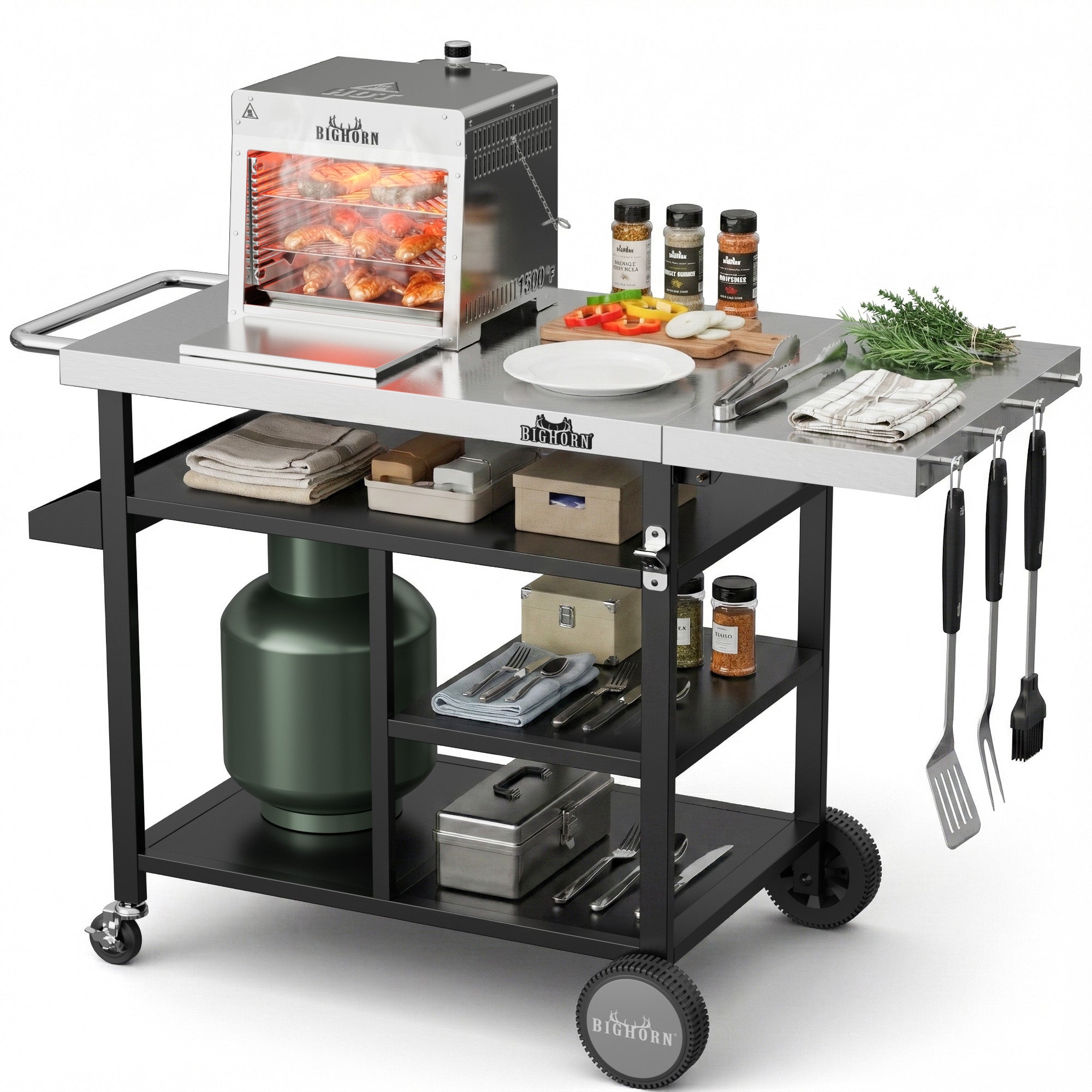
Roasted vegetables are the pizza oven's unsung talent: quick, dramatic and versatile, they turn the fire that bakes pizzas into the fire that roasts the side dishes. Start with the timing table, keep the pieces small and oiled, and pull the vegetables at the first sign of the char you want — then the oven earns a second job at every meal. Big Horn's 15-inch dual burner gas pizza oven and 12-inch wood pellet oven both handle the roast, and a grill cart and pizza oven table gives the vegetable station a stable home next to the oven.
Build the roasted-vegetable habit by pairing the pan with whatever else the oven is cooking. Vegetables that roast in five minutes are perfect for the window while a pizza rests or before the next pie launches, and a platter of charred vegetables turns a pizza dinner into a fuller meal without a second appliance. Pre-cut and season a tray of vegetables when you fire the oven for pizza, and you will find the side dish is ready before the pizza is — the oven's speed works for the cook when the vegetables are staged in advance.
Related guides & gear: Can I roast veg · What else in gas oven · Temp style · Pizza ovens · Gas ovens · Accessories · Party menu
These recipes and cook guides are editorial guidance from the Big Horn Outdoors team. Cooking results vary with equipment, fuel, ingredient temperature and weather, so rely on doneness signals and an instant-read thermometer instead of exact times. The equipment shown reflects official Big Horn Outdoors listings reviewed September 5, 2026; prices and availability can change at checkout.
Explore more in the Pizza Oven Setup Guides.