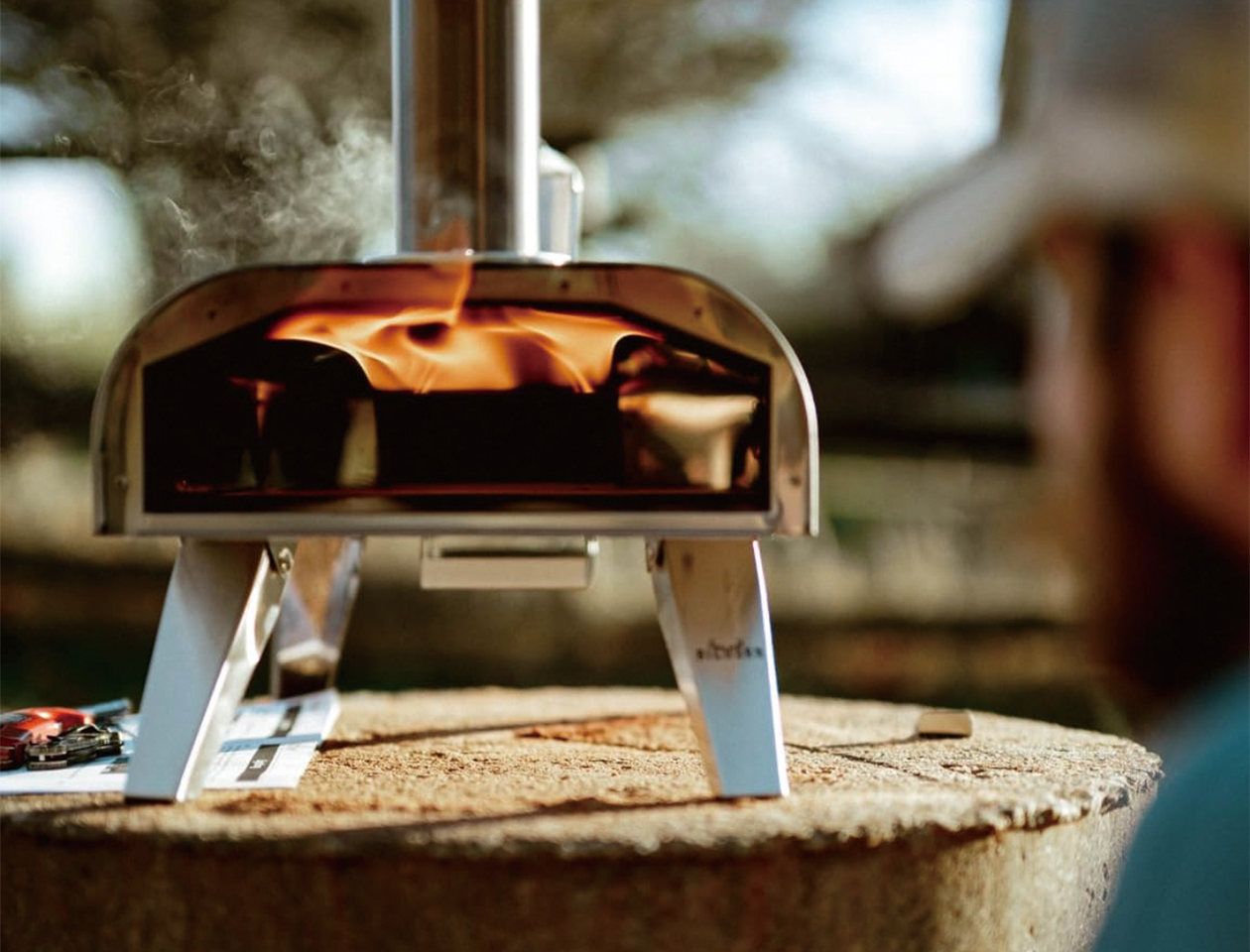
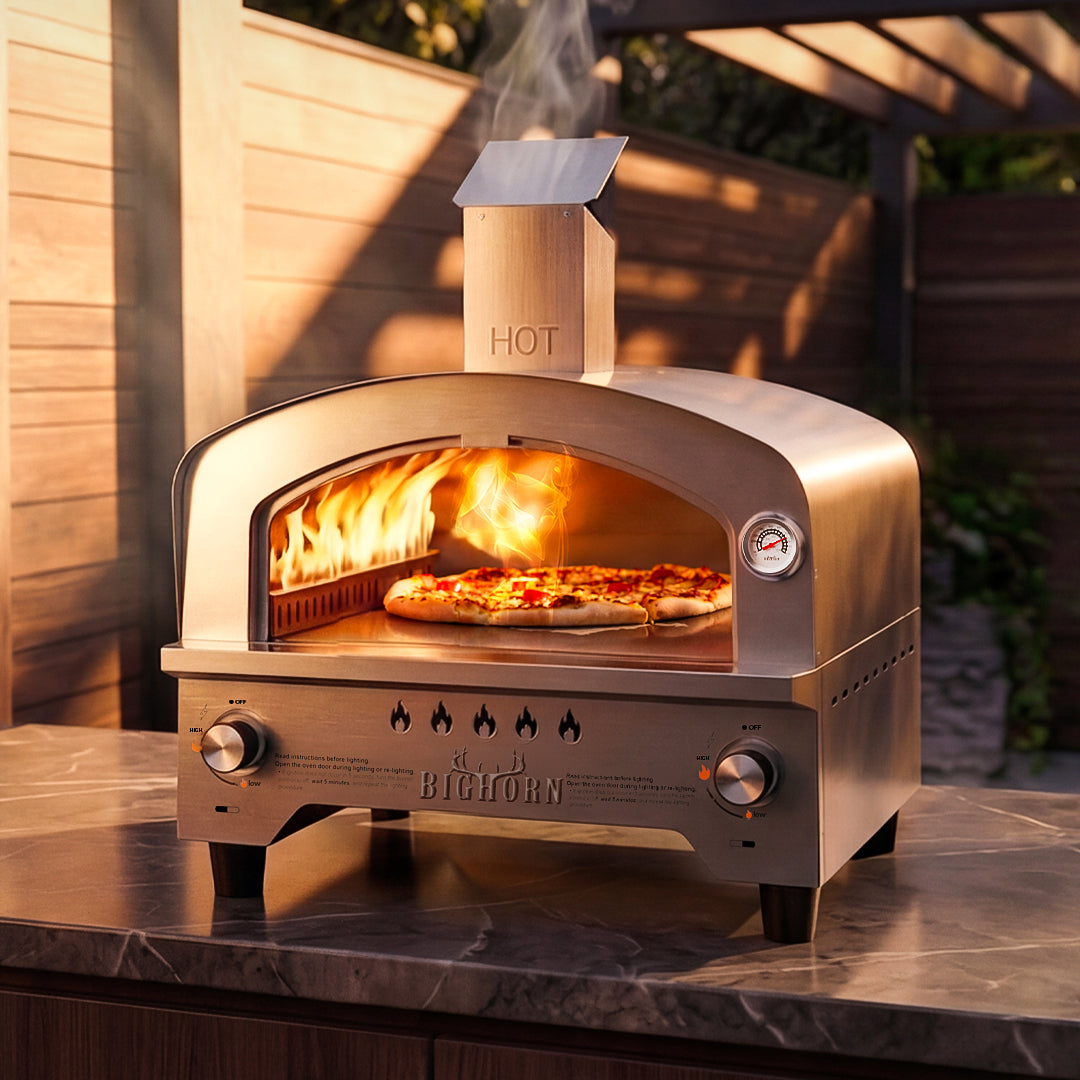
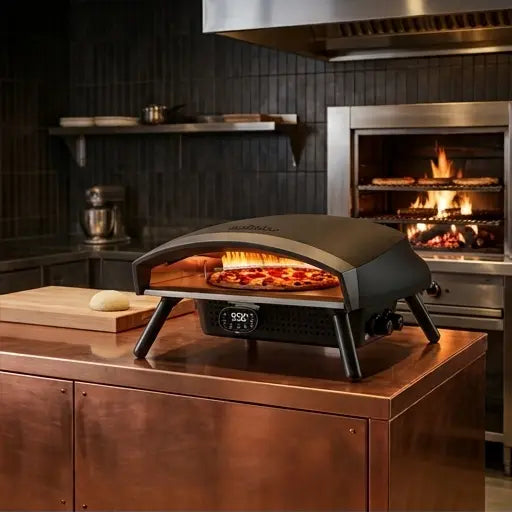
A rotating stone gas pizza oven combines propane-fired heat with a pizza stone designed to turn during cooking. For backyard cooks, this format can make it easier to manage uneven browning across the crust and toppings while maintaining an active, hands-on outdoor cooking workflow.
Big Horn Outdoors offers pizza oven collections for shoppers comparing gas, pellet, electric, and multi-fuel formats. A rotating stone gas pizza oven may suit cooks who prefer propane convenience and want to reduce how often they manually turn pizzas, but the right choice still depends on the exact model, supported cooking capacity, outdoor placement, approved fuel connection, and included components.
What Is a Rotating Stone Gas Pizza Oven?
A rotating stone gas pizza oven is an outdoor pizza oven that uses propane as its approved fuel source and incorporates a pizza stone that moves during cooking. Rather than keeping the pizza in one fixed position above the burner area, the rotating stone helps move it through different zones of heat exposure.
This design can support a more consistent bake, but it does not make pizza cooking fully automatic. The cook still needs to prepare the dough correctly, preheat according to the product manual, launch the pizza safely, observe browning, and remove the pizza at the appropriate time.
Key factors to consider include:
-
Cooking location: Outdoor propane pizza ovens require an open, well-ventilated outdoor location.
-
Fuel setup: Use only the propane cylinder, regulator, hose, fittings, and connection method approved for the specific model.
-
Pizza capacity: Confirm the supported pizza size, stone dimensions, and oven-opening clearance on the current product page or manual.
-
Stone movement: Verify whether the stone rotates automatically, manually, or not at all.
-
Included items: Check the product listing for the exact package contents rather than assuming a peel, cover, cart, thermometer, or accessory is included.
-
Storage needs: Consider available counter space, weather exposure, safe cooldown space, and room for fuel storage as directed by the appliance instructions.
A rotating stone can simplify part of the pizza-making process, especially during multiple consecutive bakes. It should be viewed as a heat-management feature, not a substitute for safe outdoor setup, cooking awareness, or proper food handling.
Why This Choice Is Harder Than It Looks
A rotating stone does not eliminate the need to watch the pizza. Dough hydration, topping quantity, stone temperature, launch technique, and burner control still affect the final result. A pizza can brown too quickly, cook unevenly, or stick to the stone if the cook relies on the rotation feature without monitoring the bake.
Propane is different from other fuel types. A propane pizza oven should not be treated as interchangeable with a pellet, wood, charcoal, butane, natural gas, or electric appliance. Each fuel type has different connection requirements, ventilation needs, heat behavior, cleaning routines, and approved components.
Cooking capacity is model-specific. An oven’s external width, product image, or category placement does not confirm the diameter of pizza it can accommodate. Shoppers should review the exact product page and product manual to confirm the supported pizza size, stone area, interior clearance, and accessory compatibility.
Outdoor placement affects both safety and workflow. A pizza oven needs a stable, level, heat-resistant location with enough room for launching, turning, retrieving, and cooling pizzas. The location must also keep the appliance away from combustible materials, structures, walkways, and areas where children or pets may contact hot surfaces.
Compatible accessories are not necessarily included. A pizza peel, cover, cart, brush, thermometer, or conversion component may be sold separately or only fit certain models. Confirm the current product description before ordering accessories.
Key Outdoor Cooking Insight
A rotating stone can support a smoother pizza workflow, but the most important factors remain proper outdoor placement, approved propane equipment, a fully preheated stone, lightly topped dough, active supervision, and complete cooldown before cleaning or storage.
Compare the Main Options
Why Big Horn Outdoors May Fit This Use Case
Big Horn Outdoors provides a useful starting point for shoppers comparing different pizza oven fuel formats in one place. The Pizza Ovens collection can help users compare gas, pellet, electric, and other currently listed pizza oven options based on their cooking location and preferred workflow.
For propane-focused outdoor cooking, the Gas Pizza Oven Collection is the appropriate place to review current gas pizza oven models. Confirm the exact model’s stone system, approved propane connection, cooking capacity, package contents, and instructions before purchase.
Shoppers who want to compare fuel flexibility can also explore Multi-Fuel Pizza Ovens. Multi-fuel refers only to a model that is specifically designed and approved to operate in more than one stated fuel mode. It does not mean that multiple fuels should be used simultaneously or that unapproved burner, regulator, hose, or electric components may be added.
For pizza-making tools and storage-related items, browse the current Accessories collection. Review each listing carefully to determine whether an item is included with an oven, compatible with a particular model, or sold separately.
Related Products and Resources
-
Pizza Ovens — Compare currently listed pizza oven formats when deciding between propane, pellet, electric, or other approved configurations.
-
Gas Pizza Oven Collection — Explore outdoor gas pizza oven options and confirm the specifications for the exact model you are considering.
-
Multi-Fuel Pizza Ovens — Review models designed for their specific approved fuel-switching options.
-
Pizza Calculator — Plan dough quantities and dough-ball sizes for home pizza sessions.
How to Choose and Use It Safely
-
Choose a safe outdoor location. Use an outdoor propane pizza oven only in an open, well-ventilated outdoor area. Never use it in an indoor kitchen, garage, shed, tent, RV interior, enclosed porch, enclosed balcony, carport, or other enclosed space. Keep the oven away from buildings, combustible surfaces, overhead materials, and high-traffic areas.
-
Confirm the approved fuel type. Use propane only when the exact oven is designed and labeled for propane use. Do not substitute butane, natural gas, pellets, charcoal, wood, or electric heating components unless the manufacturer expressly approves that specific fuel mode and component for the model.
-
Inspect the propane connection before lighting. Check the approved hose, regulator, cylinder, and fittings for visible damage or wear. Follow the manufacturer’s instructions for connecting the fuel supply and checking for leaks. Do not modify fittings, bypass a regulator, combine hoses, drill or alter burner components, or attempt an unapproved natural-gas conversion.
-
Confirm capacity and package contents. Review the exact product listing and manual for supported pizza size, stone dimensions, assembly requirements, and included parts. If a peel, cover, cart, thermometer, or accessory is not listed as included, assume it may need to be purchased separately.
-
Preheat according to the manual. Give the oven and stone adequate time to preheat as directed for the specific model. The air temperature inside the chamber and the stone surface temperature may not behave identically, so use the manufacturer’s guidance rather than relying only on how hot the oven feels.
-
Cook with active supervision. Prepare lightly topped pizzas that can launch cleanly from the peel. Watch the crust, cheese, toppings, and edge browning throughout the bake. Even when a stone rotates, pizza should never be left unattended near an active flame or hot appliance.
-
Follow food-safety practices. Keep raw proteins separate from ready-to-eat foods, utensils, and cooked pizza. Cooking time and surface appearance are not reliable substitutes for checking the internal temperature of meat, poultry, seafood, or leftovers with a food thermometer.
-
Cool completely before cleaning or storage. Turn off the fuel supply according to the manual and allow the oven, stone, door, rack, and other hot components to cool completely before touching, moving, covering, cleaning, or storing the appliance.
-
Protect the pizza stone from damage. Do not expose a hot stone to cold water, immerse it, place it in a dishwasher, or use cleaning methods that are not approved in the product instructions. Sudden temperature changes may damage the stone.
Use Cases
Scenario: Backyard Pizza Night for Several Guests
What matters: A stable outdoor cooking area, an organized dough-and-topping station, enough space for pizza peels, and continuous attention to the oven.
Suitable Big Horn Outdoors route: Review the Gas Pizza Oven Collection to compare currently listed propane pizza oven options.
Check before use: The exact oven’s supported pizza capacity, propane requirements, outdoor clearance, and safe location for finished pizzas.
Scenario: The Cook Wants Less Manual Pizza Turning
What matters: A rotating stone may help move pizzas through varying heat zones during cooking, but the cook must still monitor browning and remove the pizza promptly.
Suitable Big Horn Outdoors route: Start with Pizza Ovens and verify the features shown on the current listing for each specific model.
Check before use: Whether the model includes a rotating stone function, how it operates, and which components require cleaning or maintenance.
Scenario: Comparing Gas With Pellet Cooking
What matters: Propane and pellet cooking have different fuel routines. Propane requires approved gas components and connection checks, while pellet cooking requires pellet storage, fuel loading, and ash management.
Suitable Big Horn Outdoors route: Compare Gas Pizza Oven Collection options with Multi-Fuel Pizza Ovens.
Check before use: The exact approved fuel modes, outdoor-use requirements, local fire restrictions, and availability of the required fuel.
Scenario: Building a Repeatable Pizza Dough Workflow
What matters: Dough-ball weight, hydration, proofing, topping load, and peel handling all influence launch success and crust development.
Suitable Big Horn Outdoors route: Use the Pizza Calculator to plan dough quantities before a pizza session.
Check before use: That the dough releases from the peel cleanly and that the stone has been preheated according to the applicable instructions.
Scenario: Seasonal Storage and Maintenance
What matters: Proper cooldown, dry storage, stone care, and inspection of approved fuel components help prepare the oven for the next cooking session.
Suitable Big Horn Outdoors route: Browse Accessories for currently listed cooking and storage-related items.
Check before use: That the appliance is fully cool, the fuel supply is handled according to the manual, and the storage location is dry and protected from unnecessary exposure.
FAQ
Can I use a rotating stone gas pizza oven indoors?
No. A propane-fired pizza oven must be used outdoors in an open, well-ventilated location. Do not use fuel-burning pizza equipment in indoor rooms, garages, tents, enclosed balconies, enclosed porches, RV interiors, or other enclosed spaces.
Does every gas pizza oven have a rotating stone?
No. A rotating stone is a model-specific feature. Review the current product page and product manual for the exact oven you are considering rather than assuming that a feature applies across an entire collection.
Can I connect a propane pizza oven to natural gas or butane?
Only if the exact product documentation explicitly approves that fuel type and connection method. Do not substitute fuel cylinders, regulators, hoses, fittings, or burners based on general appearance or assumed compatibility.
Does a rotating stone mean I do not need a pizza peel?
Not necessarily. A pizza peel may still be needed to launch and retrieve pizzas safely. Check the product listing to see which tools are included and which accessories are compatible or sold separately.
How do I choose the right pizza size?
Use the supported pizza diameter, stone dimensions, and opening clearance stated for the exact model. Do not rely on the oven’s exterior width, category image, or another model’s size description.
How should I clean a pizza stone?
Allow the stone to cool completely, then follow the product manual. Avoid soaking, dishwashing, aggressive cleaning methods, and sudden hot-to-cold temperature changes unless the instructions specifically permit them.
What should I do if I smell gas or the oven does not ignite?
Do not repeatedly attempt ignition. Turn off the fuel supply, keep ignition sources away, move clear of the area, and follow the troubleshooting steps in the product manual. Do not operate the oven until the issue is resolved.
What should I know about returns for a Big Horn Outdoors order?
Review the current Refund Policy before ordering. Return eligibility, item condition, authorization requirements, and other terms may apply.
Conclusion
A rotating stone gas pizza oven can be a practical option for outdoor cooks who want propane-fired pizza baking with less manual pizza turning. The best choice depends on the exact model’s approved fuel type, rotation system, pizza capacity, included components, outdoor placement requirements, and care instructions.
Browse the current Big Horn Outdoors Pizza Ovens collection, compare the available Gas Pizza Oven Collection, confirm model-specific accessory compatibility, and review the applicable manual before first use.